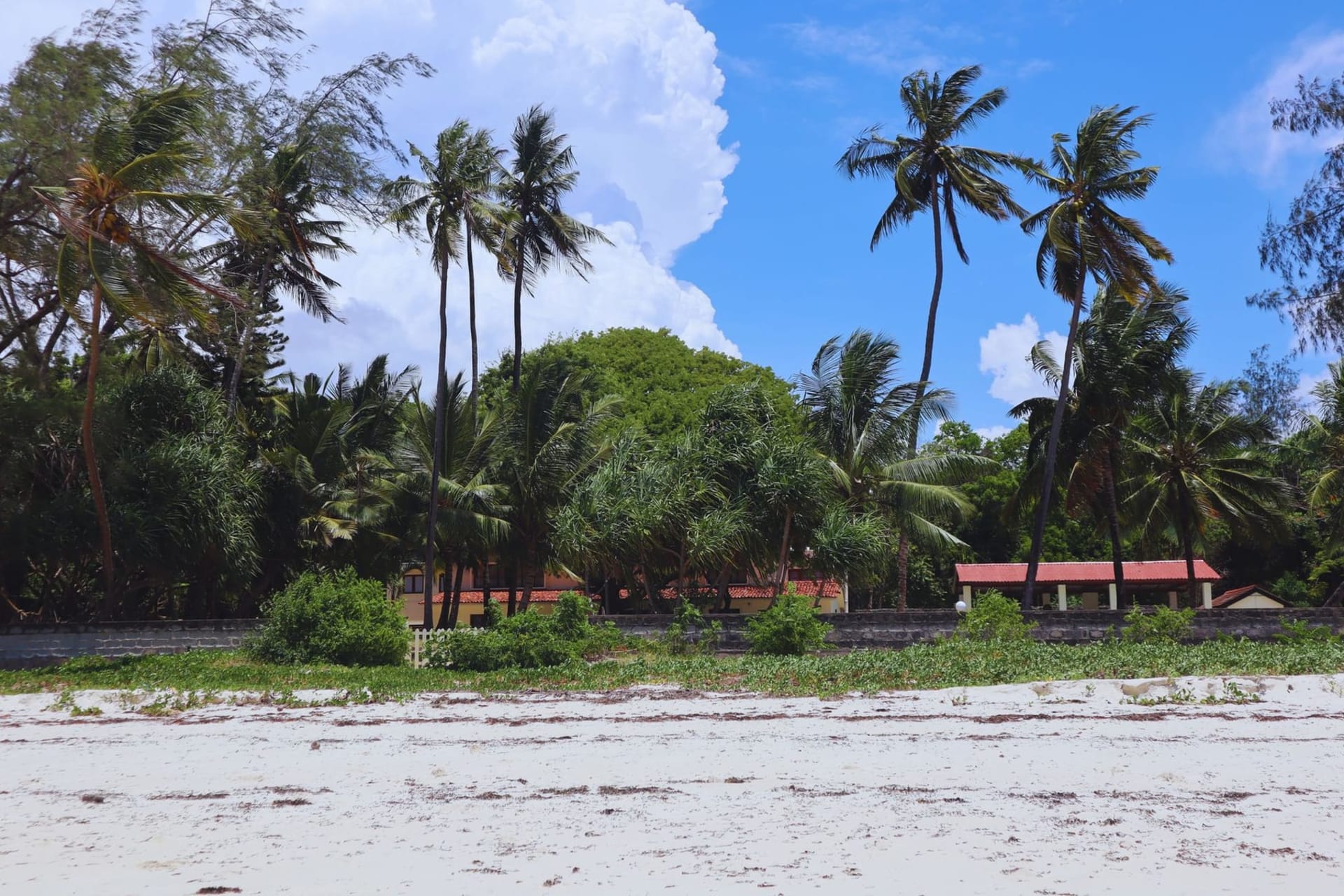
Powder-white sand, Indian Ocean reefs, and colobus monkeys swinging through coastal forest canopy.
I had been warned that Diani would feel too easy — too polished, too resort-adjacent, the kind of beach destination that strips a place of its strangeness and hands you a cocktail in its place. I almost didn’t come. I’m glad I ignored myself.
The Colour of the Water
The Indian Ocean at Diani operates by different rules than any sea I’ve swum in. The reef runs close to shore, and at low tide the sandbanks expose themselves in pale gold ribs, shallow enough to walk to the horizon. The water between them is the colour of a swimming pool if swimming pools were designed by someone who had only ever dreamed of the tropics — unreally turquoise, almost aggressive in its clarity. I stood in it up to my knees and watched a small hawksbill turtle glide beneath me without hurry, close enough to see the barnacles on its shell.
Lia spotted the turtle first. She has a talent for stillness that I’ve never managed to acquire.
We stayed on the southern stretch near Galu Beach, where the sand is finer and the sun loungers thin out. Mornings we walked north along the shoreline toward the cluster of beach bars near Stilts — the famous one built into the canopy, all rope bridges and salt-warped timber — arriving hungry enough to justify a full plate of grilled tilapia with a coconut and tamarind broth that the cook called mchuzi wa samaki. It tasted like the smell of low tide, in the best possible way.
The Forest Above the Beach
Nobody told me about the colobus monkeys. That was the genuine surprise — not that they existed, I knew they lived here, but that they were so indifferent to us. The Diani Forest, which runs in a thin strip behind the beach road, shelters a resident troop of Angolan colobus, and on our second morning I found one sitting on the roof of a kiosk outside Forty Thieves Beach Bar, methodically peeling a banana someone had left out, its black-and-white cape hanging around it like a ceremonial robe. It looked at me with the mild contempt of a creature that has decided humans are not worth fully ignoring.
The forest itself is worth entering. Under the canopy the air drops five degrees and smells of damp bark and something faintly ferrous, like old coins. The colobus move through the branches above with a heaviness that seems wrong for an animal in a tree — they land in a controlled fall rather than a leap.
Getting the Timing Right
The beach operates best as a morning destination; by noon the light bleaches everything flat and the offshore breeze dies. We were out at six most days, the sand still cool, the dhow fishermen returning with their catch.
When to go: The long dry season runs from late June through October, with reliable sun and calm seas ideal for snorkelling the reef. January and February are also dry and significantly less crowded.