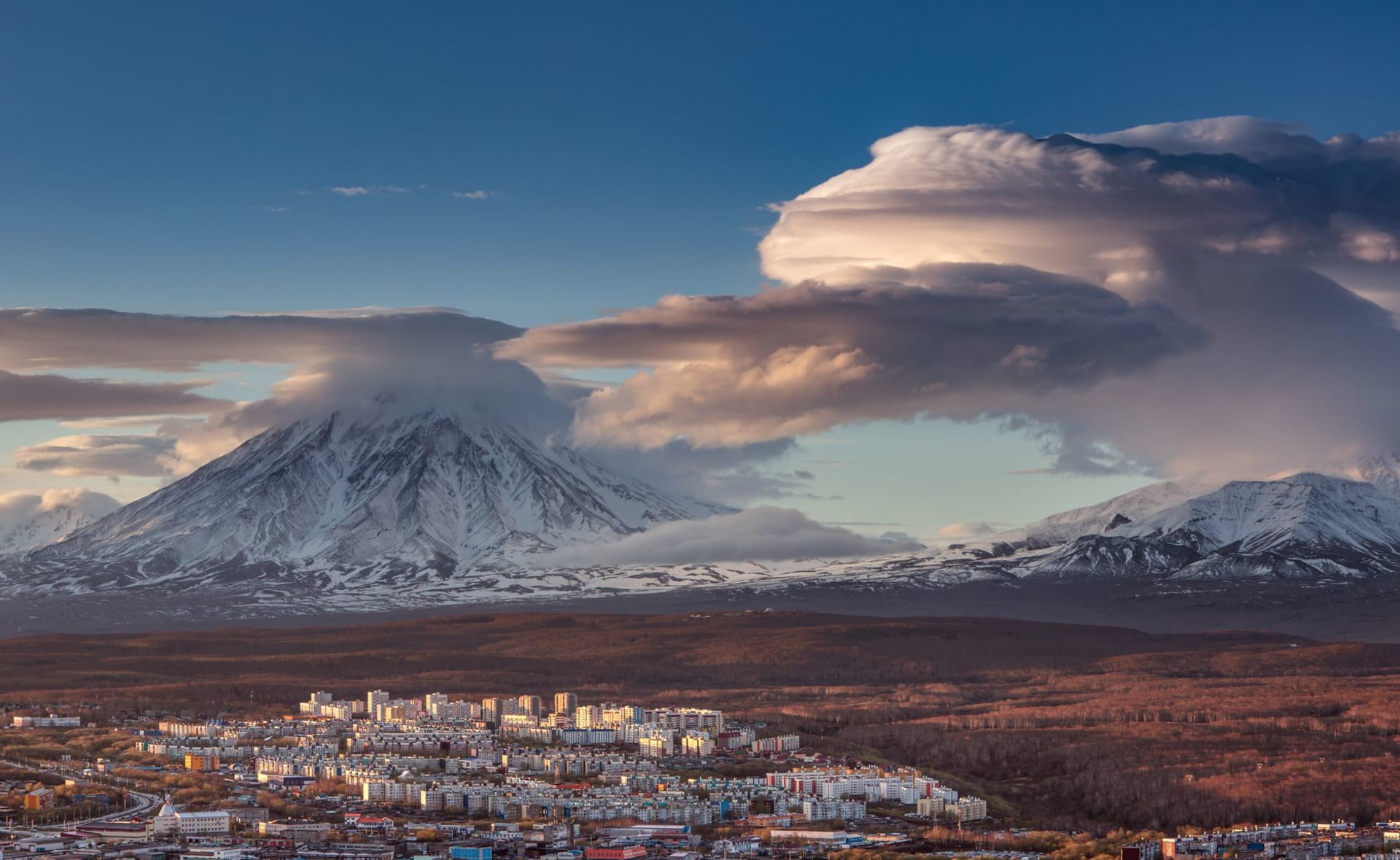
Petropavlovsk-Kamchatsky
"The city exists as if it forgot to stop being temporary — and somehow that's exactly right."
I arrived at the central market before eight in the morning, still disoriented from the overnight flight and the eleven-hour time difference from Moscow, and a woman handed me a piece of black bread loaded with red caviar without asking if I wanted it. She was selling from a metal folding table, three different grades of ikra lined up in clear plastic tubs, and she treated the offering less as a sales tactic than as a statement of fact: this is how you begin a day in Petropavlovsk. The bread was dense, the butter generous, and the salmon roe popped against the roof of my mouth with a cold, oceanic intensity. I ate three pieces and bought a half-kilo to take back to my guesthouse.
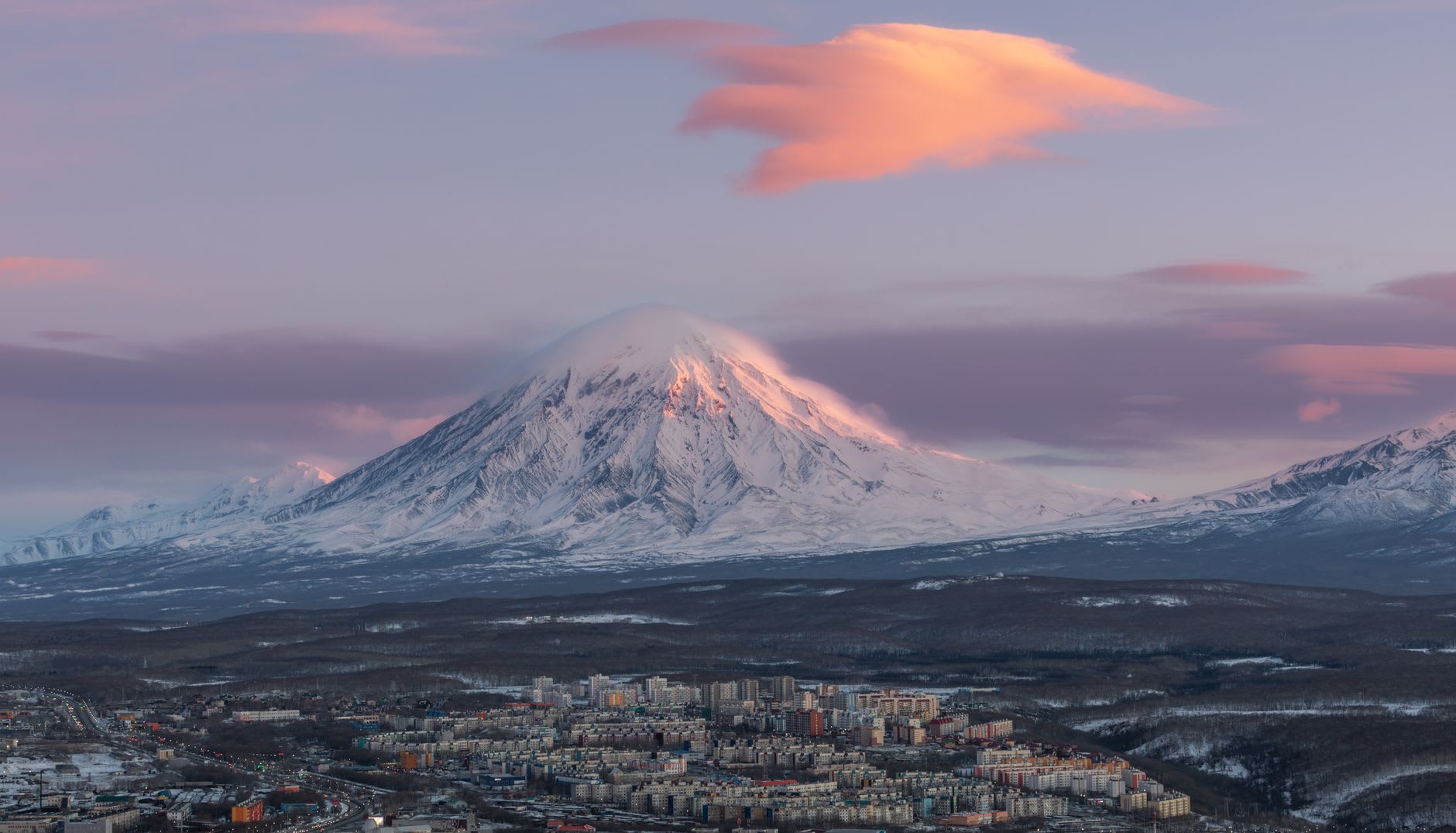
Petropavlovsk-Kamchatsky — PKK, as it appears on flight boards, as if the full name were too much to ask of anyone — is a city built by necessity rather than aspiration. The Soviets needed a Pacific Fleet base and a logistics hub for the Far East, and so they built one, and it shows. Five-story apartment blocks the color of old concrete line the hills, and the city’s main avenue feels wide enough to land a medium-sized aircraft on. But turn toward the water, toward Avacha Bay, and the scale of what surrounds this unlikely place becomes apparent: Avachinskaya Sopka and Koryaksky Volcano rise directly behind the city’s roofline, their cones sharp and snowy, occasionally trailing plumes of steam, framing the Soviet-era housing blocks with a grandeur that the architecture does nothing to earn but benefits from enormously.
The market is the city’s real centre of gravity. It runs daily and smells of fish, dill, and the faint iron tang of cold ocean air. Women in aprons sell smoked char, dried halibut, and crab legs pulled that morning from the sea. The salmon section alone occupies half a building — king salmon, sockeye, coho, pink — in every form of preservation and freshness, and at prices that still shock visitors arriving from Moscow or anywhere west of the Urals. I watched a fisherman in rubber boots carry a cooler the size of a small refrigerator through the crowd, stopping at three different stalls to offer whatever was inside, transactions completed with nods and cash and no paperwork.
In the evenings, the city has a particular quality of light — the sun sets late in summer, sliding sideways rather than dropping, and the sky over the bay turns a series of pale golds and muted pinks that the volcanoes seem to absorb and hold. I sat on the hill above the naval memorial and watched that light move across the water for an hour, the fishing fleet coming and going below, a military vessel somewhere in the outer bay, and the mountains going from white to rose to grey behind them all.
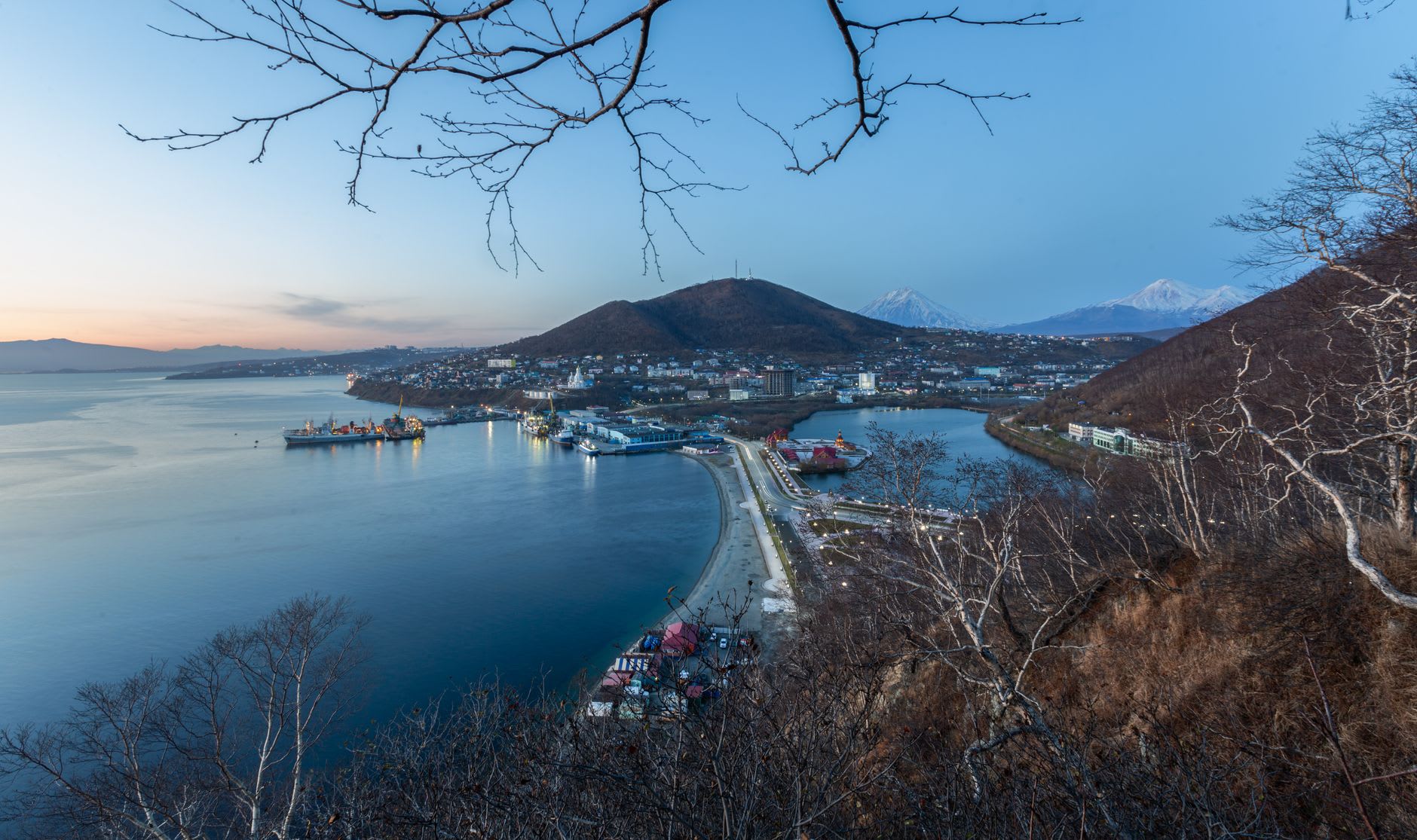
PKK is not a beautiful city in any conventional sense. But it is authentic in a way that feels increasingly rare — a place that exists for reasons other than tourism, that functions on its own terms, and that welcomes visitors not by performing itself but by simply allowing them in. The restaurants are mostly decent, the guesthouses are small and run by people with opinions about mushroom season, and every conversation eventually turns to the weather, the bears, or whether the helicopters will fly tomorrow.
When to go: Late June through September for the best weather and full market season, when the salmon runs bring maximum activity to the harbour and the volcanic slopes are clear enough to see from the city. Winter visits are possible and deeply atmospheric — the bay freezes at the edges, the volcanoes turn white above the grey city — but logistics become harder and many services scale back.