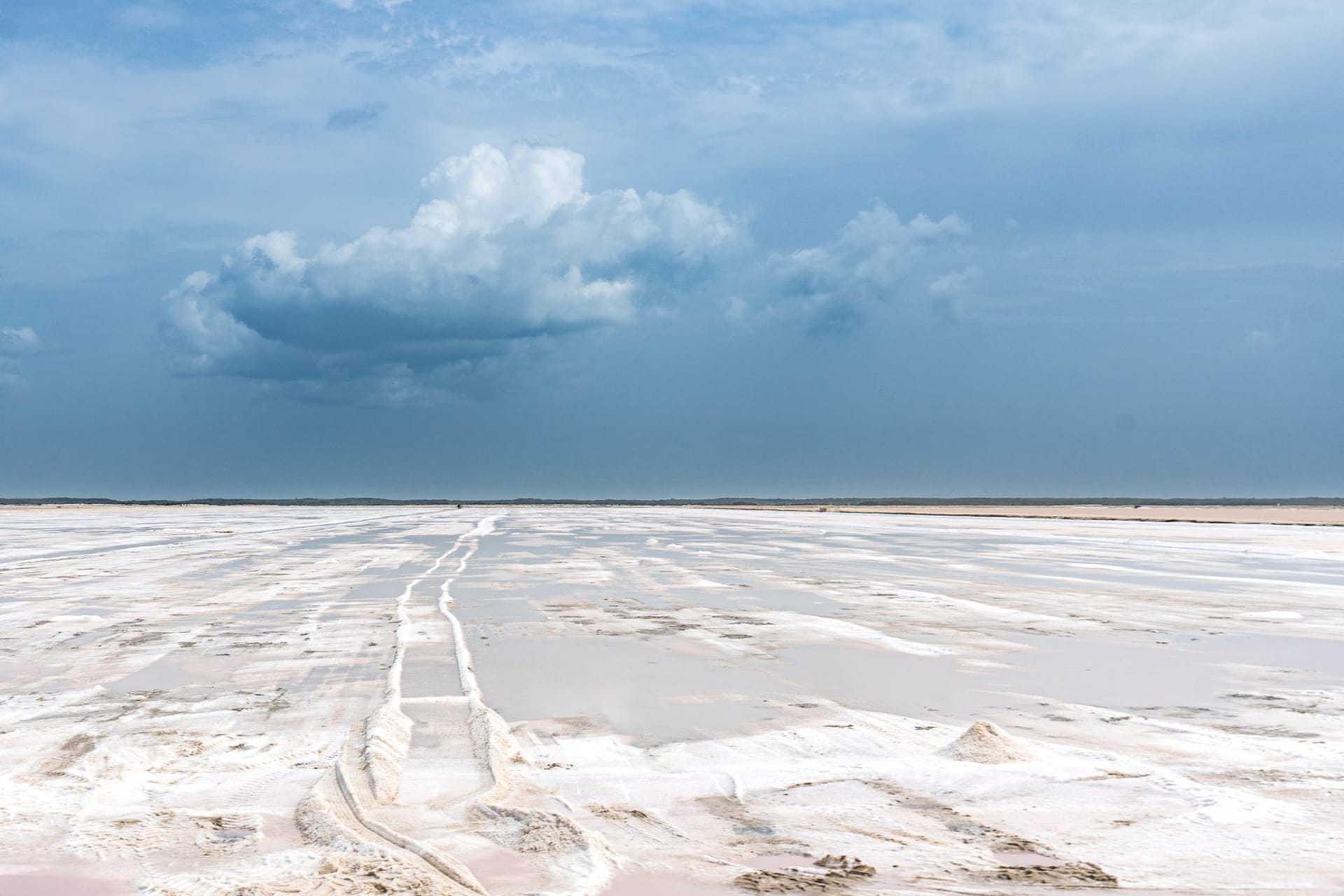
Makgadikgadi Pans
"I walked out onto the pan until the truck disappeared. Then kept walking. The emptiness was not frightening — it was a relief."
The Makgadikgadi Pans are what remains of a lake that once covered an area larger than Switzerland. Some twelve thousand years ago — a blink by geological reckoning — this was a body of water. Now it is a flat white surface of salt and soda ash, cracked into polygons by the heat, stretching across nearly twelve thousand square kilometers of Botswana’s northeast. I drove out onto the Sowa Pan in a quad bike at midday and stopped in the middle of nothing. In every direction: white, flat, featureless, the horizon a perfect line drawn with a ruler. The sky felt enormous in a way that skies do not ordinarily feel enormous, because ordinarily there are trees, hills, buildings providing scale. Here there is no scale. You are a small mammal on the floor of a dead sea, and the fact of your smallness is impossible to deny and somehow pleasurable.
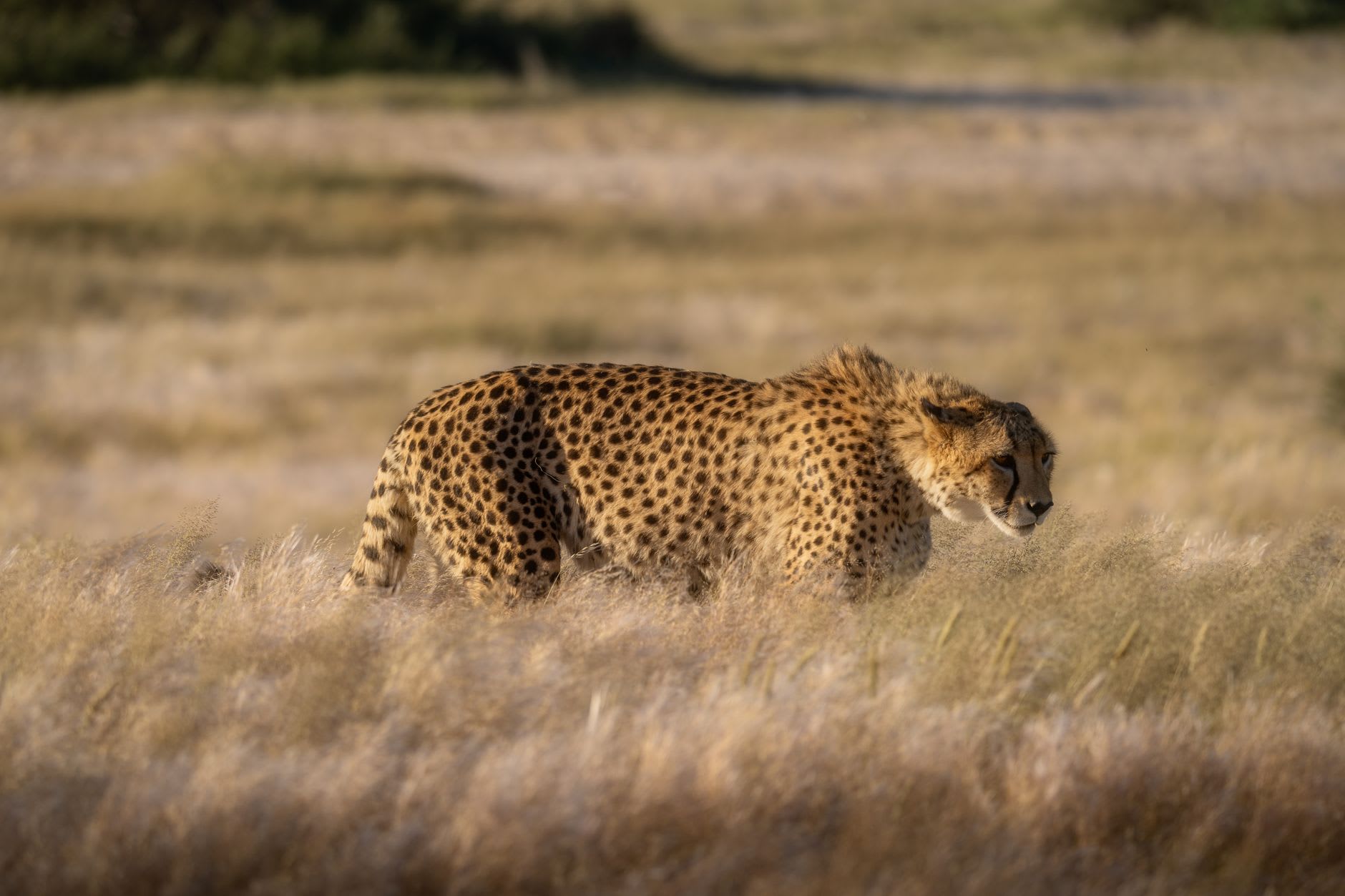
The pans have two seasons and two personalities. In the dry months, May through September, they are white and lunar and almost entirely empty of visible life — though if you look carefully, jackals pick across the surface with purpose, following insect hatches no human can detect. At the edges of the pan, near the island ridges of calcrete and the scattered palm trees, meerkats colonize every termite mound. I spent an entire morning with a meerkat mob near the Kubu Island shoreline, watching the sentinel rotate duty with what appeared to be genuine institutional seriousness — each animal stock-still on its post, scanning the sky, then descending to be relieved by a colleague who climbed up to take the watch without ceremony or acknowledgement.
In the wet season, November through March, the pans transform. Rain water sheets across the flat surface, turning it into a vast shallow mirror that reflects the sky in both directions until you cannot tell which way is up. Flamingos — sometimes hundreds of thousands of them — arrive from Kenya and Tanzania to breed on the temporary islands in the shallower pans. Seeing them from a distance is like watching something pink and improbable materialize out of nothing: the white surface and then, at the limit of visibility, a rosy smear that resolves slowly into birds as you approach. The ecology of this transformation — an entire continent’s worth of flamingos staging on a dead salt flat in the heart of a semi-arid region — is one of those facts that makes the word “nature” feel inadequate.

Kubu Island — a rocky calcrete outcrop stranded in the middle of Sowa Pan — holds the pans’ strangest detail: baobab trees growing from the shoreline of an island surrounded by nothing. Ancient San rock art has been documented here on the pale stone surfaces. Walking among the baobabs in the early morning, the salt flat visible in every direction, the silence so complete I could hear my own footsteps from meters away, I felt the weight of geological time in a way that books cannot replicate. Something happened here on a scale and a timescale that renders human history a footnote.
When to go: November through March for the flamingo spectacle and the mirror-flat reflections after rain. June through August for the meerkat colonies and the atmospheric desolation of the dry pans. Kubu Island requires a 4x4 at all times; approach via Gweta or Nata. Do not attempt to cross the open pan without local guidance.