A food-proud castle town at the foot of the sacred Dewa Sanzan peaks, where mountain vegetables and dadacha-mame edamame carry a UNESCO badge and a jellyfish aquarium drifts by the sea. Rural Yamagata at its most unhurried and quietly deep.
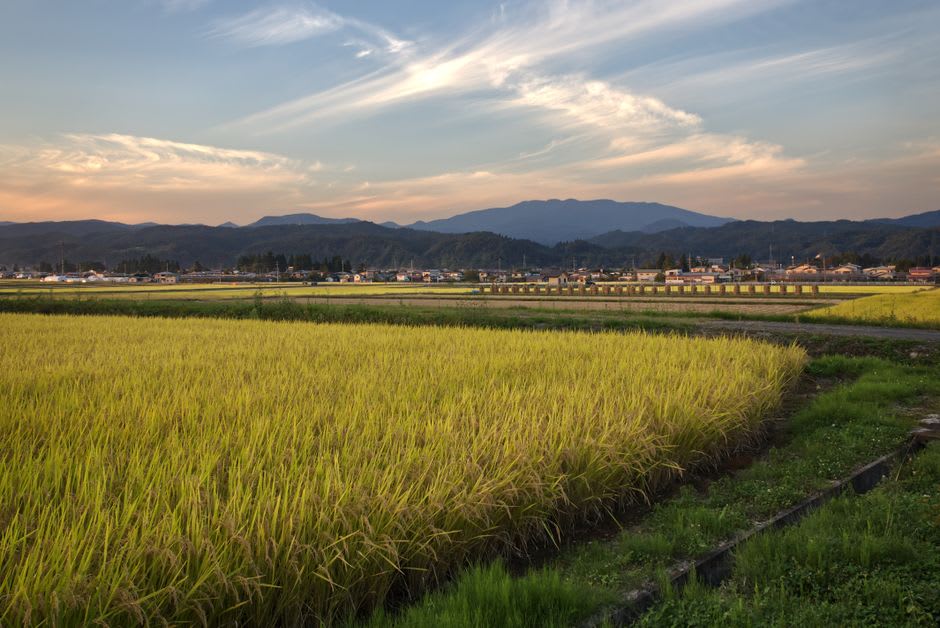
We came to Tsuruoka for the mountains and stayed for the food, which is the reverse of what I’d promised Lia when we boarded the train across the rice plain of Shōnai. She’d read that this quiet Yamagata town, out on the northwest shoulder of Tōhoku, had been named a UNESCO City of Gastronomy — the only one in Japan — and she wanted to know whether a place that rural could earn a title like that. It can. Tsuruoka turned out to be one of those towns where nobody performs for visitors, where the pilgrims heading up to the sacred peaks and the grandmothers selling mountain vegetables share the same slow rhythm, and where a bowl of something foraged that morning tells you more than any guidebook.
The Dewa Sanzan
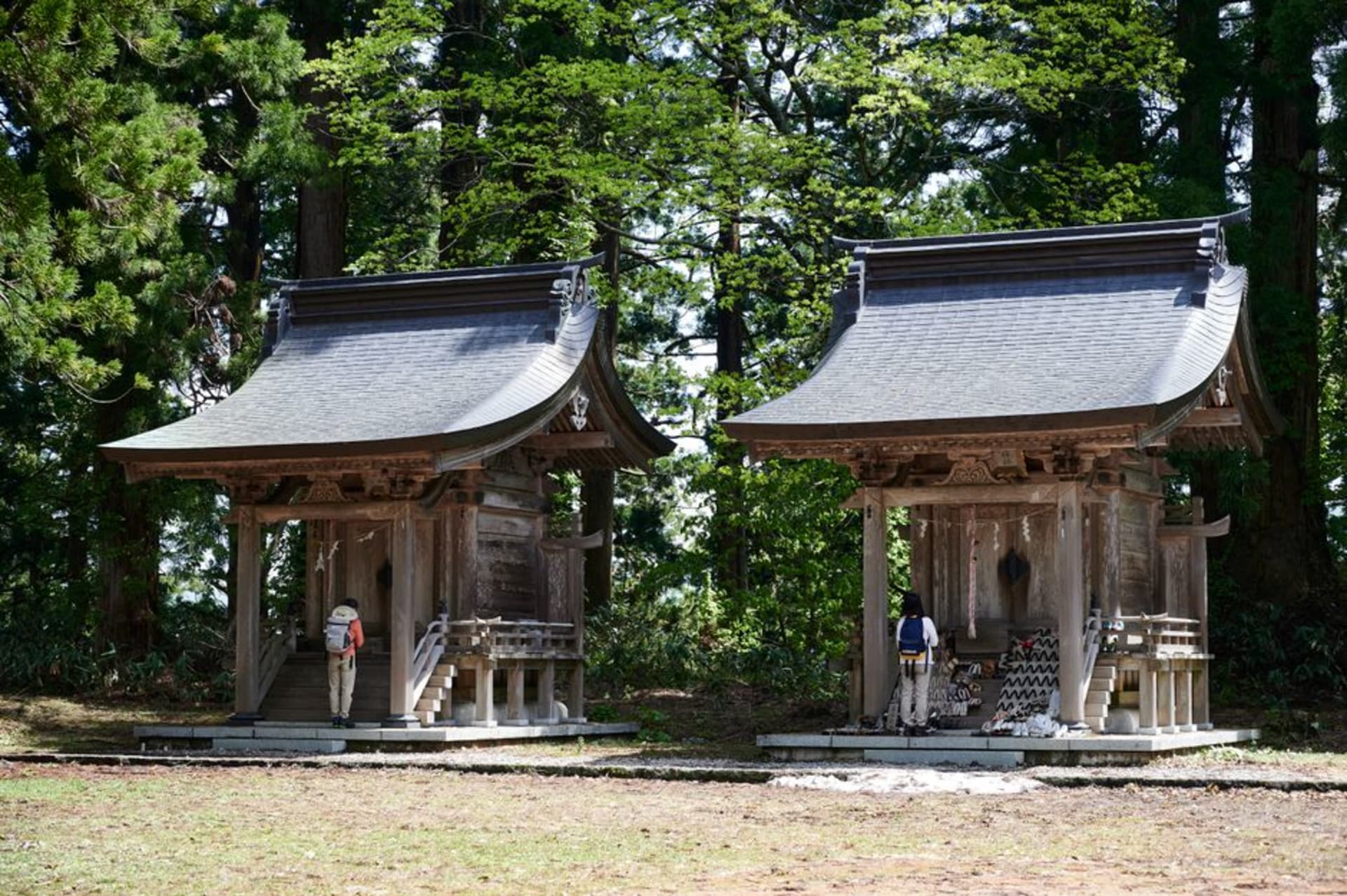
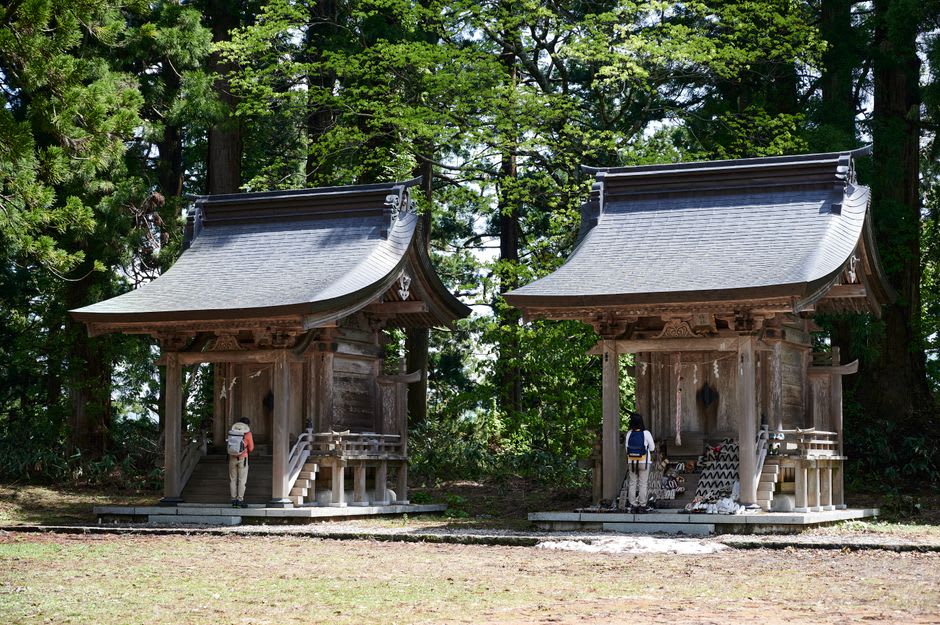
The three sacred mountains — Haguro, Gassan, and Yudono, together the Dewa Sanzan — have drawn pilgrims for over a thousand years, and Mount Haguro is the one you can reach even in the off-season. Lia and I climbed the stone staircase through the cedar forest, some two and a half thousand steps threading up between trunks so old and tall they turned the light green and cathedral-dim. Near the bottom stands a five-storey wooden pagoda, weathered to grey, utterly alone among the giant cedars — I have rarely seen a man-made thing sit so rightly in a forest. We passed white-clad pilgrims and a yamabushi mountain ascetic blowing a conch shell somewhere off in the trees. By the summit shrine, thatched in an impossibly thick roof, my legs were done and my head was quiet.
A City of Gastronomy
Back in town, the food made its case. Tsuruoka’s cooking is built on what the mountains and the plain give up through the year — sansai, the wild mountain vegetables, gathered in spring; and dadacha-mame, a local edamame so prized that people speak of it the way the French speak of a particular vineyard. We ate a set meal at a small place near the old castle grounds where nearly everything on the tray had a season and a story, and the owner walked us through each dish without a trace of hurry. This is shojin-influenced cooking, close to the temple-vegetable tradition the mountain ascetics keep, and it is not fussy — it is deeply local, a little austere, and completely delicious. Lia, who is harder to impress than I am, went quiet in the way she does when a meal is working on her.
Jellyfish by the Sea
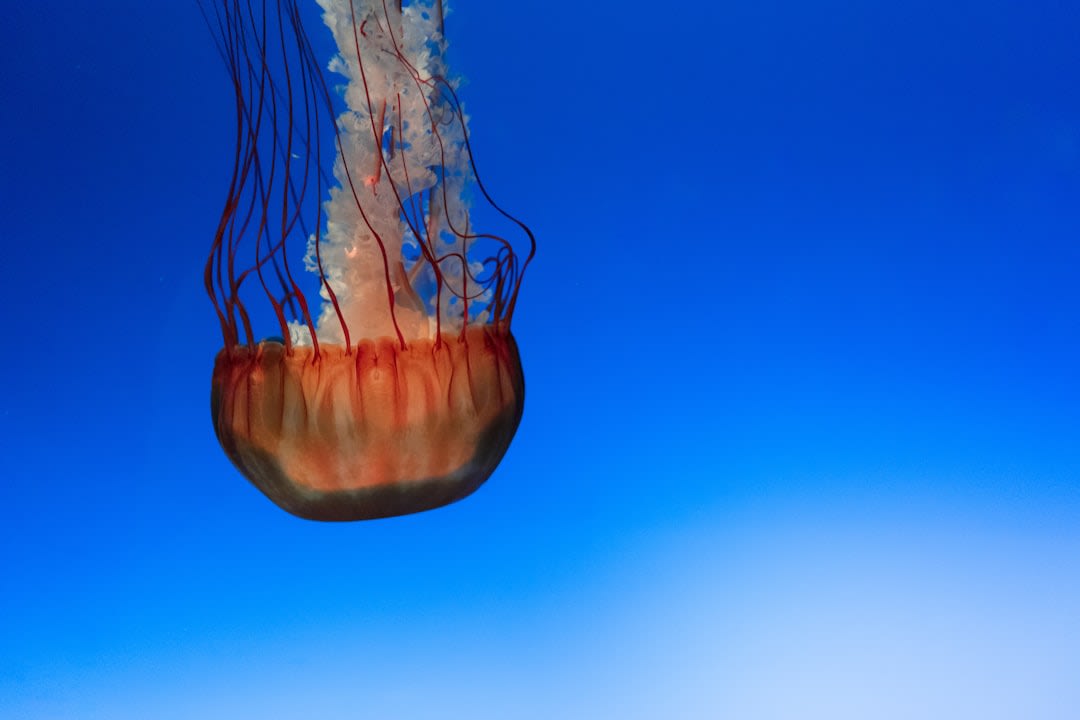
For something entirely different we drove out to the coast, where the Kamo Aquarium holds the largest collection of jellyfish in the world. I’d expected a modest local attraction and found instead a dark hall lit by enormous glowing tanks, moon jellies pulsing slow blue circles the size of a wall. We stood in front of the biggest one for far longer than either of us meant to, saying nothing, watching the creatures drift and fold. Outside, the Sea of Japan was grey and huge and cold-looking. There is something about Tsuruoka — the pilgrims’ mountains, the foraged food, the silent jellyfish — that keeps returning you to a slower gear, and by the end I’d stopped fighting it.
Getting There
Tsuruoka sits on the Sea of Japan coast in the Shōnai region of Yamagata, and reaching it takes a little commitment, which is part of why it stays unhurried. From Tokyo the simplest route is the Jōetsu Shinkansen to Niigata, then a limited express north along the coast, around four hours in total; there’s also Shōnai Airport nearby with flights from Tokyo. Buses from Tsuruoka station run up to Mount Haguro, and to reach Gassan or Yudono you’ll want the warmer months, as deep snow closes the higher peaks well into spring. Come in late summer for the dadacha-mame season, or in autumn when the cedar forest turns and the pilgrim trails are at their most beautiful.
Keep exploring
More of Tōhoku