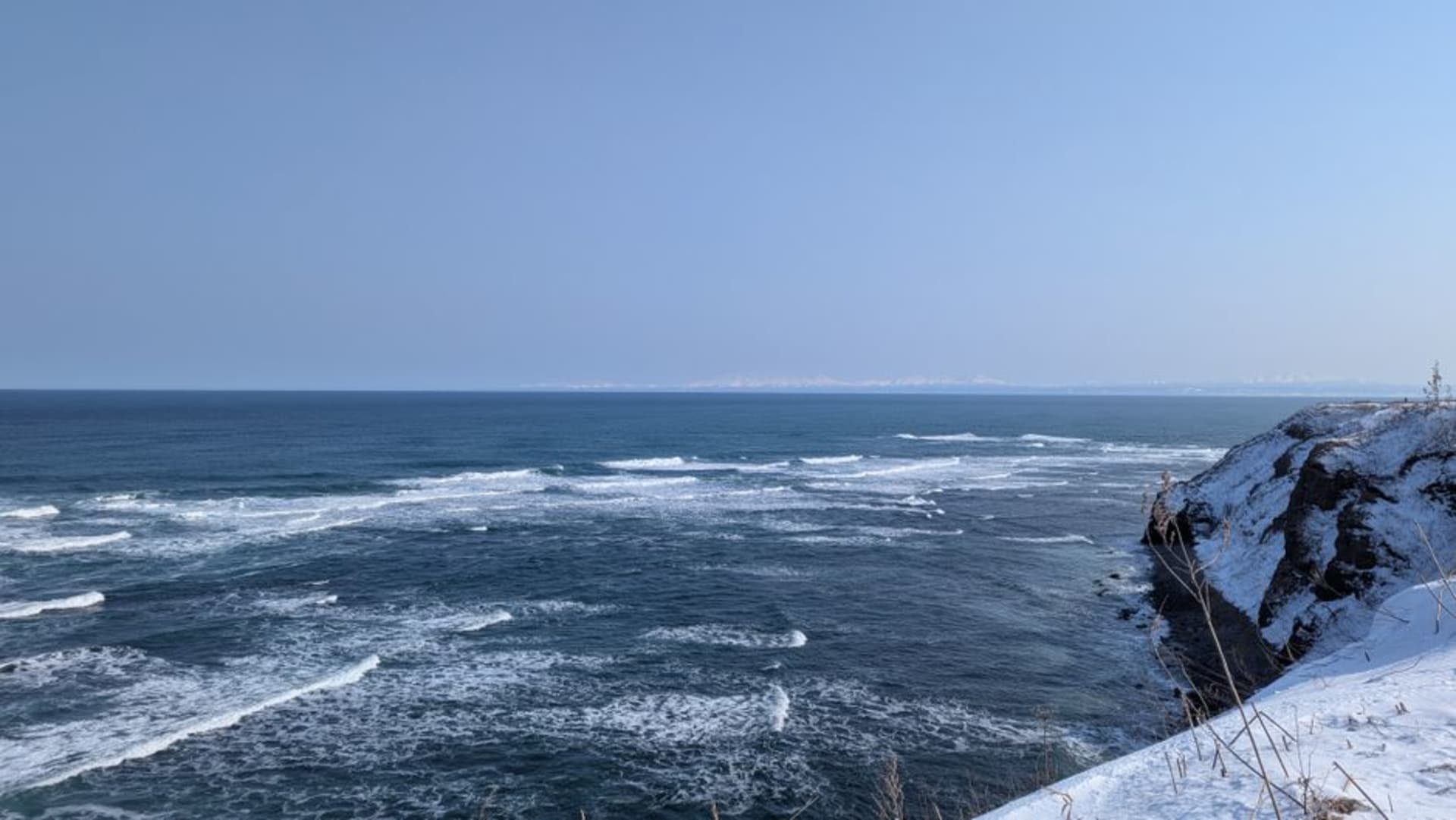
A hook of land thrown out into the Sea of Japan, the Oga Peninsula is all dramatic cliffs, spinning sunsets and the memory of demons. This is the home of the Namahage, the straw-cloaked ogres who once a year come down from the mountains to terrify the region's children into being good. We came to meet them, more or less.
There’s a photograph I keep coming back to from Oga: Lia standing at the foot of two enormous Namahage statues by the roadside, arms crossed, chin up, doing her best impression of a woman who is not at all intimidated by a fifteen-metre straw ogre. She was, a little. So was I. That’s rather the point of the Namahage — they’re meant to put a healthy fear into you — and on a peninsula this wild and wind-scoured, the folklore doesn’t feel like folklore so much as local weather.
The demons who come down the mountain
On New Year’s Eve, across the villages of Oga, men dress in bulging demon masks and thick straw capes and go house to house, stamping and roaring, “Are there any crybabies here? Any lazy children?” It sounds like a nightmare and is, gloriously, a UNESCO-listed act of love — a ritual to scare idleness out of the young and bless the household for the year. We couldn’t be there in winter, so we went to the Namahage Museum and the Shinzan shrine hall beside it, where a performer walked us through the whole terrifying visit, straw shedding across the floorboards. Up close, the masks are genuinely unsettling — carved, red, tusked. Lia said she’d have wept as a child. I said I probably still would.
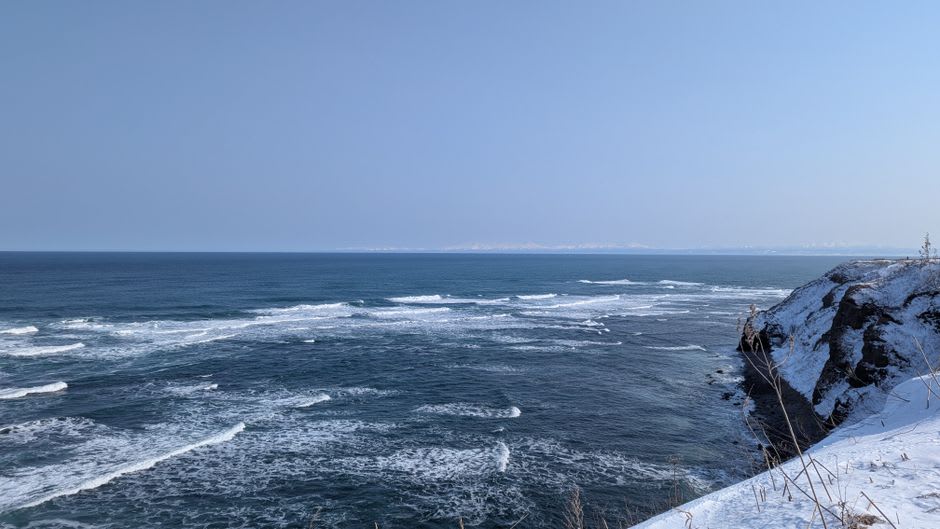
Cliffs, and a sea that never sits still
The peninsula itself is the other half of the story. We drove — you really want a car here — out to Cape Nyudo with its black-and-white lighthouse standing over a treeless headland, the grass flat with wind. Further round, the cliffs at Godzilla Rock and the Kankane coast drop straight into water that was, the day we visited, the colour of slate and thoroughly furious. This is the Sea of Japan at its most theatrical. We ate lunch out of the wind in the lee of a rock and watched a single fishing boat pitch its way home, and I understood why a place like this breeds legends about things that come out of the dark.
Sunset off the rim of the country
Oga faces west into open sea, which makes it one of the great sunset perches of Tōhoku. We found a spot near the cape and waited as the sky did the whole overwrought performance — orange, then a bruised violet, then a last hard line of gold along the horizon. A local couple had brought folding chairs and a thermos, clearly regulars, and the woman poured Lia a cup of something hot and plum-sour without a word of shared language passing between us. The sun went down into the sea with an almost audible hiss. Somewhere up in the hills, I liked to think, the demons were getting ready.
Getting There
Oga sits on the Sea of Japan coast of Akita Prefecture. Take the JR Oga Line from Akita Station to its terminus at Oga Station — about an hour — but be warned that the peninsula’s best sights are spread wide and served thinly by bus. Renting a car in Akita is by far the best plan, and turns the whole peninsula into an easy, spectacular day loop. The Namahage Museum and Shinzan hall are near Monzen on the south coast; Cape Nyudo is at the far northwestern tip. Come for the folklore any time, but the true Namahage rite is New Year’s Eve only.
Keep exploring
More of Tōhoku