
Nyūtō Onsen
"Milk-white water, black winter trees, and steam rising into the silence — I have never felt further from anywhere."
A cluster of secluded, centuries-old hot-spring inns hidden deep in the Akita mountains. Milky-white open-air baths steaming in the forest, thatched-roof ryokan warmed by irori hearths, and the feeling of having slipped clean out of the modern world.
Nyūtō Onsen is not really a place so much as a scatter of old inns tucked into the folds of the Akita mountains, at the end of a road that keeps climbing until the phone signal gives up and the forest closes over you. We had wanted, for the whole trip, one true hidden onsen — not a resort, not a town, but the real thing — and everyone who knew Japan well kept pointing us here. We came in the snow, which is the way it should be done, and when the little bus finally let us out at Tsurunoyu, the oldest of the inns, and I saw the thatched roofs bowed under white and the steam drifting up between the black trees, I actually laughed out loud. It looked three hundred years old because it very nearly is.
Tsurunoyu and the White Bath
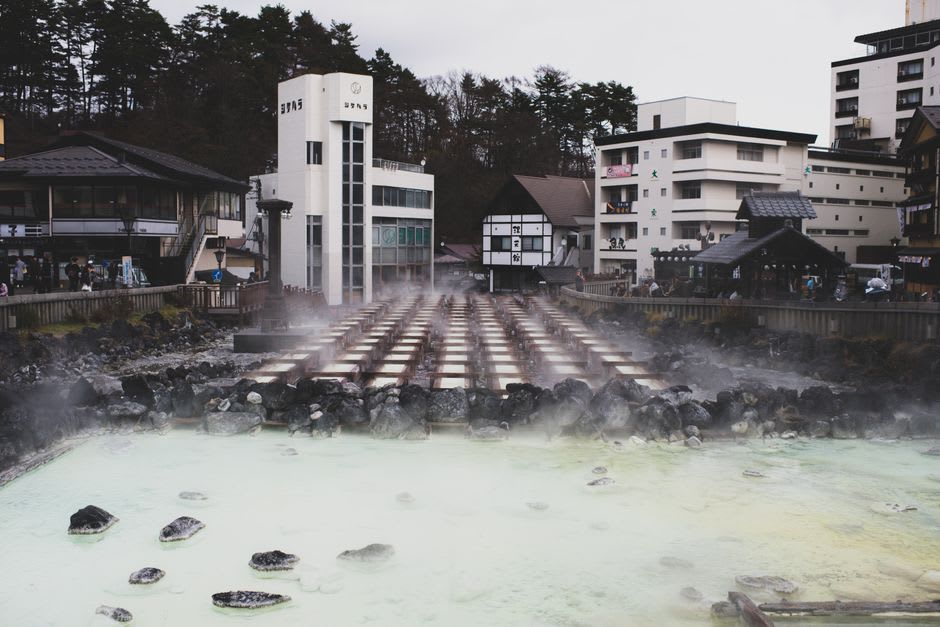
Tsurunoyu dates back to the seventeenth century, when it served lords of the Akita domain, and it has changed astonishingly little. Our room was in a long, low thatched building, dark timber and paper screens, warmed by an irori — a sunken hearth with a fire in it — where an old iron kettle hung and hissed. The famous bath is the mixed open-air one out front, fed by a spring that turns the water an opaque, chalky milk-white, so cloudy you cannot see your own hand a few inches down. We soaked at dusk with snow falling into the steam, the water hot and faintly sulphurous, ringed by the black shapes of the trees. There is a modesty to it, everyone wrapped or moving quietly, and a deep gentleness. Lia leaned her head back against the stone edge, snowflakes melting in her hair, and said very softly that she didn’t want to leave. I understood completely.
An Evening by the Hearth
Dinner at Tsurunoyu is served in a communal room around the irori hearths, and it was one of the best meals of the trip precisely because it was so rooted in this cold mountain valley. Skewers of yamame, a river fish, stood angled around the fire, cooking slowly in the smoke; there was a mountain-vegetable hotpot, imoni stew heavy with taro and burdock, pickles, rice, all of it grown or foraged nearby. The fire threw its light on the low ceiling black with three centuries of smoke. We ate slowly, warmed from both the food and the coals, and talked to a retired couple from Sendai who came here every winter and told us the valley looked exactly the same as it had on their honeymoon forty years before. Outside, the snow kept falling. There was no television, no hurry, nothing to do but be warm and full and present.
Walking Between the Inns
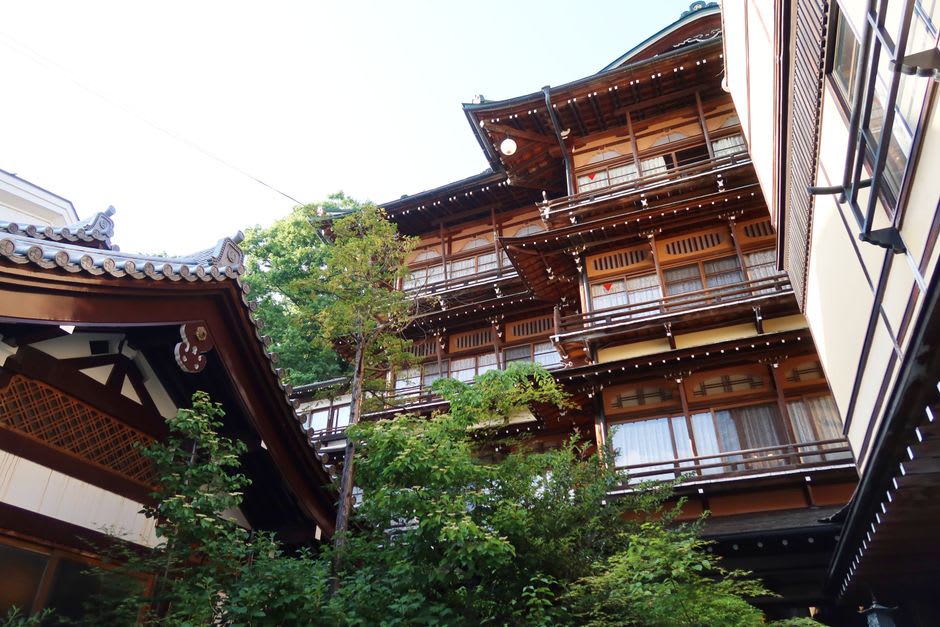
There are seven inns in the Nyūtō cluster, each with its own spring and its own character, and guests can buy a wooden pass, the yumeguri-chō, that lets you bathe your way around all of them. We spent a whole day doing exactly this, walking the snowy forest paths from one to the next — Ganiba, Kuroyu, Taenoyu with its bath looking out at a waterfall — trying each different water, some milky, some clear, some iron-red, all of it drawn straight from the mountain. Between baths we crunched through deep snow under tall beech and cedar, seeing almost no one, the only sound the muffled hush of a forest under white and the occasional soft collapse of snow off a branch. It felt like a pilgrimage of the most pleasant possible kind. By the last bath the light was going blue, and Lia and I walked back to Tsurunoyu pink-cheeked and thoroughly, blissfully undone.
Getting There
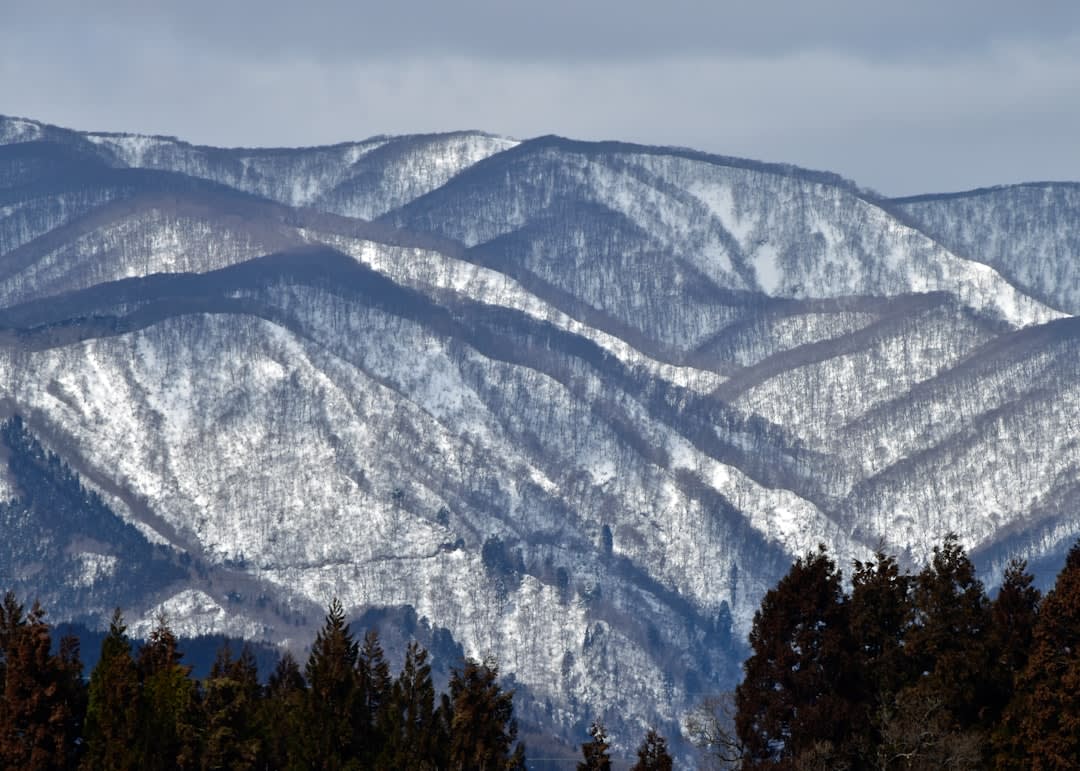
Nyūtō Onsen is genuinely remote, which is its whole appeal, but it is reachable. Take the Akita Shinkansen to Tazawako station, the gateway for the area, which is around three hours from Tokyo. From Tazawako, local buses run up toward Lake Tazawa and on into the mountains to the Nyūtō Onsen inns; the ride climbs steadily for about fifty minutes to an hour, and in deep winter some inns arrange a pickup from the nearest bus stop. Book your ryokan well ahead, especially Tsurunoyu, which fills months in advance for the snowy season. Come in winter for the snow-framed baths if you can bear the cold, or in autumn when the beech forest turns gold. Bring cash, warm clothes, and no expectation of a phone signal.
Keep exploring
More of Tōhoku