
Morioka
"Fifteen bowls in, Lia surrendered, and the waitress looked frankly disappointed in us both."
A relaxed Iwate castle city set where two rivers meet below the volcano Iwate, famous for the theatre of wanko-soba, chewy jaja-men noodles, and the cast-iron nanbu ironware that has been forged here for four centuries. An easy, unhurried place we didn't want to leave.
Morioka arrived on a list once of the world’s places worth going to, and I remember being pleased in a proprietary way, because we’d already fallen for it and hadn’t expected anyone else to notice. It is not a spectacular city. It has no single unmissable sight. What it has is a mood — a river-crossed, mountain-backed, easygoing calm that made us cancel our onward train and stay an extra two nights. We’d come in on the Shinkansen meaning only to break the journey north, and instead we spent the first evening just walking the embankment where the Nakatsu and Kitakami rivers meet, watching the light go off the water and the great cone of Iwate turning pink behind the rooftops, and Lia said, in the tone she uses when a plan is about to change, that she liked it here.
Where the rivers meet
The old castle is mostly gone — the keep pulled down long ago — but its stone ramparts survive as a park in the middle of town, moss-dark and handsome, and from the top you get the whole layout of the place: the rivers braiding together, the low mountains, and Iwate itself, a near-perfect volcanic cone that the locals call Nanbu Fuji. We climbed the castle stones on a cold bright morning and had them almost to ourselves. Beside one of the bridges stands a famous rock, the Ishiwarizakura, a cherry tree that took root in a crack and slowly split a five-tonne boulder in two as it grew — a favourite of the town, ringed by a little fence, quietly heroic. Lia loved it more than anything grander we saw.
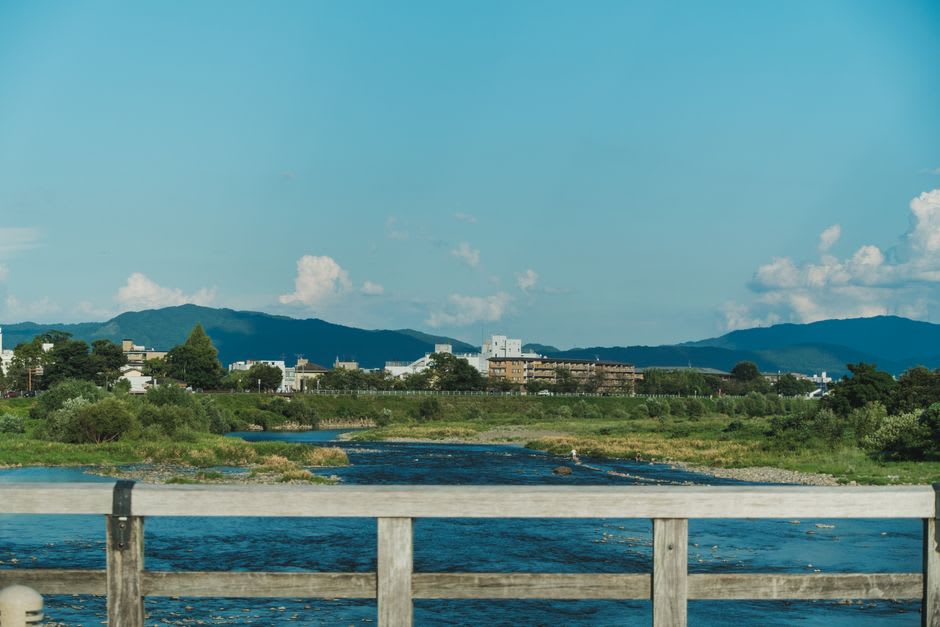
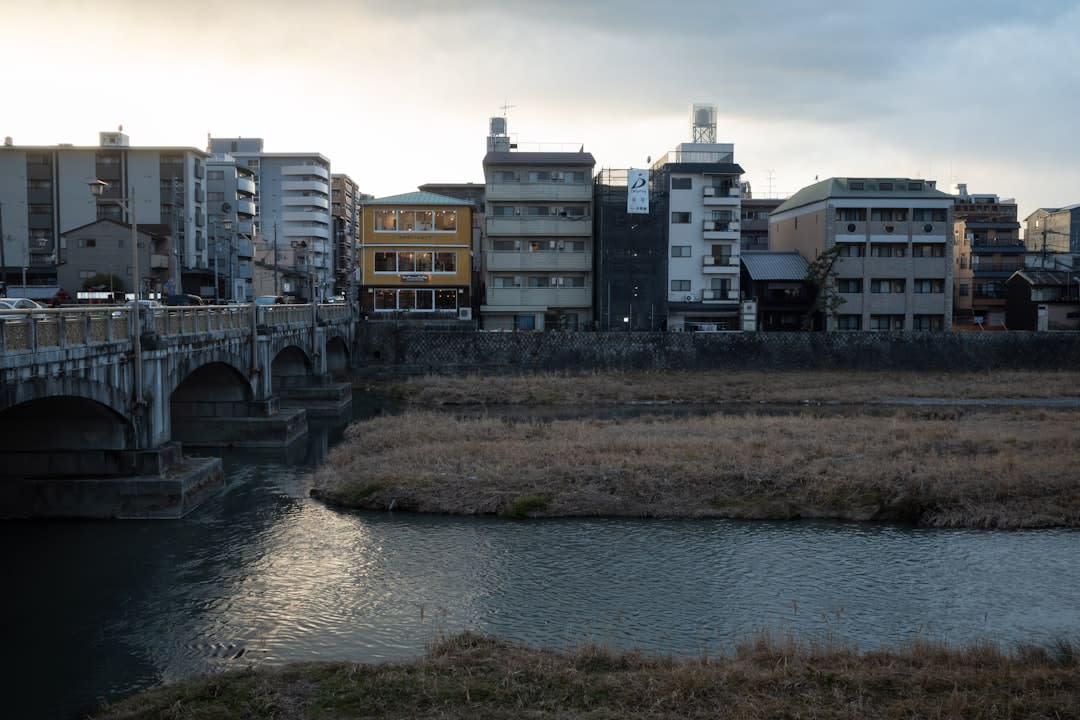
We walked the riverbanks twice a day while we were there. It is that kind of city — one that gives you a good walk and asks nothing back.
The noodle theatre
Morioka takes noodles seriously, in three distinct and slightly competitive forms, and we set out dutifully to try all of them. Wanko-soba is the famous one, and it is less a meal than a sport: a waitress stands at your shoulder and tips tiny portions of soba into your bowl one after another, calling encouragement, and the instant you empty it she refills it, and the only way to stop is to slam the lid down fast enough. Lia managed fifteen bowls and quit; I limped to twenty-six and felt no pride, only fullness. Then there’s jaja-men, flat chewy noodles under a rich meat-and-miso paste that you mix yourself, cracking a raw egg into the leftover bowl at the end for a soup. And reimen, cold and springy and Korean-descended, a legacy of the city’s history.
We argued cheerfully for the rest of the trip about which was best. Lia held for jaja-men. I’ve come, over time, to think she was right.
Iron and craft
The thing I carried home from Morioka was heavy and black and beautiful. Nanbu tekki — the cast ironware of this region — has been forged here for some four centuries, since the local lords brought kettle-makers to the castle town, and the workshops still turn out iron teapots and kettles pebbled with that distinctive dimpled texture, prized for the way they soften water and hold heat. We spent a slow hour in a shop near the old town where an artisan let us handle pieces still warm in feel from the forge, and I bought a small tetsubin kettle that now sits on our stove and will, I suspect, outlive us both. The weight of it in the shop bag on the train felt like ballast, like we’d taken a piece of the city with us.
We had coffee our last morning in an old kissaten with dark wood and jazz playing low, the kind of café Morioka has in quiet abundance, and neither of us wanted to get on the train.
Getting There
Morioka is a straightforward two hours and a bit from Tokyo on the Tōhoku Shinkansen, and it’s a natural hub — the line splits here, one branch running on to Aomori and another, the Akita Shinkansen, peeling off west toward the coast. The compact centre is walkable from the station across the river, and the old town, the ironware shops, and the castle park are all within an easy stroll. Any season suits it, but late spring, when the boulder-splitting cherry blooms, and autumn, when Iwate wears its first snow above the coloured hills, are the loveliest. Give it more than the single night we’d planned; the city rewards the extra day.
Keep exploring
More of Tōhoku