Lake Inawashiro
"The swans arrived from Siberia; we arrived from Koriyama. We were all just standing on the ice, admiring the mountain."
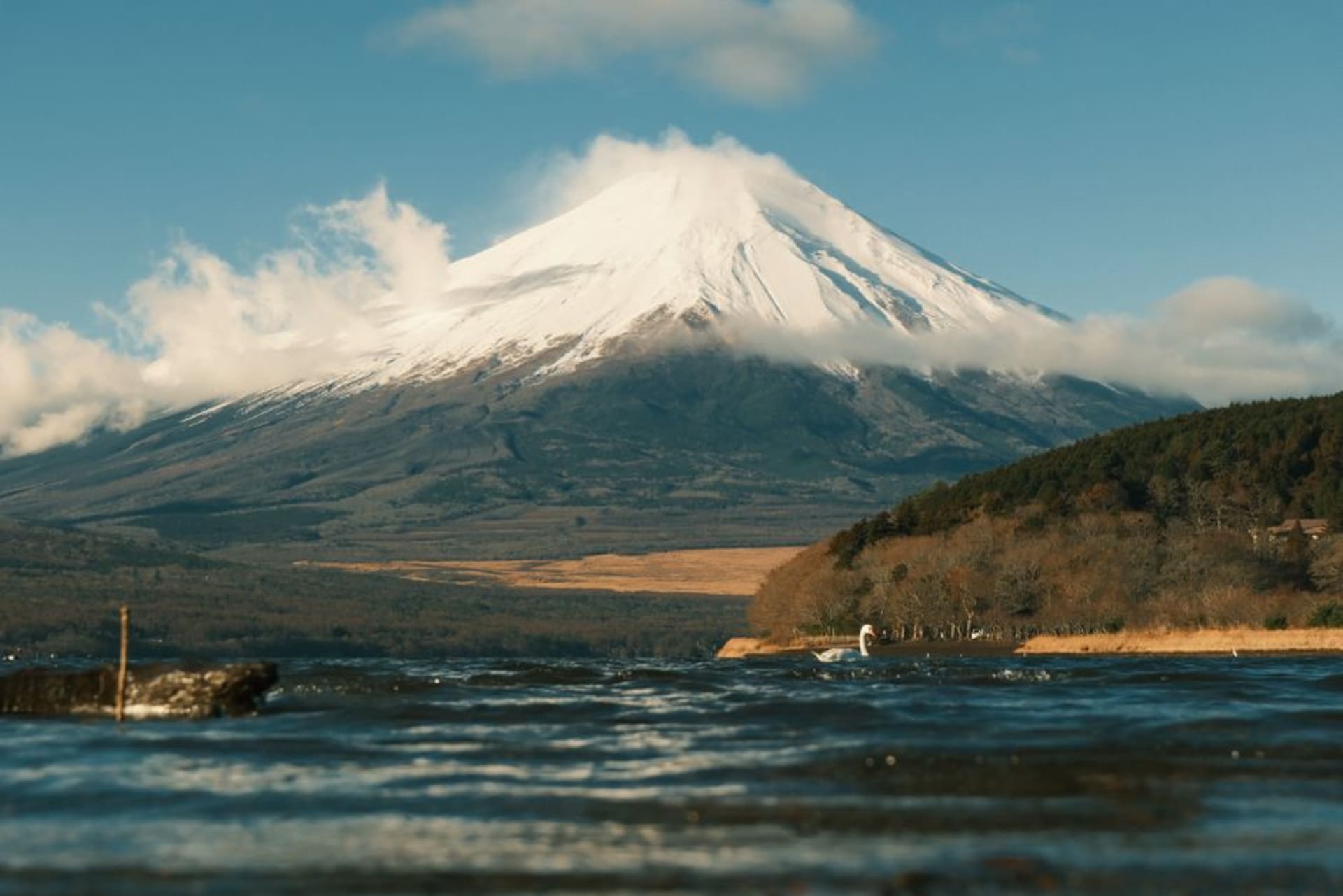
Fukushima's great mirror lake, wide and pale under the perfect cone of Mount Bandai. In winter hundreds of swans come down to its edge and the shallows freeze into strange lacework. We came for the reflection and found ourselves standing on a beach full of swans in the snow.
Lake Inawashiro is enormous — the fourth-largest lake in Japan — and on the still winter morning we visited it lay so flat and pale it was hard to tell where the water ended and the sky started. The locals call it Tenkyoko, the mirror-sky lake, and standing on its northern shore with Mount Bandai floating upside-down in the shallows, I understood the name in one glance. Then a swan honked somewhere to our left, and I remembered we hadn’t actually come for the reflection at all.
The mountain and its mirror
Mount Bandai is the reason the lake photographs the way it does. It rises just to the north, a clean volcanic cone with one side blown away by an 1888 eruption, and on a windless day the whole thing reproduces itself in the water with almost embarrassing perfection. We walked a stretch of the northern shore where the beach is coarse volcanic sand, and every few metres the view rearranged itself — Bandai framed by a bare tree, then by a fishing jetty, then by nothing at all, just mountain and mirror. Lia, who claims not to care about landscapes, took forty photographs and pretended she hadn’t.
The swans of Shiromigahama
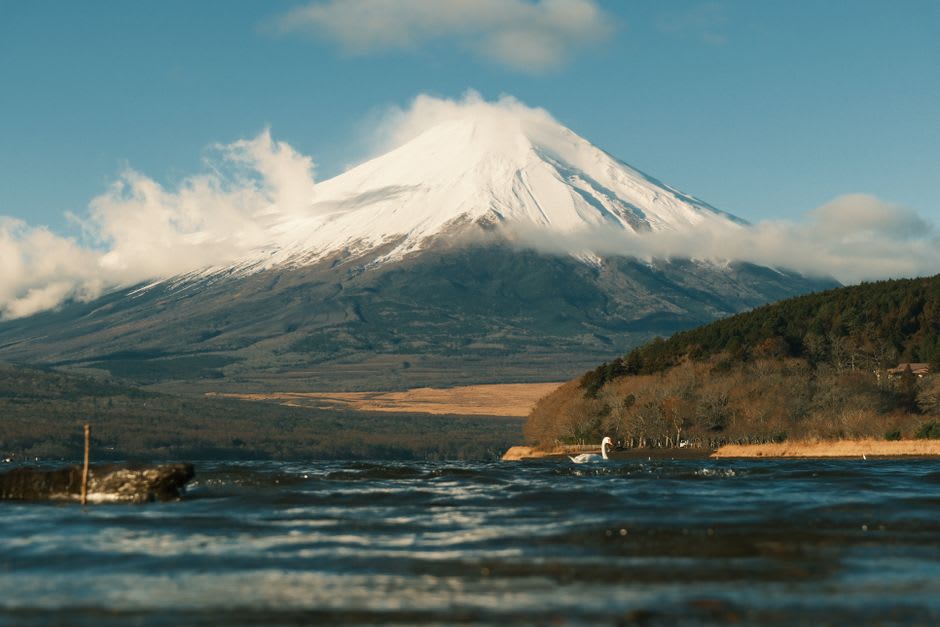
From late autumn into winter, whooper swans fly down from Siberia and settle on Inawashiro’s shallows, and the best place to meet them is Shiromigahama beach on the northern shore. There must have been two hundred of them the morning we came — great white birds paddling in the half-frozen shallows, hauling themselves onto the ice on comically large feet, calling to each other in that mournful bugle. You can stand very close. One waddled up the sand toward Lia with the frank confidence of a bird that has learned humans mean bread, and she crouched down to its level and the two of them regarded each other for a long, absurd, wonderful moment. I have a photograph of it that I love more than any of the mountain.
Hideyo Noguchi and the frozen edge
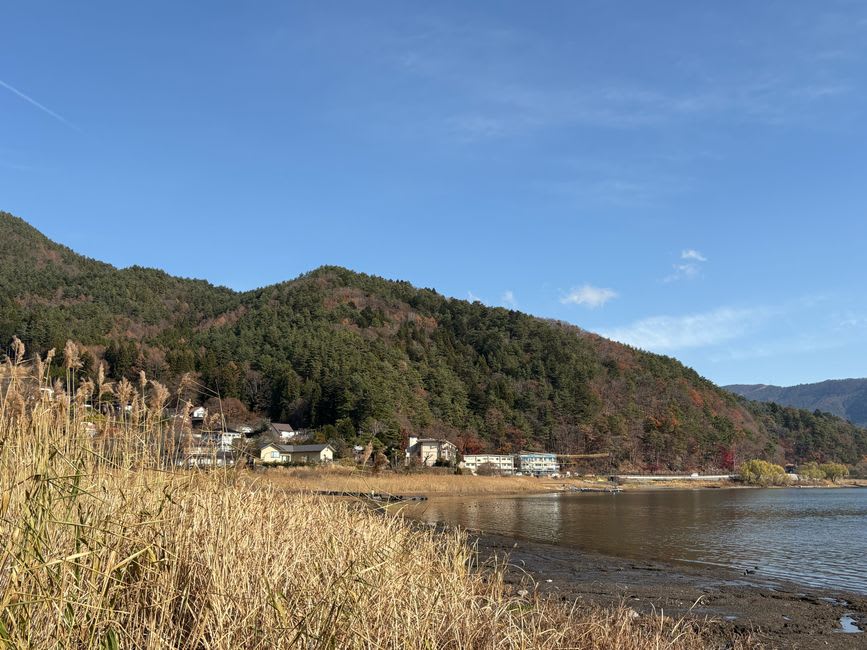
Inawashiro is also the birthplace of Hideyo Noguchi, the bacteriologist whose face is on the thousand-yen note, and his preserved childhood farmhouse sits near the lake with its famous hearth where he burned his hand as a baby. We ducked in mostly to warm up, and stayed for the strange intimacy of the low dark rooms. Afterward we walked back to the shore as the light dropped, and watched the shallows begin to skin over with new ice, the swans black silhouettes now against a pewter lake. It was cold enough that our fingers stopped working, and neither of us wanted to leave. Some places give you a single perfect image; Inawashiro gave us a mountain, a mirror, and a beach full of swans, and asked for nothing back.
Getting There
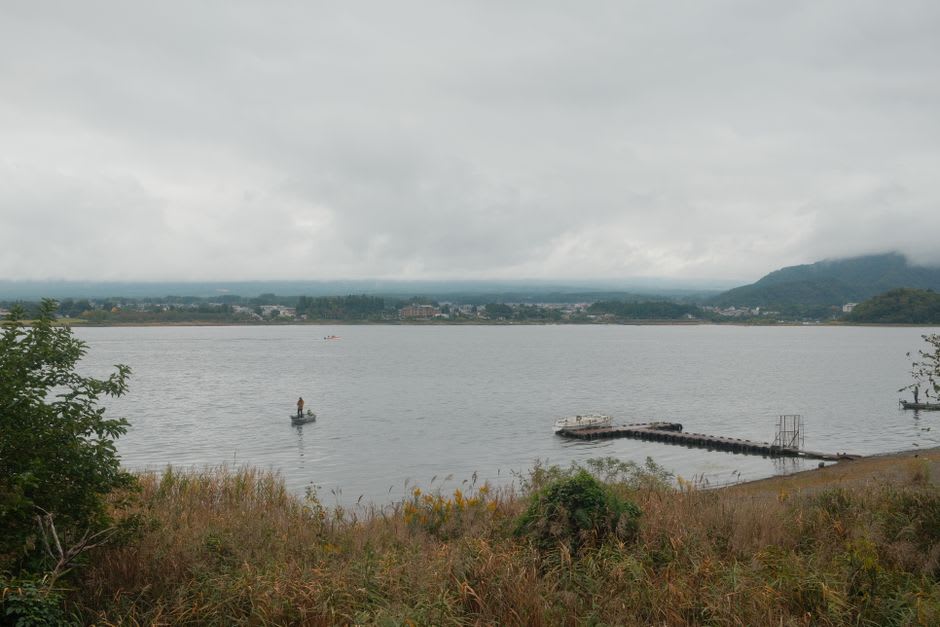
Lake Inawashiro sits between Koriyama and Aizu-Wakamatsu in central Fukushima. Take the JR Ban’etsu West Line to Inawashiro Station; from there it’s a short bus or taxi to the northern shore and Shiromigahama beach where the swans gather. A car makes it far easier to reach the quieter viewpoints and to combine the lake with nearby Goshikinuma and Mount Bandai. For the swans and the clearest mirror, come November through February and go early, before the wind picks up.
Keep exploring
More of Tōhoku