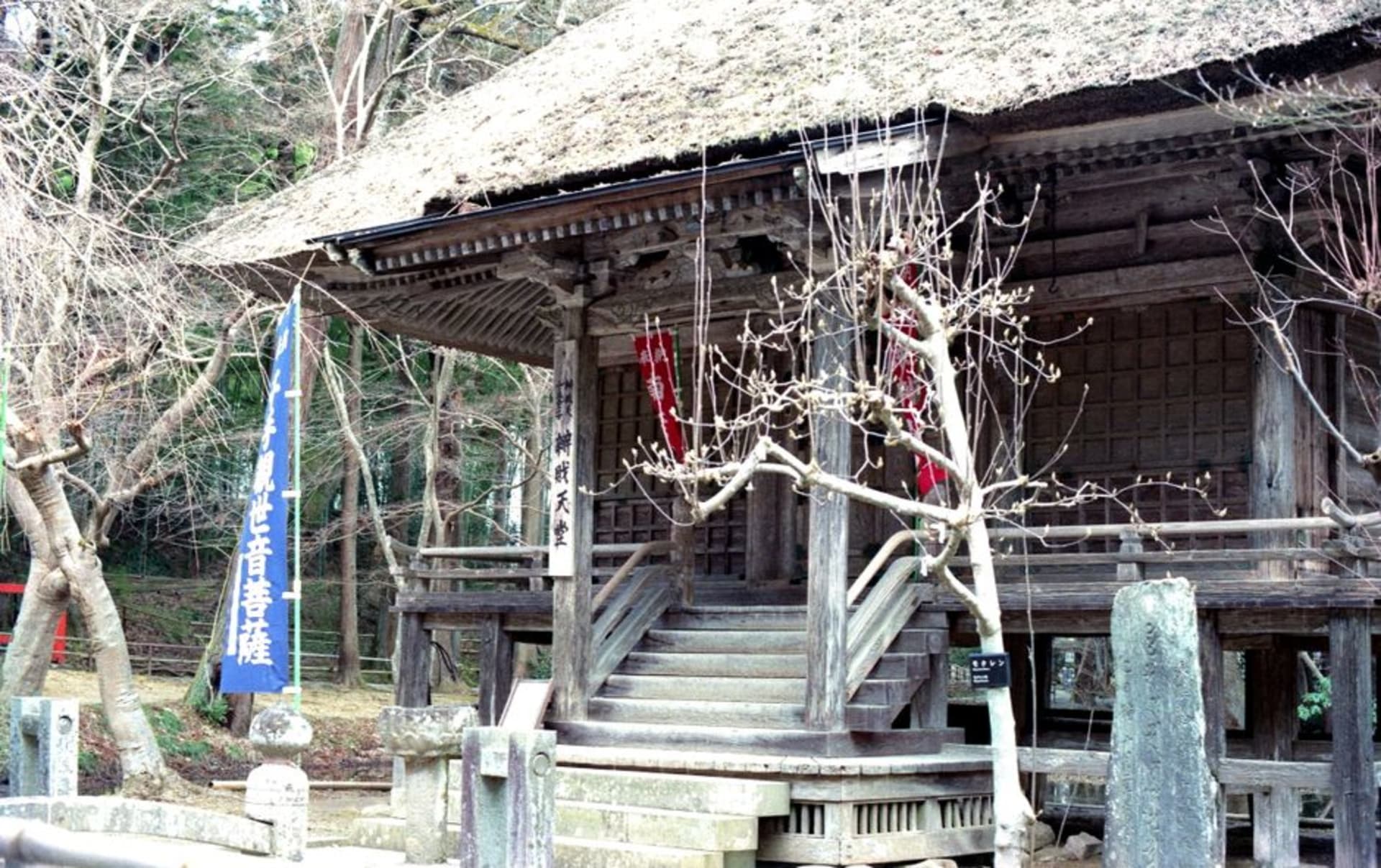
Hiraizumi
"A whole golden hall, Lia whispered, built for people who thought paradise looked like this."
A vanished northern capital in the Iwate hills, where a hall of solid gold leaf survives under glass and a Pure Land garden still mirrors the paradise its builders longed for. A UNESCO site that whispers rather than shouts.
Hiraizumi is a place that asks you to imagine what isn’t there. A thousand years ago this quiet Iwate town was a rival to Kyoto — the seat of the Northern Fujiwara, a golden city of temples and gardens grown rich on the region’s gold mines, a capital in the far north that dazzled everyone who reached it. Then it was burned and abandoned, and the paddies grew over most of it, and what remains is a scatter of survivors among the cedars. We came partly because the poet Bashō had stood here five centuries ago and wept over the vanished glory, writing the lines every Japanese schoolchild knows. Standing in the same fields, Lia read them aloud from her phone, and the smallness of the town against the size of what it had been sat with us all afternoon.
The golden hall
The one thing that survived the fire whole is the thing worth crossing the country for. Chūson-ji’s Konjikidō — the Golden Hall — is a small pavilion built in 1124 and covered, every surface of it, in gold leaf, its pillars inlaid with mother-of-pearl and lacquer, the whole thing enshrining the mummified remains of the Fujiwara lords beneath. For nine centuries it has been kept under a protective structure, and today it stands behind glass in a climate-controlled hall, glowing softly in the dim. We climbed the long cedar-lined slope to reach it, breath fogging in the cold, and when we came into the darkened room and the hall appeared, lit gold against black, Lia actually stopped walking. It is not large. It does not need to be.
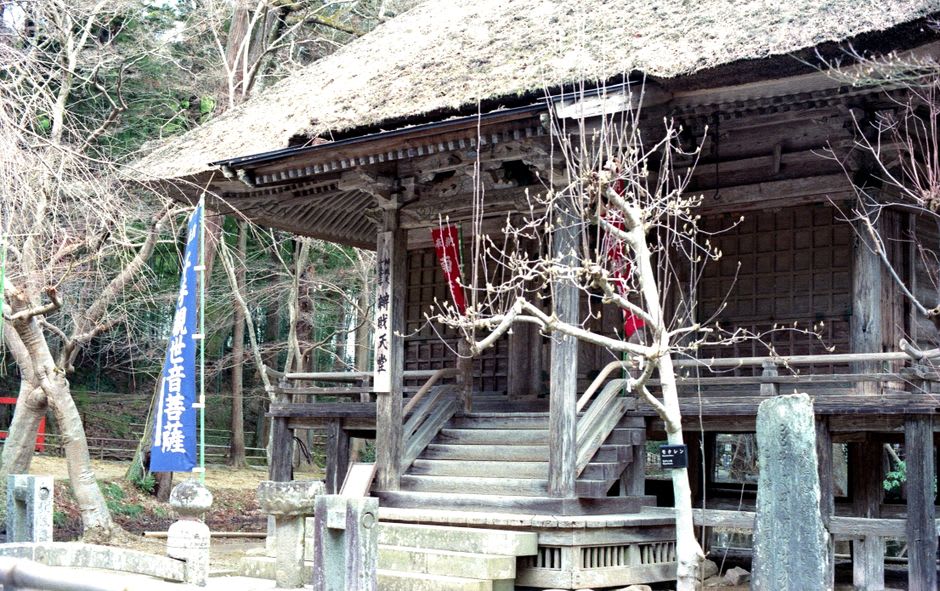
The rest of the mountain temple spreads out under enormous cedars, sub-halls and a sutra repository and a small pond, everything hushed by the trees.
Pure Land in a garden
Down on the plain sits Mōtsū-ji, and it survives in the opposite way — the temple buildings are gone, but the garden remains, and it is one of the last true Pure Land gardens in Japan. The idea was to build, here on earth, a physical image of the Buddhist paradise: a wide still pond with an artful shoreline, islands and a shingle beach and a stone set to look like a boat’s prow, arranged so that walking it would carry you, symbolically, toward enlightenment. We walked the full loop slowly. There is a small winding stream in the grounds where, once a year, poets float cups of sake and compose verses before the cup drifts past — an elegant, faintly absurd tradition that has run for centuries. Lia said she’d have been terrible at it and would have loved every second.

We sat on the grass at the water’s edge and ate rice balls we’d bought at the station, and for a long while neither of us felt any need to move.
Walking the vanished city
What I loved most about Hiraizumi was how much of it you have to build in your own head. Between the two great temples the land is just fields and low hills, but markers stand where the palaces and the great garden of Muryōkō-in once were, its outline still faintly readable in the earth. We rented bicycles and rode the quiet lanes between the sites, past rice paddies and old farmhouses, the hills of Takadachi rising where the warrior Yoshitsune made his last stand — the very spot that moved Bashō to his famous verse about summer grasses and the dreams of vanished soldiers. It is a strange, moving thing to cycle through farmland knowing a golden city once stood exactly here.
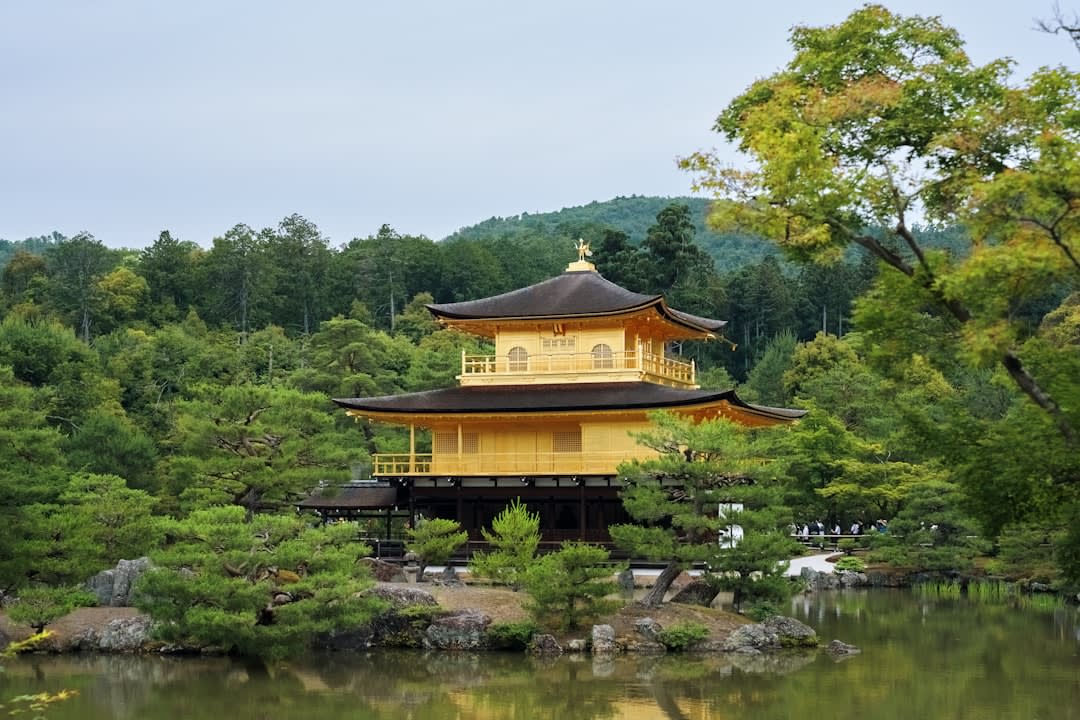
We ate wanko-soba nearby that evening, the little bowls stacking up, and toasted a city we’d only ever seen in our imaginations.
Getting There
Hiraizumi lies on the Tōhoku Shinkansen line, though the fast trains don’t stop there directly — take the Shinkansen to Ichinoseki, then a local train two stops north, about eight minutes, and you’re in the town. From Tokyo the whole trip runs close to three hours. The two great temples sit a couple of kilometres apart, walkable but better linked by the loop bus or a rented bicycle from near the station. Autumn, when the cedars and maples of Chūson-ji glow, is the finest season, though the Golden Hall shines the same in any weather. Give it an unhurried full day; this is a place that rewards slowness.
Keep exploring
More of Tōhoku