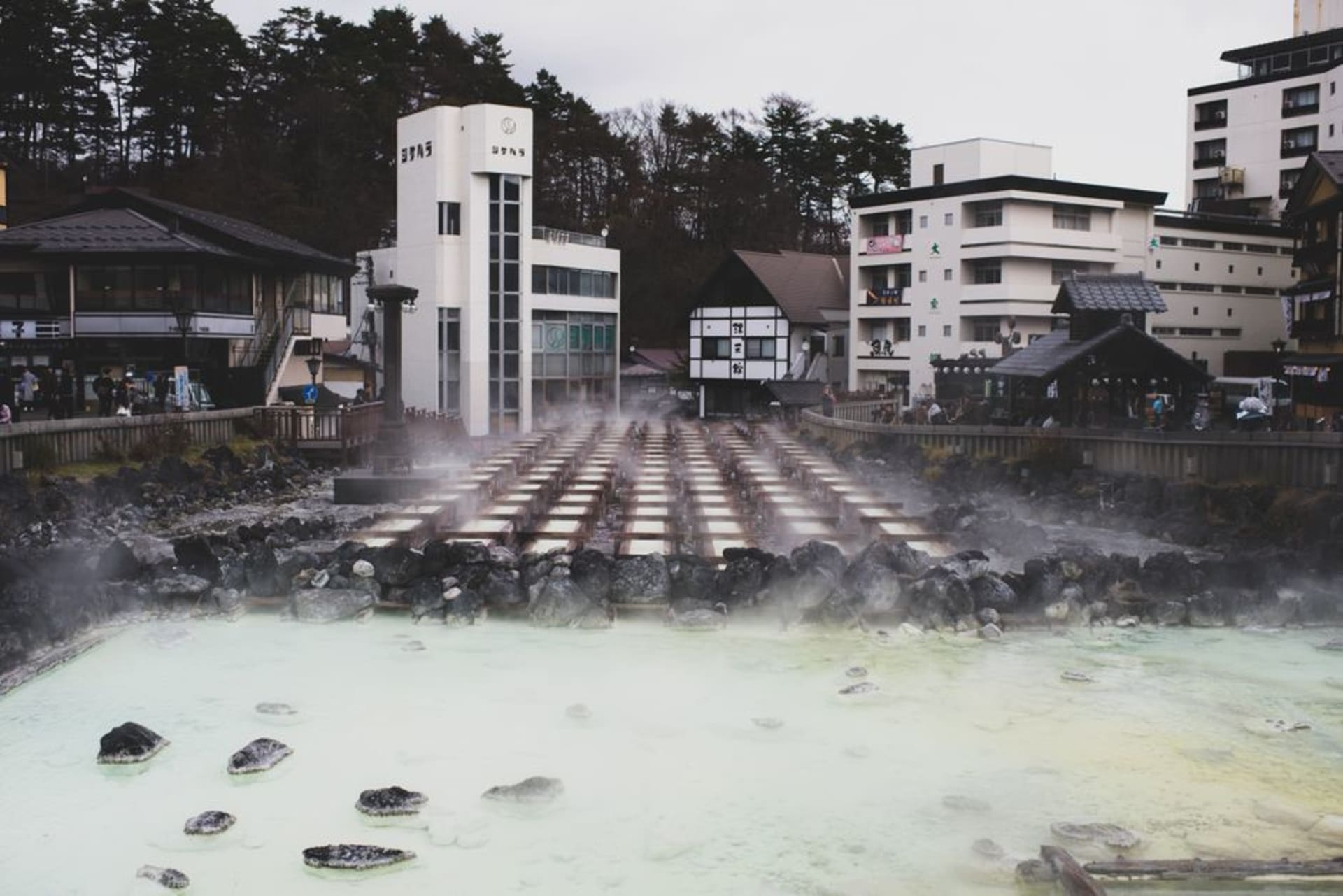
An Iwate hot-spring town that gave the world Miyazawa Kenji — poet, teacher, dreamer of a private utopia he called Ihatov. The onsen are old and generous, the countryside soft and wide, and the whole place seems half-lit by one gentle man's imagination. It's quiet in a way that gets under your skin.
I’ll confess I hadn’t heard of Miyazawa Kenji before this trip, and by the time we left Hanamaki I felt I’d made a friend. The town spreads across a green basin in central Iwate, ringed by soft mountains, threaded with hot springs and rice fields, and it is bound up completely with the memory of one man — a poet and agricultural teacher who died young in 1933 and imagined a idealized version of this very landscape he named Ihatov. Lia found a slim book of his in English at the station shop and read me a poem on the bus out to the onsen, and I’ve thought about it since. Hanamaki is that kind of place. It seeps in slowly.
The world of Kenji
We spent a whole morning on the hill at the Miyazawa Kenji Memorial Museum, which sounds dutiful and was anything but. Kenji wrote “Night on the Galactic Railroad” and dozens of strange, luminous tales for children, and the museum lays out his crowded mind — geology, Buddhism, Esperanto, astronomy, farming, music — as a single connected wonder. Outside, paths wind through gardens he might have recognized, and the view opens across the plain he loved and tried to lift out of poverty. Lia stood at the overlook a long time. “He wanted the whole world to be happy and he could barely feed himself,” she said, which is about the size of the man. We walked down the hill in a thoughtful silence that felt earned.
Soaking at the old inns
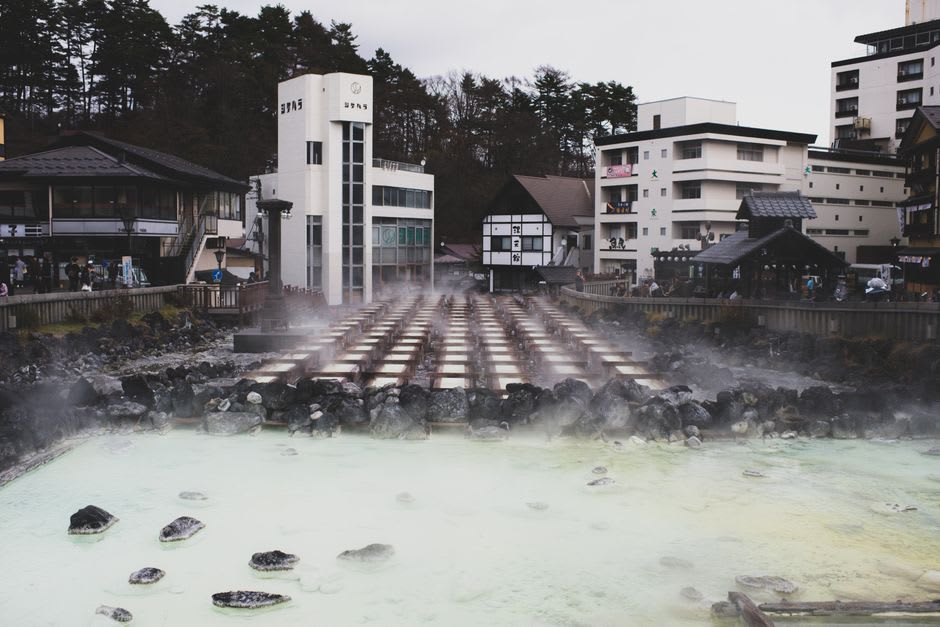
Hanamaki’s hot springs are its other glory, scattered up the valleys west of town. We stayed a night at Osawa Onsen, a rambling wooden inn parts of which are well over a century old, with a mixed open-air bath right beside the river. The floorboards sloped, the corridors creaked, and the water was silky and clear and gloriously hot. I sat in the river-side bath at dusk while the current ran loud a few feet away and the first stars came out over the ridge, and understood something about why Kenji stayed here. Lia joined the women’s side and we met back at the room grinning like children, skin pink, entirely undone by heat and quiet. Dinner was mountain vegetables and river fish, plain and perfect.
Dairyu-kyo and the wide country
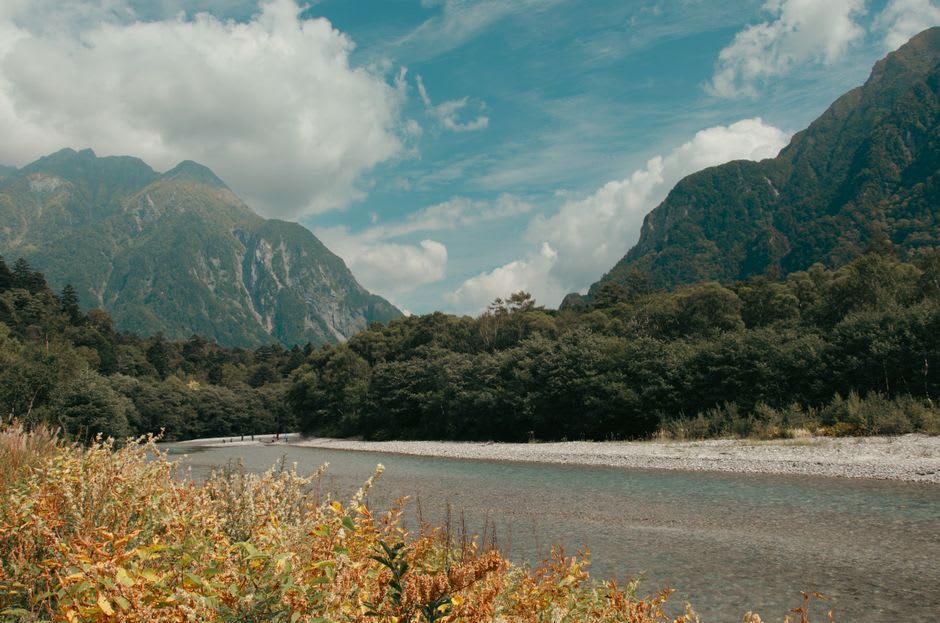
On our last day we took the train a few stops and walked out to Dairyugakyo, a small gorge where the river has carved smooth channels through the rock, quiet trails running along both banks under the trees. It’s not dramatic in the way of the famous gorges — no red bridge, no crowds — just clear water and dappled light and the sound of it moving. We ate onigiri on a flat rock and watched dragonflies work the surface. That’s really the note Hanamaki plays: not spectacle but a kind of tender ordinariness, the countryside a gentle man once tried to turn into paradise. Lia said she understood, now, why he’d bothered. So did I.
Getting There
Hanamaki is in central Iwate, on the Tohoku Shinkansen at Shin-Hanamaki Station — roughly three hours from Tokyo. From there a local train hops one stop to Hanamaki Station near the center, while the Kenji museum and the onsen valleys are reached by local bus. Osawa and the other hot-spring inns run shuttle services from Shin-Hanamaki if you ask when booking. There’s also a small airport with flights from Osaka and elsewhere. Give it two unhurried days; this is a town that punishes a rushed visit and rewards a slow one.
Keep exploring
More of Tōhoku