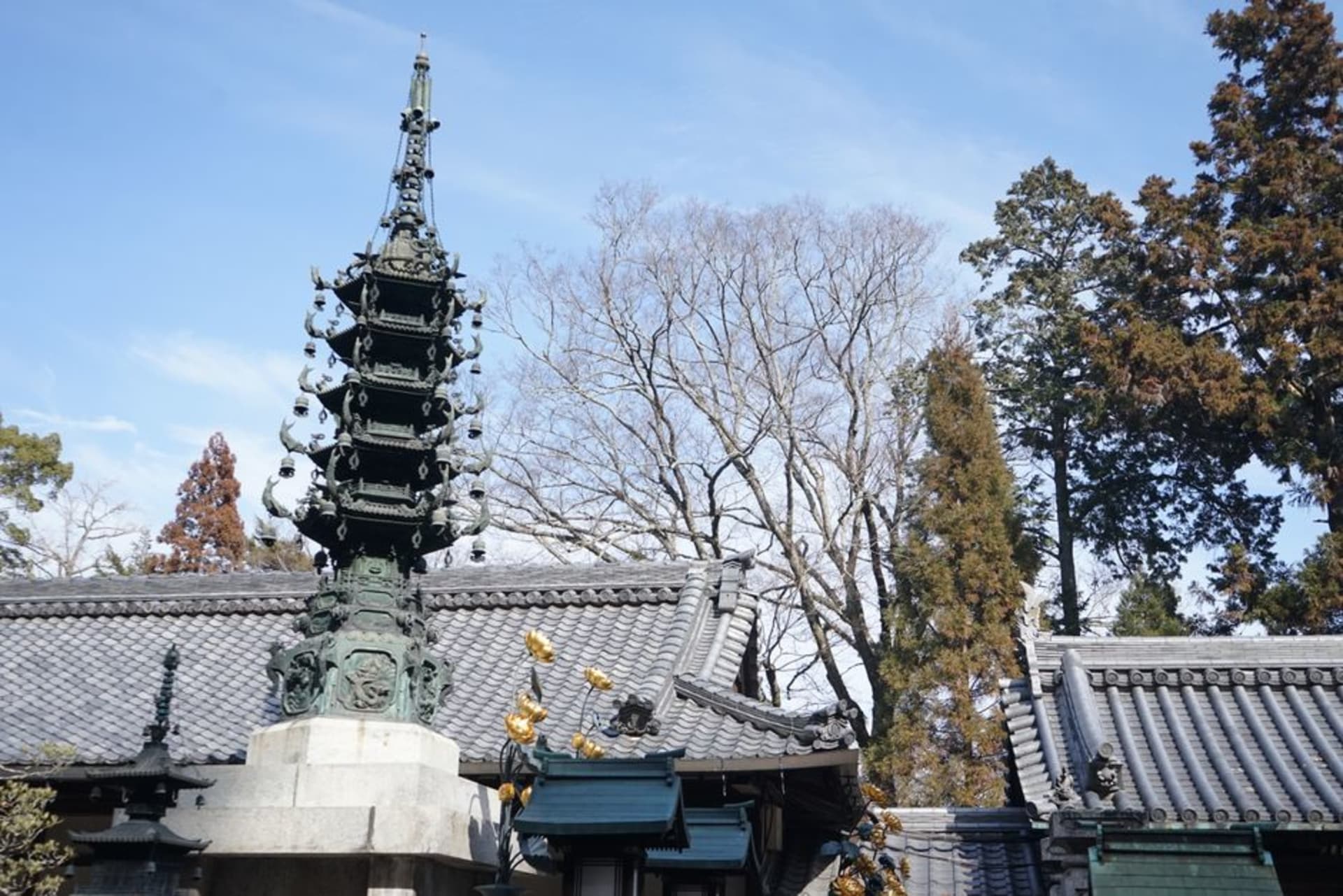
A quiet Kagawa temple town grown up around the birthplace of Kūkai, the monk who shaped Japanese Buddhism. A great five-storey pagoda watches over pilgrims in white, and the local udon is some of the best on the island.
We arrived in Zentsūji on a Tuesday with no particular plan except udon, and left having accidentally stood in the birthplace of one of the most important figures in Japanese history. That’s the thing about Shikoku’s temple towns — the sacred isn’t roped off, it’s just the neighbourhood. Pilgrims in white came and went from the station, walking sticks tapping, and Lia counted them under her breath while we worked out which way the temple was. We didn’t need the map in the end. You follow the pagoda.
At Zentsū-ji
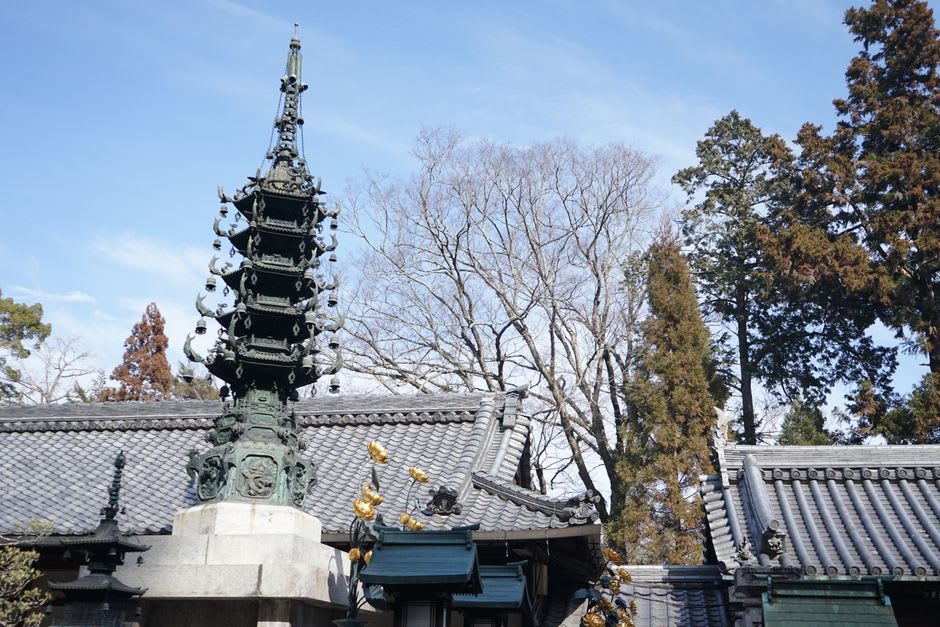
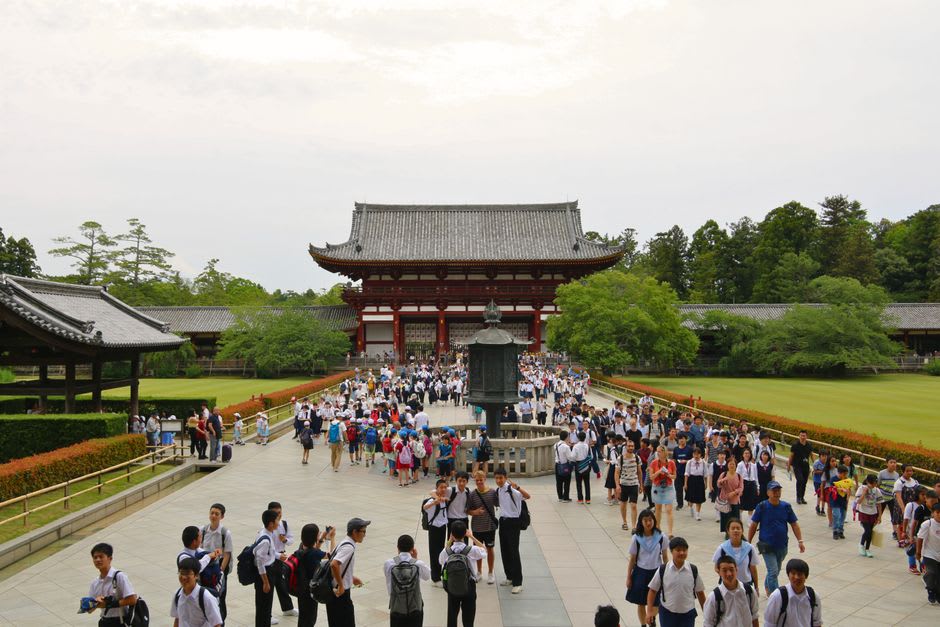
Zentsū-ji is temple number 75 on the 88-temple pilgrimage that loops the whole island, but it carries more weight than a number suggests: this is where Kūkai — known after death as Kōbō Daishi, founder of Shingon Buddhism — was born in 774. The grounds are broad and calm, gravel and old pines, and the five-storey pagoda stands over all of it, dark wood layered against the sky. In white-clad pilgrims moved between the halls, ringing the bell, lighting incense, doing the small unhurried choreography of a place they’d perhaps walked weeks to reach. We were tourists among the devout and felt it, but nobody made us feel it. An old woman showed Lia how to bow at the main hall without a word of shared language, just gesture and patience.
The dark beneath the hall
Beneath the Mie-dō, the hall built over the spot where Kūkai’s family home is said to have stood, there’s a tunnel called the Kaidan-meguri. You pay a small fee, take off your shoes, and step into total darkness — genuine, hand-in-front-of-your-face darkness — and walk with your left hand against the wall, following a painted mural you can’t see, meant to be a journey through and back toward enlightenment. Lia went ahead of me and I heard her breathing change. It’s disorienting in a way that’s hard to explain until you’ve done it; time stretches, the wall is the only real thing, and when a faint light finally appears you feel absurdly grateful for it. We came out blinking into the afternoon, quieter than we’d gone in.
Sanuki udon, at last
Then, finally, lunch. Kagawa calls itself the udon prefecture and Zentsūji takes the claim seriously — sanuki udon here is thick, square-edged, almost defiantly chewy, served in tiny shops where you sometimes fetch your own bowl and pour your own broth. We found one on a side street with no English and a queue of locals, always the sign, and ate standing at a counter: cold noodles with a raw egg and a slick of soy, a stick of tempura from the tray by the till. It cost almost nothing and was one of the best meals of the trip. Lia declared she understood the pilgrims now — you’d walk 88 temples too, if this was waiting at number 75.
Getting There
Zentsūji is on the JR Dosan line, about 30 minutes south from Takamatsu with a change at Tadotsu, or a short hop from Kotohira. The temple is a ten-minute walk from Zentsūji station, and the pagoda makes navigation simple. If you’re walking any of the pilgrimage, temples 75 through 78 sit close together and make an easy day on foot; otherwise pair Zentsūji with nearby Kotohira and its long shrine staircase, and build the whole day around at least two rounds of udon.
Keep exploring
More of Shikoku