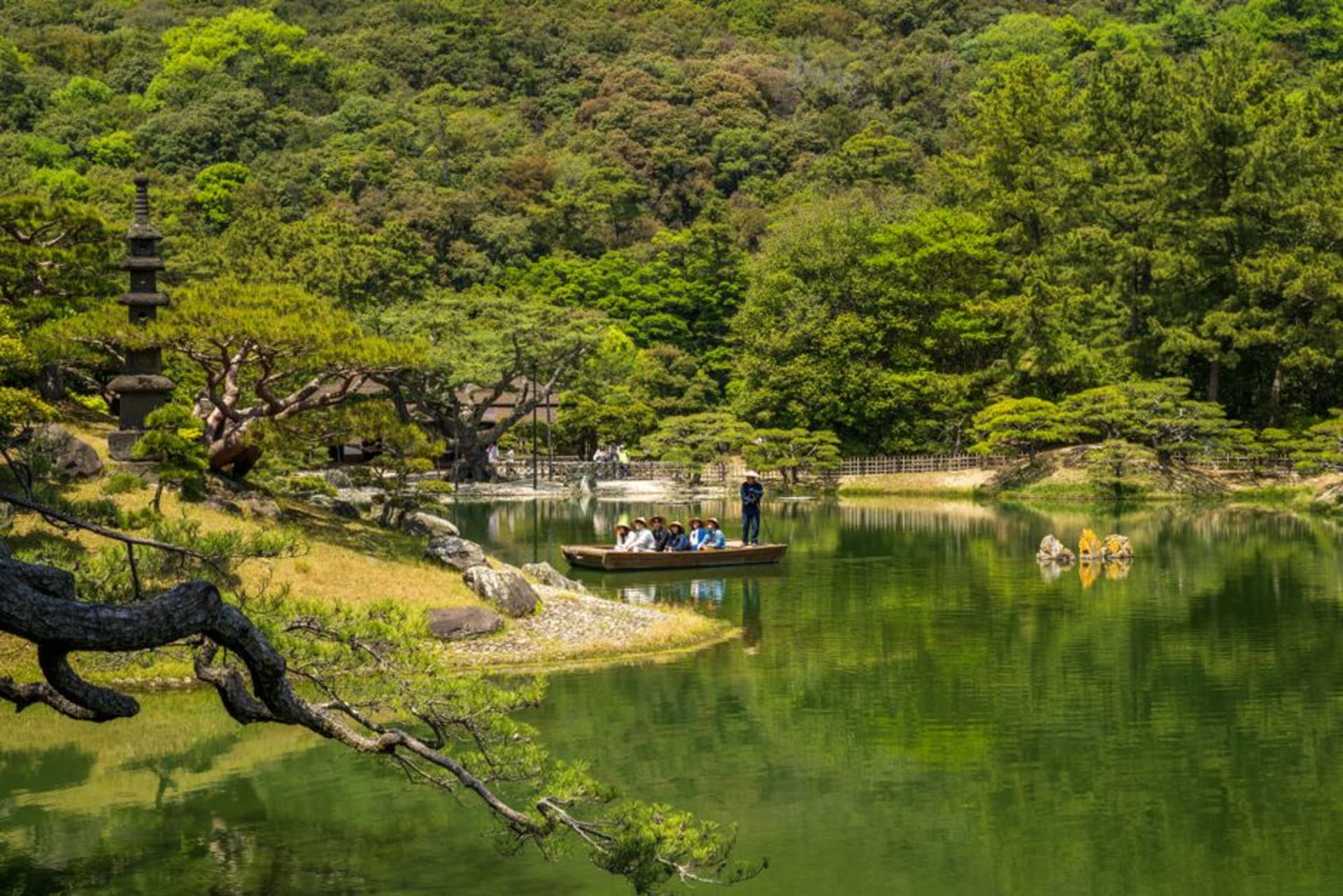
A port city where a feudal garden meets the tide and a castle keeps its feet in seawater. Takamatsu gave Lia and me our first taste of the Inland Sea, and our first bowl of udon that mattered.
We hadn’t planned to fall for Takamatsu. It was meant to be a hinge — the place you sleep before catching a boat to the art islands — and we arrived late, tired, faintly resentful of our own itinerary. Then a man at a standing counter near the station slid two bowls of udon toward us before we’d fully sat down, and Lia looked at me with that expression she gets when a plan quietly rearranges itself. We ate, we walked to the water in the dark, and by morning we’d added a day.
Ritsurin, the garden that keeps unfolding
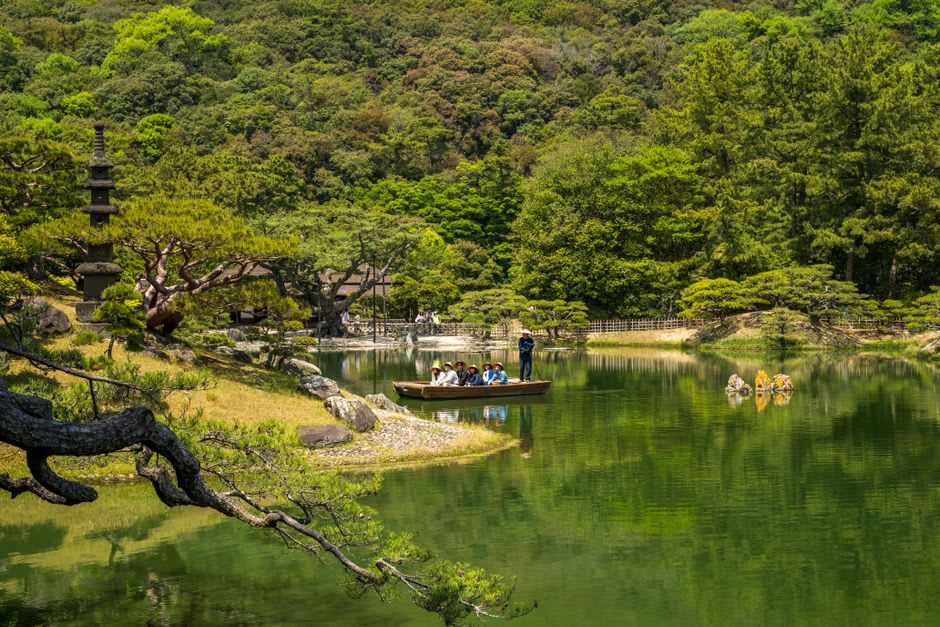
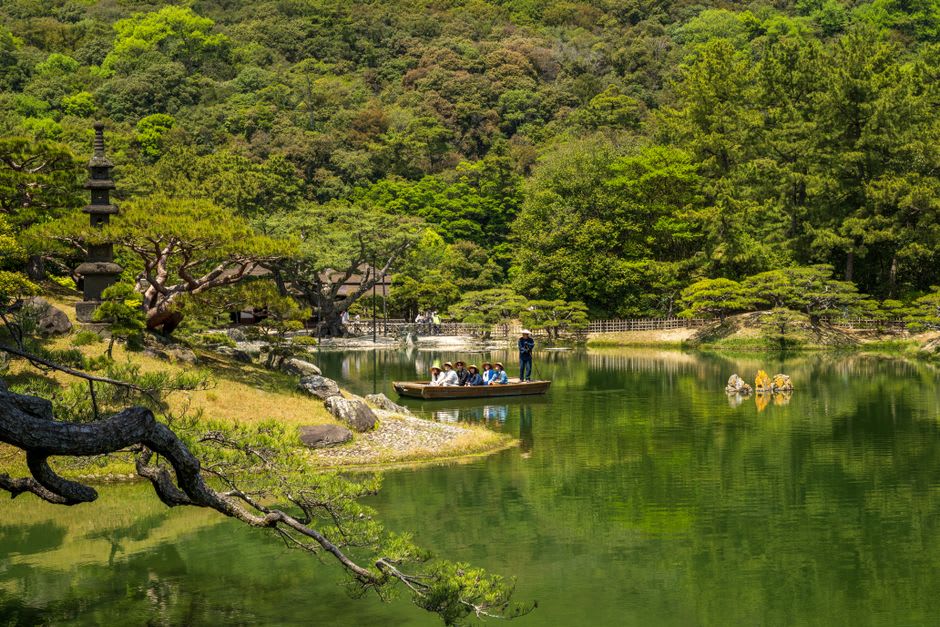
I’ve walked a lot of Japanese gardens and thought I understood the genre. Ritsurin corrected me. It refuses to show itself all at once — you round a clipped pine expecting an ending and instead there’s another pond, another arched bridge, Mount Shiun sitting behind it all like a painted backdrop that someone forgot to flatten. We rented a small boat and were rowed across the South Pond while a heron ignored us with real commitment. Lia kept saying “one more corner” until the corners ran out, nearly two hours later. The pines here are pruned by hand, generation after generation, and you can feel that patience in the shapes.
A castle with the sea in its moat
Tamamo Castle is not the soaring keep most people picture when they hear “Japanese castle” — the main tower is long gone. What remains is stranger and, to me, better: a moat filled not with rainwater but with the sea itself, tidal, so that the castle grounds hold fish that swim in from the Inland Sea. We watched them from a stone wall at dusk, the water sloshing gently with the tide. There’s a small ferry-boat that carries you across the inner moat, poled by a boatman who has clearly told the same jokes for years and still enjoys them. It felt less like a fortress and more like the city’s front porch onto the water.
Sanuki udon, seriously
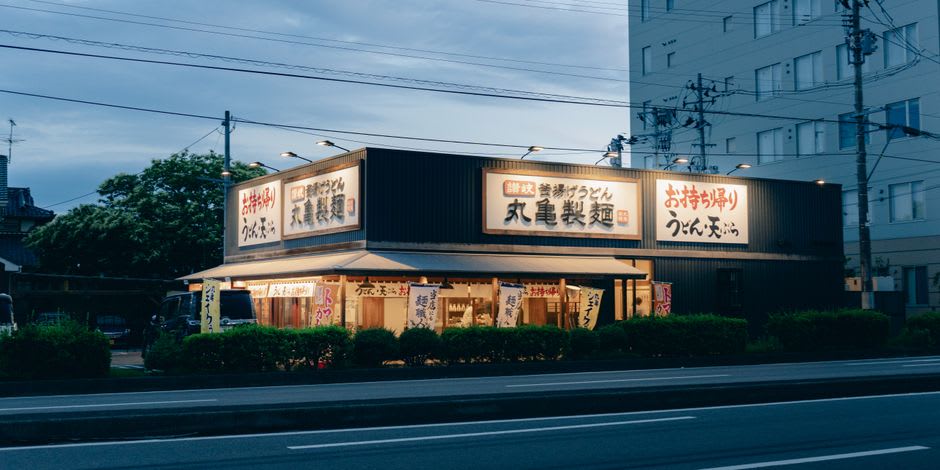
Kagawa calls itself the udon prefecture and does not say it lightly. The noodles here are thick, square-edged, defiantly chewy — sanuki udon — and eating them is half meal, half local sport. We did the self-serve route one morning: you grab your own bowl, blanch your noodles in a communal vat of boiling water, ladle on hot dashi, and add tempura from a tray, paying something close to loose change. Lia burned her fingers on a just-fried burdock fritter and declared it worth it. Every counter has its loyalists, and locals will argue routes between shops the way other cities argue football. We never found a bad bowl.
Getting There
Takamatsu is the easiest gateway to Shikoku. From Okayama on the main island, the Marine Liner train crosses the great Seto-Ohashi Bridge in about an hour, and the ride over the Inland Sea is worth a window seat. There are direct trains from Osaka and a small airport with connections to Tokyo. Once you’re here, the port sits a few minutes’ walk from the station, and this is where you’ll board ferries for Naoshima, Teshima, and the other Setouchi art islands — which is, officially, why we came. The garden was the accident. Rent a bike or simply walk; the center is flat and compact, and the sea is never far.
Keep exploring
More of Shikoku