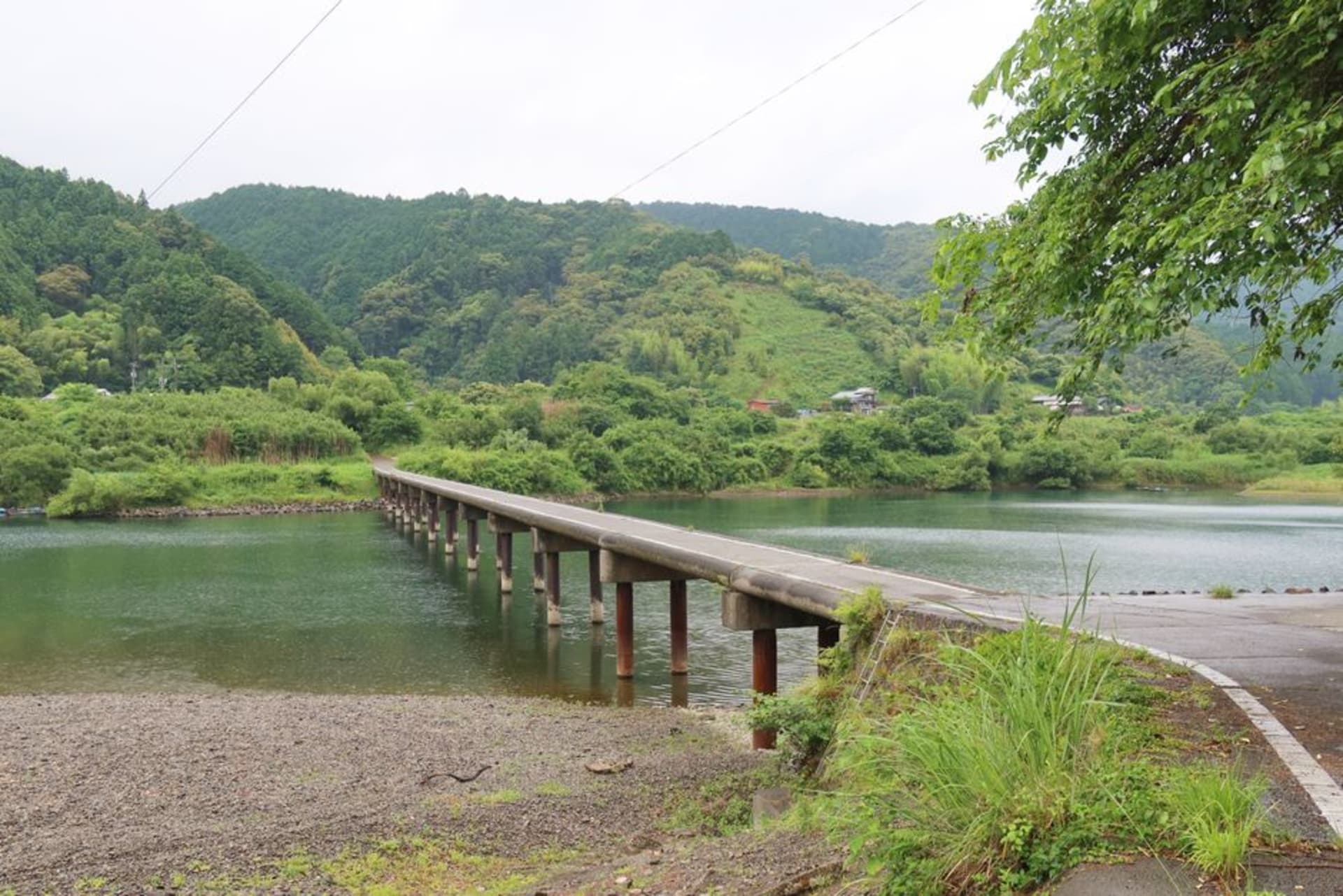
A green fold of rural Kōchi wrapped around the Shimanto, often called the last clear river in Japan. Here bridges duck under the floods instead of fighting them, and the days move at the pace of slow water.
We almost didn’t come to the Shimanto. It was a detour, a long slow train deep into the least-visited corner of Shikoku, and everyone we asked seemed faintly surprised we were bothering. Then we stood on the bank near dusk, and Lia crouched down and put her hand into water so clear it looked like poured glass, and neither of us said anything for a while. There are rivers you look at and rivers you look into. The Shimanto is the second kind. We ended up staying three days in a town that has no famous sight at all, only the river, and it became one of the parts of Japan we talk about most.
The Last Clear River
The Shimanto is often called the last clear stream in Japan — the largest river on the island with no major dam choking its main course. What that means, standing beside it, is a startling green transparency, gravel bars, and long still reaches where the current barely seems to move. We rented a Canadian canoe from an outfitter who handed us paddles, pointed downstream, and trusted us entirely. For a couple of hours we drifted between walls of forest, herons lifting off ahead of us, the only sounds our paddles and the wind. Lia, who cannot swim well and had been nervous, went completely quiet in the good way. Somewhere past a bend she said she wished her father could see it. That is the effect the river has.
The Sinking Bridges
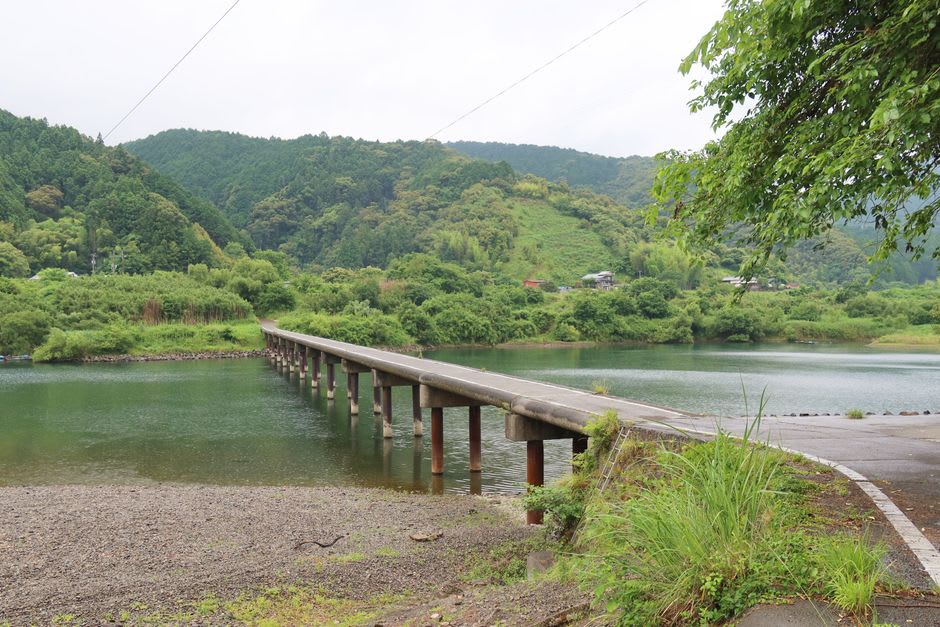
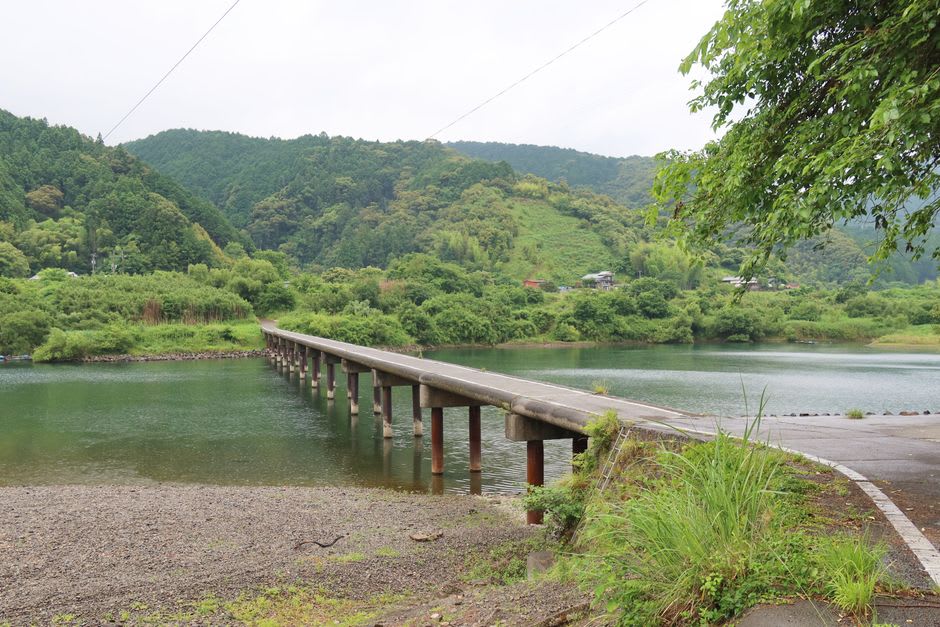
The Shimanto’s most photographed feature is also its most practical: the chinkabashi, the low “sinking bridges.” They are flat concrete spans with no railings at all, built deliberately close to the water so that when the river floods — and it floods hard — the water rushes clean over them instead of ripping them away. There are dozens along the valley. We walked out onto one near Sada, and I will admit my legs did the honest thing and turned to jelly halfway across, the water sliding past just below my shoes on both sides with nothing to hold. A farmer on a moped puttered past us as if it were nothing, which of course, for him, it was. Lia crossed with maddening calm and photographed me clinging to my dignity.

A Valley That Waits for You
What I remember most, though, is the ordinary rhythm of the valley. Rice terraces stacked up the hillsides, an old woman selling river nori and tiny sweet ayu fish grilled on sticks over charcoal, cats asleep on warm stone. We rented cheap bicycles and followed the river road with no destination, stopping wherever the view demanded it, eating our ayu on a gravel bar with our feet in the cold water. Nothing happened, gloriously. In a country where so much is engineered for the visitor, the Shimanto simply is what it is and lets you find your own pace inside it. We came for a night and kept extending, unwilling to leave the sound of the water.
Getting There
Shimanto lies in the far southwest of Kōchi Prefecture, and reaching it is part of the point — this is deep rural Shikoku. The usual approach is by train to Kubokawa and then the scenic Yodo Line down along the river, or by limited express toward Nakamura (Shimanto City station), from where local buses and rental bikes fan out into the valley. Renting a car in Kōchi gives you the most freedom to chase the sinking bridges upstream. Whatever you do, allow more days than you think; the river rewards slowness and quietly punishes a rushed itinerary.
Keep exploring
More of Shikoku