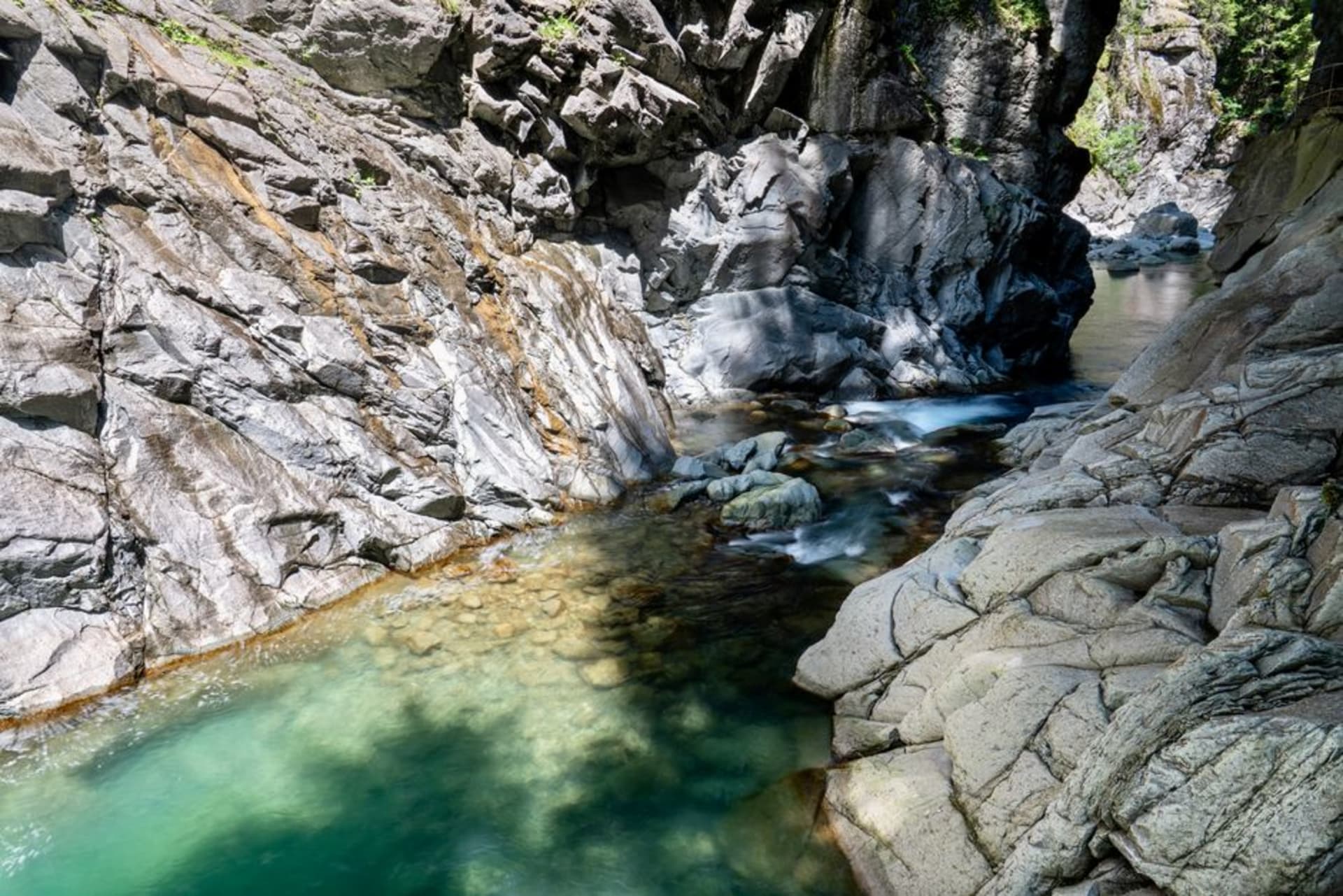
Niyodo River
"I have never argued with a colour before, but Lia and I stood on that bank and argued about whether it was real."
A Kochi river whose water goes past clear into something almost unreal — a pale, luminous turquoise the locals call 'Niyodo blue'. It pools under mossed boulders, spills over low falls, and rewards anyone willing to drive its long green valley.
We had been driving for the better part of an hour up a valley that kept narrowing, the kind of road where you pull into the wide spots to let a farm truck pass and wave at each other like accomplices. Lia was navigating from a screenshot because the signal had given up somewhere below, and then the trees opened and there was the water, and both of us went quiet at the same time. I have seen a lot of rivers. I had never seen one that looked lit from underneath.
The Colour That Started an Argument
The Japanese have a name for it — “Niyodo blue” — and I understand now why they bothered to name a colour that belongs to one specific river. At Nakatsu Gorge, where we started, the Niyodo pools between boulders in a turquoise so pale and so clear that depth stops meaning anything. Lia insisted it was the light. I insisted it was the riverbed. We were both wrong and both right; it is the astonishing clarity of the water over pale stone, and it changes with the sun, going milky-jade in shade and almost electric where the light hits square.
We spent a long time just crouched on a rock not talking, which is the highest compliment either of us gives a place.
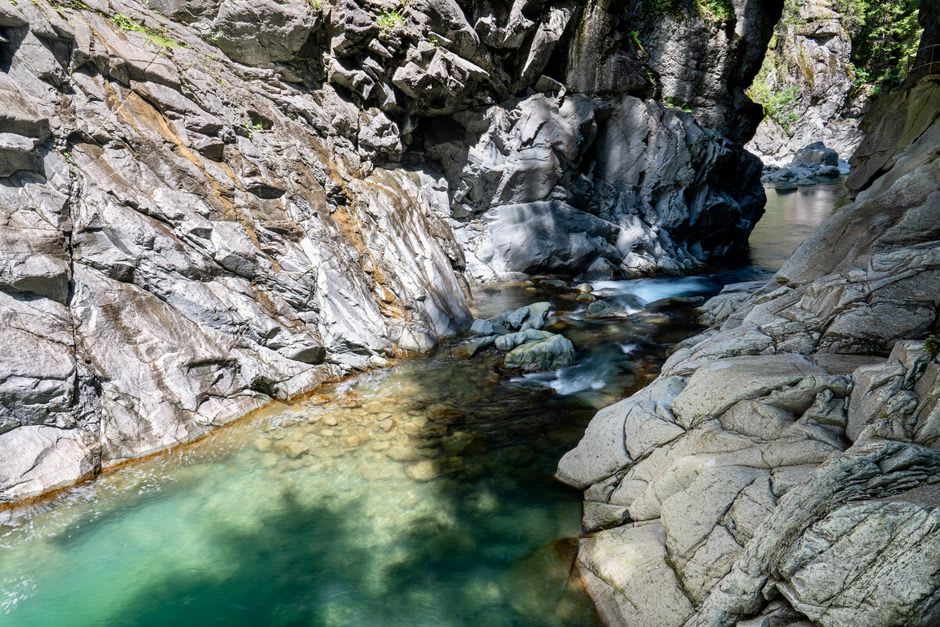
Niyodo Blue Falls and the Nakatsu Gorge Trail
The trail up Nakatsu Gorge is short but it insists you pay attention — wet stone, a couple of little bridges, rope handrails worn smooth. It follows the stream up to Uryu Falls, and the whole way the water does that trick of being invisible and vivid at once. We passed an old couple coming down who told us, mostly in gestures and one shared word of English, that we should keep going to the top. They were right.
Further along the valley we found the Nakatsu Keikoku pools proper, where the river widens into basins deep enough that a few local teenagers were leaping in from a ledge, shrieking at the cold. Lia put her feet in and lasted about four seconds. I did not even try; I have my dignity, and I am a coward about cold water.
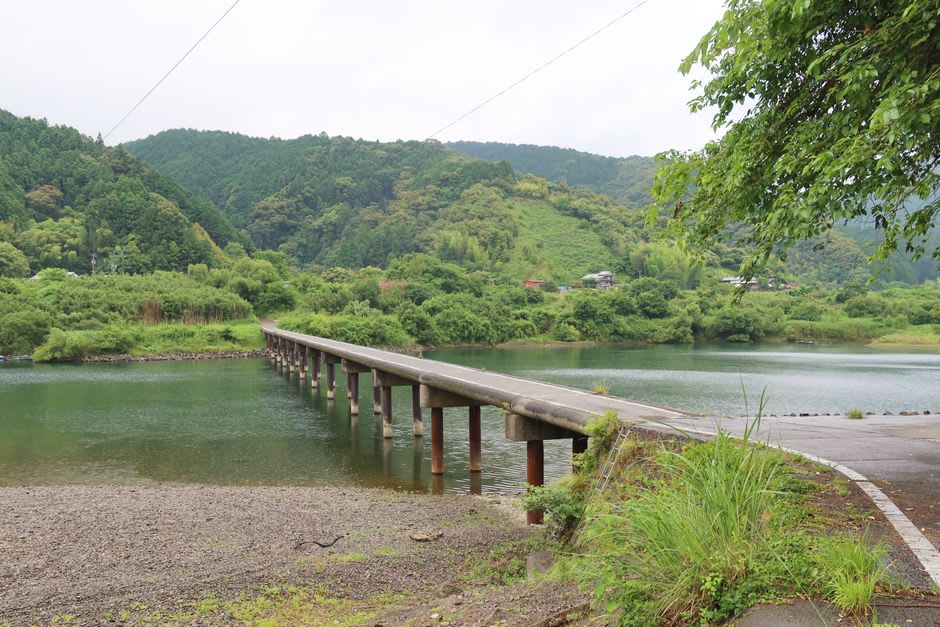
The Bridges With No Railings
The thing I keep telling people about the Niyodo is the “chinkabashi” — the low, flat submersible bridges built with no railings on purpose, so that when the river floods they simply go under and don’t get torn away. There are several strung across the valley, and driving over one is a small act of faith. We walked out onto the Asao chinkabashi near dusk, a plain concrete ribbon inches above that impossible water, and stood in the middle of the river without getting wet.
Lia said it felt like the valley had been arranged for us alone, and for that hour it more or less had. A heron worked the shallows downstream. The mountains went from green to blue to black. Nobody else came.
Getting There
The Niyodo valley threads through central Kochi Prefecture, and honestly you want a car — the good pools and bridges are spread along thirty-odd kilometres of river and no train follows them. We rented in Kochi city and drove roughly ninety minutes inland toward Niyodogawa town and Nakatsu Gorge; the JR Dosan line gets you as far as Ino or Sakawa if you’re determined, but you’ll be reliant on sparse local buses after that. Go on a clear day and go in the morning — the “Niyodo blue” needs sun overhead to do its full trick, and by late afternoon the gorge falls into shadow. Bring water shoes if you have any intention of getting in; you will want to, and you will regret the cold, and you should do it anyway.
Keep exploring
More of Shikoku