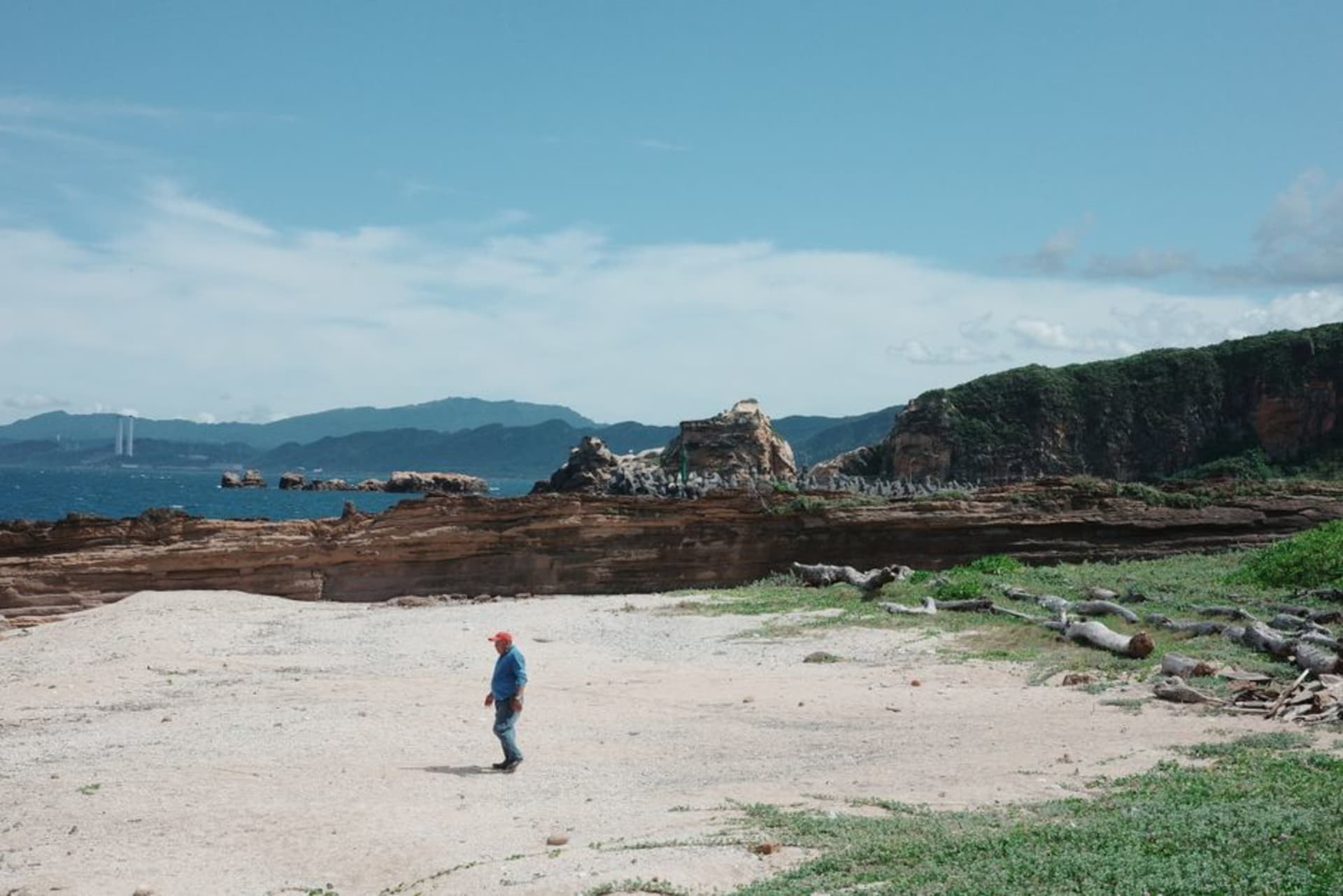
A cape flung out into the Pacific at the raw edge of Kōchi, where the land is still rising out of the sea. Muroto is uplifted rock, subtropical green, and a lighthouse that has watched the dark water for over a century. We went to feel small, and it obliged.
We reached the tip of Cape Muroto at the wrong time of day, which turned out to be the right one. Late afternoon, wind off the Pacific with nothing between us and it but a few thousand kilometres of open water. Lia climbed out onto the black rocks below the road while I read the sign that explained what we were standing on — seabed, essentially, heaved up out of the ocean by the same tectonic violence that shakes this whole coast, and still rising a few millimetres a year. You don’t often stand somewhere and feel the planet actively working. Here you do. The rock is folded and torn and studded with fossils, and the sea keeps arriving to argue with it.
The Living Rock
Muroto is a UNESCO Global Geopark, which is a bureaucratic phrase for a place where the earth doesn’t hide what it’s doing. We followed the coastal path past the Gyotō formations, slabs of tilted stone like the pages of a dropped book, and past tide pools where the water had scooped out perfect bowls. Kūkai, the monk who founded Shikoku’s pilgrimage, is said to have reached enlightenment in a cave along this shore, staring at nothing but sea and sky until the two became one word. Standing in the mouth of that cave, salt on my lips, I could believe a mind might crack open here. It is not a gentle landscape. It doesn’t want to comfort you. It wants to remind you how new you are.
The White Lighthouse
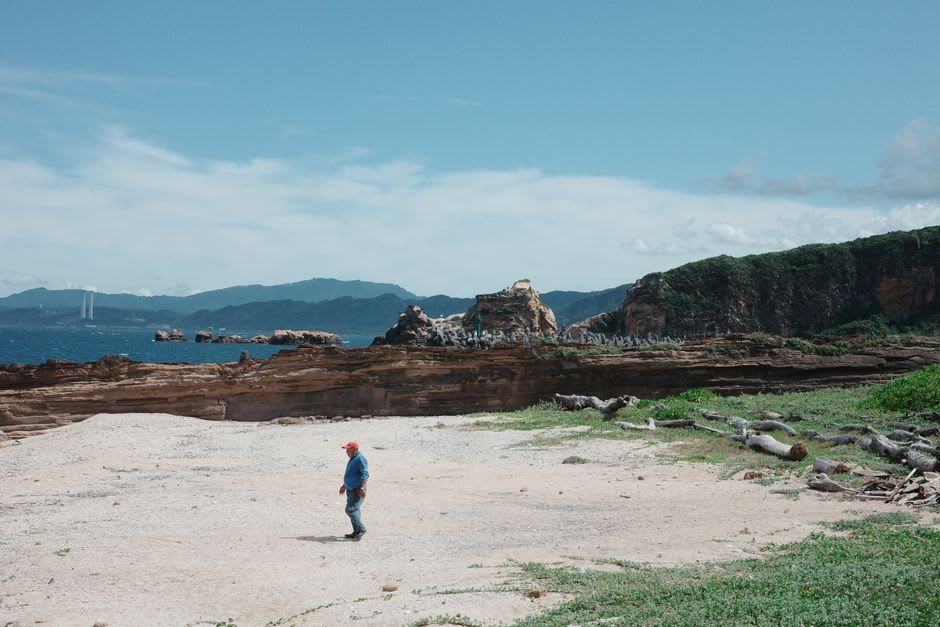
Up the hill, through a tunnel of subtropical trees, stands the Muroto Misaki lighthouse. It has thrown its beam across this water since 1899, and its lens is one of the largest in Japan — a great faceted eye that can be seen far out to sea. We climbed the path just as the light was going, and the forest around us was doing something I didn’t expect this far north: it was tropical. Ferns, twisting vines, glossy leaves the size of dinner plates. The warm Kuroshio current runs right up against the cape and drags a whole botany with it. Lia said it felt like the lighthouse had been dropped into a jungle by mistake. From the viewpoint beside it, the coastline curled away in both directions, empty, and a single fishing boat drew a slow white line across the blue.
The Edge-of-the-World Feeling
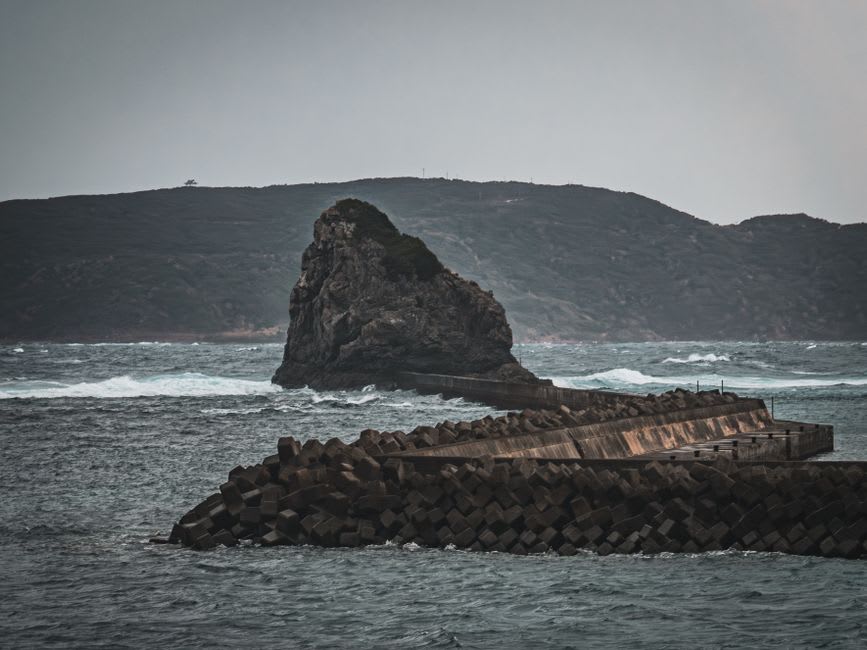
What stayed with me about Muroto was not any single sight but a mood. This is a place that feels like the end of something. The road out along the cape narrows and quietens, the towns thin to a few houses and a vending machine glowing in the dusk, and then there is just the point and the ocean. We ate that night at a tiny place near the harbour where the owner served us kinme-dai, a deep-red fish hauled from the waters we’d been staring at all day, grilled simply and perfectly. There was no menu in any language we read. We pointed, we smiled, we ate the best fish of the trip. Sometimes the edge of the world feeds you well.
Getting There
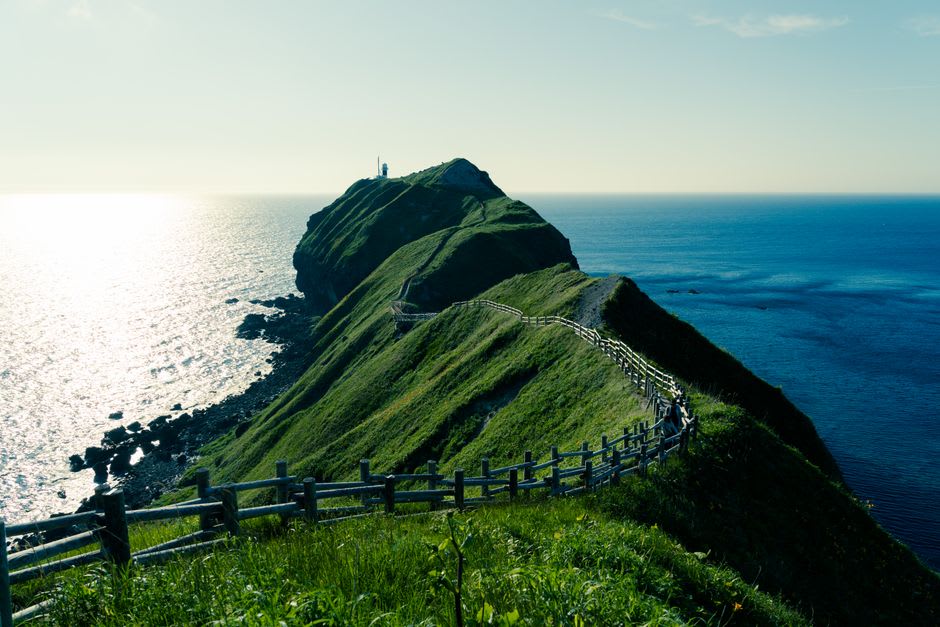
Muroto lies at the southeastern tip of Kōchi Prefecture, and getting there is part of the pilgrimage — there is no train to the cape itself. From Kōchi city, take a train to Nahari, the end of the Asa Line, then a local bus down the coast to Muroto, roughly two and a half hours all told. Drivers have the easier time of it and the better one; the coastal Route 55 is a spectacular run with the Pacific at your shoulder the whole way. Come with time to spare and a willingness to go slowly. This is not a place that rewards hurry.
Keep exploring
More of Shikoku