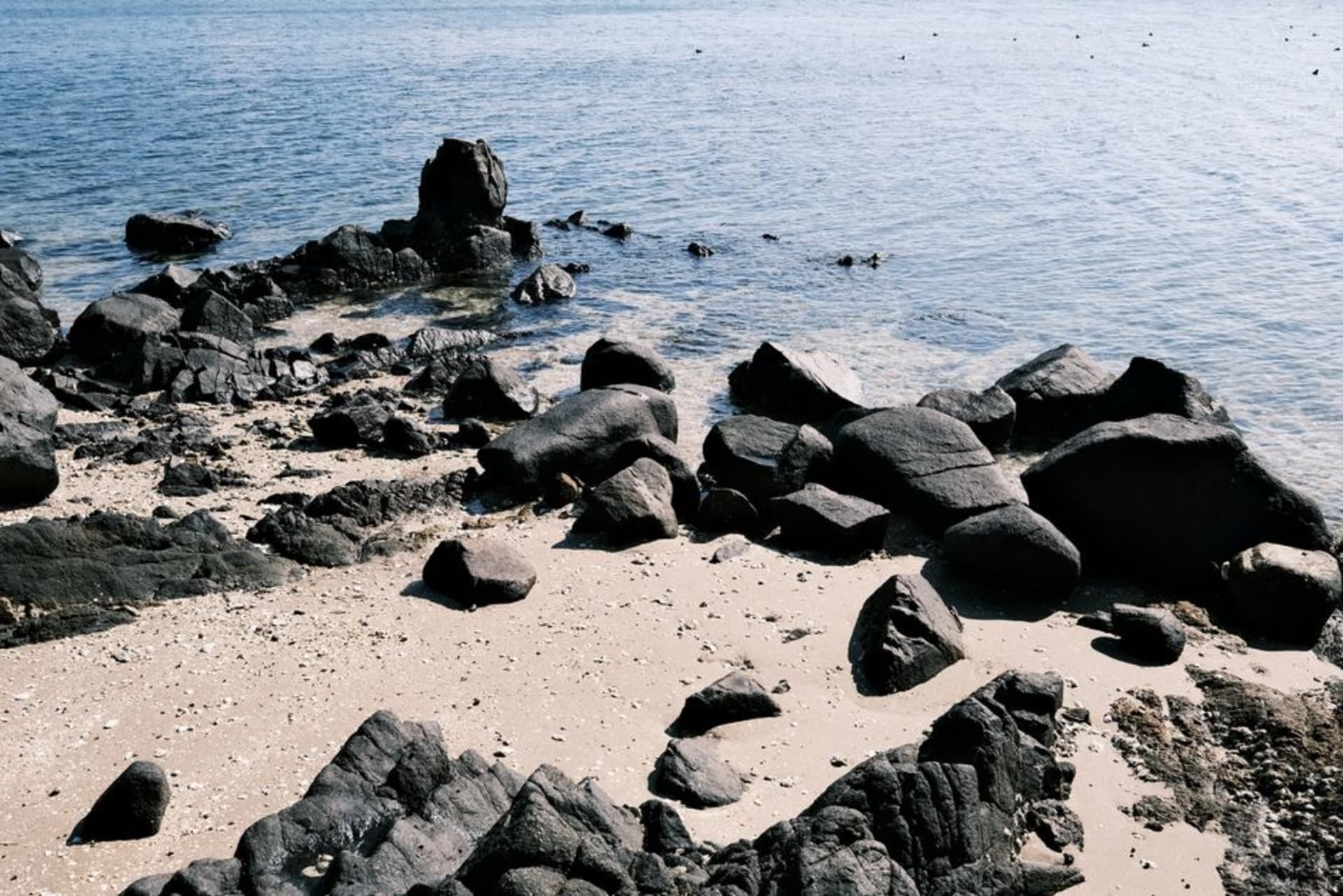
Kanonji
"A coin the size of a soccer field, raked into sand for three hundred years, and Lia solemnly wished on it for both of us."
A breezy Kagawa town on the Inland Sea where a giant coin lies raked into the beach sand, said to bless whoever looks upon it. Above it a pine-shaded hilltop shrine, and inland a mountaintop temple reached by ropeway over the whole silver sea.
There is a coin on the beach at Kanonji that is roughly the size of a soccer field. This is the sort of fact that sounds like a translation error until you climb the hill above Kotohiki Park and see it lying there in the sand — a vast Edo-era coin design, kanji and all, raked into the shore and maintained for some three centuries because the locals believe that anyone who gazes on it will never want for money. Lia and I are not superstitious people. We stood at the overlook for a good twenty minutes anyway, and she made a wish on it, out loud, “just in case,” and I loved her a little more for the sheepish way she did it.
The coin in the sand
The Zenigata Sunae, they call it — the coin-shaped sand picture — and what gets me is not the size but the upkeep. Twice a year the townsfolk gather to re-rake the grooves crisp, a whole community bending over a drawing in the sand so that a promise made long before any of them were born stays legible. From the pine-covered hill it reads perfectly, sharp against the pale beach with the Inland Sea glinting beyond. We lingered until the light started to lean, and the low sun threw the raked ridges into shadow so the coin seemed briefly to lift out of the ground, and even my flat rational heart gave a small tug.
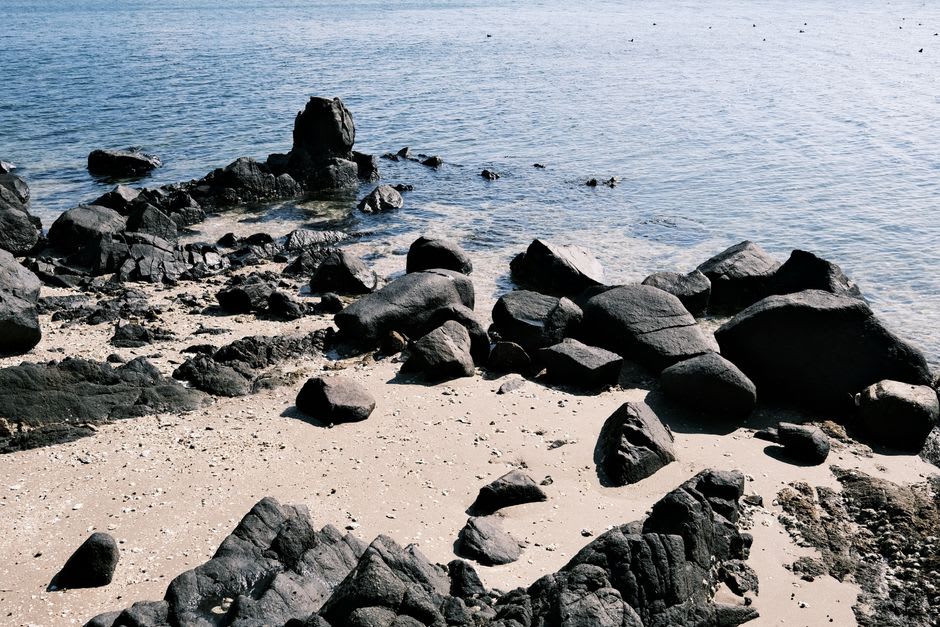
Kotohiki Park and the shrine
The hill itself, Kotohiki Park, is worth the climb even without the coin. Pines twist along the paths, and at the top sits Kotohiki Hachiman Shrine, quiet and shaded, where the sea breeze comes up through the branches and the whole place smells of warm resin. Lia rang the shrine bell and we stood a while in that particular silence shrines have, the one that isn’t really silence but wind and bird and the far hush of surf. An old couple was sweeping the steps with slow care, and we bought a small wooden amulet mostly to have a reason to talk to them. They asked where we were from and beamed at “France” as though we’d said something clever.
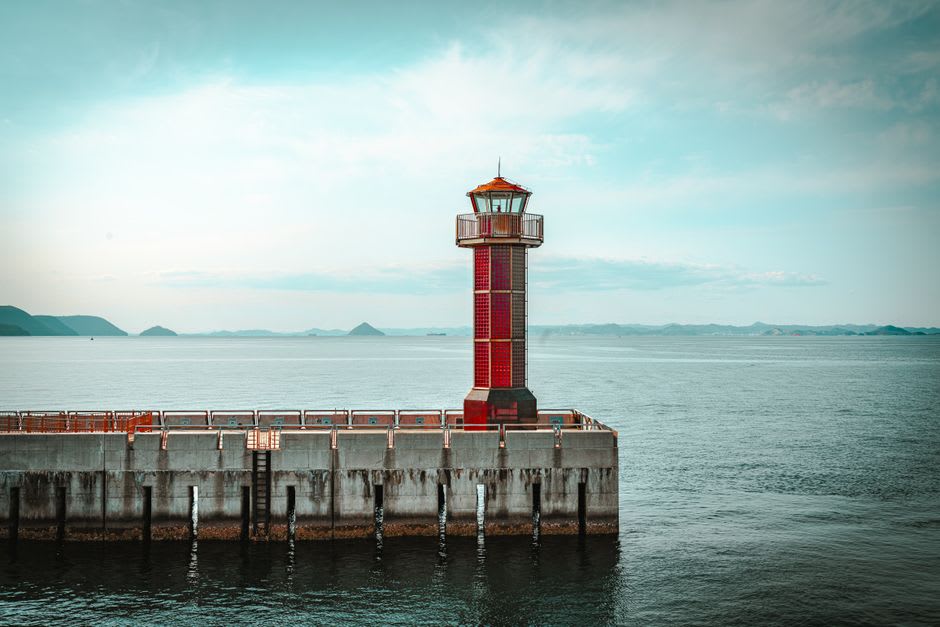
Up to Unpenji
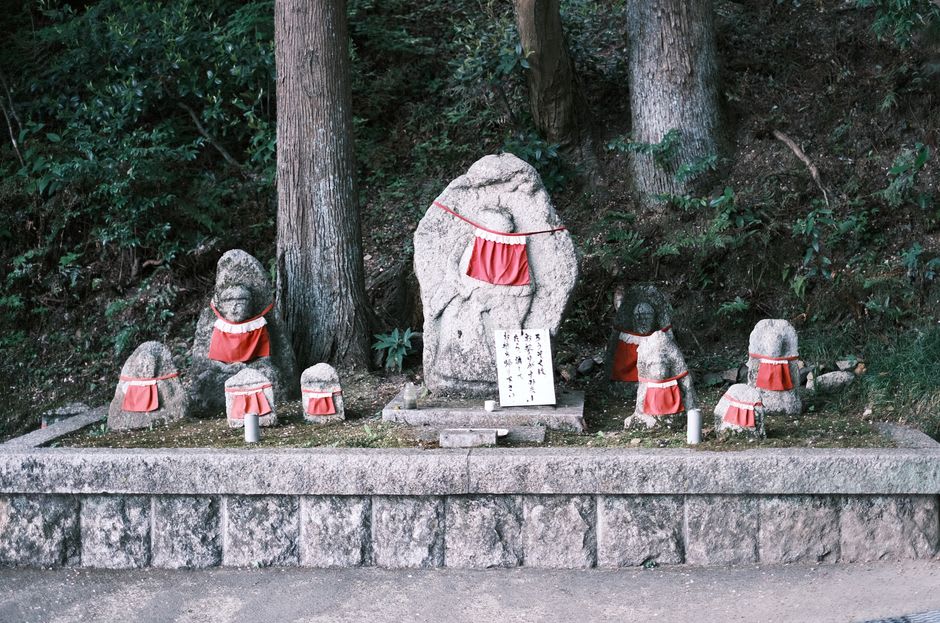
For our last afternoon we took the long ropeway up to Unpenji, the highest of Shikoku’s eighty-eight pilgrimage temples, perched near the top of its mountain. The cable car lifts you out over the whole spread of the Inland Sea, islands laid out flat and hazy below, and then delivers you into a cool cedar forest where five hundred stone rakan statues sit among the trunks, each one carved with a different weathered face. Lia went from statue to statue insisting each one looked like someone we knew. Pilgrims in white moved quietly between them, striking their bells, and the mountain air smelled of cedar and incense. We came down as the sea was going pink, tired and wordless and entirely content.
Getting There
Kanonji sits on the JR Yosan Line in western Kagawa, about forty minutes by limited express from Takamatsu. From Kanonji Station it is a short taxi or twenty-minute walk to Kotohiki Park, where the hilltop overlook gives the coin its shape — go in late afternoon for the best light. Unpenji is a drive plus the ropeway on the town’s southern edge; a half day covers it comfortably. We treated Kanonji as an easy, joyful day trip and left wishing we’d booked a night.
Keep exploring
More of Shikoku