A working port on the Seto Inland Sea where the Shimanami Kaidō lands back on Shikoku after leaping island to island on impossible bridges. Imabari smells of the sea and of freshly pressed cotton, and moves at the speed of a bicycle.
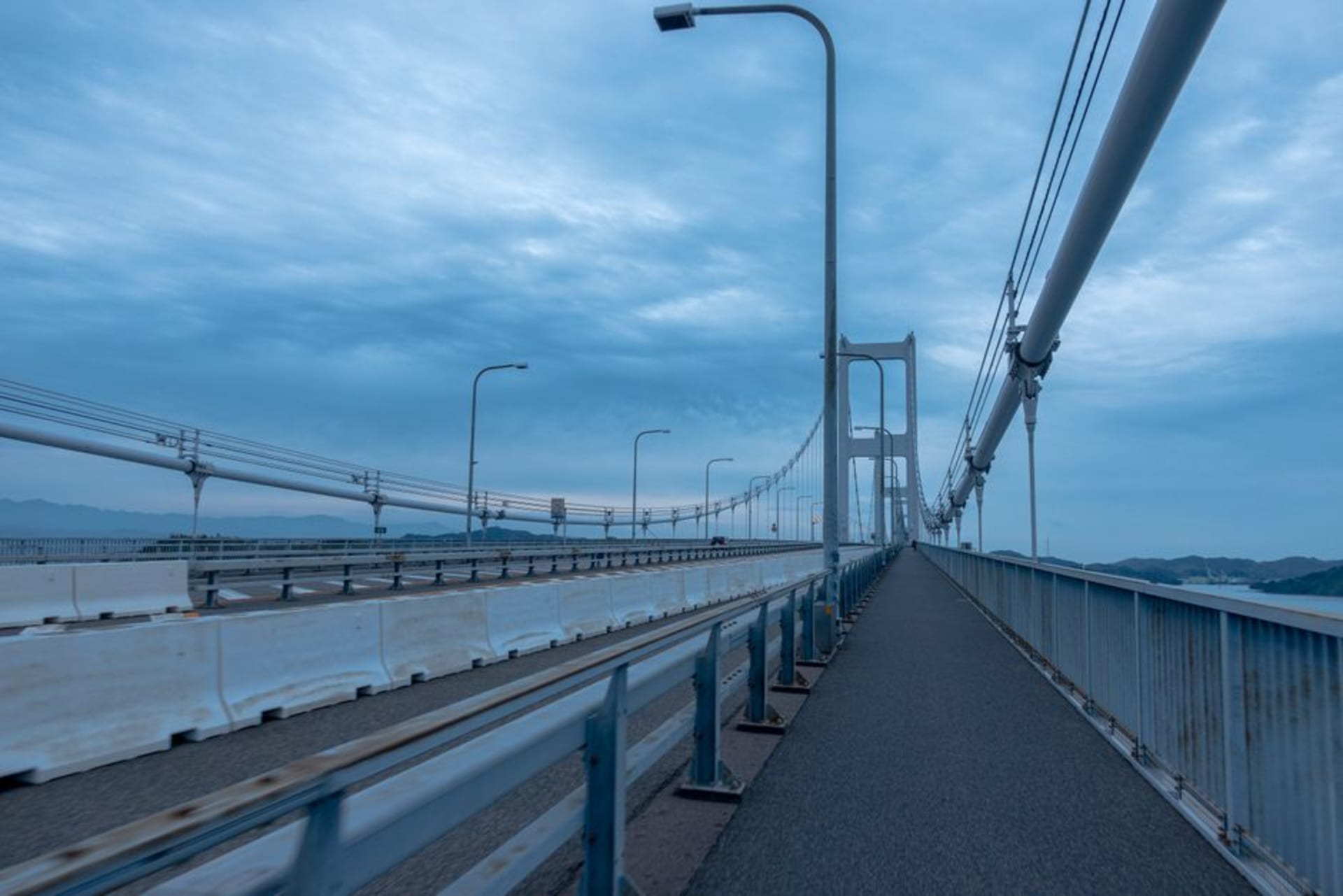
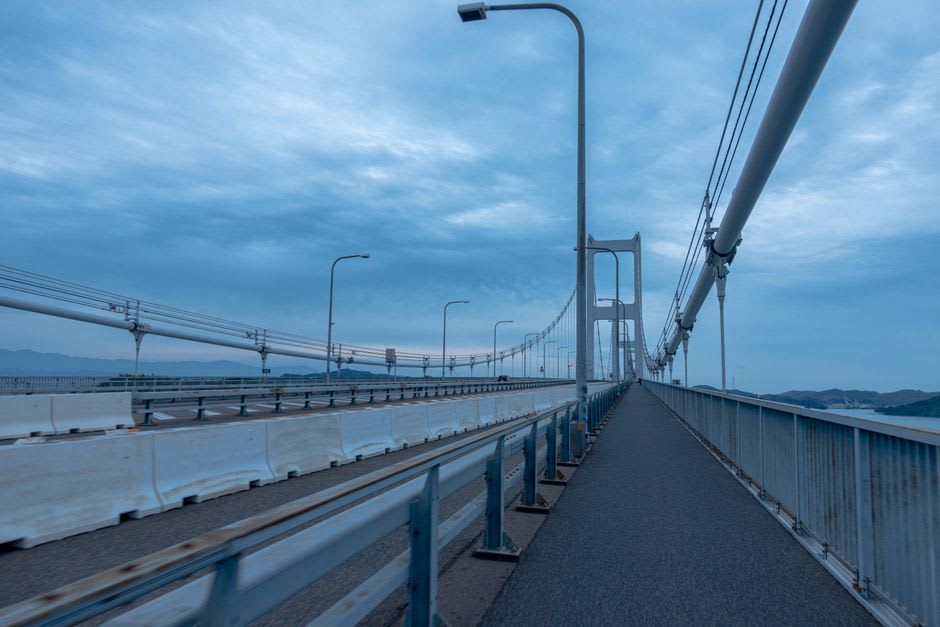
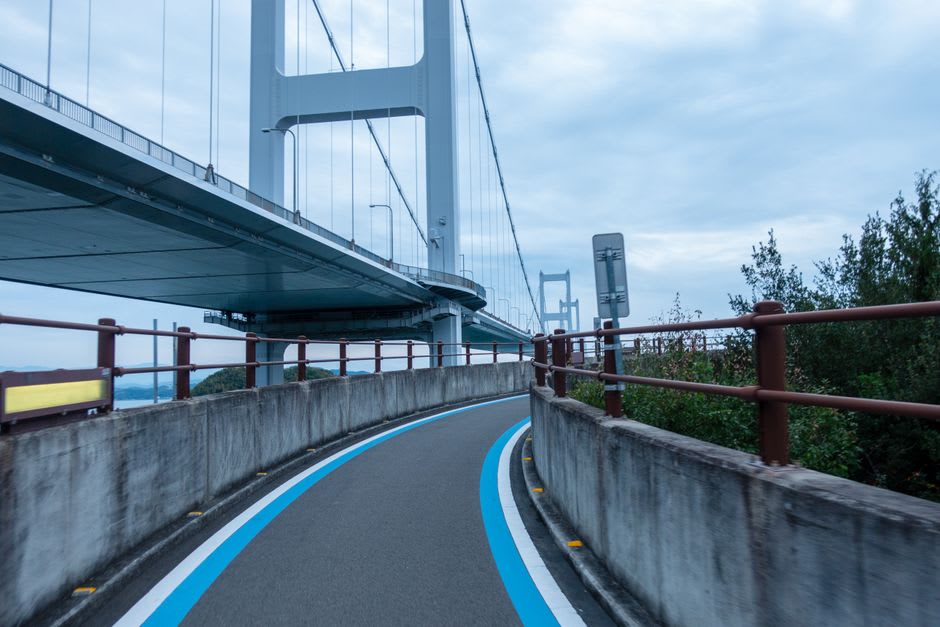
Lia and I rolled into Imabari on rented bicycles with our legs shaking and our faces sunburnt, having spent the whole day crossing the Seto Inland Sea one island at a time. The last stretch, the great Kurushima-Kaikyō Bridge, had taken nearly half an hour to pedal alone — a slow, gull-haunted arc high above the tide races — and when the ramp finally spilled us down into the streets of the port, we both just stopped and sat on a curb, laughing, unable to quite believe we had done it under our own steam. A woman sweeping her shop front brought us two cold cans of something and waved off our coins. That was our welcome to Imabari.
The Bridges of the Shimanami Kaidō
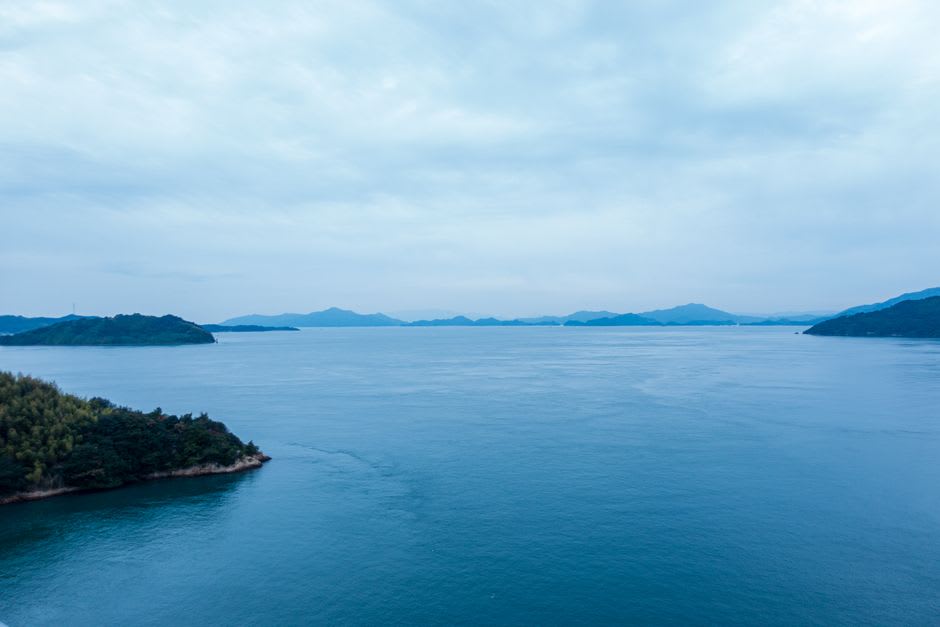
Most people know Imabari, if they know it at all, as one end of the Shimanami Kaidō — the seventy-kilometre cycling route that hops across six islands between here and Onomichi on the mainland. It is the only place in Japan where you can cross the Inland Sea by bicycle, and the engineering is genuinely staggering: the Kurushima-Kaikyō is a chain of three suspension bridges strung end to end, and from its dedicated cycling lane you look straight down through the haze onto whirlpools and container ships and tiny fishing boats. We had come expecting a nice ride. We got something closer to flying. Lia kept stopping to photograph the cables against the sky, and I kept stopping because my legs demanded it, and neither of us was in any hurry to reach the end.
A Castle on the Sea
In the morning, stiff-legged, we walked out to Imabari Castle, and it took me a moment to understand what was odd about it. The moat is full of seawater. It rises and falls with the tide, and grey mullet slip through it, because the castle was built right at the shoreline as a fortress you could resupply by ship. The keep is a modern reconstruction, and I usually feel a small deflation at that — but standing on the ramparts with the salt wind coming off the harbour, watching a ferry slide past the black-and-white walls, I stopped caring about authenticity. A local grandfather doing his morning circuit told us, with great pride and slow English, that this was one of Japan’s three great “sea castles.” We took his word for it happily.
Towels Softer Than Anything
Imabari’s other quiet fame is towels. The town has been weaving them for over a century, using the soft local water, and the Japanese treat an Imabari towel roughly the way the French treat a good baguette — a plain thing done so well it becomes a small luxury. We wandered into a mill shop near the station almost as a joke and left, honestly, converted. Lia pressed a face towel to her cheek and simply said “oh,” and that was the end of the debate. We bought a stack, mailed most of them home to family, and the one we kept travelled the rest of Japan with us and dried faster than any towel has a right to. It is still, three years later, the softest thing in our bathroom.
Getting There
Imabari sits on the northern coast of Ehime Prefecture, on Shikoku. The easiest rail approach is the limited express from Matsuyama, which takes about forty minutes and hugs the coast for part of the way. From the mainland, you can reach it by highway bus across the Nishiseto Expressway, or — as we did — by bicycle along the Shimanami Kaidō from Onomichi, renting a bike at one end and dropping it at the other. Give the ride a full unhurried day and start early; the light on the water in the late afternoon is worth planning your whole crossing around.
Keep exploring
More of Shikoku