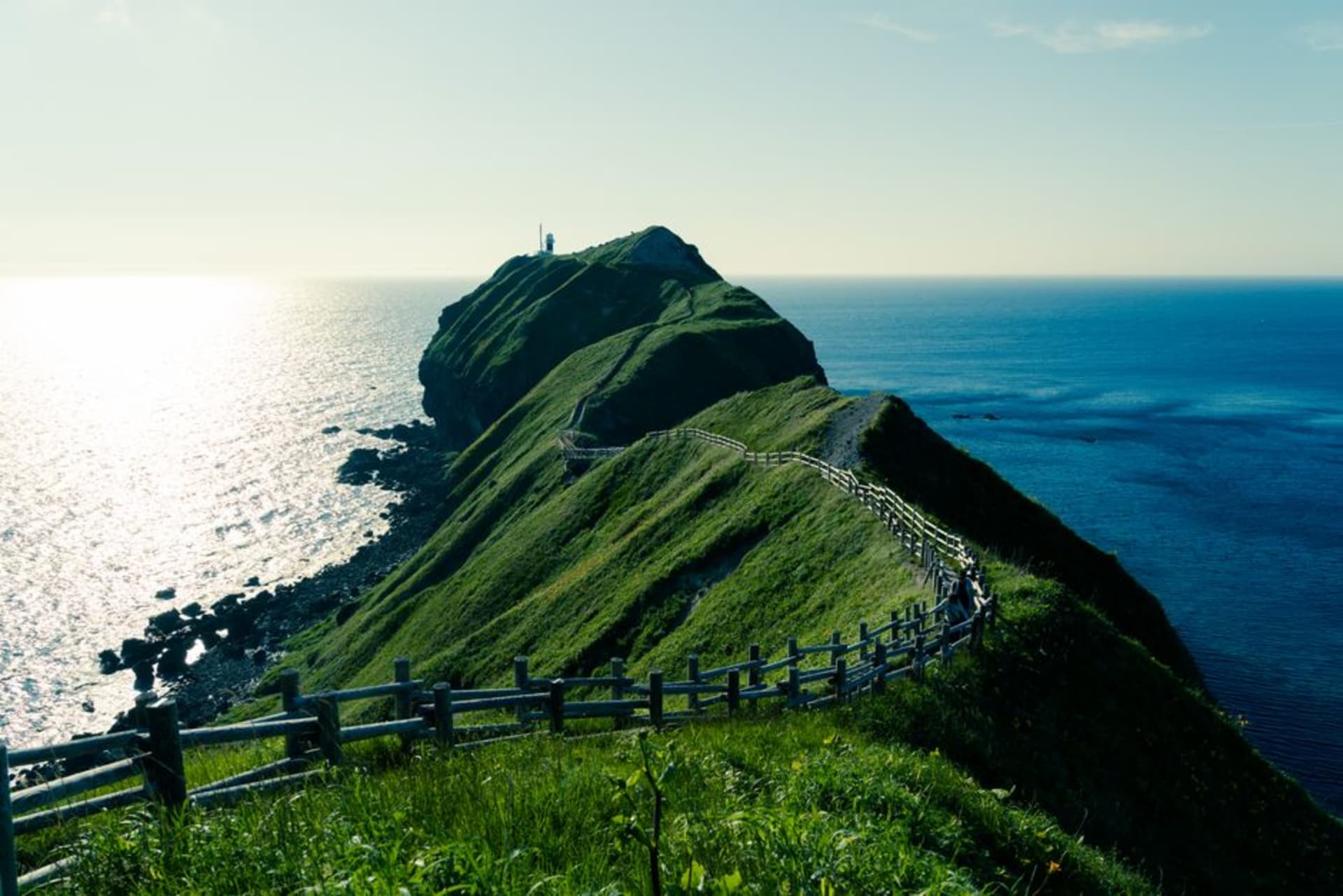
The wild southwestern tip of Kochi, where Shikoku runs out of land in a flourish of black cliffs, subtropical greenery, and a white lighthouse that has watched over some of the roughest water in Japan for over a century. It is remote, weather-beaten, and gloriously empty — a place to feel small in the good way. We drove a long way for it and the cape paid us back with interest.
Getting to Cape Ashizuri is half the story. The road down the far southwest of Kochi is long and winding, hugging a coast that grows steadily wilder, the towns thinning until it is just you, the sea, and the occasional white-flowered hedge of subtropical camellia. By the time we reached the cape the light was doing that thing it does over big open water — going hard and clean and slightly blinding — and Lia rolled the window down to the smell of salt and warm vegetation. We had been driving for hours. Neither of us minded. There is a particular satisfaction in reaching the actual end of something, the point past which there is only sea, and Ashizuri is exactly that: the place where Shikoku, and in a sense Japan, simply runs out.
The lighthouse and the edge
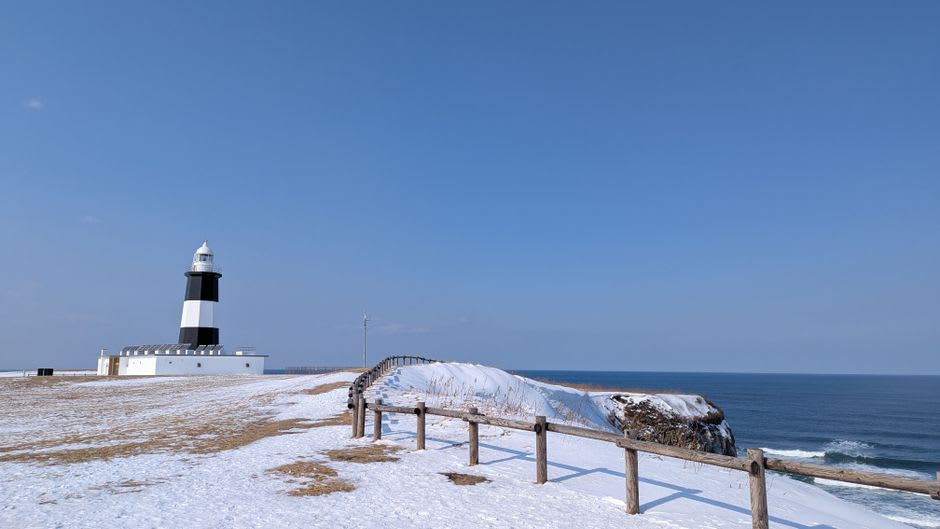
The white lighthouse at the tip of Ashizuri has stood since the Meiji era, and it earns its keep — the waters here are notoriously rough, and standing on the viewing platform you understand why. The cliffs drop in black volcanic ribs to a sea that never seems entirely calm, the swell heaving against the rocks far below with a boom you feel in your chest. We walked the loop of paths through the subtropical scrub, past the statue of the monk John Manjiro who was born near here and shipwrecked into an extraordinary life, and came out again and again to sudden gaps in the greenery where the whole Pacific opened up in one blue-grey sheet. Lia stood at the rail a long time. When I asked what she was thinking she just said, “How far it goes,” and that was the whole of it.
Kongofuku-ji and the pilgrims
Just back from the cape sits Kongofuku-ji, the 38th temple of the Shikoku pilgrimage and one of its most remote — the one that costs pilgrims the longest walk between stops. We arrived to find a handful of white-clad henro pilgrims resting in the courtyard, staffs propped against a wall, faces weathered by however many hundred kilometres they’d come. The temple is set among old trees and subtropical palms, unexpectedly lush, with a pond and mossy stone and the murmur of sutras from somewhere inside. There was a gravity to the place that had nothing to do with grandeur — these were people who had suffered to arrive, and it showed in how quietly they moved. We are not pilgrims, but we took our shoes off and sat a while, and it felt right to be quiet with them.
The empty coast and a meal of the sea
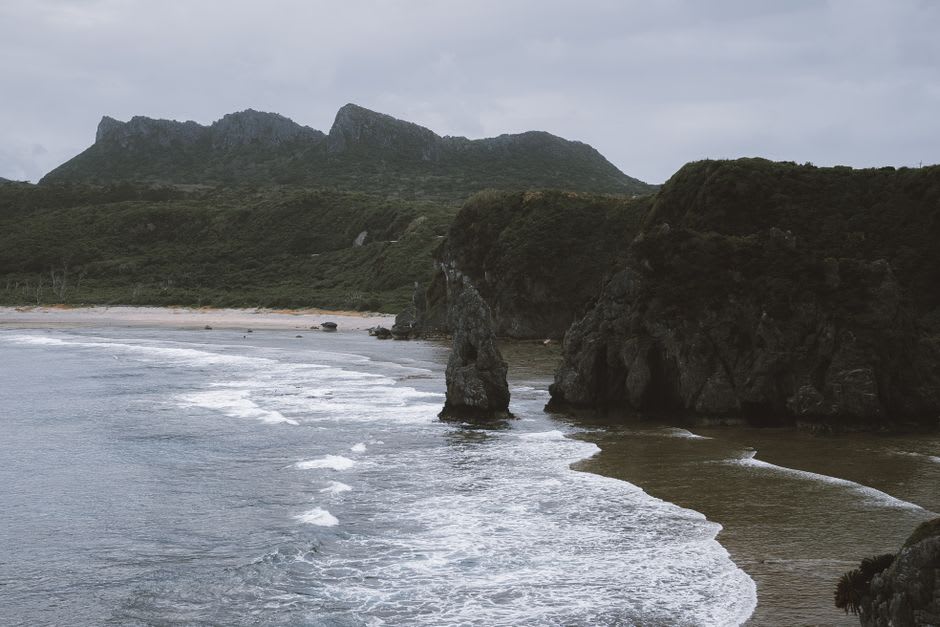
What stays with me about Ashizuri, beyond the drama of the point itself, is how empty and generous the surrounding coast feels. We spent our second morning driving the smaller roads, stopping at overlooks where the only other presence was a hawk riding the updraught, and at a tiny harbour where a woman was laying bonito out to dry. Kochi is famous for its katsuo no tataki — bonito seared hard over burning straw, the outside charred and the inside nearly raw — and we ate it that evening at a plain little place near the water, the fish so fresh it barely needed the ponzu and garlic piled beside it. Outside, the Pacific went on booming into the dark. Lia said she could live down here, and for one long uncomplicated evening I believed her.
Getting There
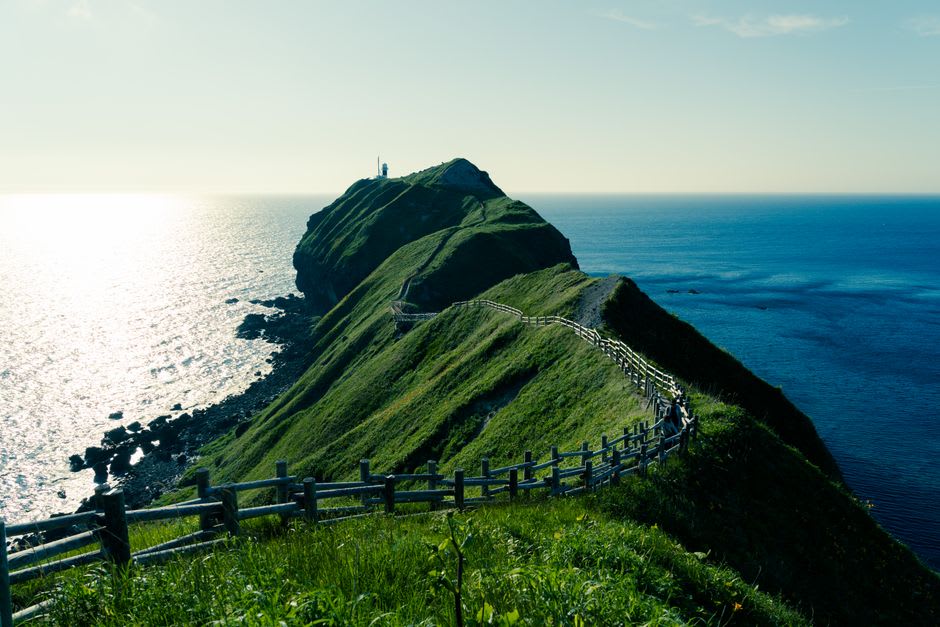
Cape Ashizuri lies at the far southwestern tip of Kochi Prefecture, and there is no fast way in — that is part of its character. The usual approach is to take a train to Nakamura Station on the Tosa Kuroshio line, then a bus down to the cape, a scenic ride of well over an hour along the coast; buses are limited, so check return times carefully. Renting a car gives you far more freedom to explore the surrounding coves and the town of Tosashimizu, and we were grateful we did. However you come, allow more time than the map suggests and treat the journey as part of the destination, because out here it genuinely is.
Keep exploring
More of Shikoku