Usuki
"A carved stone face had been smiling gently for eight centuries, and it disarmed me completely."
A small castle town on the Ōita coast where stone Buddhas have sat serenely in a green valley for eight hundred years. Usuki is carved cliffs, lantern-lit lanes, the dark perfume of brewing soy sauce, and fugu eaten slowly. We came for the Buddhas and lingered for everything around them.
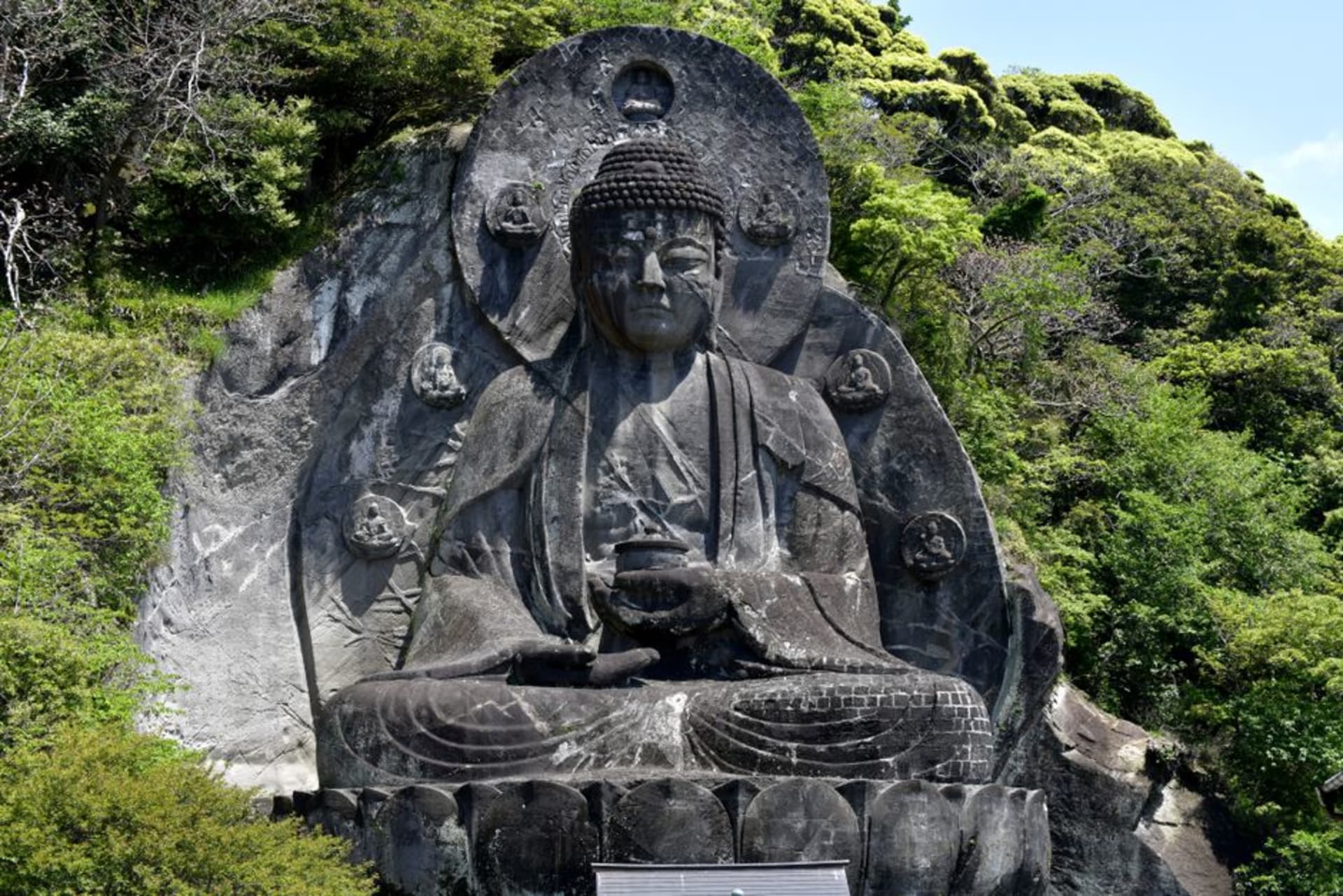
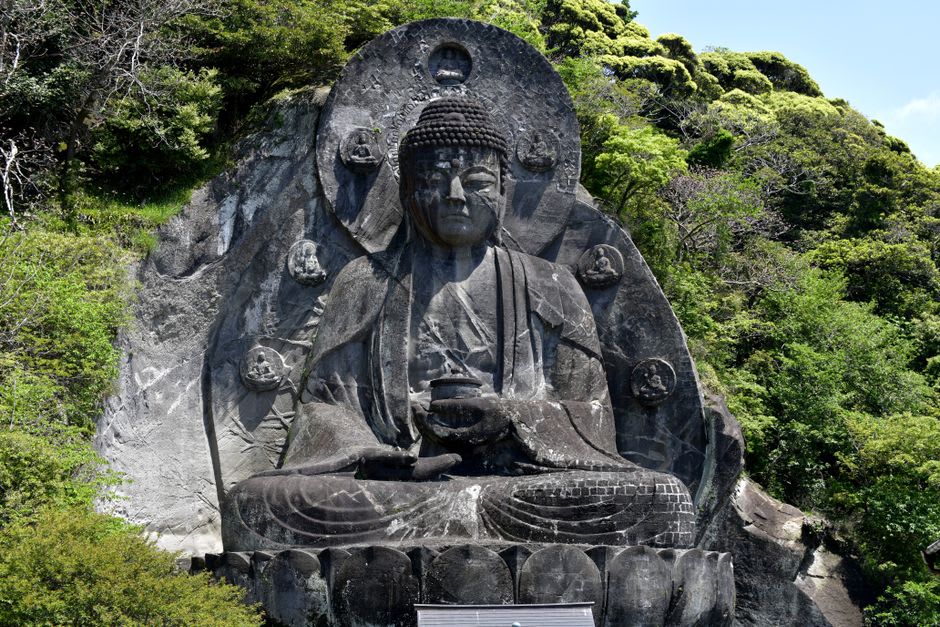
The rain started as we reached the valley, soft and warm, and I will never regret it, because it is exactly how the Usuki stone Buddhas should be met. They sit in a fold of green hills at the edge of town, dozens of them, carved directly into the soft volcanic cliffs sometime around the twelfth century by hands we cannot name. Some are massive, serene, complete. Others are worn nearly featureless, or missing their bodies entirely, so that a calm stone head rests alone on a plinth of moss. The most famous of them, a great seated Dainichi Buddha, has a face of such quiet authority that Lia and I both went silent in front of it. Water dripped from the eaves of the shelters built to protect them. Nobody spoke above a murmur. Eight hundred years of weather and prayer had left something in that valley that you can feel on your skin.
The Stone Buddhas
The magaibutsu of Usuki are the only stone Buddhas in Japan designated National Treasures, and standing among them you understand why. This was no single commission but the work of generations, an act of devotion pressed into the living rock over decades. We walked the wooden boardwalks that thread between the clusters, and I kept being caught by the small human touches — a nose recarved centuries after the original crumbled, moss colonising a serene brow, a fern growing from a Buddha’s shoulder. There is no grandeur here in the way of a great golden temple. There is something better: intimacy, and the slow patience of stone. Lia said it felt less like a monument than like meeting a group of very old, very tired, very kind people. That was exactly it.
Lanes That Remember
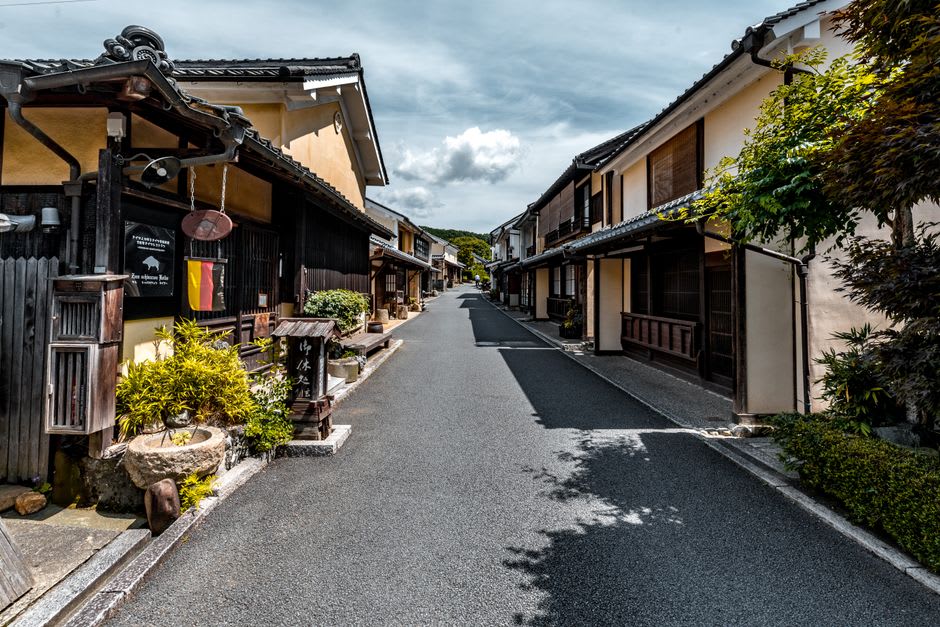
The town of Usuki itself, a few minutes away, is a survivor. Its old quarter escaped the bombing and the bulldozers, and the samurai and merchant streets have kept their shape — earthen walls, dark wooden storefronts, a stone-paved lane called Nioza that curves uphill past temples and old residences. We wandered it in the fading light as the rain eased, and shopkeepers were sliding open their wooden shutters. Usuki has brewed soy sauce and miso for centuries, and the smell of it drifts through the streets, dark and savoury and somehow ancient. We ducked into one old brewery, its beams black with age, and bought a small bottle of soy sauce that made everything I cooked for months afterward taste like a memory of that lane.
Fugu and a Slow Dinner
Usuki is also, improbably for a town this size, famous for fugu — the pufferfish that can kill you if a careless knife slips, prepared here by licensed chefs with generations of practice. I had eaten it once before and been underwhelmed by a touristy version in a big city. This was different. We sat at a small counter and the chef laid out fugu sashimi sliced so thin the pattern of the plate showed through, then a bubbling hot pot of it, then rice porridge made from the broth at the end. It is not a flashy fish. Its pleasure is texture and restraint and the faint, thrilling knowledge of what it is. We ate for two hours, drank warm sake, and walked back to our inn through empty dark streets that smelled of soy and rain.
Getting There
Usuki lies on the coast of Ōita Prefecture in eastern Kyūshū. Limited express trains from Ōita city take around forty minutes down the scenic coastal line; the same trains connect onward toward Beppu’s hot springs if you’re stringing the region together. The stone Buddhas sit a few kilometres outside the town centre — a short bus ride or taxi from Usuki Station, or a pleasant cycle if the weather holds. Give yourself an unhurried afternoon; this is a place that punishes the rushed and rewards the slow.
Keep exploring
More of Kyūshū & Okinawa