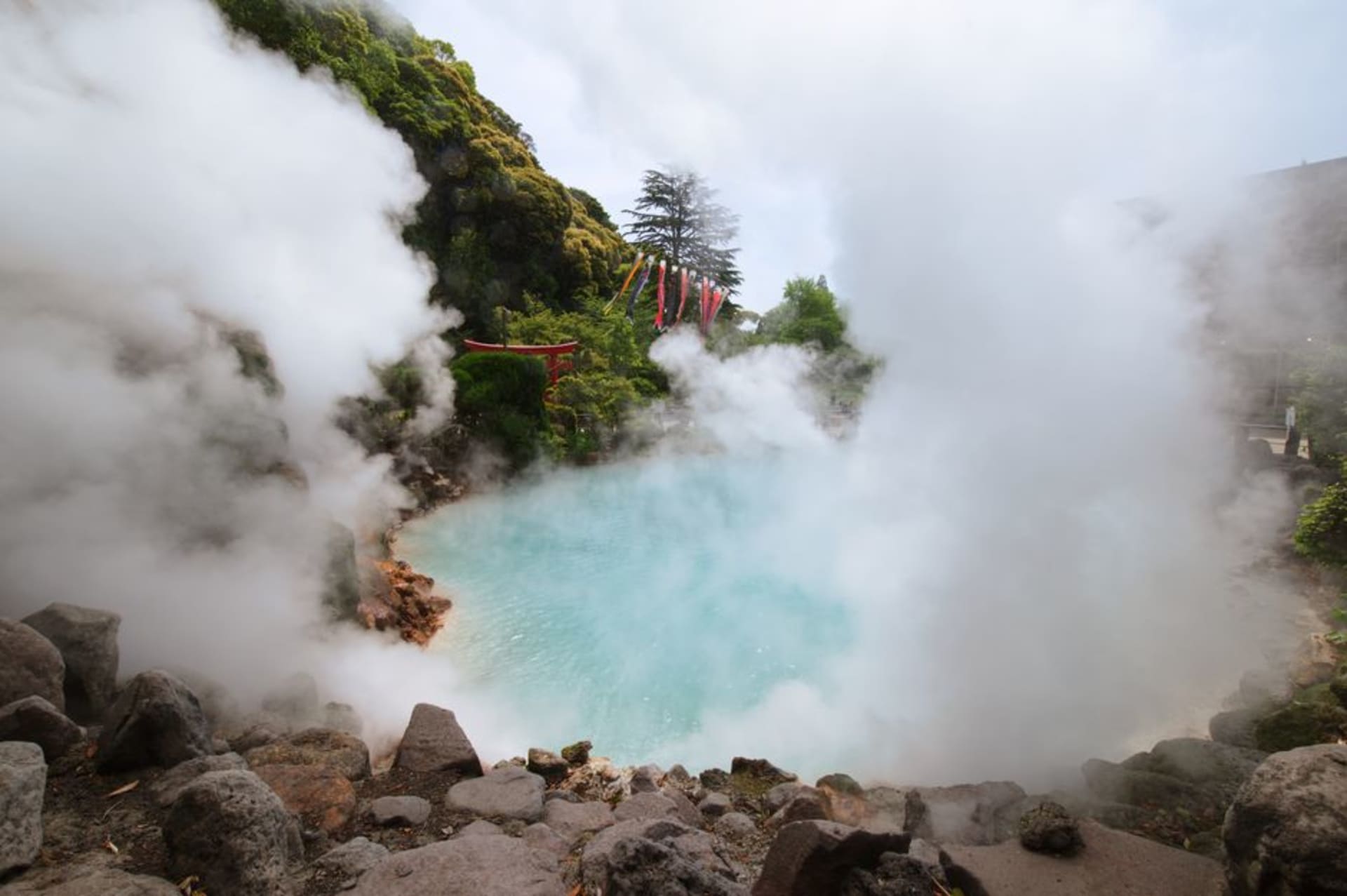
Unzen
"The ground hissed and steamed under our feet, and somewhere above it the mountain was still being watched."
A highland hot-spring resort on Nagasaki's Shimabara Peninsula, set among steaming, sulfurous volcanic 'hells' and cool mountain forest beneath the still-watched peak of Mount Unzen. Cracked white earth, hissing vents, deep baths, and a quiet, elemental air of a place living on a volcano.
You smell Unzen before you see it. We came up the peninsula by bus, climbing out of the humid coastal heat into cool forested highland, and somewhere on the last switchbacks the air changed — a sharp sulfur tang, faint at first, then unmistakable — and then the trees opened onto plumes of white steam rising straight out of the ground. Unzen sits high on the Shimabara Peninsula, a hot-spring town wrapped around a field of volcanic vents, beneath Mount Unzen, a volcano whose 1990s eruptions are still within living memory and whose slopes are watched to this day. It is beautiful and slightly unnerving in equal measure, and Lia and I felt both from the moment we stepped off the bus.
The Jigoku
The heart of it is the Unzen Jigoku, the “hells” — a stretch of bare, cracked white and grey earth where superheated water and gas force their way up through the ground in a hundred hissing vents, the whole area veiled in drifting steam that stinks of sulfur and catches in your throat. Wooden boardwalks thread through it, and you walk them with steam curling up around the rails, the ground warm underfoot, jets roaring out of fissures close enough to touch.
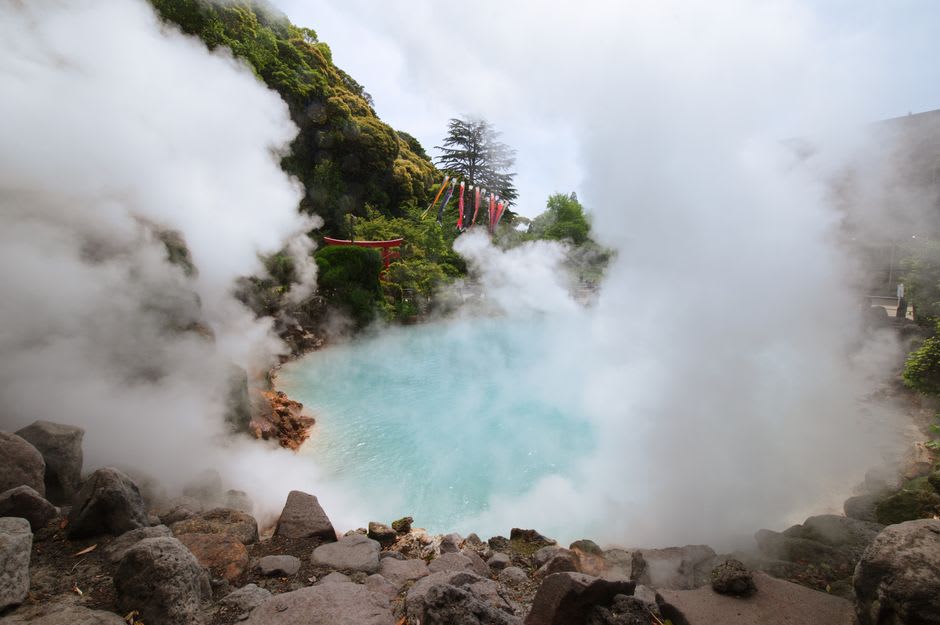
The place has a grim history too — these hells were used to martyr Christians in the seventeenth century — and small markers here and there remember it. We bought eggs boiled black in the volcanic water from a stall at the edge, as everyone does, and ate them looking out over the smoking ground.
The Onsen
All that geothermal fury has one gentle consequence: the baths. Unzen has been an onsen resort for well over a century, one of the first in Japan discovered by foreign visitors, and its waters are milky, acidic, and faintly sulfurous, piped straight from the hells into the town’s inns and bathhouses. We were staying in an old wooden ryokan, and after the walk through the steam we sank into its bath as the light failed, the water almost too hot, the smell of sulfur following us even here.
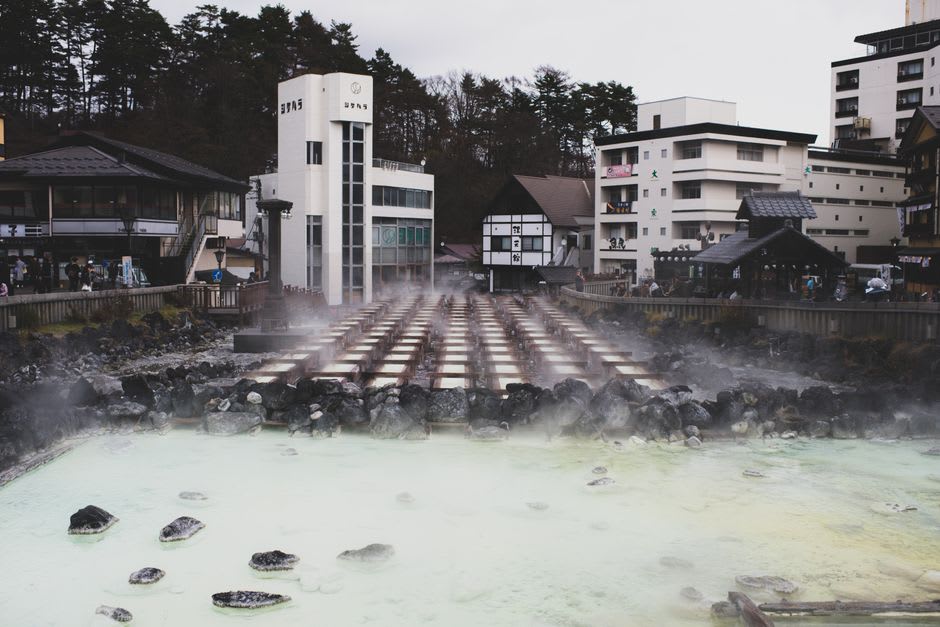
There is a particular contentment to soaking in water the earth itself has heated, and we lingered in it long past sensible, then ate too much at dinner and slept like the dead in the cool mountain air.
The Mountain and the Forest
Above the town the forested slopes climb to the peaks of Mount Unzen, and the next morning we took the ropeway up toward the summit ridge for the wider view. The 1991 eruption that built the lava dome of Heisei-shinzan is recent enough that you can see the raw scar of it, grey and unhealed, against the green of the older slopes — a sharp reminder of what the town lives on top of.
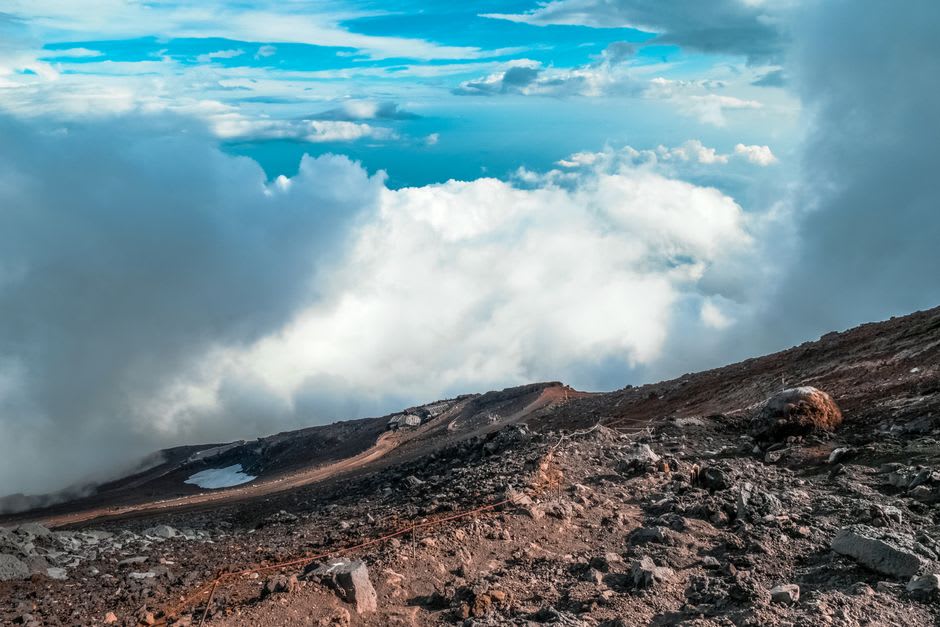
From the top the whole peninsula falls away to the sea, the Ariake Sea on one side and the open water on the other, and the cool clean wind up there was a relief after the sulfur below. We walked a stretch of the ridge trail through wind-stunted trees before coming down, glad to have felt both faces of the place — the tended baths and the untamed mountain that makes them.
Getting There
Unzen sits high on the Shimabara Peninsula in Nagasaki Prefecture, reached most simply from Isahaya, which is about 25 minutes from Nagasaki city by JR limited express. From Isahaya, buses climb up to Unzen in a little under an hour and a half. It can also be approached from the port town of Shimabara on the far side. There is no train to Unzen itself, so plan around the bus timetable. The town is small and walkable, the jigoku and bathhouses all close together; give it an overnight to do the baths properly and see the hells at both ends of the day.
Keep exploring
More of Kyūshū & Okinawa