Takeo Onsen
"You crane your neck at the big tree until it stops feeling like sightseeing and starts feeling like church."
A small Saga hot-spring town built around a 3,000-year-old camphor tree and a library that people travel across Japan just to sit in. We came for the bath and stayed for the trees, which is not the order I expected.
The first thing you see in Takeo is a gate the colour of a persimmon — the Romon, a two-storey vermilion tower that looks like it wandered in from a much grander city and decided the pace here suited it better. Lia and I arrived mid-afternoon with wet hair from the rain and no real agenda beyond soaking. A retired couple we’d shared a train carriage with had insisted, with the fervour of true believers, that we not skip the camphor tree. “Older than the shrine,” the husband had said. “Older than everything.” We nodded politely, the way you do. Then we went and found it, and stopped being polite about it.
The great camphor
You reach the tree through the grounds of Takeo Shrine, down a path that narrows into bamboo and then opens onto a small clearing, and there it is: a camphor said to be three thousand years old, its trunk so vast that a hollow at its base has been made into a tiny shrine you could crawl into. The bark folds and buttresses like something geological rather than living. Lia went quiet in the way she does when she’s genuinely moved and doesn’t want me to make a joke about it. I didn’t. We stood at the little rope barrier for a long time, and I found myself doing the arithmetic — this tree was already ancient when the things I think of as ancient were being built. It rearranges you a little.
The library everyone talks about
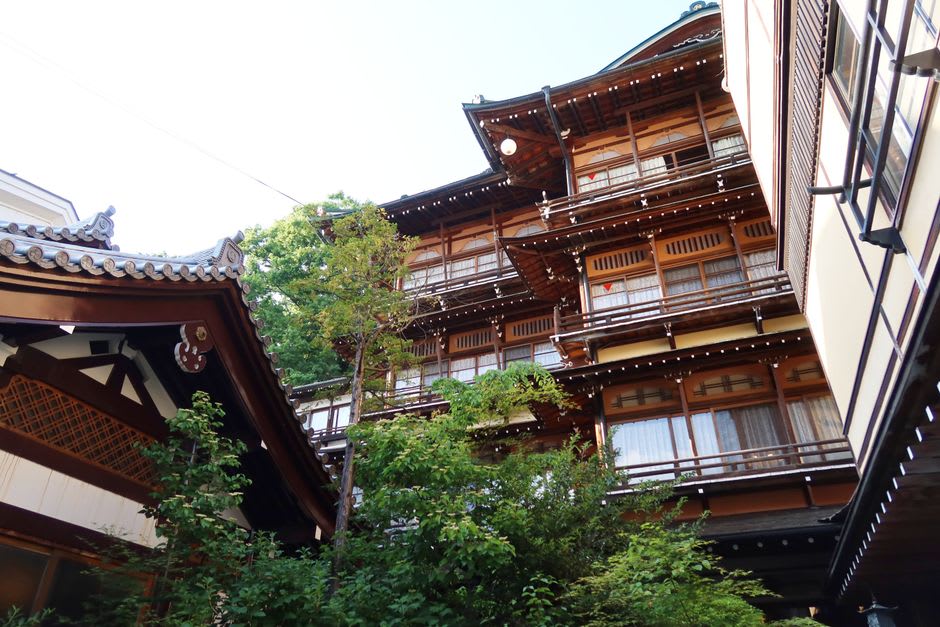
Takeo has, of all things, a famous library. The city renovated its public library into an airy, wood-and-glass space with soaring shelves, a café, and long tables where locals and pilgrims-of-good-design sit reading all day. I was ready to find it overhyped — a photogenic idea more than a real place. Instead we lost ninety minutes there without noticing, Lia curled in an armchair with an art book she couldn’t read a word of, me watching an old man work slowly through a newspaper with a coffee. The genius of it is that it’s still a working library, full of ordinary townspeople, not a museum of itself. A town that decided reading was worth building a cathedral for. I liked Takeo enormously for that.
Finally, the bath
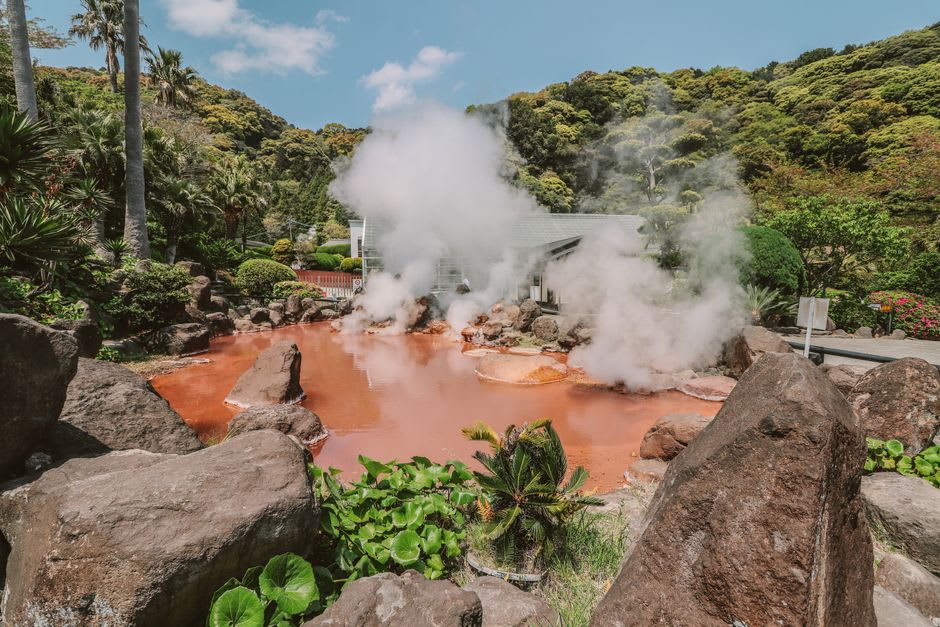
We had, of course, actually come to bathe. The Takeo Onsen bathhouse district sits just behind the Romon gate, and the water here has been drawing travellers for well over a thousand years — samurai, feudal lords, the odd shogun. We split for the separate men’s and women’s baths at the Motoyu, the oldest of them, a plain and honest building with no frills and blessedly hot water. The onsen is faintly alkaline and leaves your skin feeling smoothed, almost soapy. Afterward Lia and I found each other pink-faced and loose-limbed in the lobby, and walked back to our inn through the evening drizzle eating a shared bag of something sweet, saying almost nothing, which by then was the whole point.
Getting There
Takeo Onsen sits on the Nishi-Kyushu Shinkansen line, which put it within about 30 minutes of Nagasaki and a bit over an hour from Hakata (Fukuoka) via a transfer at Takeo-Onsen Station — the line’s opening made this once-sleepy town suddenly very reachable. From the station the Romon gate, the shrine, and the great camphor are a flat 15-minute walk or a short bus ride; the library is even closer. It’s small enough to do on foot in an afternoon, but I’d argue for staying a night at one of the ryokan so you can bathe twice and see the camphor once in daylight and once in the strange green quiet of dusk.
Keep exploring
More of Kyūshū & Okinawa