
Takachiho
"The boatman said the gods came down here, and standing in that gorge at dawn, Lia and I found it easy to believe him."
A mist-wrapped gorge town in the mountains of Miyazaki, where a river runs green between sheer basalt cliffs and the old creation myths of Japan feel less like stories than local news. Rowboats beneath a waterfall by day, sacred dance by night.
Takachiho is hard to reach, which is part of why the gods are supposed to have chosen it. We came up into the Kyūshū mountains on a slow bus through cedar valleys wrapped in mist that never fully lifted, and by the time we arrived I understood why this remote town holds such a grip on the Japanese imagination. This is where the myths live — where, so the Shintō stories go, the sun goddess Amaterasu hid herself in a cave and plunged the world into darkness, and where the divine ancestor of the imperial line first descended to earth. Lia isn’t given to mysticism, and neither am I, but there’s a quality to the light here, green and dim and wet, that makes the old tales feel like something remembered rather than invented.
The gorge
The Takachiho Gorge is the town’s still heart — a narrow chasm where the Gokase River, over millennia, has cut down through columns of basalt left by an ancient eruption of nearby Mount Aso. The cliffs rise sheer and fluted on either side, dripping with ferns, and the water between them is an astonishing jade green. A walking path runs along the rim, but the thing to do is take one of the little rowboats out onto the water and pull yourself upriver toward the Manai Falls, which drops seventeen metres straight off the cliff into the gorge. We queued a while for a boat, then Lia took the oars and rowed us in under the spray while I trailed a hand in water cold enough to ache, both of us grinning like children, the cliffs closing overhead.
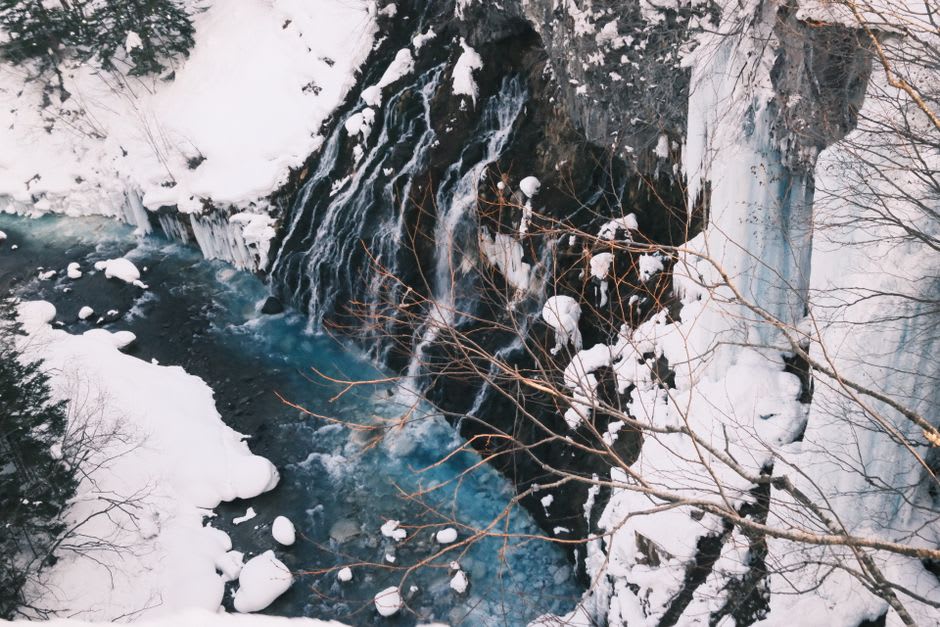
From the water the scale is overwhelming — the walls go up and up, mossed and streaming, and the light comes down filtered and green, and it is very easy to stop talking.
The shrines in the trees
Takachiho is thick with shrines, and they are not showpieces but working places, mossy and cedar-shaded and often nearly empty. We walked out to Amano-Iwato-jinja, the shrine dedicated to the cave myth, where you can peer across a ravine at the rock cave in which Amaterasu is said to have hidden. Downstream from it, along a river path, lies Amano-Yasukawara, a broad cave where the eight million gods are said to have gathered to plot how to coax her out — and pilgrims have built thousands upon thousands of little stone cairns across its floor and walls, so that the whole cavern glitters with balanced stones. Lia added one, carefully, and we stood in the damp hush listening to the water. It felt like the oldest place I’d ever been.
Back in town, Takachiho-jinja stands among towering cryptomeria, one pair of trees grown together at the trunk and hung with prayers for lovers, which Lia insisted we honour.
Kagura by night
But it’s after dark that Takachiho gives its greatest gift. The village has kept its yokagura — sacred night dances that reenact the creation myths — alive for centuries, and every night at Takachiho-jinja they perform a handful of the thirty-three ritual dances for visitors. We sat on the floor of the shrine hall in the cold with a couple of dozen others while masked dancers moved to drum and flute, telling in slow deliberate gesture the story of the sun goddess and the cave, of the god who tore the rock away and let light back into the world. One dance drew laughter, another something closer to awe. It was not a performance for us so much as one we’d been allowed to witness. Lia squeezed my hand in the dark.
We walked back to our inn through empty streets under a wet black sky, the mountains invisible around us, and I thought that some places you visit and some places let you in. Takachiho, briefly, let us in.
Getting There
Takachiho takes some effort, which keeps it quiet. There’s no train; the usual approach is a highway bus from Kumamoto or from Miyazaki, each around two and a half to three hours through the mountains, or a drive if you have a car. Come midweek and out of the autumn-leaf peak to have the gorge boats without a long wait, and stay the night — the kagura is only offered after dark, and the town at dusk, emptied of day-trippers and wrapped in mist, is the whole reason to come.
Keep exploring
More of Kyūshū & Okinawa