Sasebo
"Somebody once tried to count the islands and gave up at ninety-nine, which felt about right."
A Nagasaki port city facing a maze of pine-clad islets called the Kujūkushima, the Ninety-Nine Islands. Home to a Dutch theme park, a US-navy-born burger culture, and boat cruises that thread between green scraps of land scattered across a silver sea.
Sasebo isn’t on most itineraries, and that’s exactly why we liked it. It’s a working port city on the ragged western edge of Kyushu, a place where a Japanese naval base and an American one share the water and the result is a town with an accent all its own — burger joints next to udon shops, sailors on shore leave, and just offshore one of the strangest, most beautiful coastlines in the country. We’d come mostly for the islands. We stayed for the burgers, which is not a sentence I expected to write about Japan.
The Ninety-Nine Islands
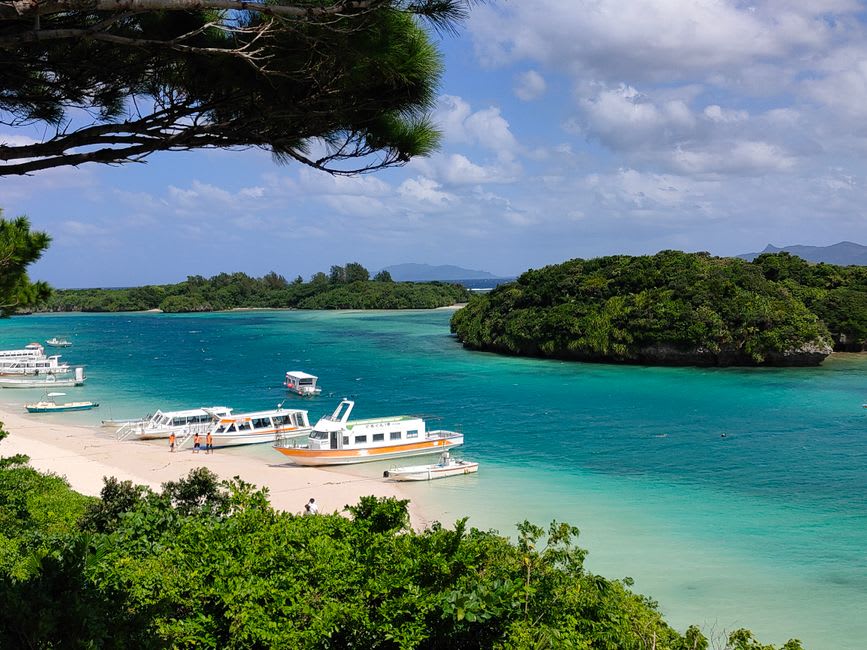
The Kujūkushima aren’t really ninety-nine — there are over two hundred — but the old name meant “too many to count,” and standing at the Ishidake overlook at dusk I understood the exaggeration. The sea below was scattered with dark green islets, most of them uninhabited, humped and pine-covered like a school of whales frozen mid-surface, and the low sun laid a sheet of hammered silver between them. Lia, who is not easily impressed by a view, went completely quiet and then said it was the best sunset of the trip, and she was right. A photographer nearby had clearly staked the spot out for hours. He nodded at us like we’d all earned it together.
Out among the islets
The next morning we took one of the sightseeing cruises out from Pearl Sea marina, an hour threading between the islands at water level where they close in around you and the channels narrow to lanes. Oyster and pearl rafts float in the sheltered bays; the boat slid past cliffs where the pines grow impossibly out of bare rock. It’s a gentle, undramatic trip, no rapids, no commentary you need to follow, just the slow revelation of how intricate the coast is once you’re inside it rather than looking down from above. Lia bought a small bag of grilled oysters at the marina afterward and we ate them on a bench watching the boats come and go, salt on our fingers.
Burgers, tulips, and the American edge
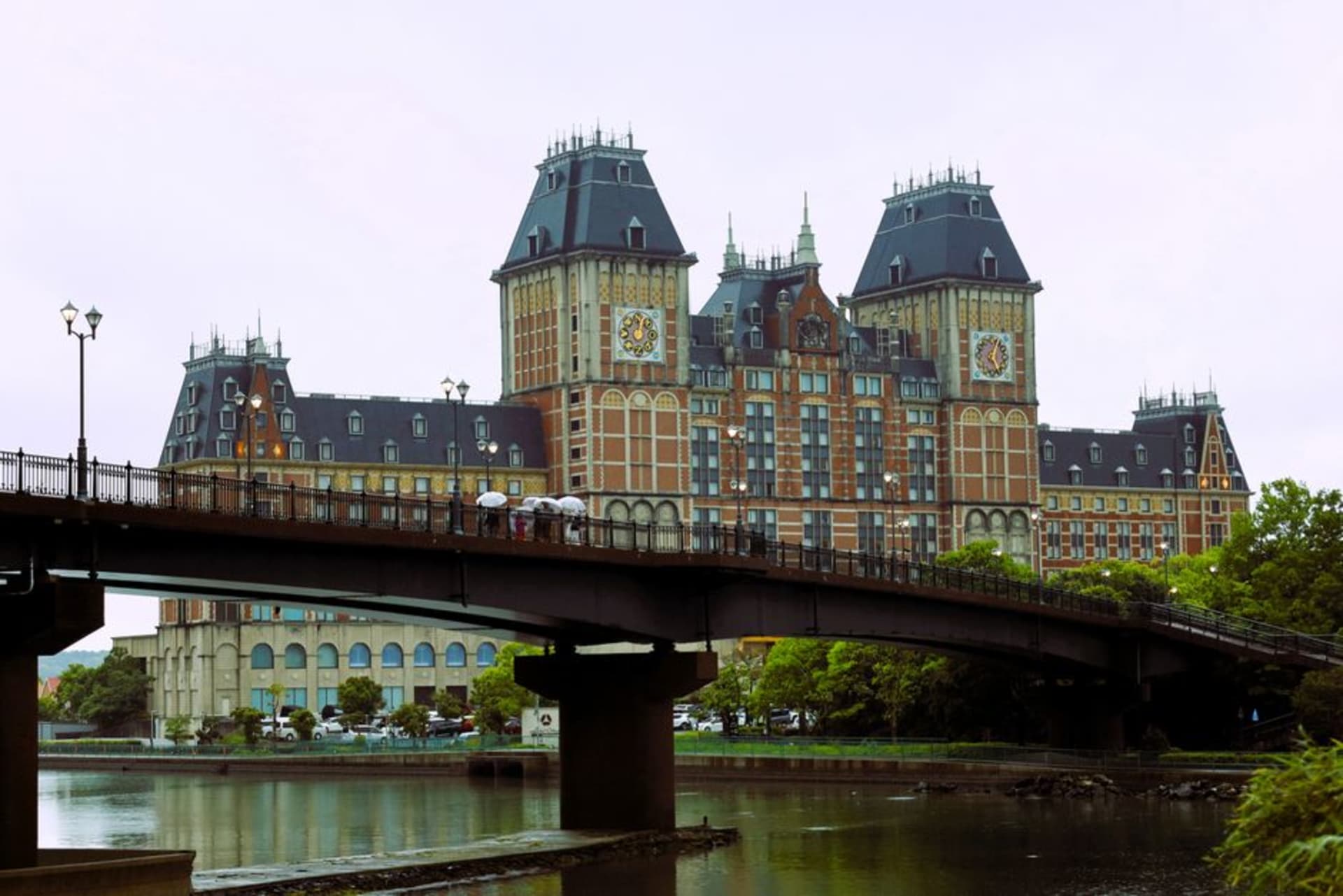
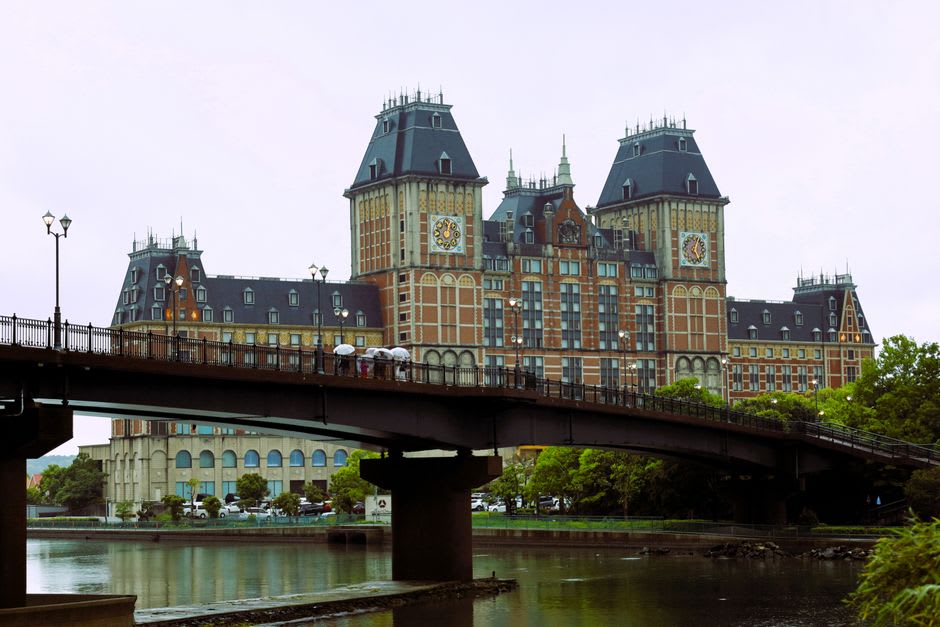
Sasebo’s other faces are stranger and I loved them for it. The Sasebo burger is a genuine local institution, born after the war when American sailors brought the idea and the town made it its own — thick, hand-made, stuffed with a fried egg and bacon and served in shops that have been at it for decades. We ate one each, enormous and unapologetic, at a counter near the base gates while sailors queued behind us. And then there’s Huis Ten Bosch, a full-scale reproduction of a Dutch town just outside the city, canals and windmills and tulip fields and brick gables, which should feel absurd and somehow, in the golden evening light, simply felt cheerful. We walked its canals eating stroopwafels and laughing at the sheer improbability of standing in the Netherlands, in Japan, having eaten an American burger for lunch.
Getting There
Sasebo is the western terminus of the JR Sasebo line, about 1.5–2 hours from Nagasaki or reachable via Hakata (Fukuoka) with a change. Huis Ten Bosch has its own station one stop before the city. For the Kujūkushima, the Pearl Sea marina and its cruise boats sit a bus ride north of Sasebo station, while the Ishidake overlook — best at sunset — needs a taxi or car. Give the city two nights: one for the islands and their light, one for its odder, more human pleasures.
Keep exploring
More of Kyūshū & Okinawa