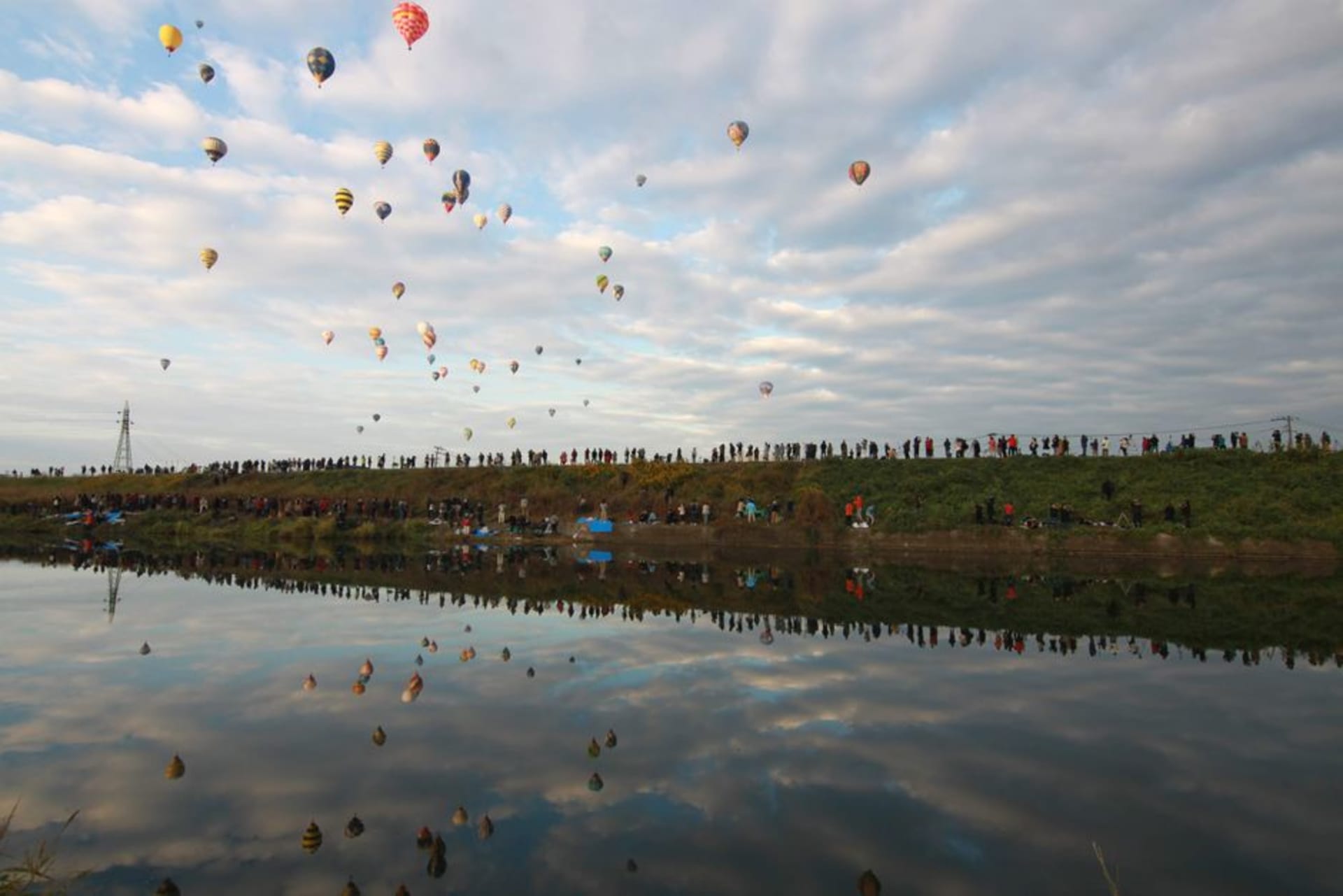
The quiet capital of a quiet prefecture, ringed by rice plains on northern Kyūshū. Saga is castle grounds and moats, a sky full of balloons come autumn, and the ghosts of an ancient moated village older than most of history. We found a city that asks nothing of you and gives more than you expect.
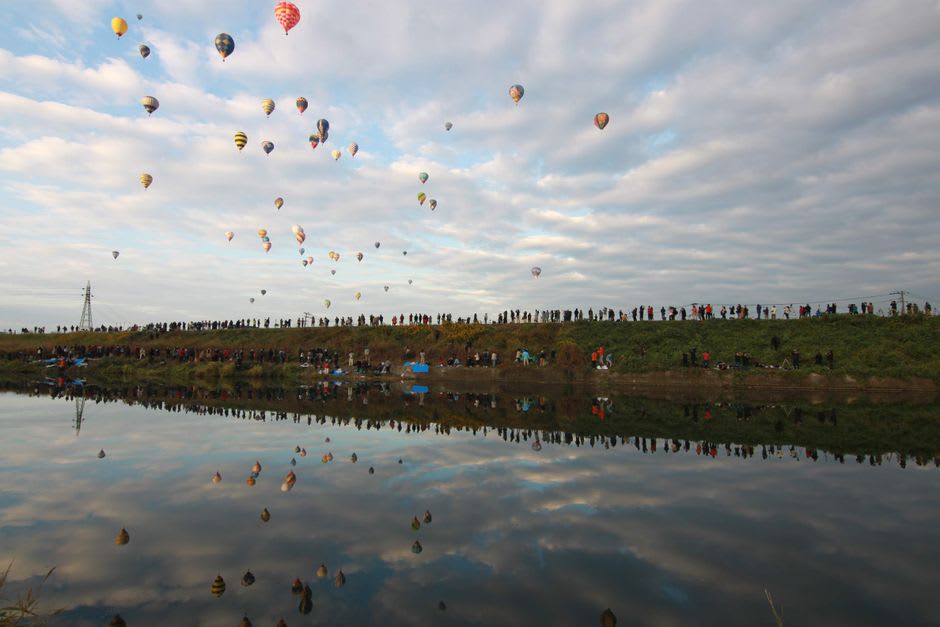
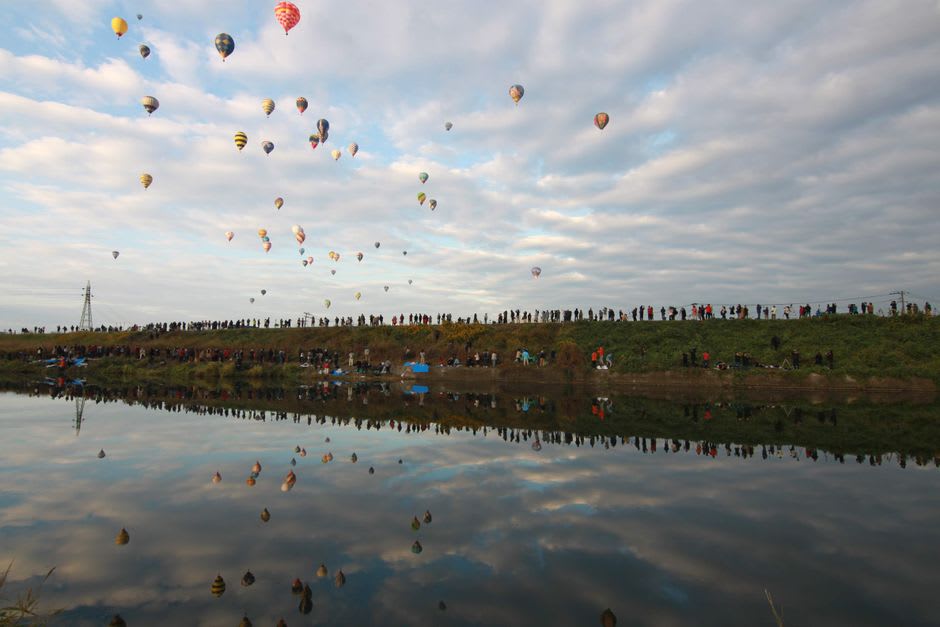
The alarm went off at five and Lia groaned at me from under the futon, but she got up, because you don’t sleep through the reason you came. It was late autumn and Saga was hosting its balloon fiesta, and out on the banks of the Kase River, in the grey before sunrise, dozens of crews were unrolling great envelopes of nylon across the frost-stiff grass. Then the burners began — that deep, breathy roar — and one by one the balloons stood up, filled, and lifted. By the time the sun cleared the plain there were more than a hundred of them adrift over the river, red and yellow and improbable, and the whole crowd had gone silent in the way crowds do when something is genuinely beautiful. I have been to loud festivals. This one was mostly hush and gasp.
A Sky Full of Balloons
The Saga International Balloon Fiesta is the largest ballooning event in Asia, and for a week each November this modest city fills up with pilots from around the world. There are competitions — target drops, distance races — but as a spectator you mostly stand on the riverbank and let it happen. We bought hot cans of coffee from a stall and warmed our hands and watched the balloons chase markers across the fields, dipping low enough to trail their baskets through the rice stubble. In the evening they held a “night mooring,” the tethered balloons all glowing in unison to music, and Lia, who is not sentimental, admitted it was one of the loveliest things she’d seen in Japan. Time it right and Saga gives you a memory that a bigger city never could.
The Castle and the Moat
The rest of Saga rewards a slower pace. At the heart of the city sits Saga Castle, or what remains of it — the great wooden Honmaru palace has been faithfully rebuilt, and inside it a free history museum tells the surprising story of this domain, which quietly became one of the most technologically advanced in Japan in the years before the country reopened to the world. We walked the broad moats afterward, past willows and slow carp, and the whole place was nearly empty on a weekday morning. That emptiness is Saga’s gift. In Kyoto you fight for a photograph. Here Lia and I had a reconstructed feudal palace almost to ourselves, and the caretaker gave us green tea and a genuinely curious question about where in France we were from.
Ruins Older Than Rome’s Fall
A short ride out of the city lies Yoshinogari, and it undid some of what I thought I knew about ancient Japan. This is a vast reconstructed moated settlement from the Yayoi period, well over two thousand years old — watchtowers, thatched pit dwellings, raised granaries, burial mounds, all rebuilt across a green expanse that goes on and on. We climbed a watchtower and looked out over a village that people defended, farmed, and buried their dead in when Rome was still a republic. It is one of the most important archaeological sites in the country, and yet we shared it with only a handful of school groups. I stood on the ramparts, wind in the grass, and felt the odd vertigo of deep time that travel occasionally hands you for free.
Getting There
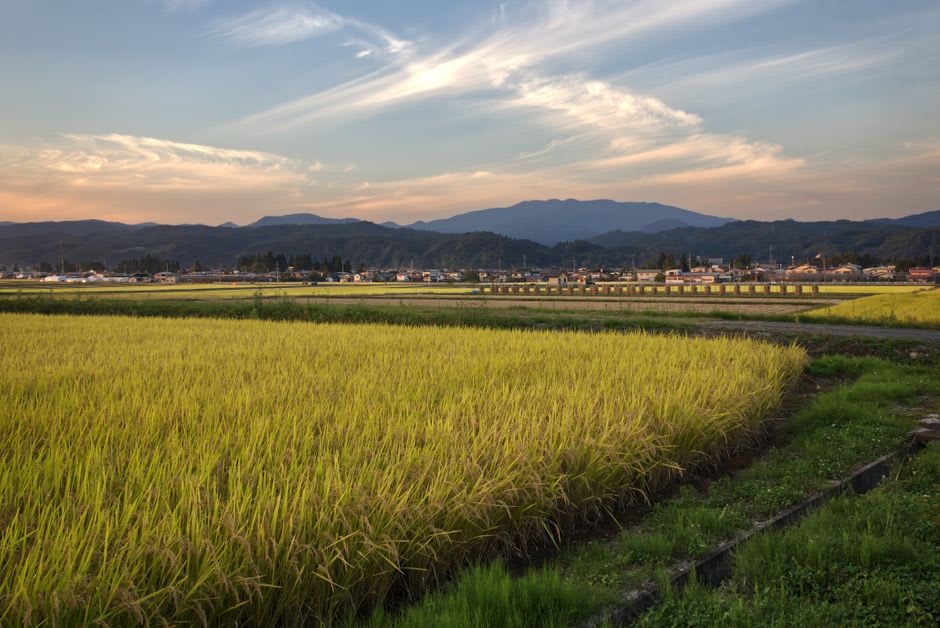
Saga sits on northern Kyūshū between Fukuoka and Nagasaki, and it’s easy to reach. Limited express trains from Hakata Station in Fukuoka take around forty minutes; trains from Nagasaki, a little over an hour. The city itself is flat and best explored by rental bicycle — the tourist office by the station lends them cheaply. For the balloon fiesta in early November, a temporary station opens right beside the launch site; go early, dress for a cold dawn, and don’t skip the morning flight for the sake of sleep.
Keep exploring
More of Kyūshū & Okinawa