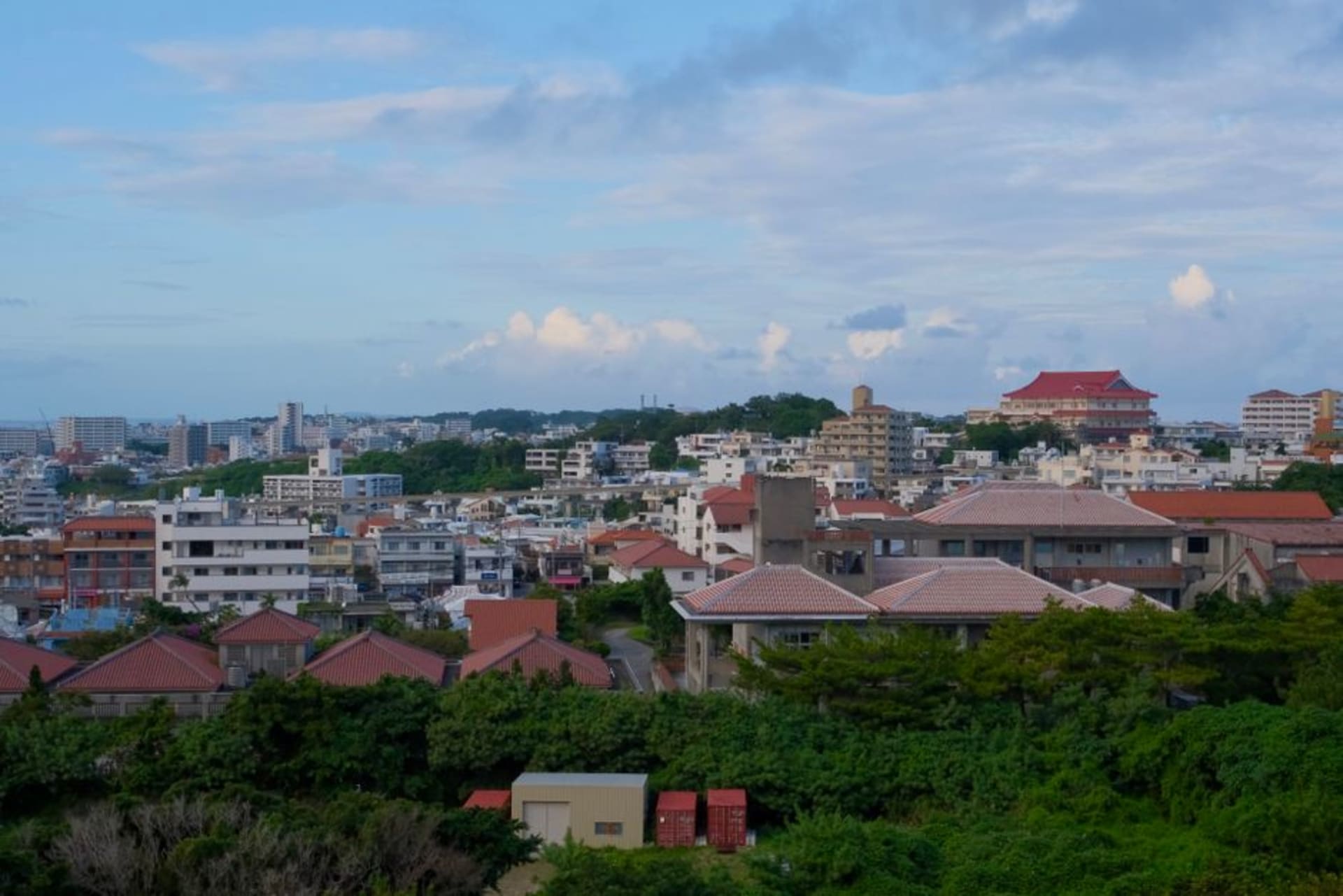
The sun-warmed capital of Okinawa, where mainland Japan loosens into something slower and more tropical. A market street that never quite sleeps, the reconstructed heart of the old Ryūkyū Kingdom, and a sea that changes the color of everything.
The first thing I noticed in Naha was the light — thicker, warmer, more golden than anywhere else we’d been in Japan. We had flown down from the mainland’s cool spring into what felt like a different country wearing the same passport. Okinawa was its own kingdom for centuries, and it still feels it: the food is different, the pace is different, the roofs curve differently, and people move as though the heat has quietly negotiated a slower agreement with time. Lia took off her cardigan on the tarmac and didn’t put it back on for three days. We dropped our bags and went straight out into the warm evening to walk.
Kokusai-dōri After Dark
Kokusai-dōri — International Street — runs for a mile or so through the center of Naha, and in the evening it hums. It is touristy, unashamedly so, but I liked it more than I expected to. Shops sell shisa, the lion-dog guardians that sit on every Okinawan roof, and bottles of awamori, the local rice spirit, and bitter-melon everything. We ducked off the main drag into the covered market arcades where the real life happens — a fish market downstairs selling parrotfish in improbable blues and greens, and cooks upstairs who will grill whatever you point at. We pointed at a lot. Sea grapes, those tiny green bubbles that pop with brine. Rafute, pork belly stewed soft in awamori and brown sugar. A street musician played the sanshin, the three-stringed snakeskin banjo, and its twang is the sound I now hear whenever I think of the island.
Shuri Castle and the Ryūkyū Past
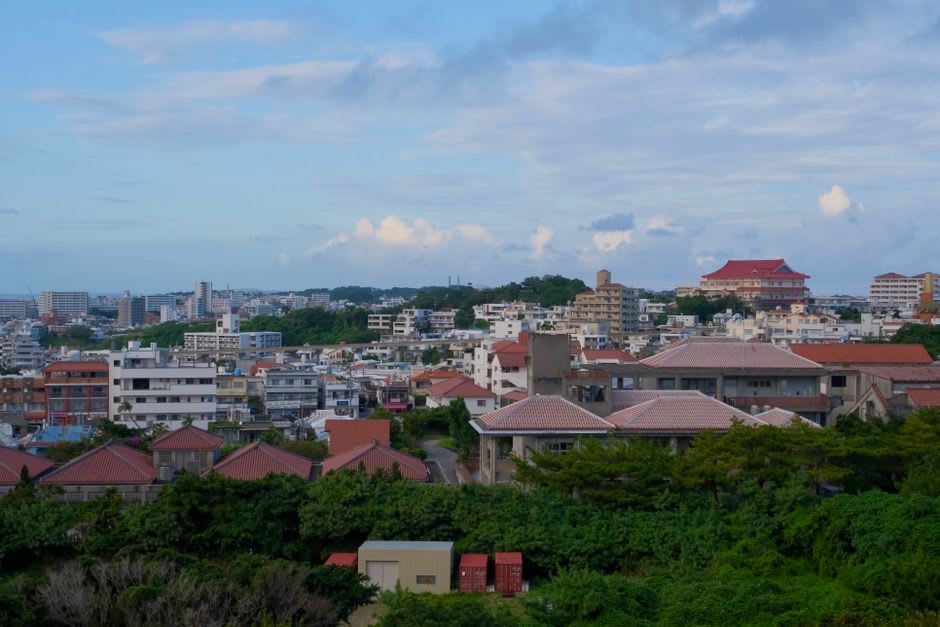
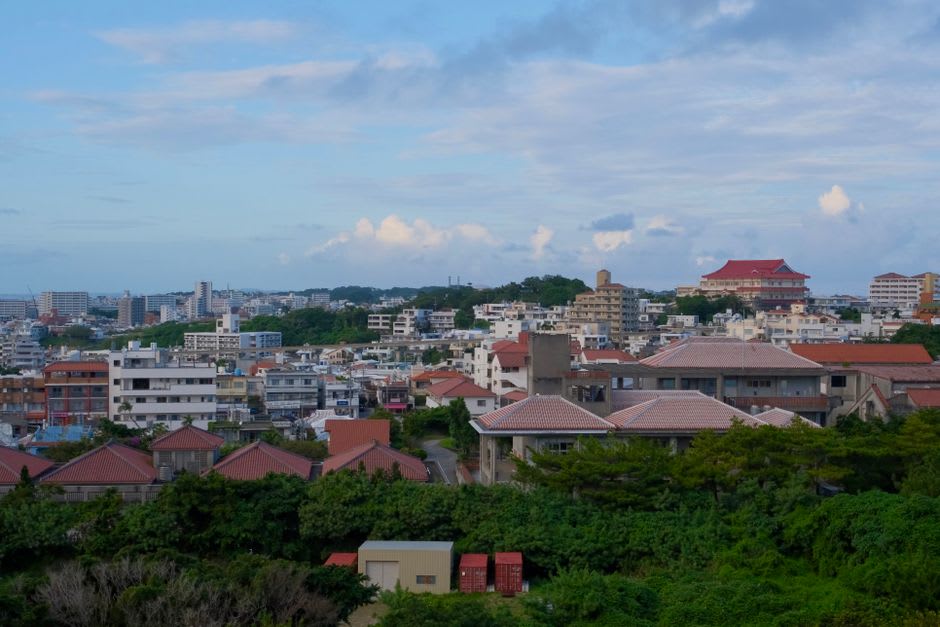
On a hill above the city stands Shuri Castle, the seat of the Ryūkyū Kingdom that ruled these islands for four and a half centuries before Japan absorbed them. It is painted a deep vermilion rather than the dark wood of mainland castles, its roofs a fusion of Chinese and Japanese and something wholly Okinawan, and even under reconstruction after the fire that gutted the main hall in 2019 it moved me. We walked the stone paths and the surviving gates, and from the walls we could see clear across Naha to the sea. A guide told us, quietly, that the Okinawans have rebuilt this castle before — more than once, war and fire taking it and the island putting it back each time. There is a stubbornness in that which reminded me of Hiroshima, a different island’s version of the same refusal to disappear.
Island Pace and the Sea
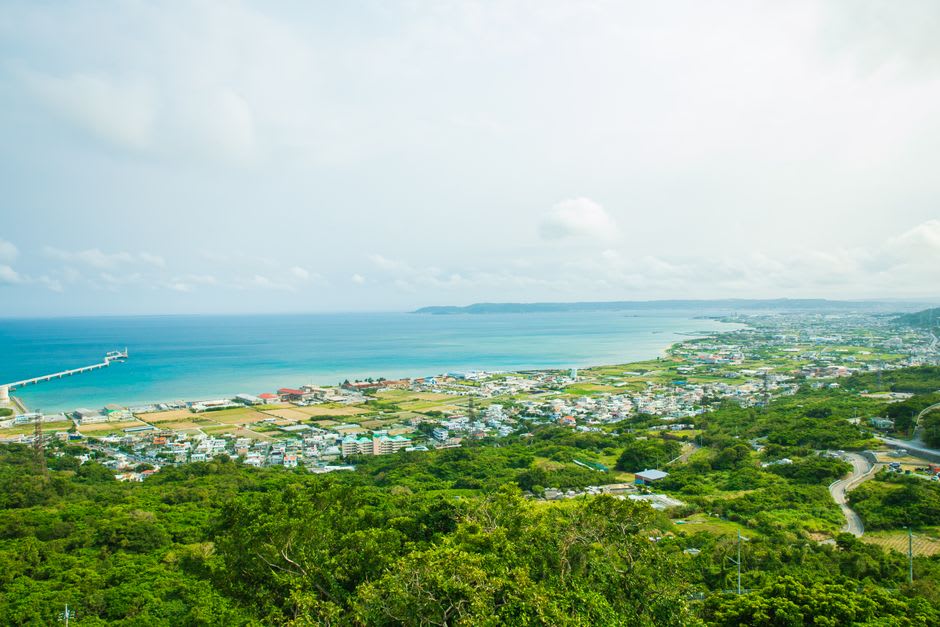
What stays with me most about Naha is not any single sight but the tempo. Okinawa consistently produces some of the longest-lived people on earth, and after a few days I began to suspect I understood why — nothing here is in a hurry. We took a local bus out toward the coast one afternoon, sat on a low seawall, and simply watched the water, which off these islands turns a blue so bright it looks switched on. An old man fished beside us and shared his shade and a can of cold sanpin tea without a common word between us. Lia dozed. I watched the light on the water and thought about how a single country can hold this and the snow of Hokkaidō at the same time, thousands of miles apart, and somehow both be Japan.
Getting There
Naha is reached almost entirely by air — Naha Airport sits just southwest of the city and connects to Tokyo, Osaka, Fukuoka and much of East Asia, a roughly two-and-a-half-hour flight from Tokyo. From the airport, the Yui Rail monorail runs straight into the center and up toward Shuri, which makes the main sights easy without a car, though renting one opens up the rest of the island and its beaches. Naha is warm year-round; late spring and autumn are the sweet spots, avoiding both the peak summer heat and the typhoon-prone months of high summer. Come with a slower clock than the mainland asks for — the island rewards it.
Keep exploring
More of Kyūshū & Okinawa