Nagasaki
"No other Japanese city has looked outward for so long, or paid such a price for it."
A hillside harbor city on Kyūshū with a history unlike any other in Japan — Dutch and Chinese traders, hidden Christians, streetcars, and a night view that spills down the slopes into the sea.
We reached Nagasaki by an old streetcar rattling in from the station, and I understood the city before I had properly seen it. It is built into a fold of hills around a long, narrow harbor, houses stacked up the slopes so steeply that some can only be reached by stairways, and everything tilts either toward or away from the water. Lia pressed her face to the tram window as we crossed a bridge over the Nakashima River, past stone arches and the pale facades of old trading houses. Nagasaki does not feel like the rest of Japan, and that is the whole point of it. For more than two centuries, when the country sealed itself off from the world, this one harbor stayed open a crack — a single licensed window through which Dutch and Chinese ideas, goods, and faith kept trickling in. That long, strange history is layered into every street, and by evening I felt we had arrived somewhere genuinely singular.
Dejima and the Two-Centuries Window
We started at Dejima, the fan-shaped artificial island where the Dutch trading post was confined during Japan’s centuries of isolation. It is no longer an island — the harbor around it was long ago filled in — but the compound has been painstakingly reconstructed: the warehouses, the merchants’ quarters, the sea gate, all rebuilt to the scale of the men who lived here as the country’s only sanctioned Europeans. Walking the narrow lanes between the timber buildings, I kept thinking about what it meant to be one of a handful of foreigners permitted in an entire nation, watched, useful, and largely stuck.
Nearby, the story deepens and darkens. Nagasaki was also the center of Japan’s hidden Christians, who kept their faith in secret for generations under threat of death, and the city’s churches — including the graceful Ōura Church, the oldest in the country — carry that memory of persistence. Lia lit a candle there. Neither of us is religious, but some places make the gesture feel less like belief than like acknowledgment.
Chinatown, Slopes, and Streetcars
By midday we were hungry, and Nagasaki has its own answer for that: champon, a mountain of noodles in a rich pork-and-seafood broth invented here by a Chinese restaurateur to feed homesick students. We ate it in Shinchi Chinatown, one of the oldest in Japan, under red lanterns strung between the gates. The Chinese influence in Nagasaki is not a recent import; it goes back centuries to the traders who, like the Dutch, were among the few outsiders allowed in, and it has fused into the local food and festivals so completely that it no longer reads as foreign at all.
Afterward we simply walked, which in Nagasaki means climbing. We found the Glover Garden on the southern slope, a hillside of preserved Western residences from the port’s boom years, with the harbor spread out below and the old streetcars grinding past at the bottom of the hill. The trams are cheap and go nearly everywhere; we bought a day pass and let them carry us from one slope to the next, getting off wherever a view or a stairway or a temple gate looked worth the stop.
The Peace Park and the View From Inasa
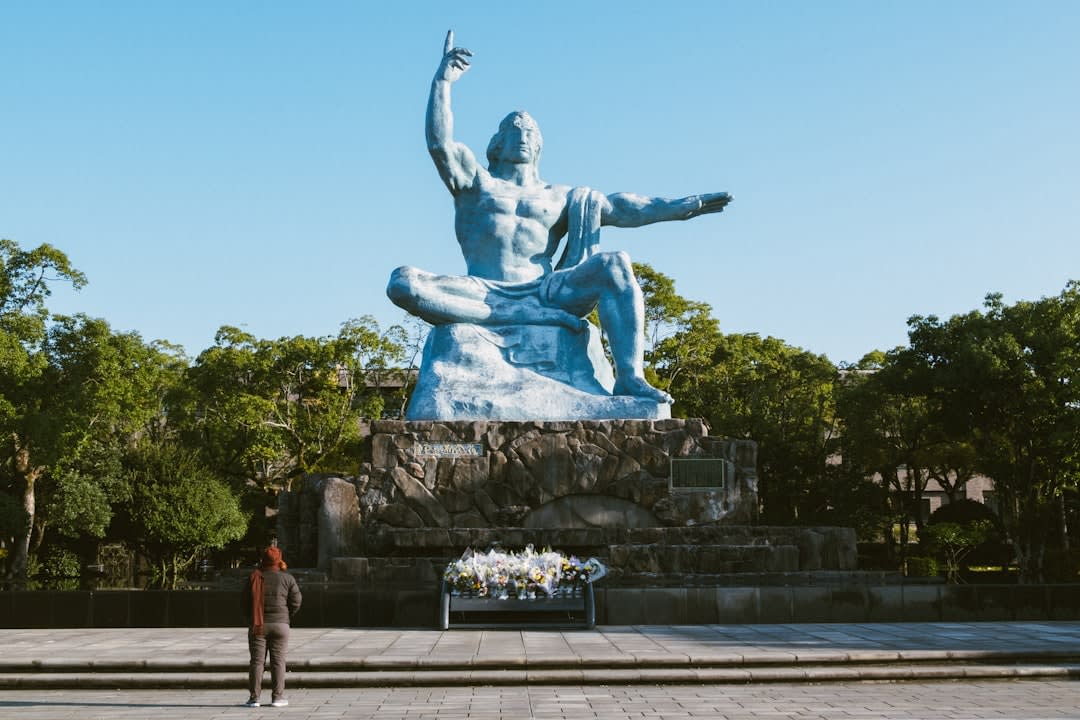
We saved the north of the city, and the hardest part of it, for a clear morning. The Peace Park and the Atomic Bomb Museum mark the second and, one prays, last time such a weapon was used on a city. The hypocenter is a simple black pillar in a quiet square; the museum around it is unflinching. I will not try to describe what it holds. I will only say that we came out silent, and that Nagasaki, having endured this on top of everything else its history threw at it, has chosen to speak about it plainly and toward peace rather than bitterness. That choice moved me as much as anything in the museum itself.
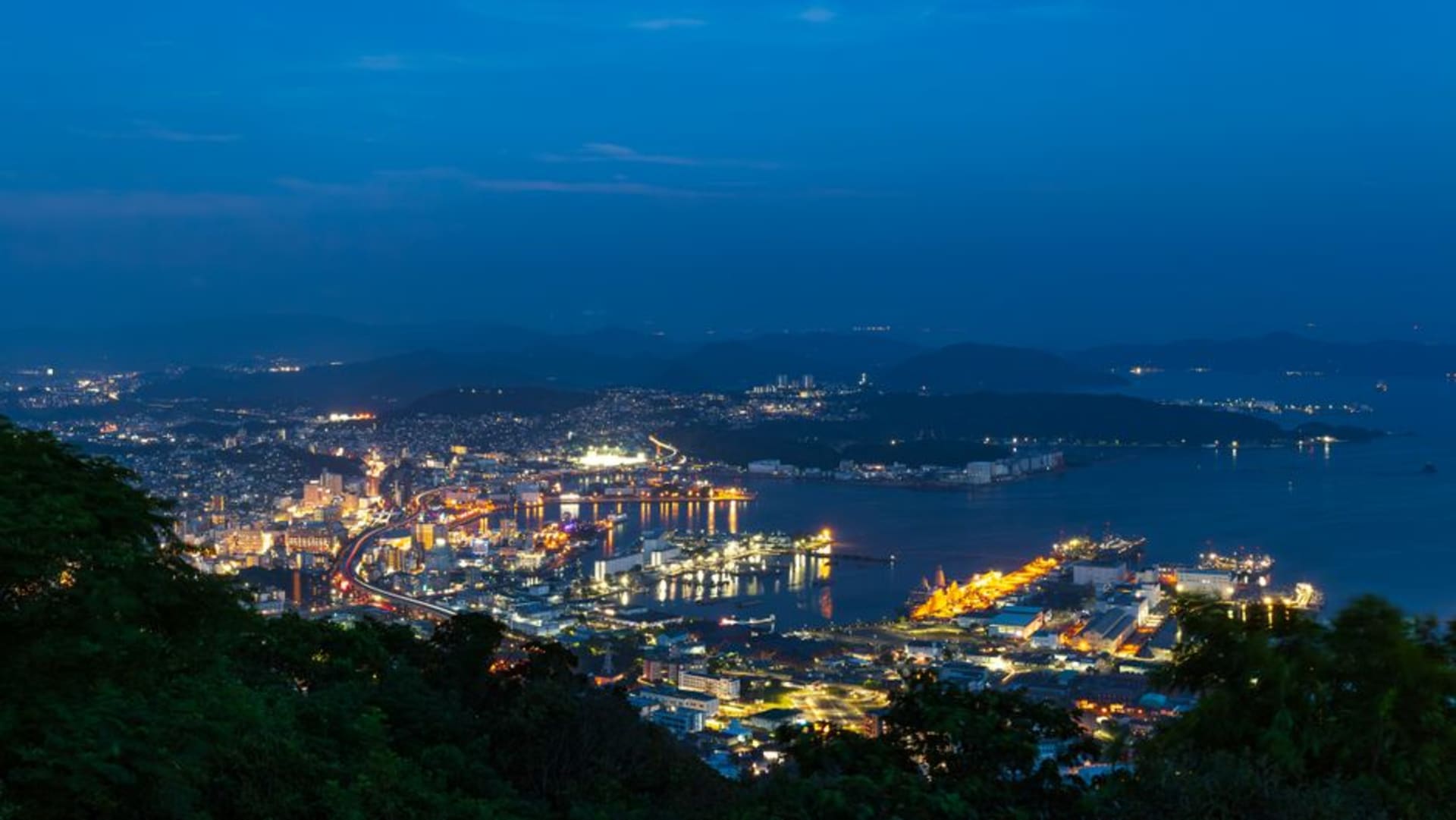
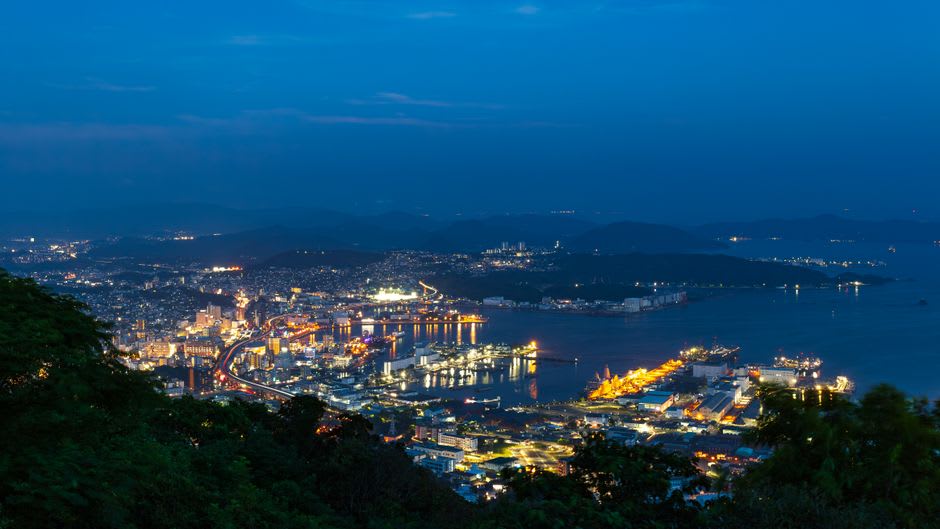
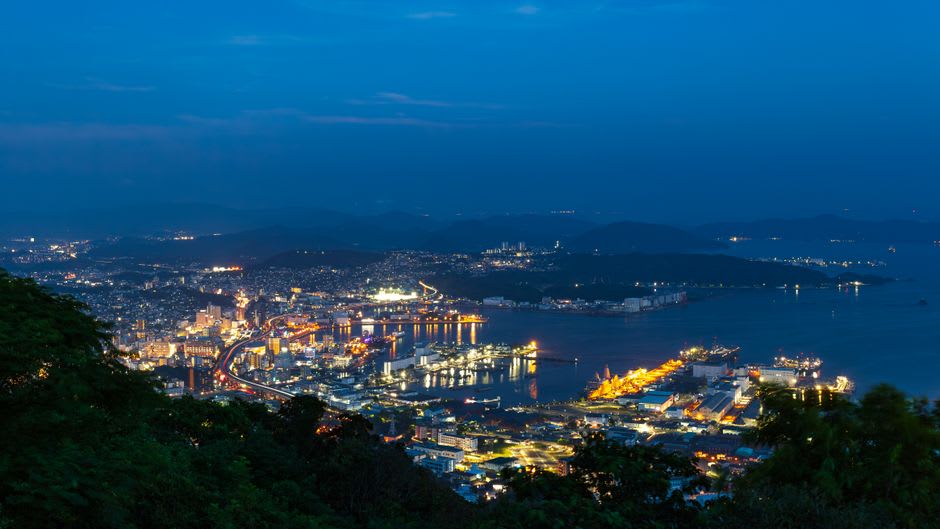
That night, to end on the note the city wants you to end on, we rode the ropeway up Mount Inasa. Nagasaki after dark is famous, and now I know why — the whole city becomes a glittering bowl, lights climbing every slope and pouring down to the black harbor, ships moving slowly across the water. It is counted among the great night views of the world. Standing up there in the wind with Lia, looking down at a city that had been through so much and shone so brightly anyway, I found the whole day settling into something I still carry.
Getting There
Nagasaki sits at the western end of Kyūshū. The fastest route from the main island is the Sanyō Shinkansen to Hakata (Fukuoka), then the Nishi-Kyūshū Shinkansen and a connecting limited express down to Nagasaki — figure a couple of hours from Fukuoka. There is also an airport about forty minutes from the city by bus, with domestic flights from Tokyo and Osaka. Once you arrive, forget about anything other than the streetcars and your own two legs; a tram day pass costs next to nothing and reaches Dejima, Chinatown, Glover Garden, and the Peace Park, while the hills in between are best taken slowly on foot.
Keep exploring
More of Kyūshū & Okinawa