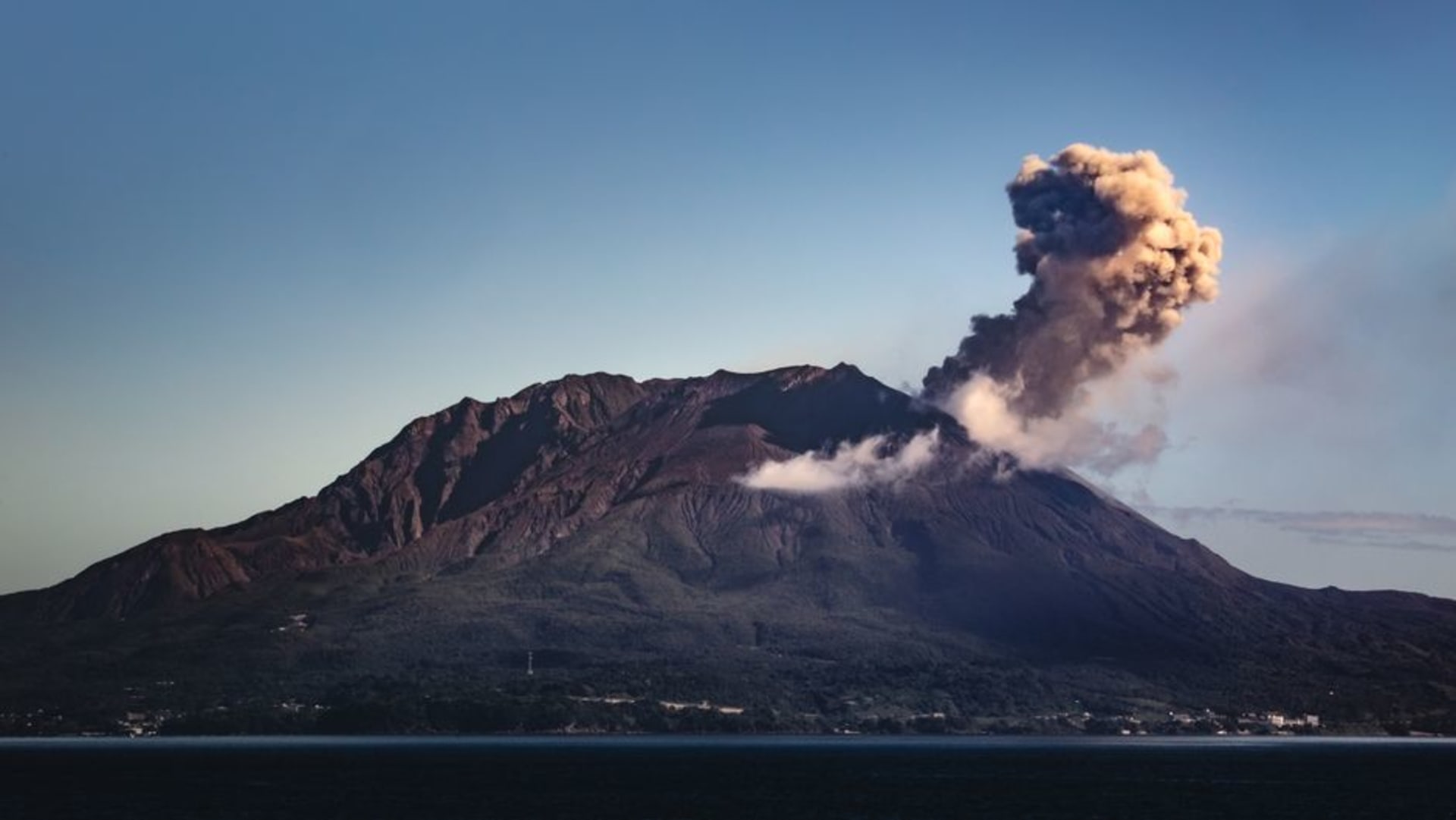
Kirishima
"The Japanese say the gods first stepped down onto these peaks — and standing in the mist, I could see why they'd believe it."
A range of volcanic peaks and crater lakes in Kagoshima wrapped in creation myth — the legendary place where the gods first came down to earth. Steaming hot springs, ancient shrines, and high, misty hiking.
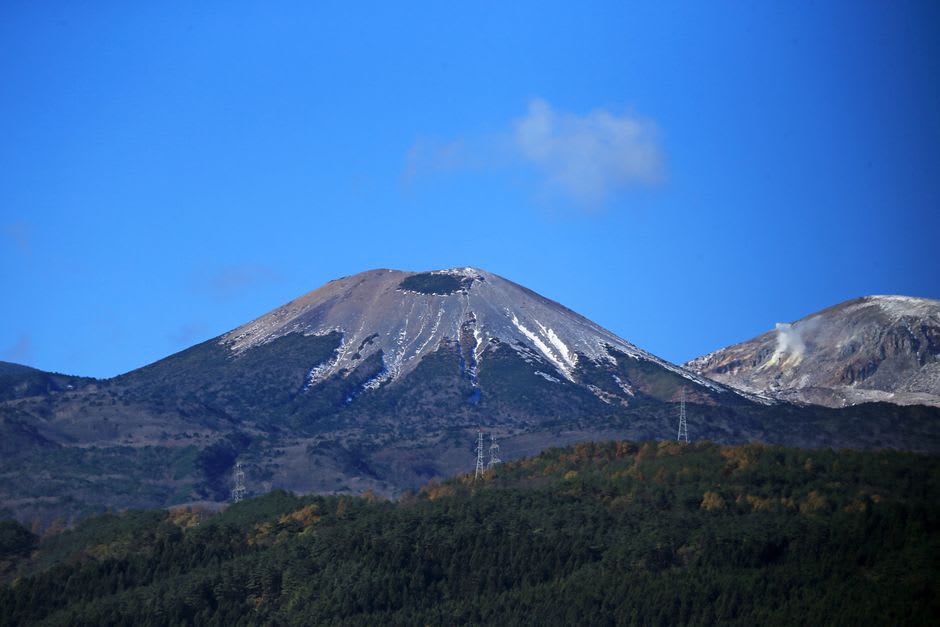
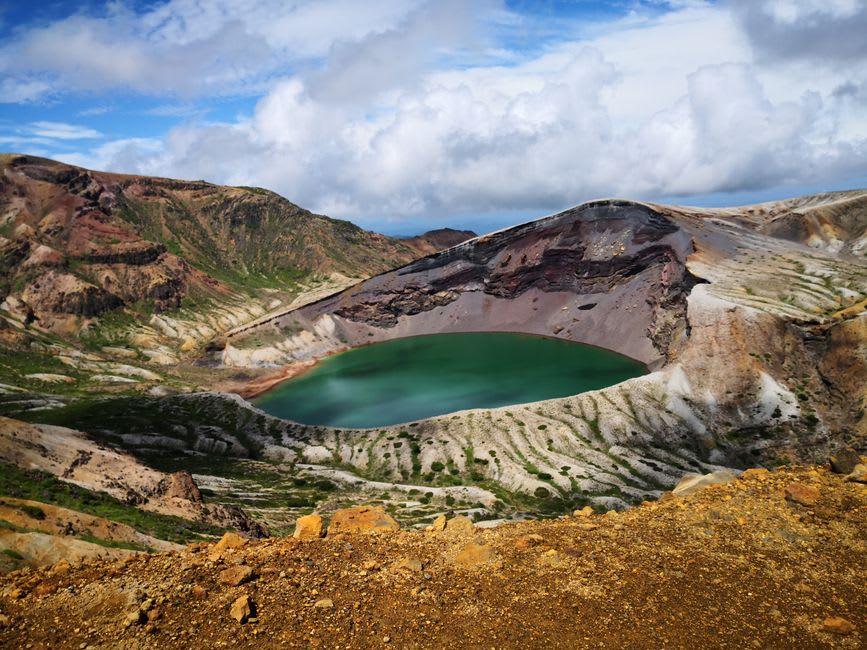
Kirishima means “island of mist,” and it earned the name honestly. We drove up into the range on a morning when cloud lay in every fold of the mountains, so that the volcanic peaks appeared and vanished as ridges of dark rock floating on white. This is one of the oldest sacred landscapes in Japan — in the founding myths, the grandson of the sun goddess descended from heaven to a peak here, planting a legendary spear at the summit and beginning the imperial line. You feel the weight of that story in the place. The mountains are a cluster of more than twenty volcanoes, some still steaming, laced with crater lakes and hot springs and ringed by cryptomeria forest. Lia, not usually given to that sort of thing, admitted that driving up through the shifting mist she understood exactly why ancient people had decided the gods came down here first.
The Sacred Peaks
The heart of Kirishima is its peaks and crater lakes, and even a short walk gets you among them. We hiked up toward Mount Karakuni, the highest of the range, on a trail that climbed out of the forest into open volcanic slope, the cloud tearing now and then to reveal cinder cones and, far below, the round eye of a crater lake.
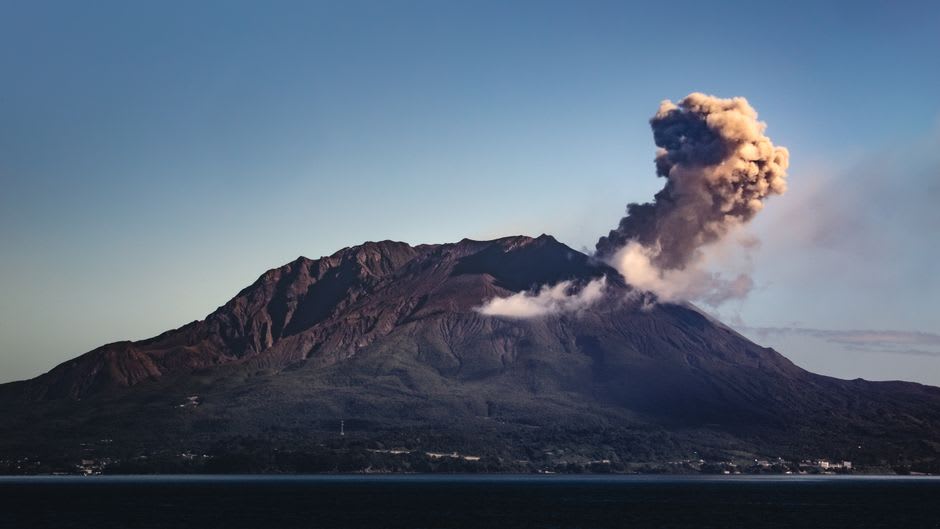
Nearby stands Mount Takachiho-no-mine, the mythic peak where the god is said to have descended, its summit still crowned by a replica of the legendary spear. We didn’t have the weather to climb it, but we watched it emerge from the mist for a few minutes — a perfect dark cone — and then disappear again, which felt somehow more fitting than a clear view would have. The trails up here are exposed and the volcanoes genuinely active, so some are closed at any given time; even the short stretch we walked left us breathless, ash underfoot and the whole range breathing cloud around us.
Kirishima Shrine
Back down in the forest sits Kirishima-jingū, the shrine dedicated to that descending god, and it is one of the most atmospheric we visited anywhere in Japan. You approach through towering old cedars, the air cool and green and resinous, and emerge at a vivid vermilion shrine set against the mountainside.
The current buildings are three centuries old, rebuilt after eruptions destroyed the earlier ones further up the mountain — even the shrine has been chased downhill by the volcanoes over the ages. We arrived as a Shinto priest was performing a ceremony, the sound of a drum carrying through the cedars, and stood at the back watching the smoke of incense rise. Lia lit a stick and left it burning at the rail. There is a giant sacred cedar in the grounds said to be eight hundred years old, and standing beneath it in that hushed, dim, myth-heavy air, I felt further from the modern world than almost anywhere on our trip.
Hot Springs Below the Mountains
All those volcanoes make for extraordinary hot springs, and we ended each day in one. The area is dotted with onsen — some grand, some just a steaming bath behind a farmhouse — and the water runs the full range from milky sulphur to clear iron-rich brown.
We stayed at a small inn near Maruo, where an outdoor bath sat right at the forest edge, and I soaked there in the last light with steam rising to meet the descending mist, aching from the day’s climb. A little further off, a whole hot waterfall — geothermally heated — pours down the rocks, and locals bathe in the pools below it. Lia and I shared the inn’s bath alone as the dark came down, the smell of sulphur and cedar on the air, the mountains of the gods invisible above us in the cloud. It was, we agreed, the most complete kind of tired.
Getting There
Kirishima straddles the border of Kagoshima and Miyazaki prefectures in southern Kyūshū. The usual gateway is Kirishima-jingū Station on the local line, reached via Kagoshima-Chūō, which sits on the Kyūshū Shinkansen (around one and a half hours from Fukuoka). From the station, buses run up to the shrine, the hot-spring villages, and the trailheads, though the mountains open up far more easily with a rental car. Kagoshima Airport is actually the closest hub of all — only about fifteen minutes from the lower hot-spring resorts — making Kirishima an easy first or last stop in the far south. Check trail and volcano conditions before hiking, as the higher peaks close when activity rises.
Keep exploring
More of Kyūshū & Okinawa