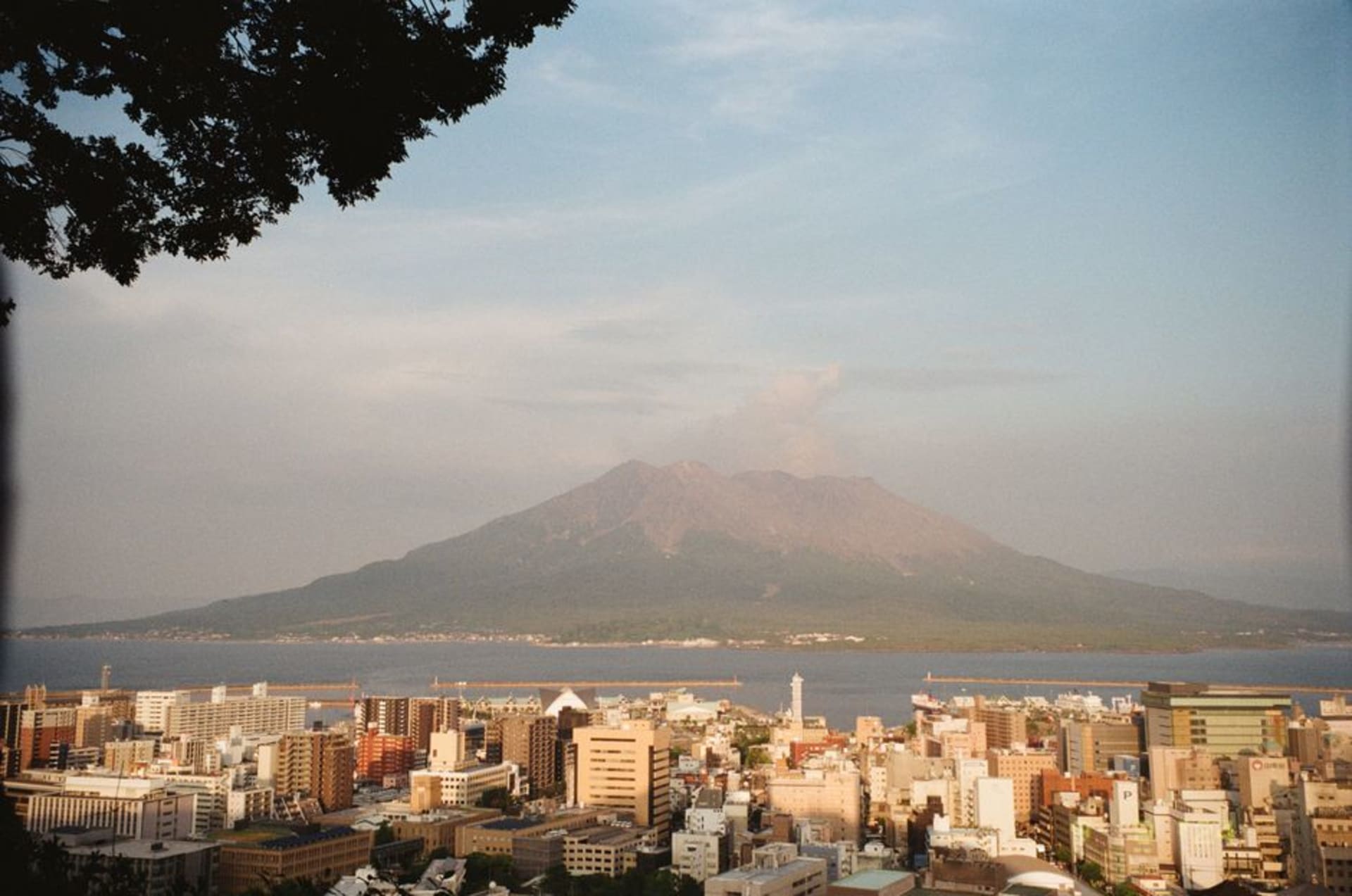
Kagoshima
"A city that eats breakfast every morning across the water from an active volcano, and thinks nothing of it."
The 'Naples of Japan,' a warm southern city living in the shadow of the constantly smoking Sakurajima volcano across its bay. Ash-dusted streets, fiery shōchū, samurai history, and hot-sand baths down the coast.
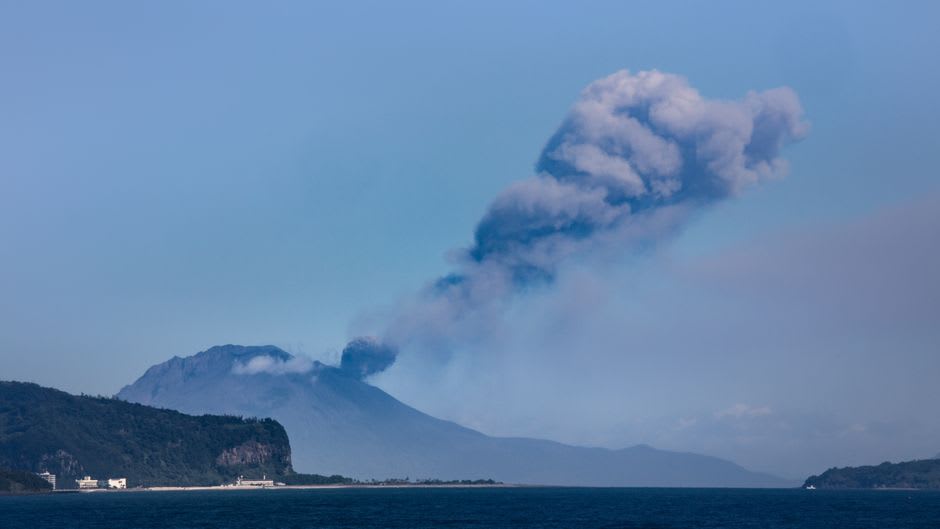
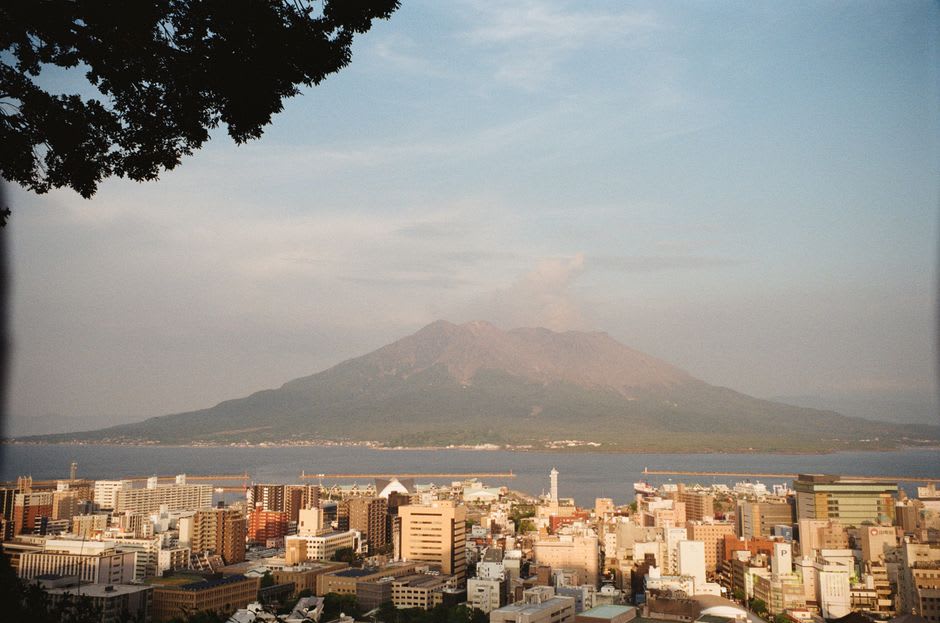
I have never been anywhere quite like Kagoshima, and the reason stands right across the bay, breathing. Sakurajima — a volcano so active it erupts hundreds of times a year — sits a few kilometers offshore, its cone trailing a permanent smudge of ash into the southern sky. From the city’s palm-lined waterfront you look straight at it, close enough to feel implicated. On our first morning Lia brushed a fine grey dust off the café table and the waiter shrugged: volcanic ash, he said, like mentioning pollen. People here compare their home to Naples, another warm bay city under a smoking mountain, and the comparison holds — not just the geology but the temperament. Kagoshima is southern, easygoing, sun-warmed, a little wild at the edges. It felt like the end of Japan, and in a way it is.
Sakurajima Across the Water
You cannot come here and ignore the volcano, and we didn’t try. A short ferry crosses the bay from the city center to Sakurajima itself in fifteen minutes, running around the clock, and we took it on a clear morning. Up close the mountain is enormous and raw — hardened black lava fields from past eruptions, warning shelters along the roads, steam and ash rising from the summit above.
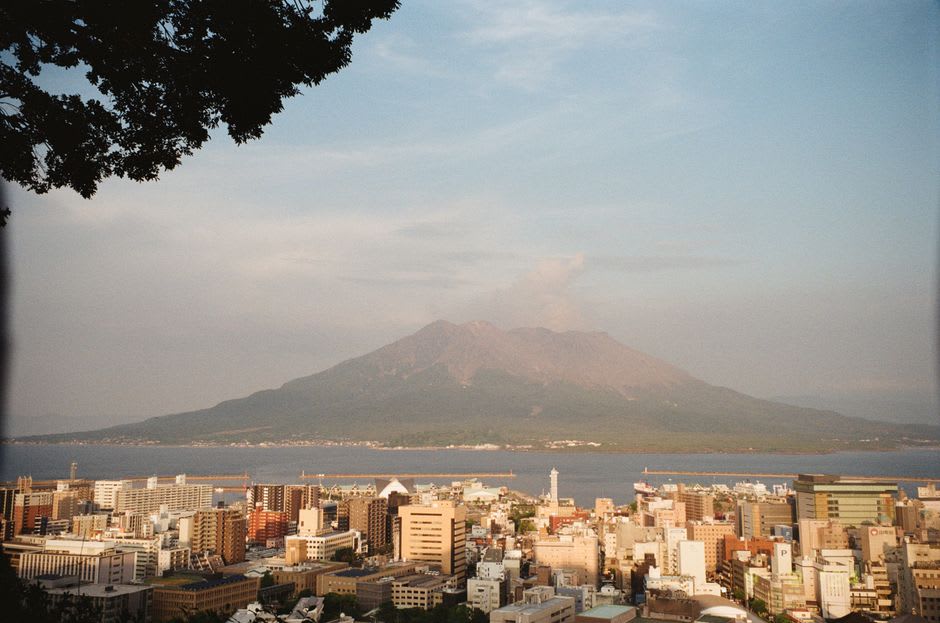
We soaked our feet in a long free footbath on the island’s shore, heated by the volcano’s own geothermal water, looking back across the bay at the city we’d just left. A small eruption went off while we sat there — a soft grey bloom at the summit, unhurried — and no one around us so much as looked up. Lia found it thrilling and slightly absurd, this casual coexistence. Living in the shadow of Sakurajima seems to give Kagoshima its whole character: a shrug, a warmth, an acceptance that the ground is not entirely to be trusted.
Samurai History and Shōchū
Kagoshima was the seat of the powerful Shimazu clan, and it played an outsized role in dragging Japan into the modern world — the reformers who ended the samurai era largely came from here. We spent an afternoon at Sengan-en, the Shimazu family’s old villa and garden on the bay, where the landscaping is arranged so that Sakurajima itself becomes the borrowed centerpiece, a real volcano standing in for a garden mountain.
In the evening we went looking for shōchū, the fiery distilled spirit that Kagoshima makes from sweet potatoes and drinks with fierce local pride. At a tiny izakaya the owner lined up three varieties and taught us to drink it cut with hot water, the traditional way here, alongside plates of kurobuta — the region’s famous black pork — grilled and dipped in ponzu. Lia declared the sweet-potato shōchū an acquired taste; by the third cup she had acquired it.
The Hot Sand Baths of Ibusuki
The excursion I’d most looked forward to was down the coast at Ibusuki, where the beach itself is heated from below by geothermal water, and people come to be buried in it. We took the local train south along the shore — a lovely slow ride hugging the sea — and changed into cotton yukata at the sand-bath house on the beach.
An attendant dug us shallow trenches at the water’s edge and shoveled hot black sand over us until only our heads showed. The heat comes up slow and heavy and total, and with the sound of the waves right there I lasted maybe twelve minutes before I had to be dug out, pulse thumping, skin scarlet. Lia lasted longer, of course. We rinsed off and soaked in an ordinary hot spring afterward, then ate somen noodles on the train back north, watching the light go pink over the bay and, beyond it, the ever-present shape of the volcano.
Getting There
Kagoshima sits at the southern tip of Kyūshū, and the Kyūshū Shinkansen runs all the way down to Kagoshima-Chūō Station — around one and a half hours from Fukuoka (Hakata), or a longer through-run from Osaka. Kagoshima Airport has good domestic connections if you’re coming from further afield. The city center is compact and served by a charming old tram line, and the Sakurajima ferry leaves from the waterfront. For the sand baths, local trains run south down the coast to Ibusuki in about an hour and a half — slow, scenic, and worth every minute.
Keep exploring
More of Kyūshū & Okinawa