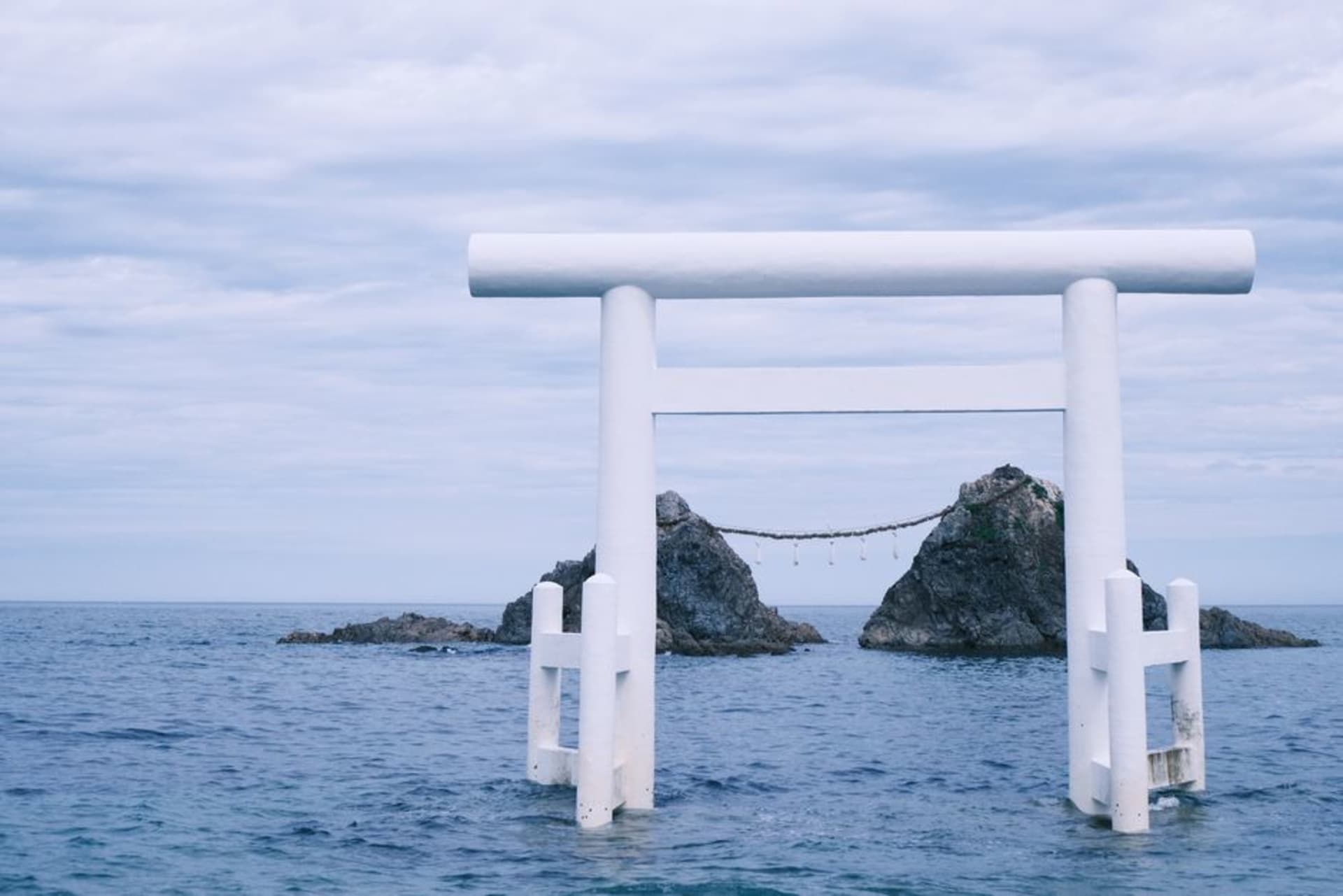
A coast of surf-shack cafés and low mountains an hour west of Fukuoka, where a lone white torii stands in the shallows facing the sunset. It felt less like Japan's postcard image and more like a slow Sunday that never quite ended.
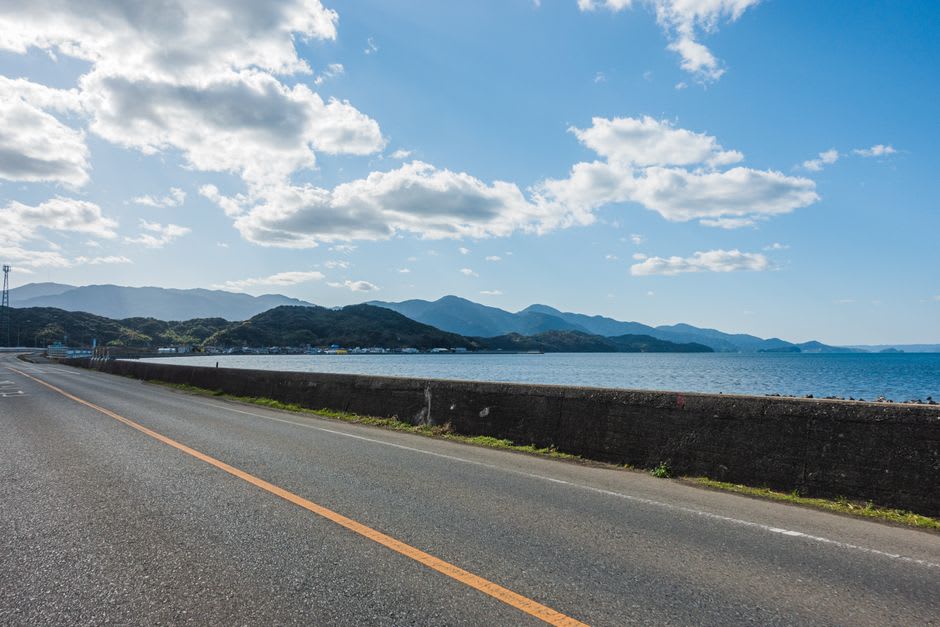
We came to Itoshima almost by accident. A woman at our Fukuoka guesthouse had drawn a squiggle on a napkin that was supposed to be the coastline, tapped it twice, and said “bicycle.” That was the whole recommendation. So Lia and I rented two rattling city bikes, took the train to Chikuzen-Maebaru, and pedalled out toward the sea with no plan sturdier than that napkin. Within twenty minutes the town thinned into rice fields, and then the road tipped downhill and there was the water, flat and pale, and the smell hit us both at once — salt, and something warm and yeasty drifting from a café we couldn’t yet see.
The white torii in the water
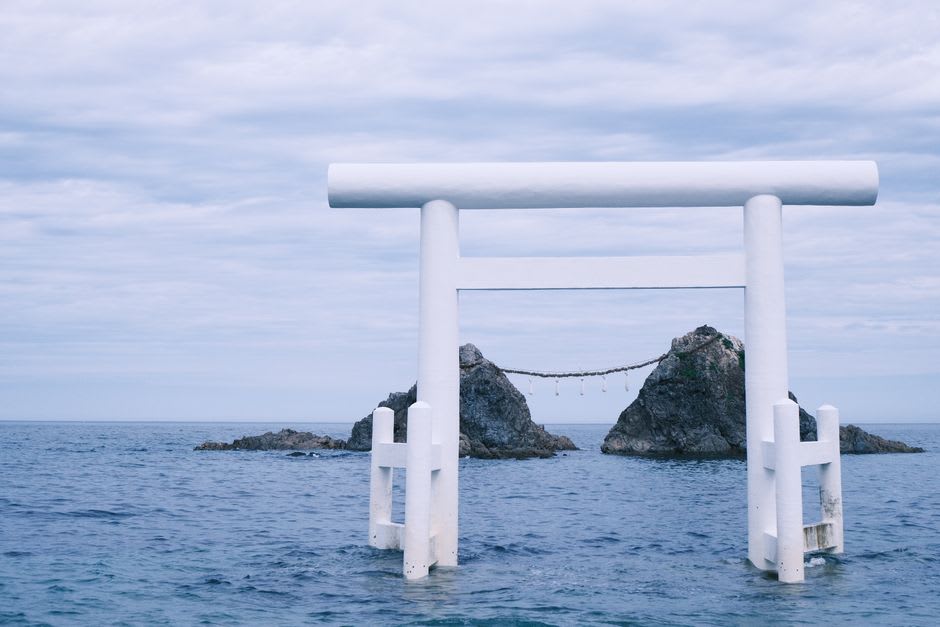
Everyone comes for the torii at Sakurai Futamigaura, and I’ll admit I braced myself for a letdown. Famous photo spots usually punish you for wanting them. But we arrived in that soft hour before sunset when the tour buses had already gone, and it was just the gate — white, weathered, standing in the shallows a little way out — and two black rocks bound together with a heavy straw rope, the “married couple rocks.” Lia waded in to her shins without discussing it with me first, which is how I knew she liked it. The tide was coming in around the torii’s feet. A heron stood on one of the rocks as if it had been hired for the composition. We didn’t talk much. There wasn’t a need to.
Café road
Itoshima’s other religion is coffee. The coast road is strung with cafés built out of old boat sheds and shipping containers and somebody’s converted garage, most of them run by people who clearly moved out from the city to escape it. We stopped at one with hand-thrown mugs and a surfboard leaning by the door, and drank flat whites looking at the sea through a window someone had framed like a painting. The owner told us, in careful English, that he’d been a graphic designer in Tokyo. Now he roasts beans and watches the weather. I envied him with an intensity that surprised me. Lia ordered a second slice of banana bread and said, quietly, “we could live like this,” and for about ten minutes on that bench I genuinely believed her.
Keya no Oto and the long way back
Further west the coast turns dramatic. At Keya no Oto, dark columnar cliffs drop straight into the water and there’s a sea cave you can reach by small boat when the swell allows. It wasn’t allowing the day we went — the boatman shook his head at the chop and we didn’t argue — so instead we scrambled along the headland and watched the waves punch into the basalt from above. On the ride back the light went gold, then pink, then that bruised blue that means you’ve stayed too long and you’re going to be pedalling in the dark. We didn’t care. We stopped once more where the road met the beach, laid the bikes in the sand, and watched the last of it. Lia found a sand dollar. I found the exact tiredness that feels like happiness.
Getting There
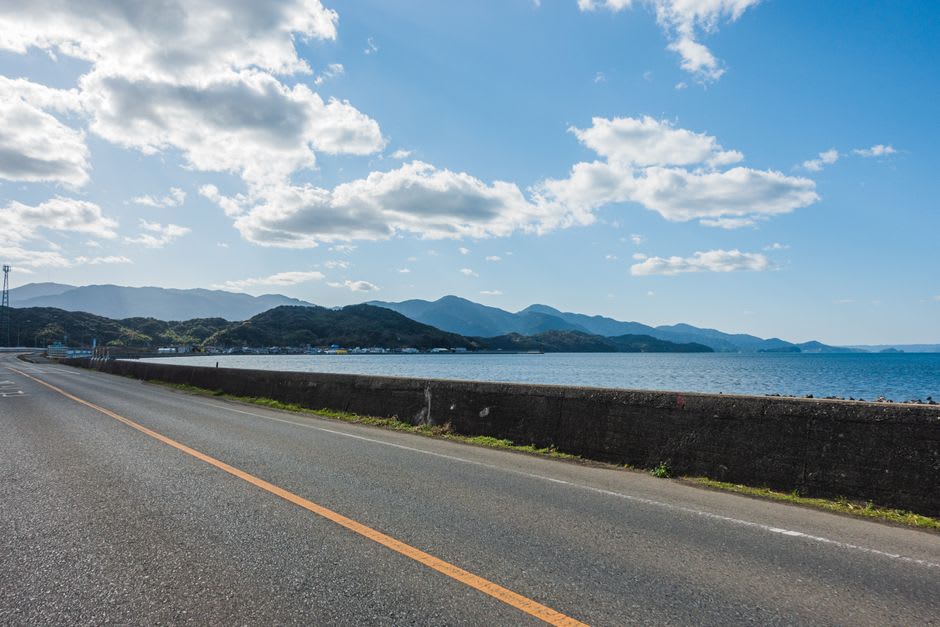
Itoshima is genuinely easy from Fukuoka. Take the JR Chikuhi Line from Meinohama (through-service from the Fukuoka City Subway) toward Chikuzen-Maebaru, the main hub, about 40 minutes from central Fukuoka. From there the coast is spread out and the buses are infrequent, so rent a bicycle near the station or, honestly, a car if you’re chasing several spots — the cafés and the cliffs are far apart. We managed on bikes and regretted nothing except our legs the next morning. Go on a weekday if you can; weekends bring the whole city out to the same torii.
Keep exploring
More of Kyūshū & Okinawa