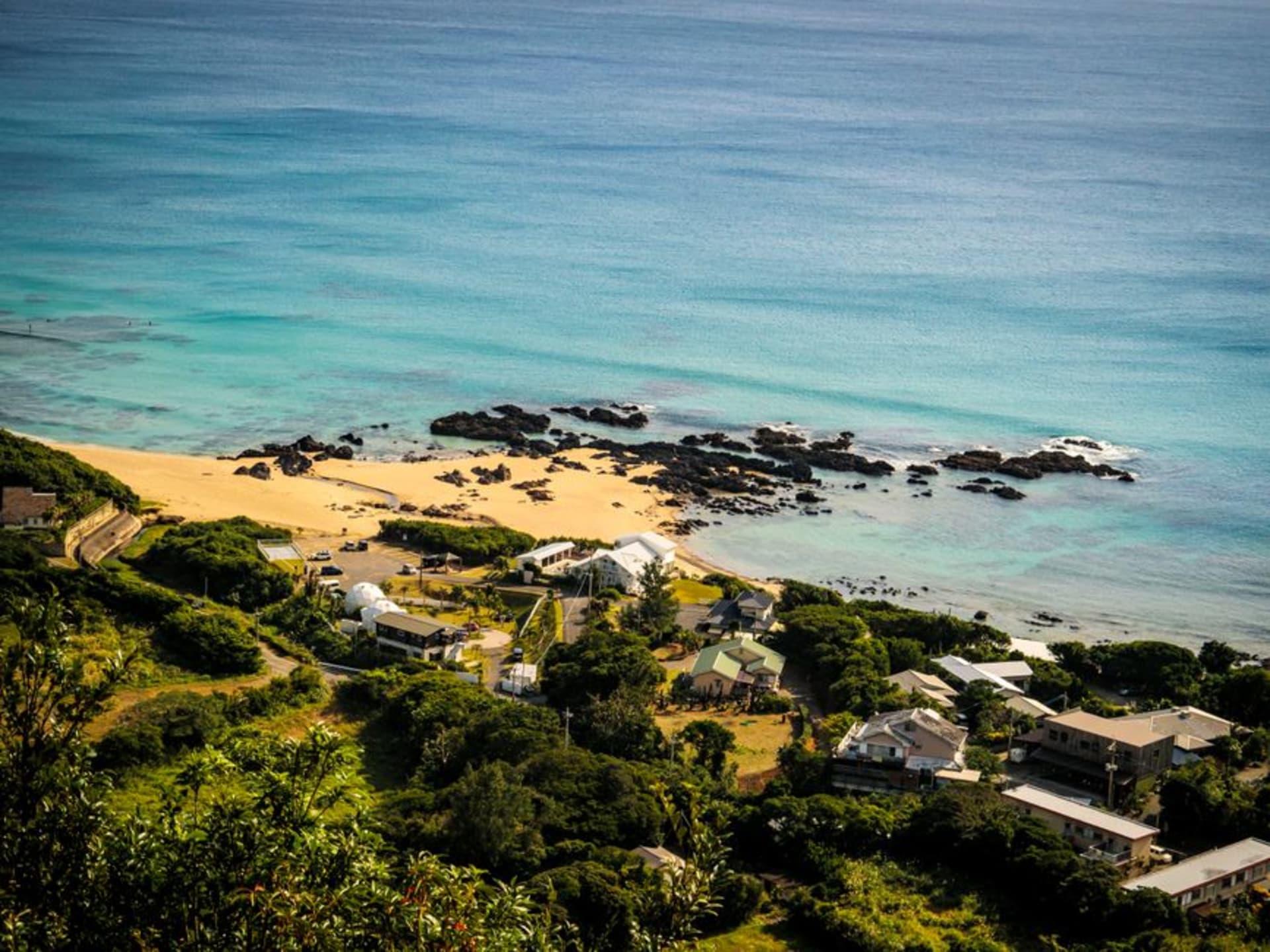
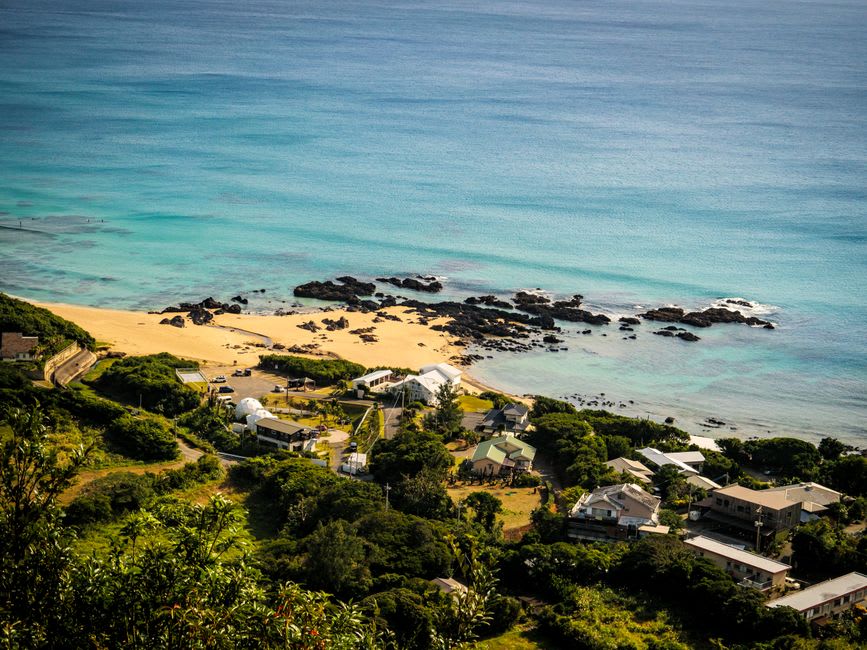
A hot-spring town at the southern tip of Kagoshima's Satsuma Peninsula, where the beach itself steams and you are buried to the neck in hot volcanic sand. Beyond it rises the near-perfect cone of Mount Kaimon, the Satsuma Fuji.
I want to be honest: when Lia first read out that the local speciality was being buried alive in hot sand on a beach, I assumed it was a translation problem. It was not. At the far south of Kyushu, where Japan runs out of land before the sea toward Okinawa, Ibusuki sits over so much geothermal heat that the shore itself steams, and for centuries people have come to be interred up to the chin in it. We came skeptical. We left converted, gritty, and pink.
Buried on the beach
The ritual is called sunamushi, sand-steaming. You change into a light cotton yukata, walk down to the black-sand beach where columns of steam rise straight out of the ground, and lie down in a shallow trench. Then attendants with wooden spades shovel hot, wet, heavy sand over you until only your head sticks out. The weight is the surprise — it presses on you like a firm hand — and the heat comes up slowly from below until you’re sweating from every part at once. You’re meant to last about ten minutes. Lia lasted twelve out of sheer stubbornness and emerged looking like she’d run a marathon and enjoyed it. I tapped out early, staggered to the shower, and felt, an hour later, genuinely wrung-out and wonderful. The sea was right there the whole time, grey-blue and loud.
The Satsuma Fuji
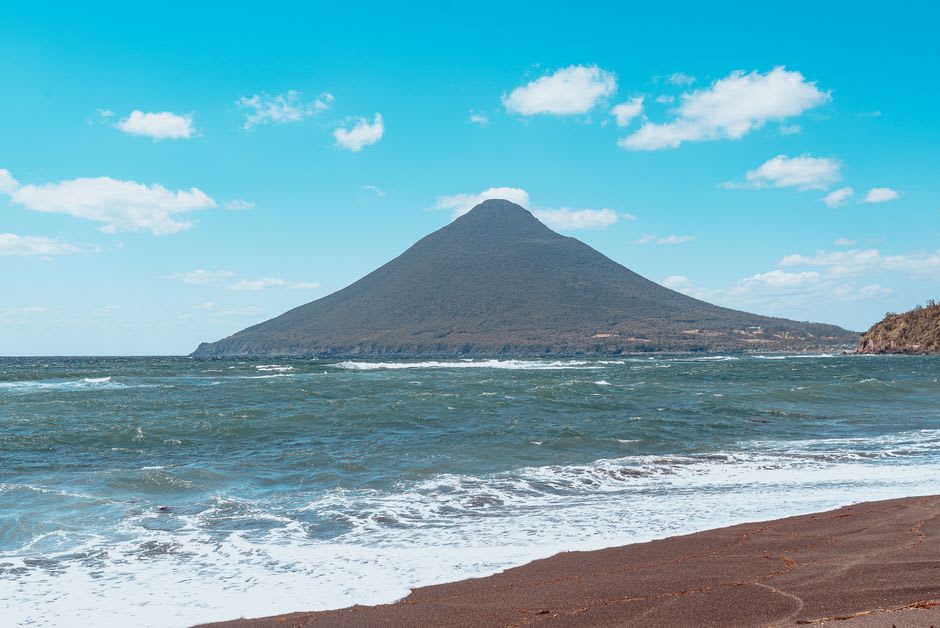
South of the town, Mount Kaimon rises alone off the peninsula’s tip, a volcanic cone so symmetrical the locals call it Satsuma Fuji, and on a clear day it’s the first thing your eye goes to from anywhere in Ibusuki. We took a slow train down the coast to look at it properly. It’s only about 920 metres and people climb it in a morning, spiralling up the outside like a screw, but we were still recovering from the sand and settled for admiring it from below with a can of coffee each. Near its foot sits Lake Ikeda, a caldera lake with its own resident legend of a giant eel-monster the guidebooks call Issie, Japan’s answer to Nessie. We saw no monster. We saw a very calm lake and Kaimon reflected in it, which was plenty.
The end of the line
Ibusuki also gave us one of those small perfect Japanese moments at Nishi-Ōyama, the southernmost station on the whole JR network — an unstaffed single platform in a field, a yellow post-box, and a signboard, with Mount Kaimon standing behind it like a painted backdrop. There’s nothing to do there and that’s the point. We got off, took the photo everyone takes, watched a farmer work the next field over, and waited forty minutes in the sun for the little diesel train back. Lia said it felt like the edge of something, and it did — not dramatic, just the quiet far corner of a country, warm sand behind us and the sea beginning to turn toward evening.
Getting There
Ibusuki is about an hour south of Kagoshima-Chūō station by train; the tourist “Ibusuki no Tamatebako” limited express makes the coastal run a small event in itself and should be reserved ahead. The sand-steaming baths are a short walk or bus ride from Ibusuki station along the seafront. For Mount Kaimon, Lake Ikeda, and Nishi-Ōyama station you’ll want either the local Ibusuki–Makurazaki line, which runs infrequently, or a rental car, which frees you to chase the mountain from every angle.
Keep exploring
More of Kyūshū & Okinawa