Hirado
"A church spire and a temple roof in the same photograph — that's the whole island in one frame."
A Nagasaki island where Japan first met the West — Portuguese and Dutch traders, a hilltop castle, and churches that stand a stone's throw from Buddhist temples, holding four centuries of hidden Christian history. It is one of the strangest, most layered places we found in Kyushu.
Hirado sits at the far northwestern edge of Kyushu, connected to the mainland by a single red bridge, and it feels like the end of something — which, historically, it was, and also the beginning. This was one of the first places in Japan to trade with Europe: Portuguese ships in the 1500s, then a Dutch trading post, decades before Nagasaki took over that role. Lia and I came partly for that history and partly because a man in Fukuoka had told us, with real feeling, that Hirado was “the most beautiful sad place” in Kyushu. I didn’t know what he meant until we’d been there a day. Then I couldn’t have put it better myself.
The castle and the harbour
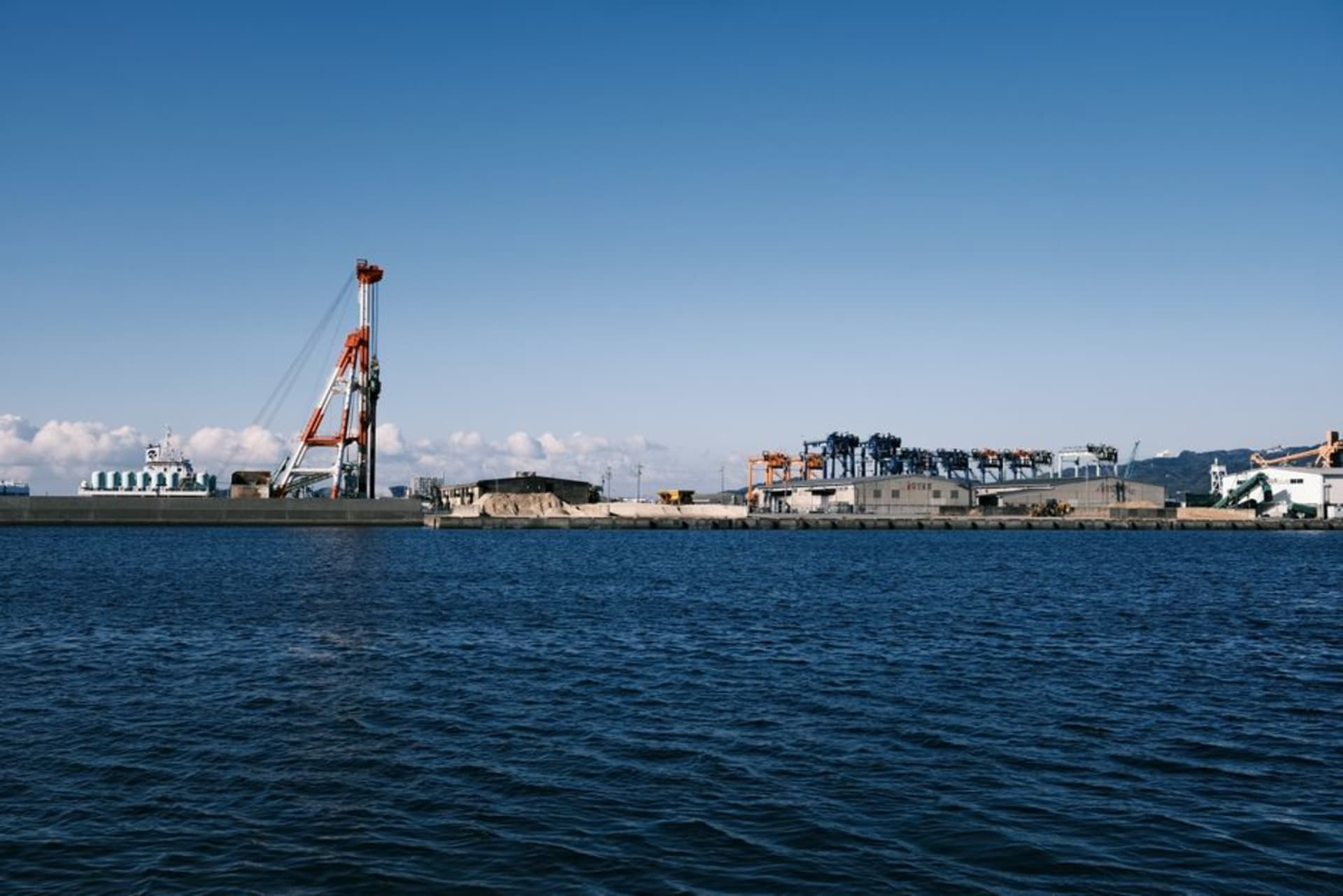
We climbed first to Hirado Castle, which crowns a hill above the port with a clean white keep and long views over the water and the red bridge we’d crossed to get there. It’s a reconstruction, but a handsome one, and the harbour it overlooks is the whole point — you stand up there and imagine the foreign ships that once anchored below, the strangest sight imaginable to the townspeople of four hundred years ago. Down at the waterfront the old Dutch trading post has been rebuilt too, a solid stone warehouse that looks startlingly European against the Japanese hills. Lia leaned on the castle wall and said the town had the feeling of a place that had once been at the centre of the world and had quietly agreed to stop being. She was right, and the harbour looked lovelier for it.
Where church meets temple
The single image everyone associates with Hirado is a view up a stone-stepped lane where the spire of a Catholic church rises directly behind the sweeping tiled roofs of Buddhist temples — the two faiths stacked in one frame. We found the spot and stood there a while, because it really is uncanny: the Gothic verticality of St. Francis Xavier Memorial Church and the horizontal calm of the temples below, coexisting on the same slope. Hirado is where the Jesuit missionary Francis Xavier passed through, and the island became a stronghold of early Christianity — and then, when the faith was banned and brutally suppressed, a place of “kakure kirishitan,” hidden Christians who kept their belief secret for generations disguised as Buddhist practice. Standing on that lane, knowing that, the view stops being picturesque and becomes something heavier.
The hidden-Christian coast
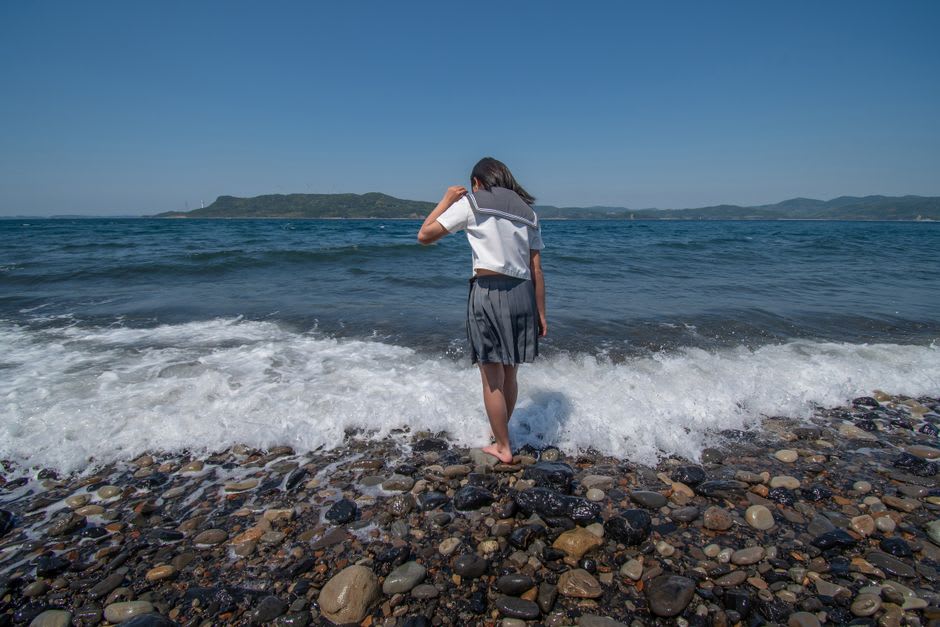
We spent our last afternoon driving out along the island’s western coast, which is wild and green and dotted with small churches built in remote coves — the ones raised, finally, in the open once the ban was lifted in the Meiji era, often by the descendants of families who had kept faith in secret for two hundred and fifty years. Some of these villages are part of a UNESCO listing now. The Himosashi and Hoki area churches sit among terraced fields above the sea, plain and moving, and there’s almost no one around. Lia lit a candle in one of them, though she isn’t religious, and afterward we sat on a wall looking at the water without saying anything for a long time. “The most beautiful sad place,” she finally said, quoting the man from Fukuoka. We drove back over the red bridge at dusk, both of us quiet, both of us changed a little.
Getting There
Hirado takes some effort, which is part of why it stays so quiet. The usual route is to reach Sasebo (about 1.5–2 hours from Hakata/Fukuoka by limited express), then take a bus or drive the roughly one-hour road out to Tabira, where the red Hirado Bridge crosses to the island — no ferry needed, the bridge connects it to the mainland. Once there, a rental car is close to essential: the castle and the church district are walkable in Hirado town, but the western-coast churches and coves are scattered and barely served by buses. Give it an overnight at minimum. This is not a place to rush, and it does not reward those who try.
Keep exploring
More of Kyūshū & Okinawa