Beppu
"A whole town quietly, constantly steaming, like a kettle that never quite comes off the heat."
A hot-spring town on the Kyūshū coast where steam rises from the streets themselves. Colorful boiling 'hells,' hot sand baths, and more onsen than anywhere else in Japan.
The first thing about Beppu is the steam. We saw it before the train had even stopped — plumes of white rising all over the town, from drains and rooftops and hillsides, as if the whole place were smoldering gently and no one was concerned. Lia counted the columns and gave up around thirty. Beppu sits on the Ōita coast of Kyūshū over one of the most active geothermal fields in the country, and it does not hide the fact; it leans into it entirely. The steam is simply part of the weather here, drifting between houses, curling up from grates in the pavement, softening the edges of everything. We had come for onsen, and Beppu produces more hot-spring water than anywhere else in Japan, but what I hadn’t expected was how strange and theatrical the town would feel — a place living openly on top of something enormous and hot.
The Hells of Beppu
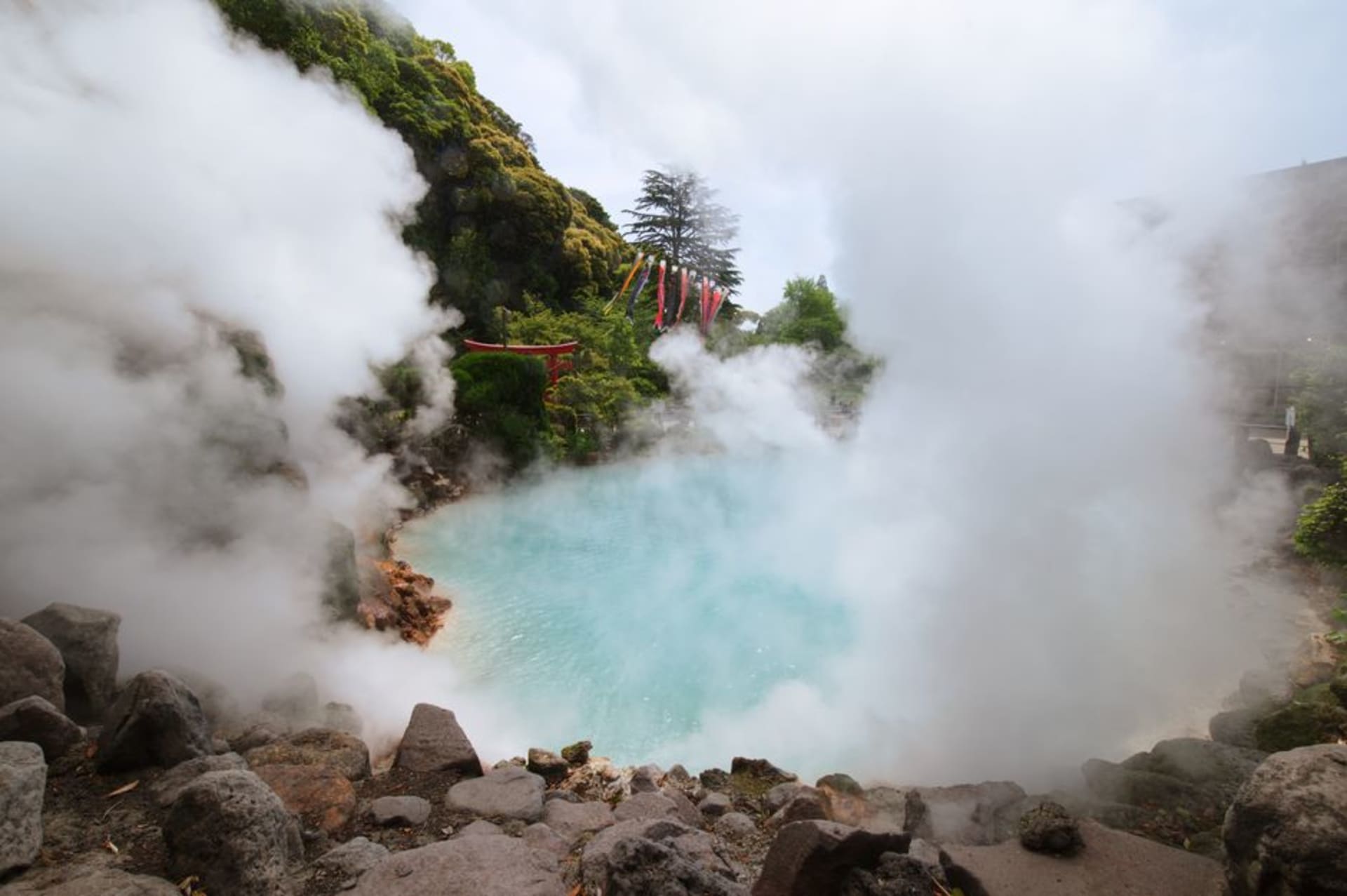
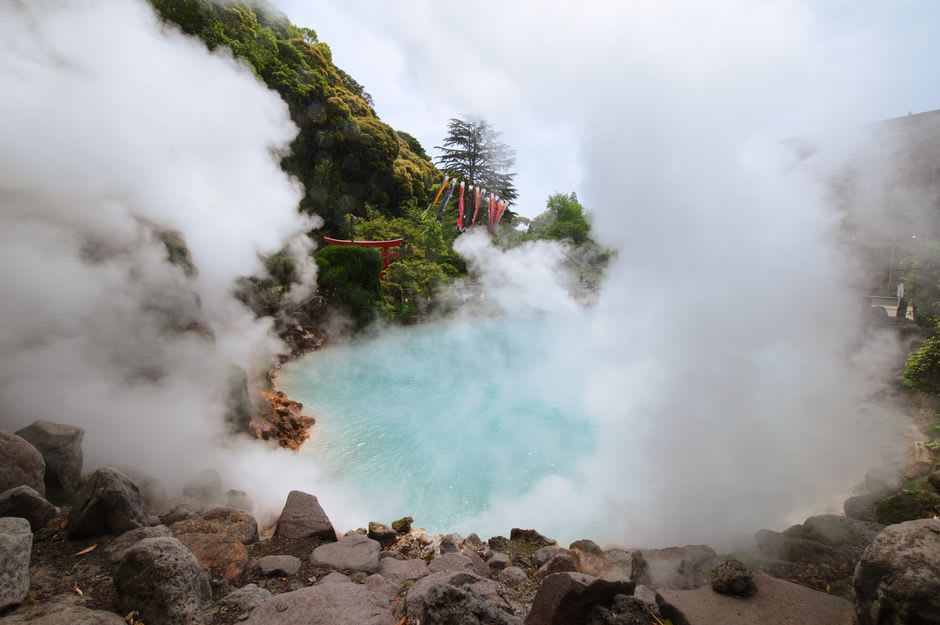
Not all of Beppu’s springs are for bathing. Some are far too hot, too acidic, or too spectacular, and these are the jigoku — the “hells” — a set of vivid, boiling springs you come to look at rather than get into. We spent a morning making the circuit. Umi Jigoku, the “sea hell,” is a wide pool of an impossible cobalt blue, steam rolling off its surface into a garden of palms. Chinoike Jigoku, the “blood pond hell,” is exactly what it sounds like — a pond the deep red of iron-rich clay, bubbling faintly, more unsettling in person than any photograph prepares you for.
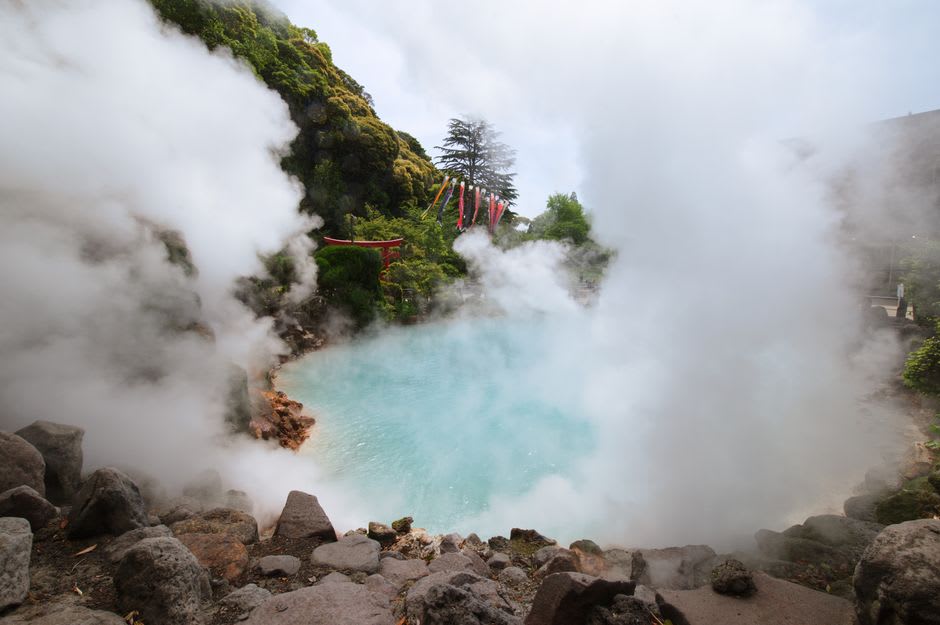
Between the hells there is a light carnival atmosphere — vendors selling eggs and pudding steamed in the geothermal heat, footbaths, a slightly kitsch charm that I found I didn’t mind at all. Lia bought an egg cooked in hell-steam and pronounced it the best boiled egg of her life, which may have been the setting talking. We ate them sitting on a bench while a nearby geyser, on its own schedule, went off with a roar and buried the whole yard in white for a minute or two.
The Sand Bath
The experience I had most looked forward to was the sand bath, and it did not disappoint. At a bathhouse down near the shore, you change into a light cotton yukata, lie down in a shallow trench on the beach, and an attendant with a wooden spade buries you up to the neck in naturally heated sand. The sand is warmed from below by the same geothermal water that steams the rest of the town, and the weight of it is the point — heavy, even, enveloping, pressing the heat slowly into you until you feel it in your bones.
You are meant to last about ten minutes. Lia, competitive, tried for fifteen and had to be excavated early, laughing and scarlet. I lay there with the sound of the sea nearby and the sky above and the strange, deep, mineral heat working through me, and thought that of all the odd things Japan had asked me to do, being buried alive on a beach was among the most restorative. Afterward you rinse off and soak in a normal hot spring, and you leave feeling scrubbed clean from the inside.
An Evening in the Steam
We spent our last afternoon just soaking. Beppu is divided into eight major hot-spring areas, each with slightly different water, and you could bathe for a week without repeating yourself. We chose Kannawa, the most atmospheric district, where the steam is thickest and the lanes are lined with old bathhouses and shops selling produce cooked in the vents. In Kannawa you can smell the minerals in the air, and every few steps another jet of steam hisses up from the ground beside your feet.
We ended in a small, plain neighborhood onsen, the kind locals use, where an old man showed us wordlessly which basin was which temperature and then ignored us entirely. Outside the window the town kept steaming into the dark. Lia said it felt like bathing inside a cloud, and sitting in that hot mineral water with the light fading and the whole valley exhaling its white breath around us, I couldn’t think of a better way to put it.
Getting There
Beppu is on the east coast of Kyūshū in Ōita Prefecture. From Fukuoka (Hakata) the limited express Sonic runs along the coast to Beppu in about two hours, and the same line connects down from other Kyūshū cities. There is also a nearby airport at Ōita with domestic flights, and overnight ferries link Beppu to the main island of Honshū if you want a slower approach. The hells and the eight spring districts are spread across town and up the hillside, so a local bus pass or the occasional taxi is worth it — but the sand baths, and the best of the bathhouses, are all easy to reach, and honestly you could spend a happy day simply following the steam wherever it rises.
Keep exploring
More of Kyūshū & Okinawa