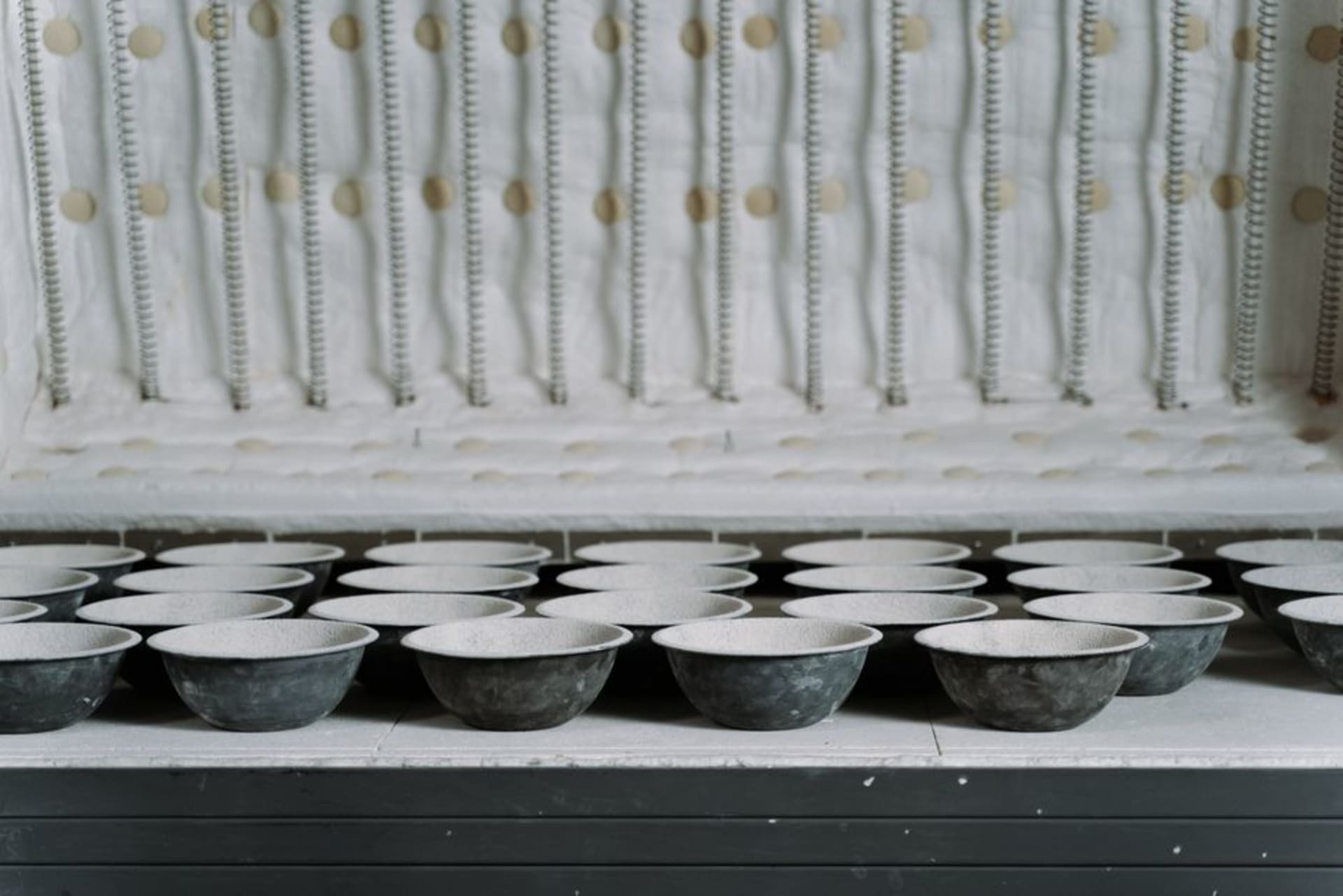
The Saga town where Japanese porcelain was born four centuries ago, still lined with kilns, old shops, and a hillside shrine with torii and lanterns made of glazed ceramic. We went for pottery and left thinking about a single teacup for weeks.
I don’t think of myself as a pottery person. Before Arita, a plate was a plate. But there’s something about a place that has done exactly one thing, superbly, for four centuries — the concentration of it gets under your skin. Arita is where Japanese porcelain began, after kaolin clay was discovered in the hills here in the early 1600s, and the town has essentially been a single enormous kiln ever since. Lia, who actually does care about ceramics, had circled it on our map in a way she circles very few things. We arrived on a grey morning that smelled faintly of woodsmoke, and I watched her go quiet with the particular greed of someone who is going to want to buy things she cannot afford.
Tozan Shrine and its porcelain torii
We started at Tozan Shrine, up a lane above the town, and it’s the strangest and best introduction to Arita imaginable. The torii gate here is not stone or wood but porcelain — glazed blue-and-white, the classic Arita palette, standing improbably against the green hillside. Inside, the guardian lion-dogs are ceramic, the lanterns are ceramic, and there’s a great water jar and offering vessels all made of the same porcelain that made the town rich. It shouldn’t work and it completely does. Lia ran her fingertips along the cool glaze of the torii and said it was like a shrine that had dreamed itself out of teacups. The potters of Arita come here to give thanks, which, standing in front of that blue gate, made total sense to me.
The old road of kilns
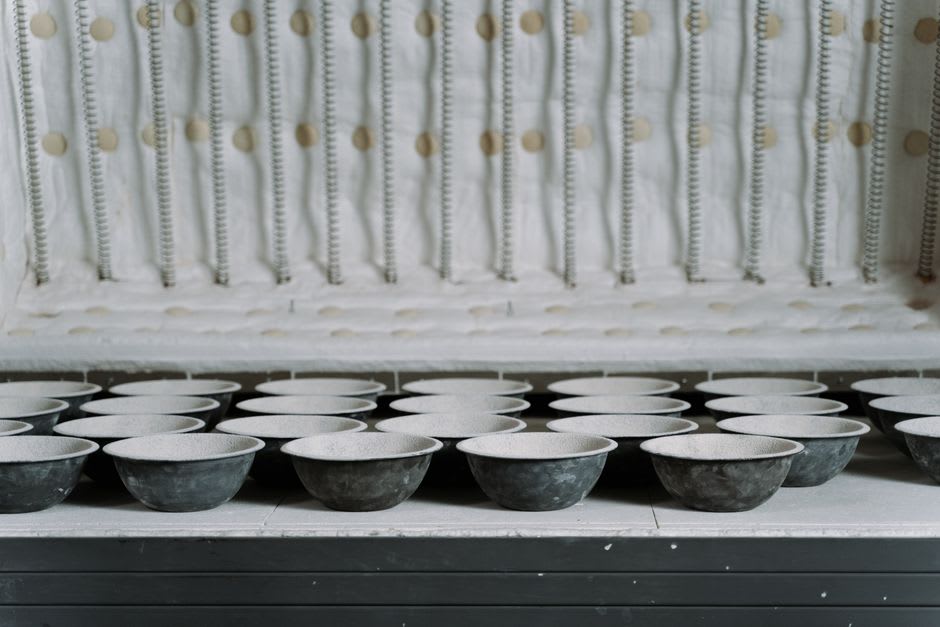
Arita’s main street, Uchiyama, runs for a long stretch lined with wooden merchant houses, kilns, and shops, some of them centuries old, their walls in places built from “tonbai” — recycled brick from the old climbing kilns, studded with drips of ancient glaze. We wandered in and out of showrooms all afternoon. Some sold cheap souvenir cups; others displayed a single tea bowl on a plinth under a light, priced like a small car, and you understood you were meant to look and not breathe on it. In one quiet shop an elderly potter let Lia hold an unfinished piece, still chalky and unglazed, and explained through gestures how many hands and firings a finished bowl passes through. She bought one small sake cup, white with a single sweep of cobalt. It cost more than our dinner. Neither of us has regretted it.
Okawachiyama, the secret valley
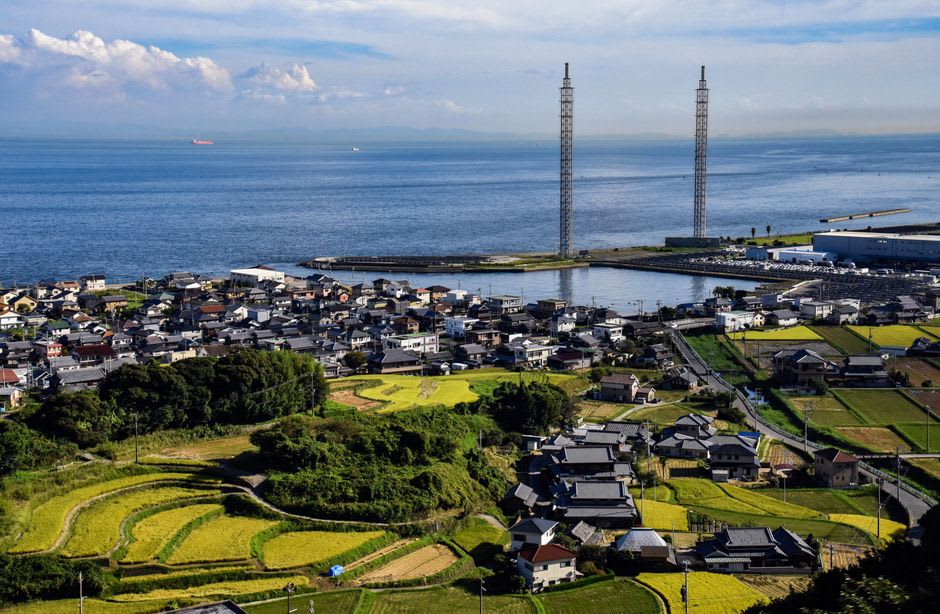
A short trip from Arita proper is Okawachiyama, the “village of the secret kilns,” tucked in a narrow valley where the local lord once hid his best potters to guard their techniques from the outside world. It’s a genuinely atmospheric place — a stream running through, bridges tiled with porcelain shards, chimneys rising among the houses, and the constant sense that people are still working behind the doors. We climbed a little way up the hillside to look back down over the rooftops and chimneys, mist sitting in the trees above. Lia said she finally understood why her cup cost what it did: not the clay, but the four hundred years of hands that had to happen first. We took the last bus back down in a comfortable silence, the little cup wrapped three times in paper on her lap.
Getting There
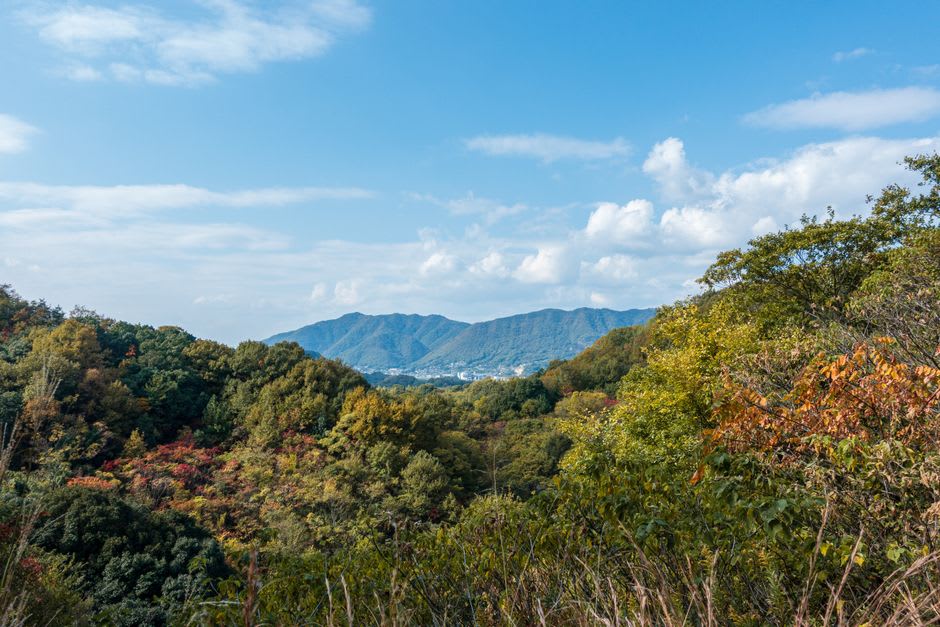
Arita is a stop on the JR Sasebo Line, reachable in a bit over an hour from Hakata (Fukuoka) with a transfer, and easily combined with Saga’s onsen towns of Takeo and Ureshino, which are close by. The town stretches along the rail line, so the porcelain shops, Tozan Shrine, and the main Uchiyama street are walkable from Arita Station, though it’s a fair stroll end to end. For Okawachiyama you’ll want the local bus or a taxi from Imari, the next town over. If you can, come during the Arita Ceramics Fair in late April and early May — half a million people, the whole town turned into a market — or, like us, come on an ordinary quiet day and have the blue torii almost to yourself.
Keep exploring
More of Kyūshū & Okinawa