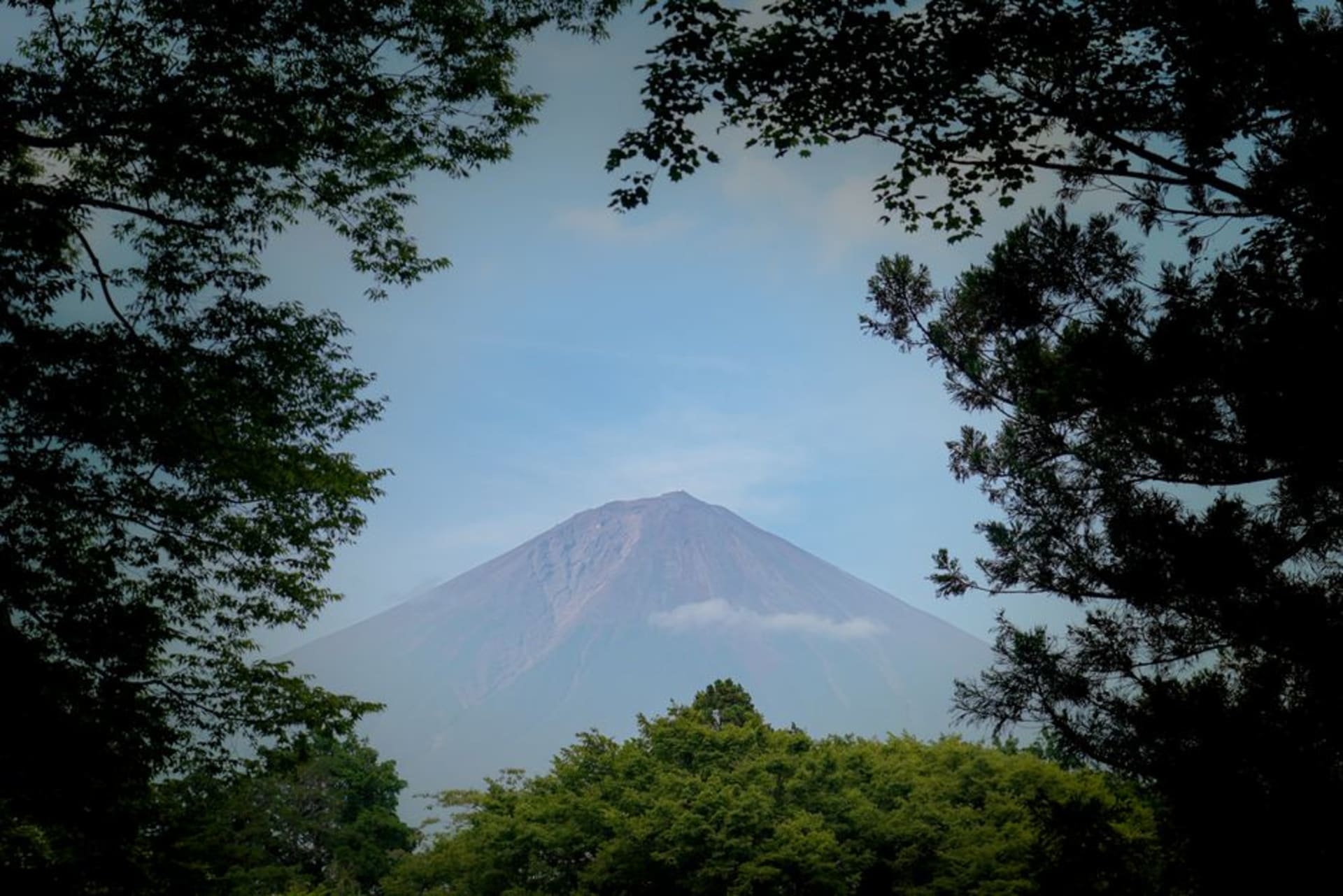
A shapely twin-peaked mountain rising alone from the flat Kanto plain, revered since antiquity and paired in old sayings with Mount Fuji. At its foot sprawls Tsukuba Science City, a planned town of laboratories and researchers. Ancient shrine above, particle physics below, and a cable car strung between the two worlds.
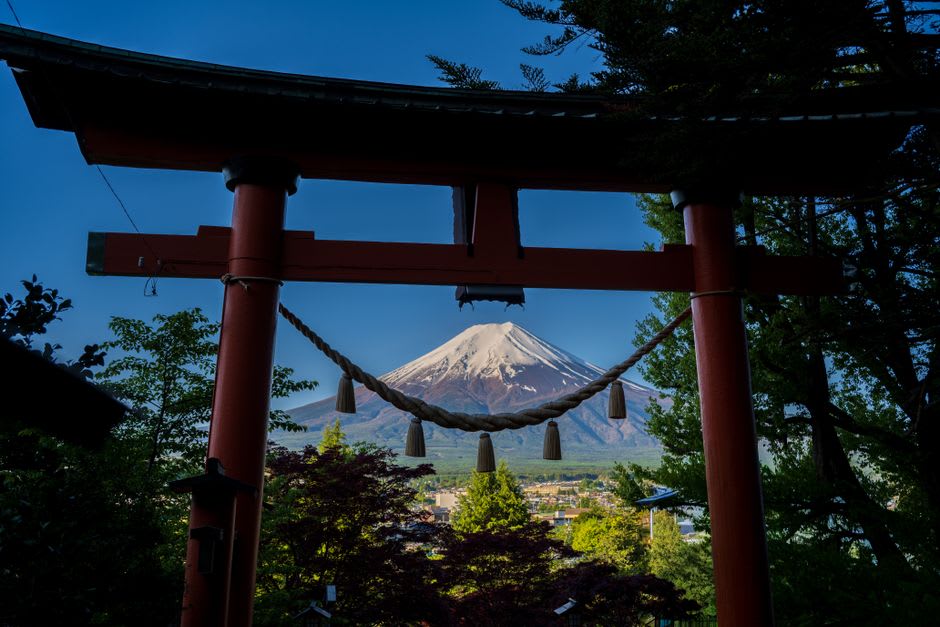
There is an old saying, “Fuji in the west, Tsukuba in the east,” and I had always filed it under polite exaggeration until we stood at the base of the thing. Fuji is a solitary giant; Tsukuba is smaller, gentler, twin-peaked, and it has the good manners to be climbable in an afternoon. Lia had picked it precisely because it wasn’t Fuji, because we wanted a mountain we could actually get up without ropes or a queue of a thousand people. We started from the Tsukuba-san Shrine, whose great cedar-shaded gate sits where the sacred slopes begin, clapped our hands at the offering hall like everyone around us, and started walking up into the trees.
The Mountain of Two Deities
Tsukuba has two summits, Nantai and Nyotai, the “male” and “female” peaks, and the shrine honours a divine couple said to dwell in them. The trail up through the forest is old and rooted and steep in places, passing strange balanced boulders that pilgrims have named and prayed to for centuries. We took the Miyukigahara path, sweating despite the cool, and I confess we were both quietly grateful the mountain tops out under a thousand metres. At the saddle between the peaks Lia insisted we do both summits, and so we did, scrambling the last rocks of Nyotai to a view that made the effort feel small. The whole flat expanse of Kanto lay below like a spilled map.
The View That Earned Its Nickname
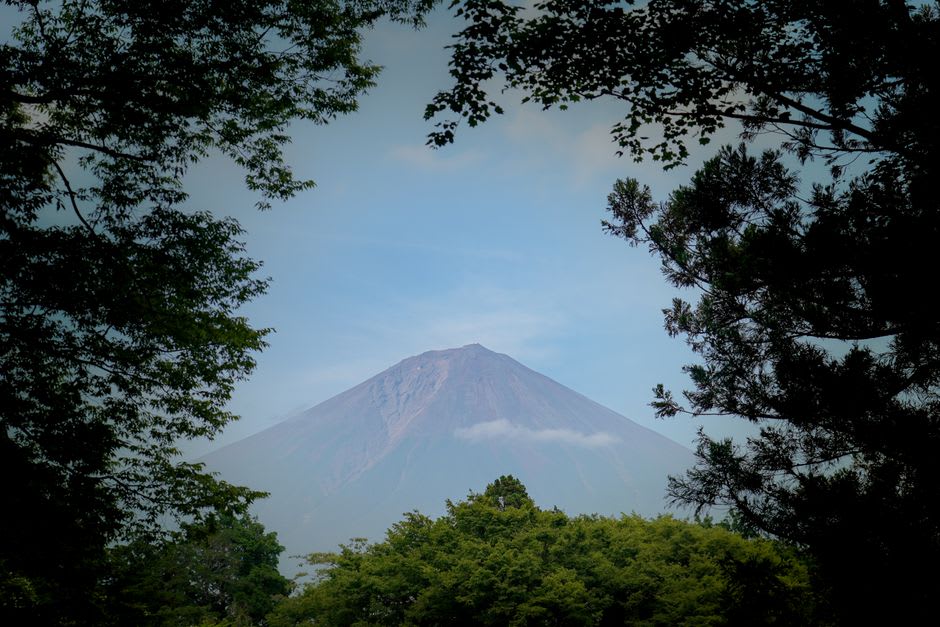
They call Tsukuba “the purple mountain,” Shiho no yama, because of the way its slopes shift colour through the day, and from the top I finally understood it. In the late afternoon light the plain turned hazy and the distant ranges went genuinely violet at the edges. On a clear enough day you can see the towers of Tokyo far to the southwest and, if you are lucky, Fuji itself, faint as a rumour. We were half-lucky: Tokyo yes, Fuji no. Lia bought a cup of amazake from the summit stall and we sat on a rock sharing it, not talking, watching kites wheel on the updrafts below us. There is a particular quiet you only get on small mountains, where the plain hums faintly beneath and the wind does the rest.
Down Among the Laboratories
At the mountain’s foot lies Tsukuba Science City, a place unlike anywhere else we visited: a town built from scratch in the 1960s to house Japan’s research institutes, wide and green and eerily orderly. We came down off the ancient peak and, within an hour, were standing in the JAXA space centre looking at a full-size rocket laid on its side and a real satellite. The contrast was almost comic, gods on the summit and centrifuges in the valley. Lia loved it, being the more scientific of us; I loved the strangeness of the juxtaposition. We ended the day with coffee in a modernist plaza surrounded by researchers on bicycles, the purple mountain framed neatly behind them.
Getting There
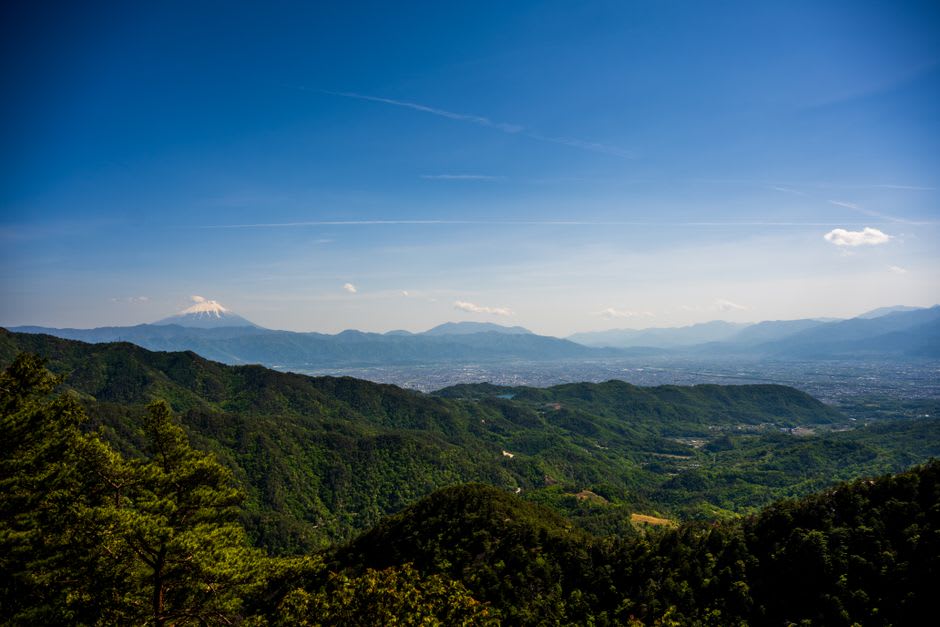
Mount Tsukuba is easiest reached via the Tsukuba Express train from Akihabara in Tokyo to Tsukuba Station, a fast forty-five minutes or so, then a direct shuttle bus to the shrine at the mountain’s base. From there you can hike up or take the cable car to the saddle and a ropeway to the second peak, which is what many day-trippers do. We walked up and rode down, a fair compromise. The JAXA Tsukuba Space Center and the science museums are back near the station and worth building into the day. Come on a clear, dry day if you can, because the whole point of Tsukuba is the view.
Keep exploring
More of Kantō