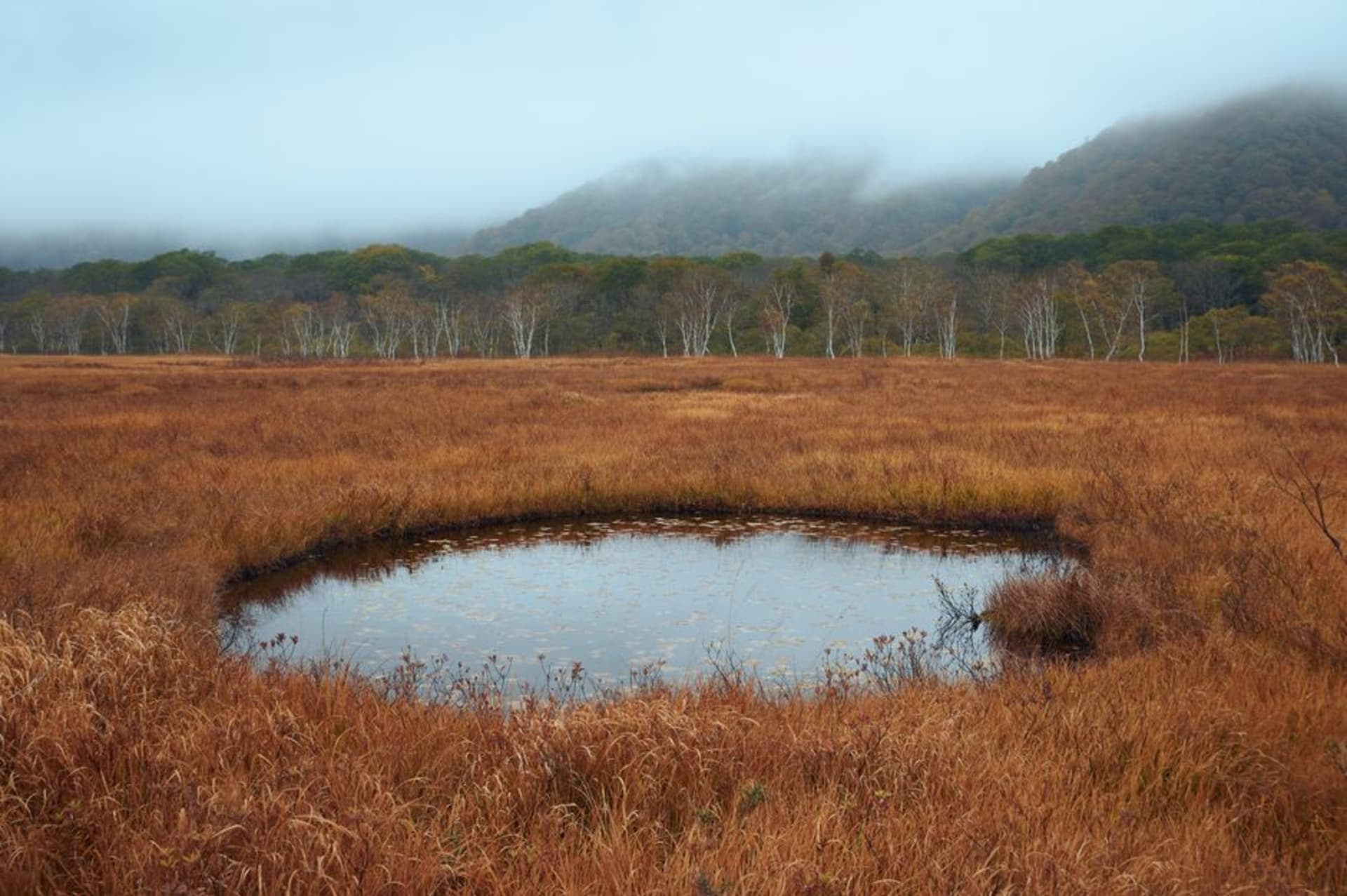
A vast high marshland straddling four prefectures, laced with wooden boardwalks that float across the wet moor. In late spring the skunk cabbage blooms in white drifts; in summer the tiny nikkokisuge lilies turn the plain gold. A rare, tender wilderness reached only on foot, hushed and huge under a wide mountain sky.
Oze begins where the road ends. We left the car at Hatomachi Pass, shouldered our small packs, and walked down through cool forest for the better part of an hour before the trees suddenly let go and the marsh opened in front of us, flat and green and immense, a wooden boardwalk running dead straight across it toward the distant cone of Mount Shibutsu. Lia stopped walking entirely. There is a particular kind of silence in high wetlands, broken only by frogs and the creak of the planks, and it undid something in both of us that Tokyo had wound too tight. We had come to see the flowers, but the first gift Oze gives you is space, more of it than you knew the crowded heart of Japan still held.
Walking the Floating Boardwalk
The whole of Ozegahara is crossed by narrow twin planks of wood, one for each direction, raised just above the wet moor so that thousands of walkers can pass without ever touching the fragile peat. You learn the etiquette fast: keep left, step aside for uphill hikers, and never, ever put a boot on the bog itself. We walked for hours and the marsh simply kept unrolling, pool after dark pool reflecting the sky, clumps of cotton grass nodding in the breeze. Lia counted dragonflies until she lost the number. The boardwalk has been here in some form for decades, the planks replaced patiently by hand, and there is something moving in an entire landscape protected by the simple discipline of staying on the path.
The Flowers That Draw the Crowds
Oze is famous first for its flowers, and the timing is everything. In late May and June the mizubasho, the white skunk cabbage, pushes up across the wet ground in pale hooded drifts, and there is even a beloved old song about them that half the country seems to know. We came a little later, in the golden window of high summer, when the nikkokisuge, small orange day-lilies, wash whole sections of the moor in colour that lasts only a single day per bloom. Lia crouched at the boardwalk’s edge photographing them until her knees complained. Between the flowering peaks the marsh is quieter and, some would say, more beautiful still, all subtle greens and the promise of autumn’s rust to come.
A Night at the Marsh’s Edge
You cannot really do Oze justice in a day, so we stayed at one of the mountain lodges scattered at the marsh’s rim, simple places with shared baths and early curfews and dinners served at long communal tables. Ours sat beside a stream at Yamanohana, and after the day-trippers had trickled back to their buses the whole moor fell into a stillness I can still summon. We walked out onto the boardwalk after dark with a torch and switched it off, and the sky over Ozegahara held more stars than either of us had seen in years. In the morning mist lay on the marsh in low white ribbons, burning off as the sun climbed, and I understood why people return to this place their whole lives.
Getting There
Oze is a protected national park spanning Gunma, Fukushima, Niigata, and Tochigi, and there is no way in but on foot. The most common approach from the Tokyo side is via Gunma: take a train or highway bus toward Numata, then a local bus to the Hatomachi Pass trailhead, from which it is a walk of an hour or more down to the marsh at Yamanohana. Cars are barred from the final stretch, so you park and shuttle. Come prepared for real mountain weather, wear proper footwear, and if you can, book a lodge and stay a night, because the marsh empties beautifully once the day crowds leave. The classic seasons are the skunk cabbage of early summer and the golden lilies that follow.
Keep exploring
More of Kantō