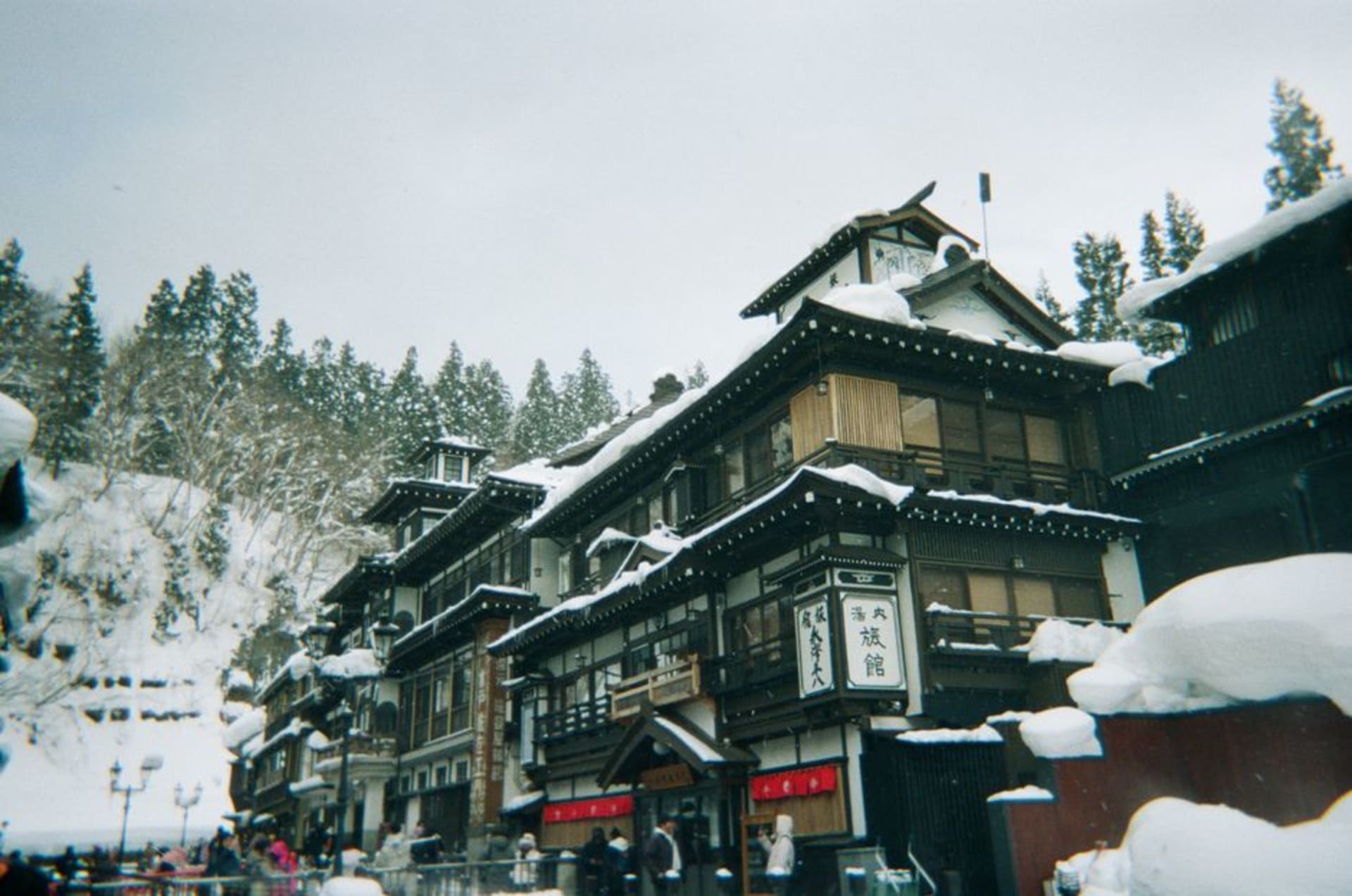
Ikaho Onsen
"Three hundred and sixty-five steps, one for each day, and my calves counted every one."
A hot-spring town built up the side of a Gunma mountain around a single, famous stone stairway of 365 steps, lined with bathhouses, game halls, and steam rising into the cedar dusk. Ikaho is old-fashioned onsen Japan at its most atmospheric.
We arrived in the blue hour, when the lanterns were just coming on, and the whole town seemed to be tilting uphill. Ikaho is essentially one great stone staircase — the Ishidan, three hundred and sixty-five steps climbing between the inns and shops — and there is no way to see the place except to climb it. Lia bounded up ahead in her yukata and wooden geta, clacking on the stone, while I followed more slowly. Three hundred and sixty-five steps, one for each day, and my calves counted every one. Steam drifted from grates in the stairway. Somewhere above us a shrine bell rang. I have rarely felt so completely transported.
The brown gold of the mountain
Ikaho’s water is called kogane-no-yu, “golden water,” a cloudy iron-brown that stains the stone channels running down beside the steps and turns the moment it meets the air. We soaked that first evening at our ryokan, sinking into water the color of weak tea and faintly metallic on the tongue, and I understood why people have been coming here for four hundred years. The town also taps a clearer “white water” from a newer source, but it’s the old brown gold that made Ikaho’s name, said to warm you to the bone and ease tired blood. Lia claimed she slept better that night than she had in weeks, and I couldn’t argue — I was asleep before I’d finished disagreeing.
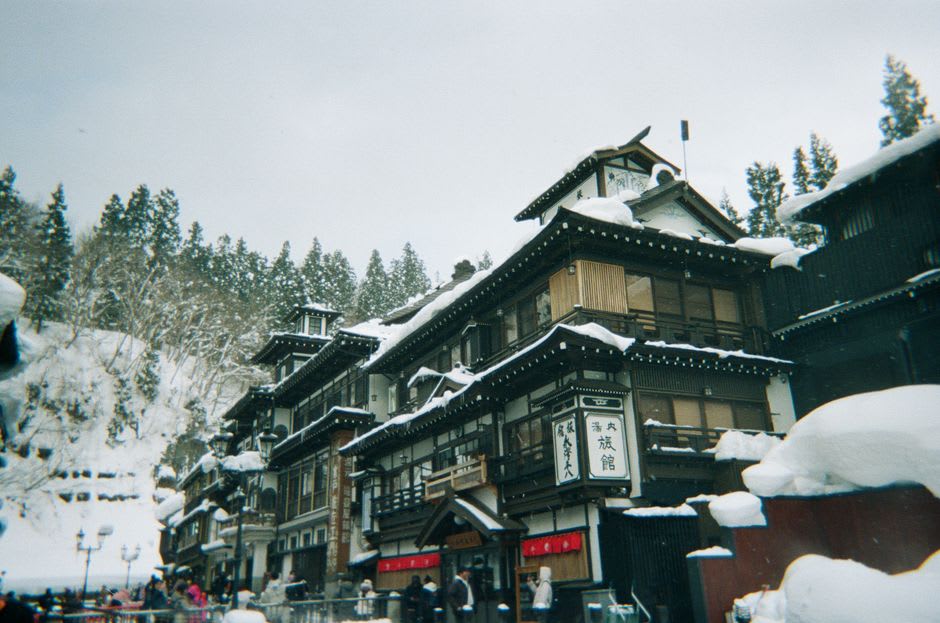
Yukata, pinball, and the shooting gallery
What I hadn’t expected was how playful the town is after dark. Halfway up the stairway we found the old game halls — narrow rooms where you can try your hand at a cork-gun shooting gallery, air rifles, and a kind of retro pinball, all in your bathrobe with a bottle of local cider. Lia is fiercely competitive and would not leave until she’d won a cheap plush cat, which she then carried triumphantly for the rest of the trip. Groups of friends in matching inn yukata drifted past, faces flushed from the baths, laughing. There’s a lovely, unhurried village theater to an onsen evening — the strolling, the snacking, the stopping to soak your feet in a free footbath — and Ikaho does it as well as anywhere I’ve been.
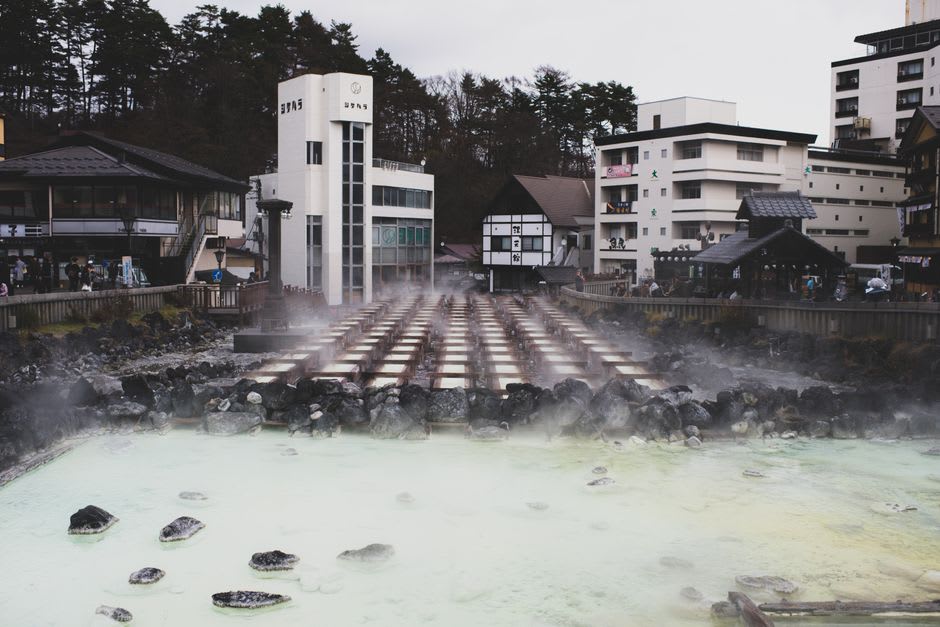
The shrine at the top, and the woods beyond
At the head of the stairway stands Ikaho Shrine, small and weathered, dedicated to the gods of medicine and childbearing — the reward, such as it is, for the climb. We caught our breath there and looked back down the length of the steps, the whole glowing spine of the town falling away beneath us. The next morning we walked on into the hills above, where a red vermilion bridge, the Kajika-bashi, crosses a gorge that was just beginning to turn color, and a ropeway climbs to a viewpoint over the Kanto plain. Mount Haruna’s crater lake lies not far beyond, close enough to fold into the same trip. But it was the stairway I kept thinking about on the bus out — that slow, steaming, lantern-lit climb into an older Japan.
Getting There
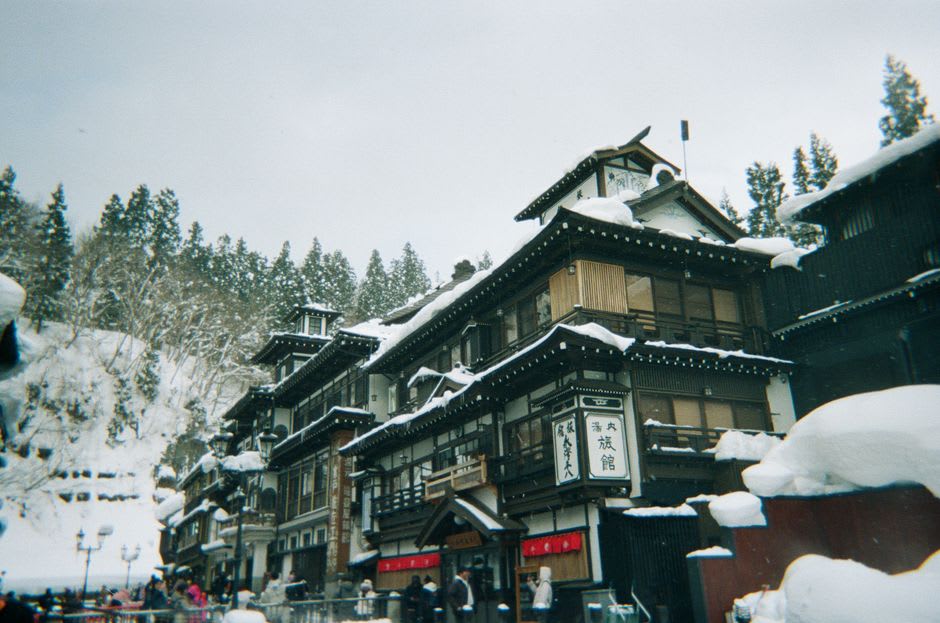
Ikaho is in Gunma Prefecture, an easy escape from Tokyo. Lia and I took the Shinkansen to Takasaki, a little under an hour from the capital, then a bus that wound up into the hills to the onsen in about ninety minutes; there are also direct buses from Tokyo in the season. Once you’re there the town is entirely walkable, which is to say entirely climbable — leave the heavy bags at your ryokan. Autumn, when the surrounding maples flare, is the classic time, but the golden water is just as welcome under winter snow.
Keep exploring
More of Kantō