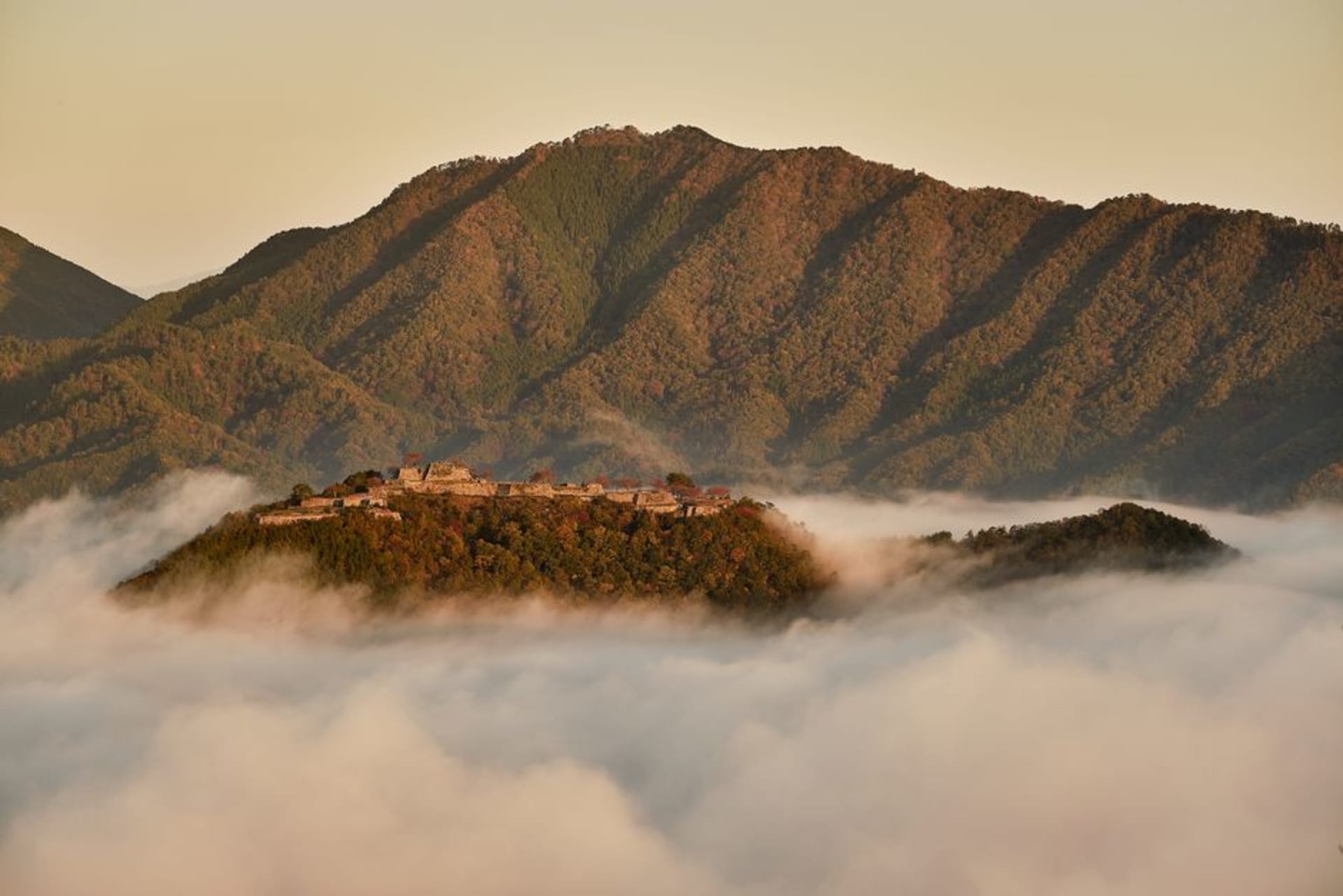
A ruined mountaintop fortress in northern Hyogo that, on the right autumn morning, appears to float on a sea of cloud — the reason locals call it the Castle in the Sky. There is nothing left but stone ramparts and grass, and somehow that is exactly enough. You climb in the dark to earn a view that lasts about an hour.
The alarm went off at four and Lia, who does not love mountains before sunrise, said something into the pillow I chose not to translate. But we’d built the whole detour around this one morning, so we laced up and stepped out of the inn in Wadayama into air cold enough to see. The taxi driver who took us to the trailhead had done this run a thousand times; he glanced at the sky, sucked his teeth, and said one word — “unkai” — with the confidence of a man taking a bet he knew he’d win.
The Climb Before Light
There are two ways up to Takeda Castle, and we took the steep one from the town side because we were early and stubborn. The path switchbacks through cedar in near-total dark, head-torches picking out roots and the occasional startled glow of another climber’s eyes. Nobody talks much on the way up. You hear breathing, boots, the odd cough, everyone climbing toward the same gamble — that the cloud will be there, that the timing will hold. Lia found her rhythm around the halfway mark and pulled ahead of me, and I remember watching her torch bob up through the trees and thinking that this, the effort in the dark, was already the good part, whatever waited at the top.
Ramparts on a Sea of Cloud
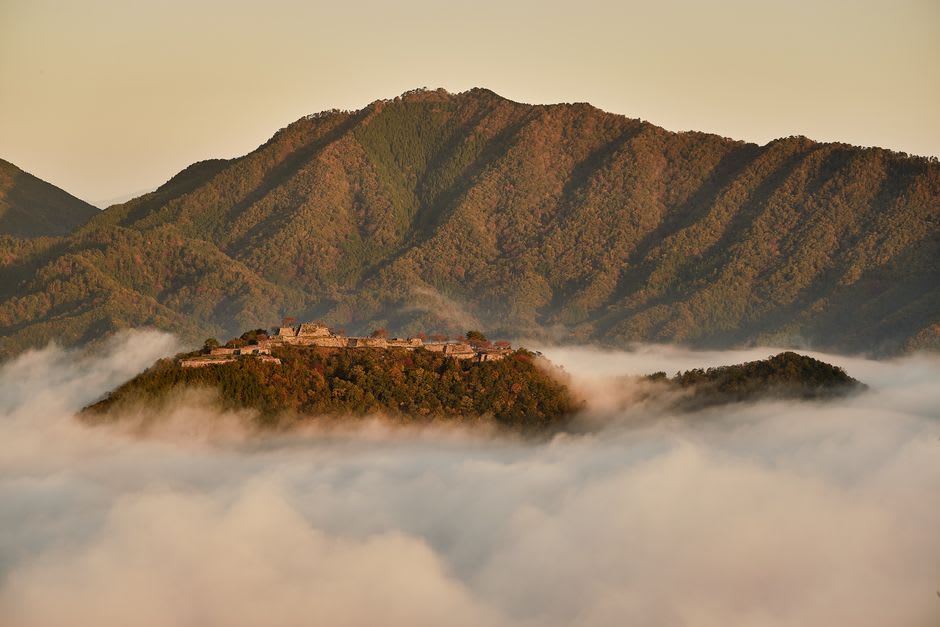
We came out of the trees onto the ridge just as the grey began to thin. And there it was — the ruined stone walls of a castle that lost its keep four centuries ago, laid out along the summit like the bones of something enormous, and below them, filling the whole valley of the Maruyama river, an unbroken sea of white cloud. Other peaks poked through it like islands. The rising sun caught the top of the cloud and turned it pink, then gold. I have stood in a lot of dawns for this blog and told you a lot of them were worth it. This one silenced us both. We just stood on the old ramparts, cold and slightly stunned, and let it happen.
The Castle That Isn’t There
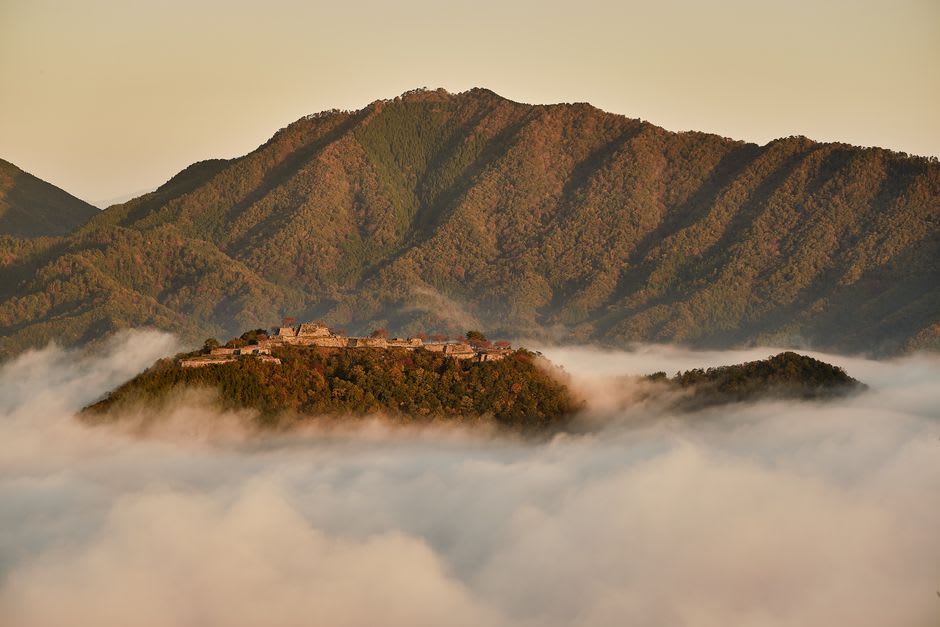
What surprised me most, once the sun was fully up, was how little of the castle remains — and how little that matters. Takeda was built in the 1400s, held by a series of warlords, and abandoned after the battles that unified Japan. No walls, no tower, no roof. Only the stonework survives: beautifully fitted dry-stone terraces following the crown of the mountain, grass growing where samurai once slept. Lia walked the whole perimeter tracing the wall lines with her hand. Without buildings to look at, you look at the shape of the place instead — the way the ramparts use the ridge, the views in every direction, the sheer strategic arrogance of building up here at all. Ruins, I decided, sometimes tell a cleaner story than the thing intact.
Getting There
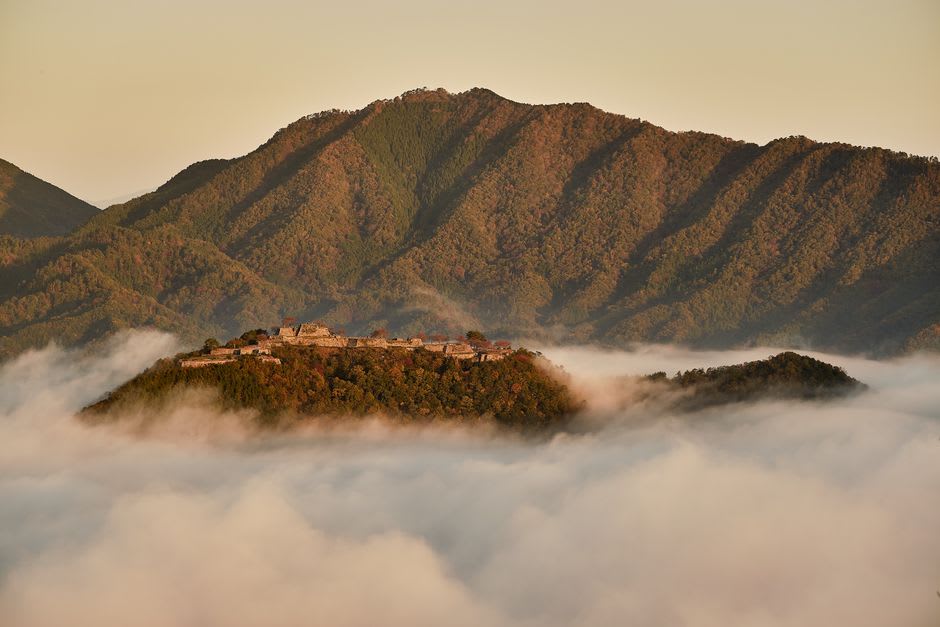
The sea of cloud is seasonal and fickle — it forms on cold, clear, windless mornings from roughly late September to late November, best in the hour after dawn. Take the JR Bantan line to Takeda Station; from Osaka or Kyoto it’s around two and a half hours via Himeji. For the cloud view you actually want the opposite mountain, Ritateyama, whose observation decks look across at the floating castle — a separate 40-minute climb reached by taxi to the trailhead. To stand on the ramparts themselves, climb from Takeda Station (about 40 minutes). Stay the night before in Wadayama or Takeda so you can start in the dark, and check the local cloud forecast the evening before. Bring more layers than you think.
Keep exploring
More of Kansai