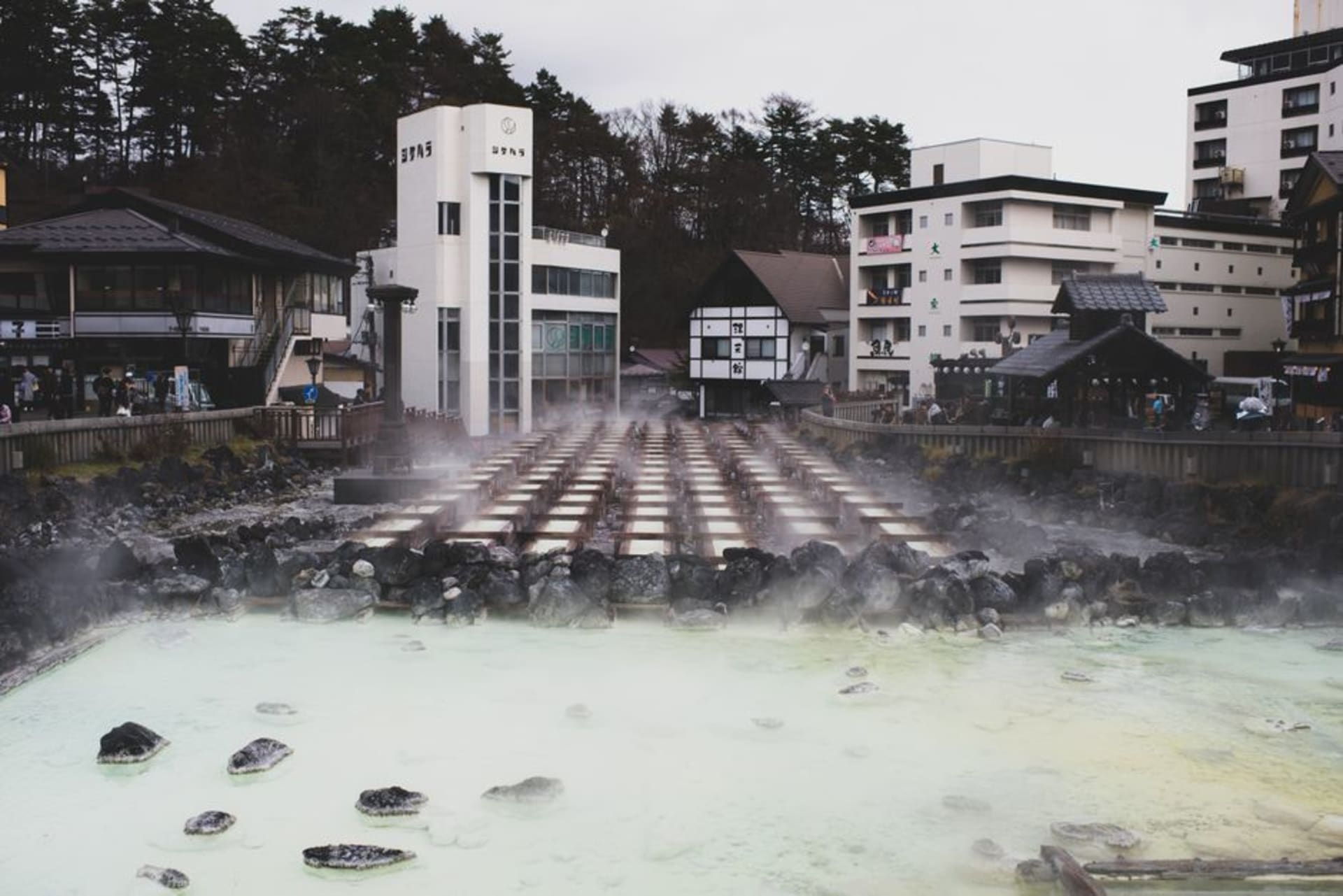
Ryujin Onsen
"We drove three hours past the last vending machine to soak in water that felt like it wasn't there at all."
A remote hot spring folded deep into Wakayama's Kii mountains, where the water runs so soft it feels like liquid silk on the skin. The kind of place you reach only after the last convenience store has vanished from the map, and are glad of it.
The road to Ryujin does something to your shoulders. Lia and I had been white-knuckling the rental car up Route 371 for the better part of an hour, hairpin after hairpin through cedar so dense the afternoon light came through green, and somewhere around the point where the phone signal died entirely, I felt my grip loosen. There was nothing to do but arrive. When the valley finally opened onto a cluster of wooden inns hunched over the Hidaka River, steam threading up from the rocks below, Lia said the thing I was thinking: “We could have missed this so easily.” That’s the whole feeling of Ryujin. It doesn’t come to you.
The water they call beauty
Ryujin is one of Japan’s three great “bijin no yu” — beauty hot springs — and I confess I rolled my eyes at the marketing until I actually got in. The water here is alkaline, bicarbonate-rich, and it doesn’t behave like normal water. It’s slippery. You rub your forearm underwater and your fingers glide as if over soap that never rinses away. Lia kept laughing about it, running a hand along her own collarbone in disbelief. We soaked in the open-air bath at Kami-no-yu as the light drained out of the gorge, the river loud below us, and neither of us said much for a long time. My skin genuinely felt different for two days afterward — softer, tighter, whatever the old legends promised the samurai lords who came here to convalesce.
Life in a village of eleven inns
There is almost nothing to do in Ryujin, and this is the point. The onsen village is barely a ribbon of ryokan strung along the river — the venerable Kami-no-yu bathhouse, a scatter of family inns, a single small shop selling grilled amago fish on skewers. We ate the amago standing on the bridge, salt-crusted and smoky, watching an old man in the river below patiently working a fishing line. Our ryokan served us a kaiseki dinner of mountain vegetables, river fish, and a beef so tender Lia declared she’d forgive the drive twice over for it. At night the whole valley went black except for the paper glow of inn windows, and the sound was only water. I slept the way I did as a child.
The high road over Gomadanzan
We left by the mountain route rather than doubling back, taking the Koyaryujin Skyline north toward Mount Gomadanzan. Up at the ridge the cedar gives way to beech, and there’s a viewpoint where, on the clear morning we had, you can see ridgeline folding into ridgeline all the way to the Pacific haze. Lia made me stop the car three times. It’s the kind of empty, sculpted landscape you don’t expect to find so close to Osaka, and it links Ryujin directly to Koyasan, the great Buddhist monastery complex — which is exactly how the old pilgrims and healing-seekers travelled between them for centuries. Standing up there in the wind, I understood why they thought these mountains were the dwelling of a dragon god. Ryujin means, after all, dragon god.
Getting There
Ryujin Onsen sits deep in the Kii Peninsula, and there is no easy way — that’s its protection. A rental car is by far the best option: roughly three hours from Osaka or two from Wakayama City via the winding Route 371 or 424. Come in from the north over the Koyaryujin Skyline if you’re pairing it with Koyasan, but note the skyline closes in winter. Buses do run from Gomadanzan and from Tanabe on the coast, but they are infrequent and slow; check the timetable before you commit. Whichever way you come, fill your tank and eat before the mountains — the last services vanish long before the water begins.
Keep exploring
More of Kansai