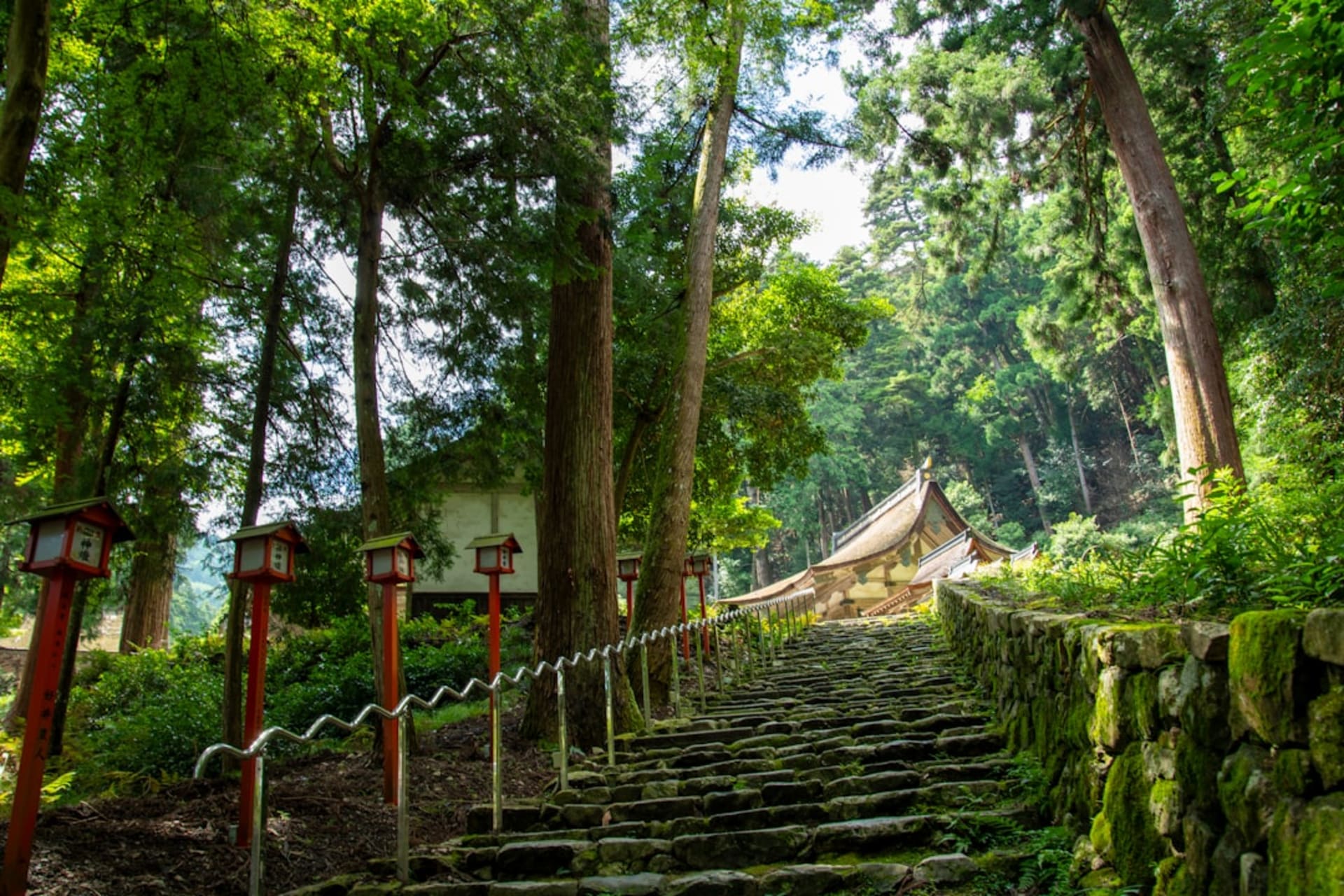
A lakeside city in Shiga where Japan's largest lake, Biwa, lies flat and enormous below the wooded shoulder of Mount Hiei — and on that mountain sits Enryaku-ji, the vast monastery that shaped Japanese Buddhism for a thousand years. Otsu is Kyoto's quieter neighbor, a place of lake light and temple bells that most travelers rush straight past. We didn't, and we were glad.
Everyone told us Otsu was a place you passed through. It’s the first stop out of Kyoto heading east, close enough that people commute, and its reputation is essentially that of a suburb with a nice view. But Lia and I had spent three days in Kyoto being gently trampled by tour groups at every famous gate, and the idea of somewhere twenty minutes away with a lake and no crowds sounded like medicine. We took the little train over the hills in the morning, and when Lake Biwa first opened up below us — vast, silver, so wide the far shore vanished into haze — we both understood at once that this was not a suburb of anywhere. It was its own thing entirely, and it had a lake the size of a small sea.
Enryaku-ji on the Mountain
Above Otsu rises Mount Hiei, and on it sprawls Enryaku-ji, one of the most important monasteries in Japanese history — the training ground of nearly every great Buddhist reformer for centuries, and a place once so powerful its warrior-monks made emperors nervous. We rode the cable car up through cedar forest into cool mountain air, and the crowds of Kyoto simply fell away. The temple isn’t one building but a whole scattered complex of dark wooden halls spread through the trees, connected by mossy stone paths and the smell of incense drifting between cedars. In the central hall, the Konpon Chudo, a flame is said to have burned without going out for over a thousand years. We stood in its dim, cool interior a long while. Lia, who is not religious, whispered that it felt like standing inside something’s slow heartbeat. I knew exactly what she meant and couldn’t have said it half so well.
The Lake That Doesn’t End
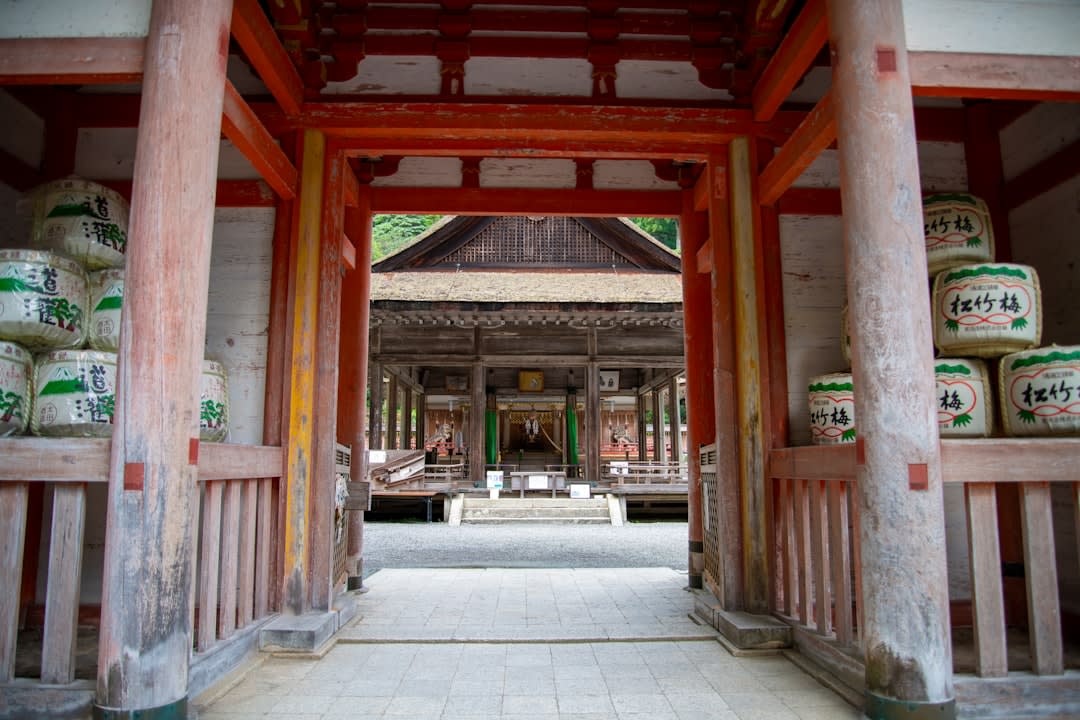
Back down at lake level, Otsu belongs to Biwa. The lake is the largest in Japan and old beyond reckoning — millions of years — and standing at its edge you feel that scale in your chest, the horizon going flat and endless like the sea except the water is fresh and still. We rented bicycles and rode the shoreline path in the afternoon, past fishermen and herons and a scattering of old torii standing right in the shallows. There’s a floating shrine gate at Shirahige further up the shore that we didn’t have time for, and I’ve regretted it ever since. Instead we found a quiet stretch of pebbled beach, sat, and watched the light change on the water for the better part of an hour. A pleasure boat crossed far out, silent at that distance. The lake did what large calm water always does to two tired people: it emptied our heads out completely.
Old Roads and Lake Fish
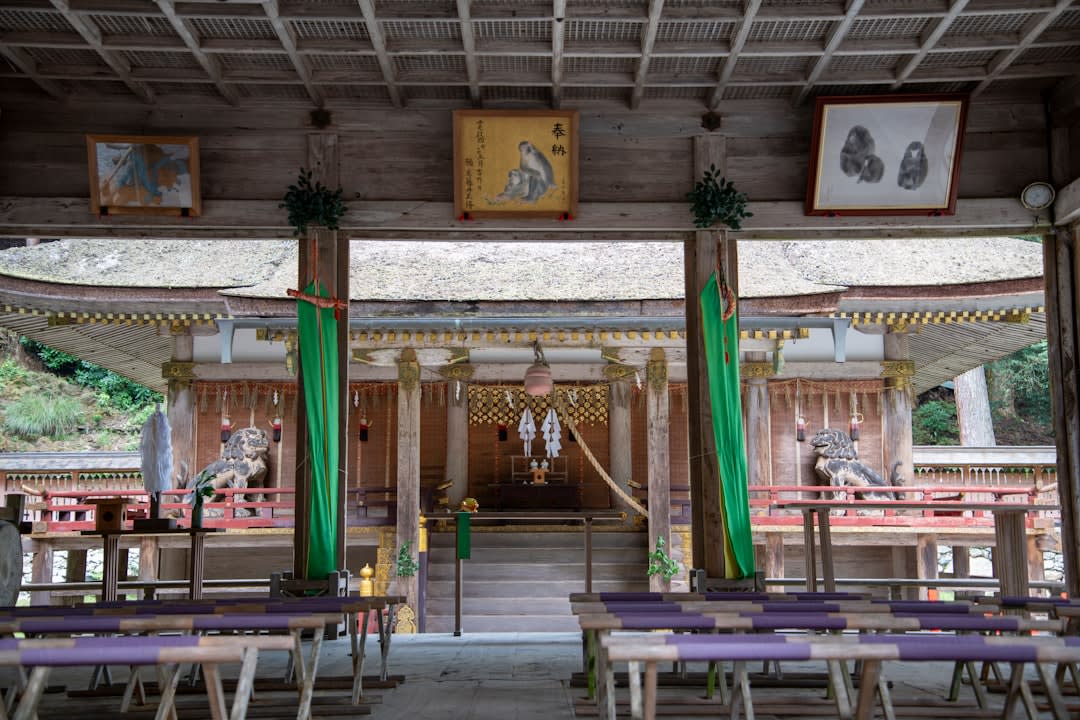
Otsu was once a crucial post town on the old road between Kyoto and the east, and traces of that history are still folded into the streets if you look. We wandered the old Tokaido stretch near Otsu-juku, past shops that had clearly been shops for a very long time, and stopped at a small place serving Biwa’s own fish — funazushi, the ancient fermented crucian carp that is the distant ancestor of all sushi. I will be honest: it is pungent, sharp, an acquired taste I did not fully acquire in one sitting. Lia loved it immediately, naturally. We washed it down with local sake and a plate of simpler grilled lake fish that we both adored, and walked back toward the station in the blue evening with the lake glowing faintly to our left. Kyoto was twenty minutes away. It felt like a different country.
Getting There
Otsu could not be easier to reach — it’s a ten-to-twenty-minute train ride from Kyoto Station on the JR line, which is exactly why it makes such a good day trip or a calmer base than the city itself. For Enryaku-ji, take the Sakamoto Cable Car (Japan’s longest funicular) up Mount Hiei, or approach from the Kyoto side via Yase; give the mountain a half day at least, as the halls are spread far apart. The lakeside is walkable or bikeable straight from central Otsu, and boat cruises run from the main pier. Come on a clear day if you can — the whole point here is the view, and Biwa deserves to be seen sharp.
Keep exploring
More of Kansai