Ōmihachiman
"The boatman poled us past four centuries of somebody else's wealth, and it felt like a secret."
A merchant town near Lake Biwa where willow-lined canals still carry flat-bottomed boats past the whitewashed storehouses of the old Ōmi traders. We came for an afternoon and stayed until the water turned copper. Some places just refuse to be rushed.
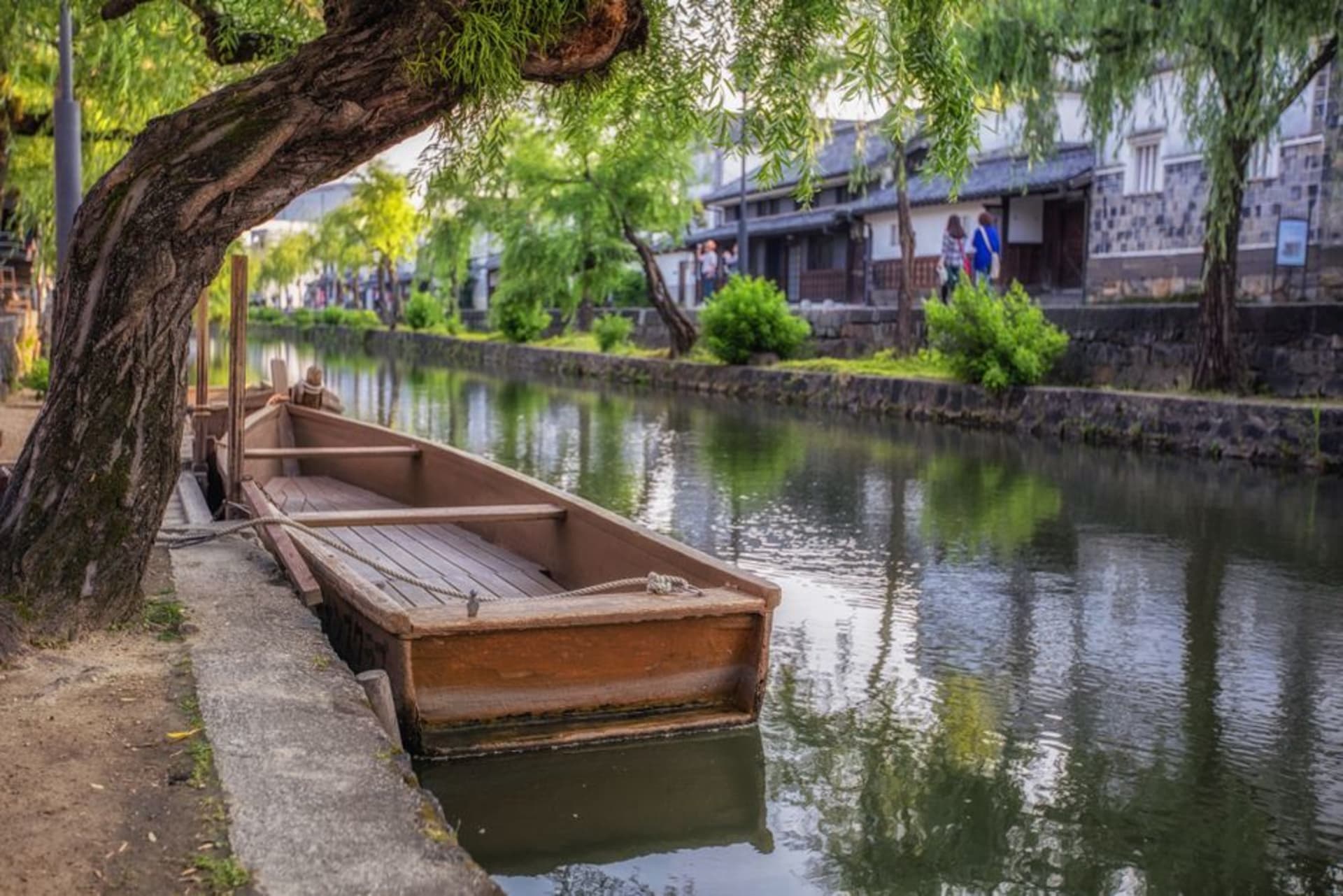
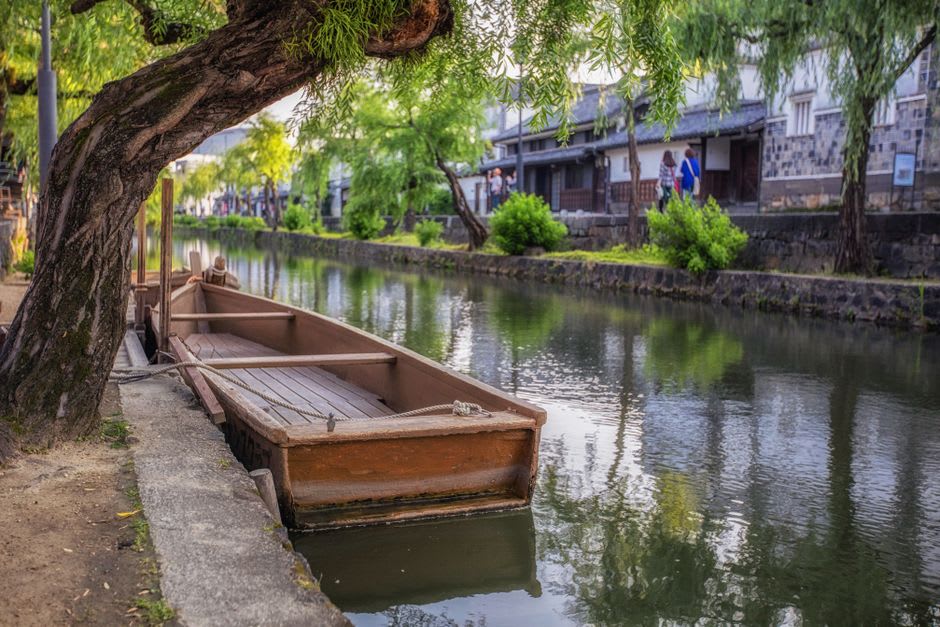
Lia found Ōmihachiman before I did, in a paragraph of a guidebook we’d both otherwise skimmed, and she read it out loud on the train while I watched Lake Biwa slide by the window. “Merchant town. Canals. Boats you can ride.” That was enough. We got off at a small station, walked twenty minutes through an ordinary suburb that gave no hint of what was coming, and then the street opened onto the Hachiman-bori canal — green water, drooping willows, a row of dark-tiled storehouses leaning their reflections into the surface — and both of us just stopped. A flat wooden boat slid under a stone bridge with a handful of passengers aboard, the boatman working a single pole, and Lia turned to me with the particular grin she gets when a gamble pays off.
The Hachiman-bori Canal
The canal is the reason to come, and it earns it. Dug in the late 1500s, Hachiman-bori linked the town to Lake Biwa and made Ōmihachiman a hub of water-borne trade, and it has been restored with enough care that walking its banks feels like stepping sideways in time. The willows are the thing — they trail into the water at intervals, and the whole length is lined with the whitewashed, black-timbered kura storehouses the merchants built to hold their goods. We took the boat, of course. For forty-odd minutes we sat low on the water while the boatman poled us slowly along, pointing out an old sake brewery here, a moss-slicked stone landing there, the ceiling of a bridge passing close overhead. From the water the town rearranges itself, and you understand that the canal was never scenery — it was the whole point.
The Ōmi Merchants and Vories
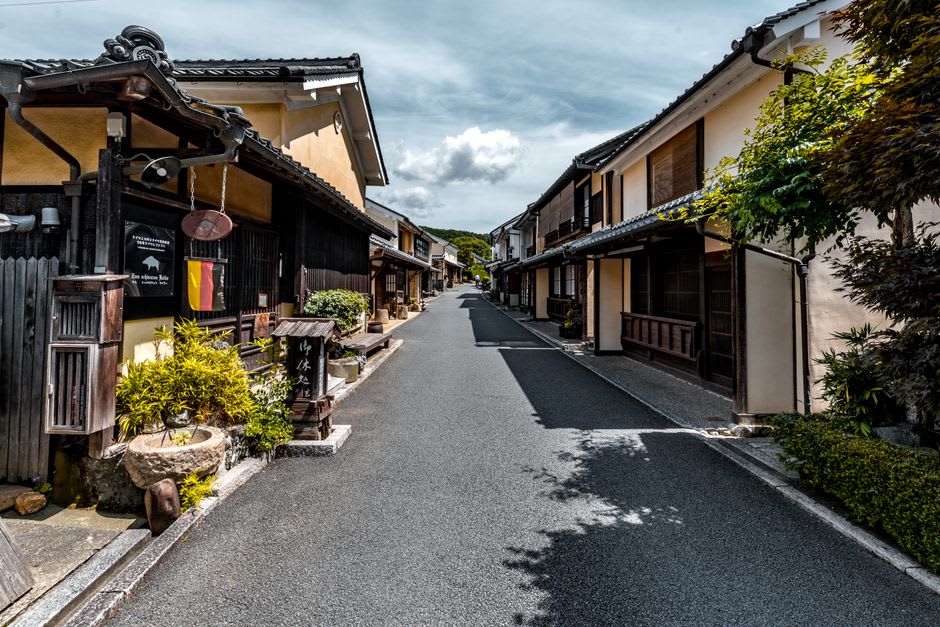
Ōmihachiman was home to the legendary Ōmi shōnin, travelling merchants who fanned out across Japan and built fortunes on a code that prized honest trade — “good for the seller, good for the buyer, good for the world,” a phrase you still see quoted. Their old quarter, Shinmachi-dōri, is a preserved street of lattice-fronted merchant houses, some open to visitors, and we spent a slow hour wandering rooms of dark polished wood and inner gardens. Then there’s the other, stranger layer: William Merrell Vories, an American who arrived in 1905 to teach English, stayed for life, and left the town scattered with gentle Western-style buildings — a school, a hospital, houses with pale clapboard and soft rooflines. The mix is unexpected and completely charming, an American architect’s dream folded quietly into a samurai-era trading town.
Hachimanyama by Ropeway
Above the town rises Hachimanyama, and a short cable-car ropeway climbs it in a few minutes. At the top sit the remains of a castle and Zuiryūji temple, but what we came for was the view — and it delivered. From the summit the whole geometry of the place lays itself out: the canal threading through the roofs, the grid of the merchant streets, the reed beds, and beyond them the vast flat sheet of Lake Biwa going hazy at the horizon. We timed it badly on purpose, arriving late, and watched the light drop until the water down below turned to hammered copper. Lia said it was the best thing we’d almost skipped, and I couldn’t argue. A small resident cat wound around our ankles at the ropeway station on the way down, seeing us off.
Getting There
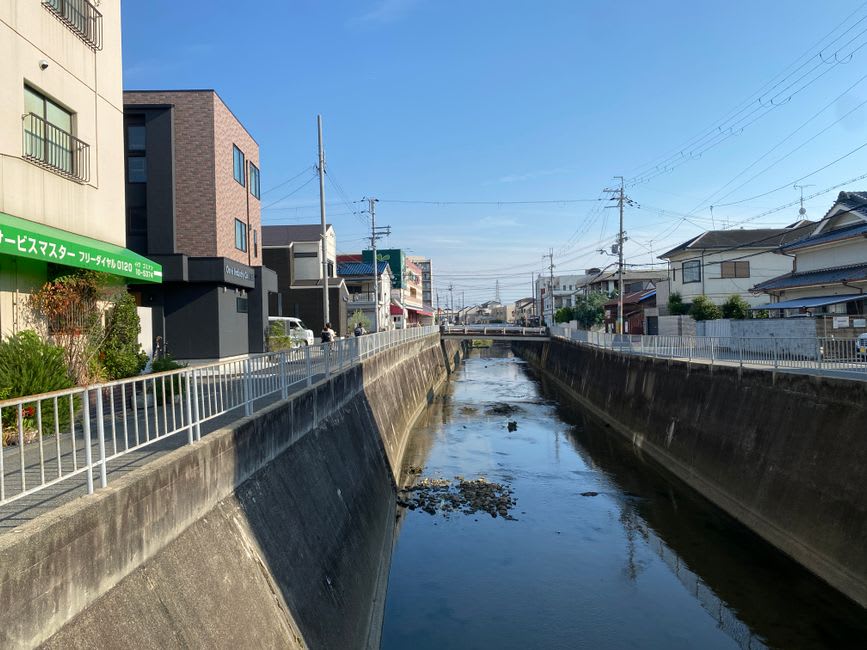
Ōmihachiman sits on the JR Biwako line, about thirty-five minutes from Kyoto and a little over an hour from Osaka by rapid train. From the station it’s a flat fifteen-to-twenty-minute walk to the canal, or a short bus ride if you’d rather save your legs for the old streets. The boat cruises run through much of the day; the ropeway up Hachimanyama is a five-minute walk further on. It makes an easy, uncrowded day trip, and pairs well with Hikone or a wider loop around Lake Biwa. Go in the late afternoon and stay for the light on the water.
Keep exploring
More of Kansai