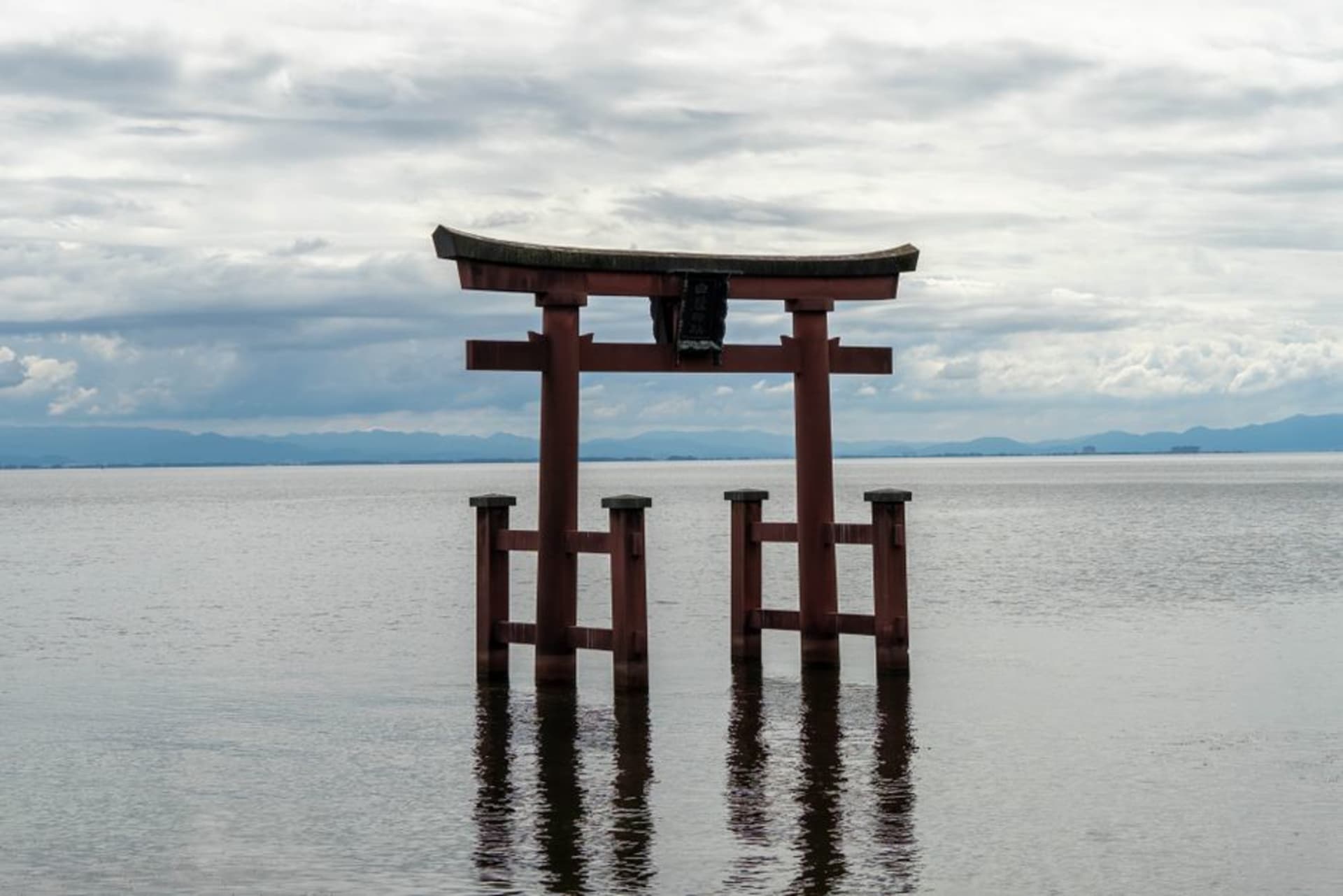
A lakeside castle town on the northern shore of Lake Biwa, where a district of black-walled merchant houses has been reborn as a glass-craft quarter. We wandered in on a slow afternoon and found a town that had quietly reinvented itself without losing its bones. The lake sits at the end of every street like a held breath.
Nagahama came to us as a recommendation from a woman we’d shared a table with in Hikone, who said, almost conspiratorially, that we should go north up the lake and see what a town could do with an old black warehouse and some imagination. So we did. Nagahama sits on the northeastern shore of Lake Biwa, and its heart is Kurokabe Square, named for the “black wall” — a nineteenth-century merchant building, its dark plaster facade nearly demolished in the 1980s until locals fought to save it and turned it, of all things, into a glass shop. That single act of stubbornness rippled outward. Lia and I spent the afternoon drifting through the streets it saved, and I kept thinking about how close this had all come to being a car park instead.
The Black-Wall Glass District
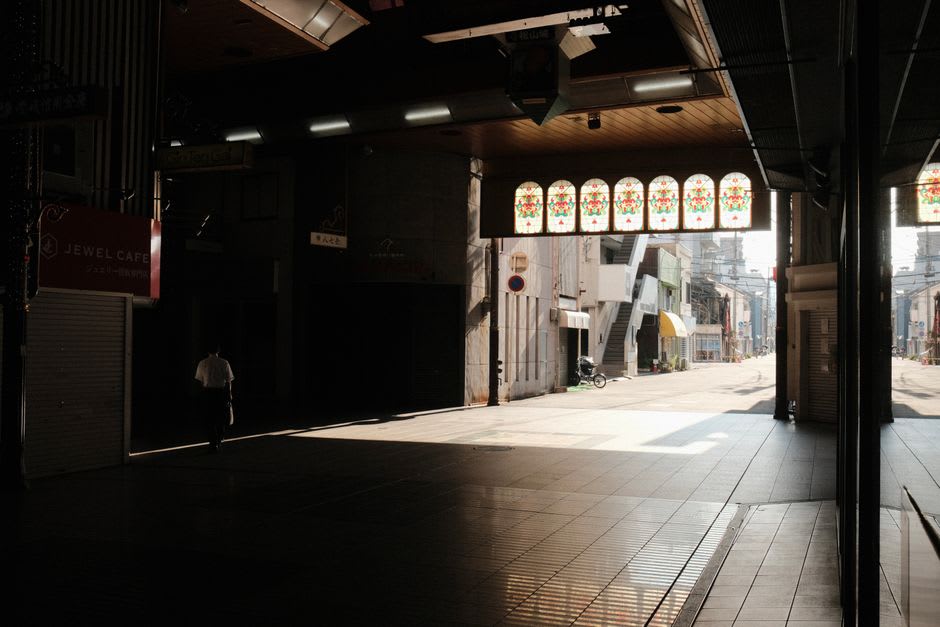
Kurokabe is now a cluster of glass studios, galleries, and shops threaded through the preserved streets of dark-walled machiya, and it has a lightness to it that surprised me — glass being the material of the place, everything catches and throws the afternoon light. There are studios where you can watch blowers work a glowing gather at the end of a rod, and workshops where, for a fee, you can try grinding your own piece or making a bead. Lia signed us up for a short glass-bead session on a whim, and I produced something lopsided and oddly beautiful that now lives on our windowsill in Mexico. Between the studios are cafés and craft shops, and the whole district manages to be touristic without feeling fake, because the buildings underneath are genuinely old and the craft is genuinely made here.
The Castle and Its Ghosts
Nagahama Castle stands in a park by the lake, a clean white reconstruction of the fortress once held by Toyotomi Hideyoshi — the peasant-born warlord who unified Japan and got his first castle here, an origin story the town wears proudly. The rebuilt keep houses a small museum, and the climb to the top gives you the whole sweep of Lake Biwa, that inland sea so wide the far shore blurs into haze. It isn’t an original keep like Hikone’s down the coast, and it doesn’t pretend to be, but standing on its top floor with the wind off the water I found the history easy to feel anyway. We lingered in the surrounding park, where the cherry trees must be spectacular in spring, and watched an old man practise slow tai chi movements with the lake behind him.
Festival Town
What we didn’t get to see, but heard about endlessly, was the Nagahama Hikiyama Festival — a spring event, held in April, where ornate wooden floats are hauled through the streets and children perform kabuki plays on stages built into the floats themselves. The town clearly organises a good part of its identity around it; there’s a dedicated museum, the Hikiyama Museum, where several of the elaborate floats are displayed year-round, all gold leaf and carved dragons and astonishing craftsmanship. We went in partly to escape a sudden rain shower and came out an hour later, converted. Afterwards we ate a bowl of yakisaba somen — grilled mackerel over noodles, a local specialty — at a small place near the station, and made a quiet promise to come back in April someday, which is the kind of promise a good town extracts from you.
Getting There
Nagahama sits on the JR Biwako and Hokuriku lines; direct trains reach it from Kyoto in about an hour and from Maibara, a shinkansen stop, in around ten minutes, which makes it easy to fold into a wider trip. Kurokabe Square and the glass district are a flat five-to-ten-minute walk from Nagahama station, with the castle and lakeside park just beyond. It pairs beautifully with Hikone down the eastern shore for a two-town Lake Biwa day. Go slowly, try a workshop, and end at the water’s edge in the late light, when the lake goes wide and still.
Keep exploring
More of Kansai