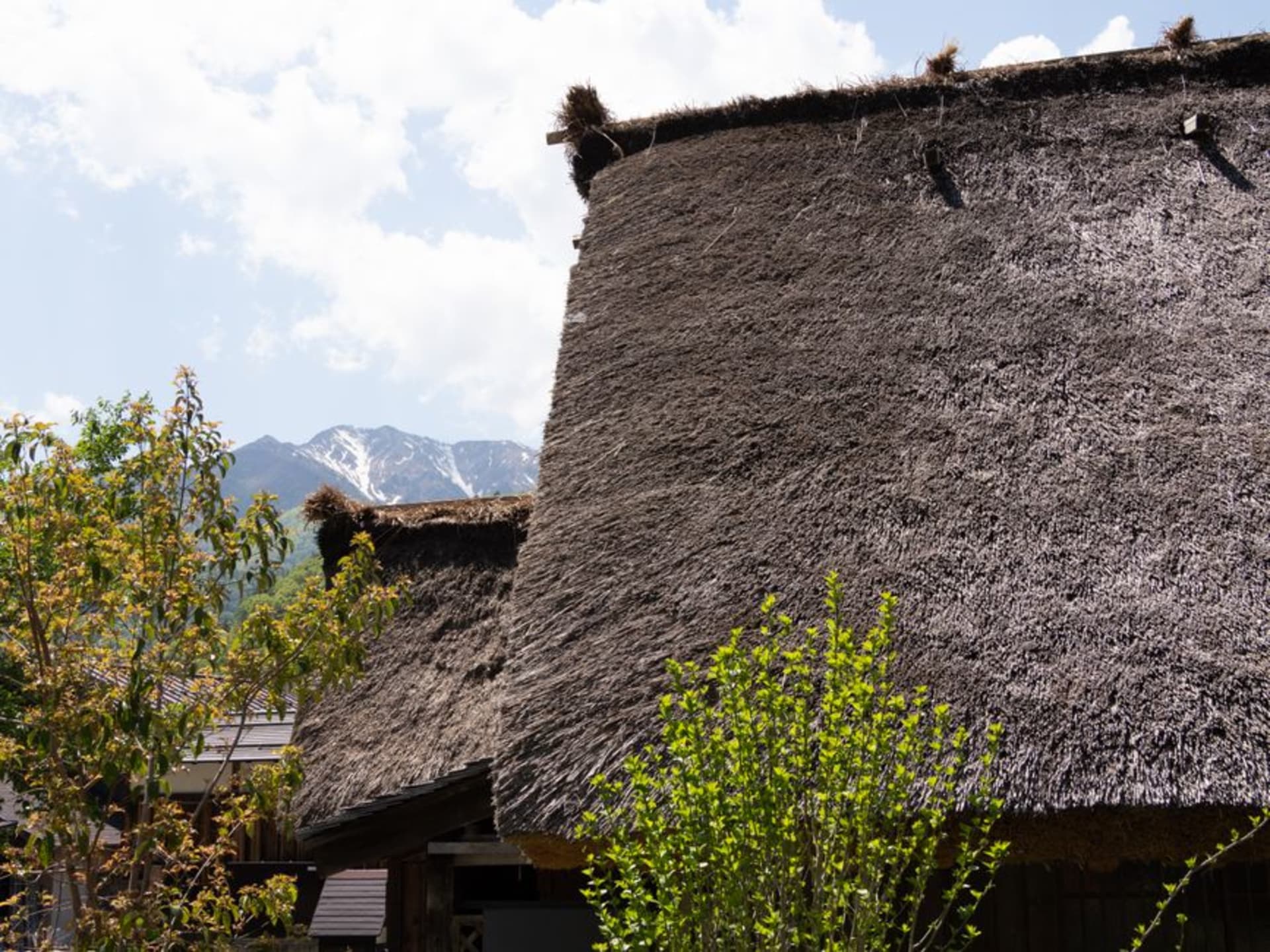
A hamlet of steep-thatched kayabuki farmhouses scattered across a green fold of the Kyoto hills, where the roofs are as tall as the houses beneath them. We arrived thinking it would be a photo stop and stayed until the light went gold and the frogs started up.
The rental car smelled of the previous driver’s cigarettes, and Lia navigated with a paper map because the phone signal had given up somewhere back in the mountains. We came around a bend expecting another sleepy Kyoto-prefecture village and instead the valley opened onto Kayabuki-no-Sato — a cluster of thatched farmhouses so steeply roofed they looked like a row of praying hands. I pulled over badly. What got me wasn’t that it was pretty, though it was; it was that smoke was rising from one of the chimneys. People still lived here, under those absurd beautiful roofs, on an ordinary Tuesday.
Under the Thatch
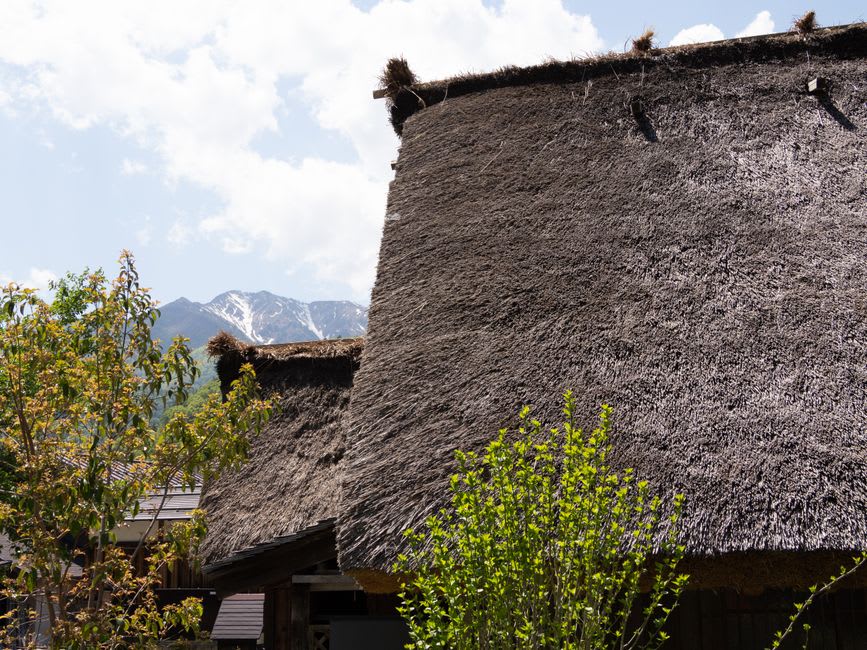
We parked and simply walked. Miyama’s kayabuki houses aren’t a museum — around forty of them still stand in the little settlement of Kita, and most are family homes, so you wander lanes between vegetable patches and drying laundry and thatch three feet thick. A man was up on one roof with a wooden mallet, patting the reeds back into line, and he waved down at us without stopping. Lia asked, in her careful Japanese, how long a roof lasted, and he held up two fingers then made a face — twenty years, maybe thirty, and then the whole village turns out to re-thatch it together. I loved that. A building that requires your neighbors to keep it standing. We ate rice balls on a low wall and watched the roofs steam faintly in the morning damp.
The Folk Museum and the Little Shrine
One of the farmhouses is open as the Kayabuki Folk Museum, and stepping inside was like stepping into a cured, smoke-blackened lung. The irori hearth was lit, a kettle hanging over it, and the whole timber interior had been darkened by two centuries of that fire — the smoke is what keeps the thatch dry and the insects out, they told us. Upstairs, where silkworms were once raised, the floor was slatted so warmth rose through. Behind the village a mossy path led up to a tiny Shinto shrine among the cedars, red-bibbed foxes standing guard. Lia rang the bell and we stood a moment in that green quiet. From up there you could see the whole hamlet laid out, thatch on thatch, and the river beyond it, and I remember thinking I would happily have missed our flight for another hour of it.

The Long Green Afternoon
Miyama is not a place you tick off. We drove the surrounding valleys with the windows down, past terraced rice fields the exact green of new tea, past a roadside stand where a woman sold us miyama gyunyu — the local milk, thick and cold, in glass bottles — and pointed us toward a soba shop she swore was better than any in Kyoto. It was. We ate cold buckwheat noodles by an open window, a stream running under the floorboards, and Lia declared she wanted to grow old somewhere exactly like this. As the sun dropped, the thatched roofs threw long shadows and the frogs in the paddies started their evening racket, thousands of them, and we sat in the car for a while just listening before we could make ourselves leave.
Getting There
Miyama sits in the hills of northern Kyoto Prefecture, in the city of Nantan, and it genuinely rewards having a car — the surrounding valleys are half the pleasure. Renting in Kyoto and driving up takes around ninety minutes through pretty mountain roads. Without a car it’s still doable but slower: take the JR San-in Line to Hiyoshi Station, then the Nantan City bus toward Kayabuki-no-Sato, which runs only a handful of times a day, so plan the return carefully. There’s a small parking area at the entrance to the Kita village; leave the car there and go on foot, and remember that people actually live behind those famous roofs — keep to the lanes and keep your voice down. Autumn and fresh-snow winter are spectacular, but the deep green of early summer is what stole us.
Keep exploring
More of Kansai