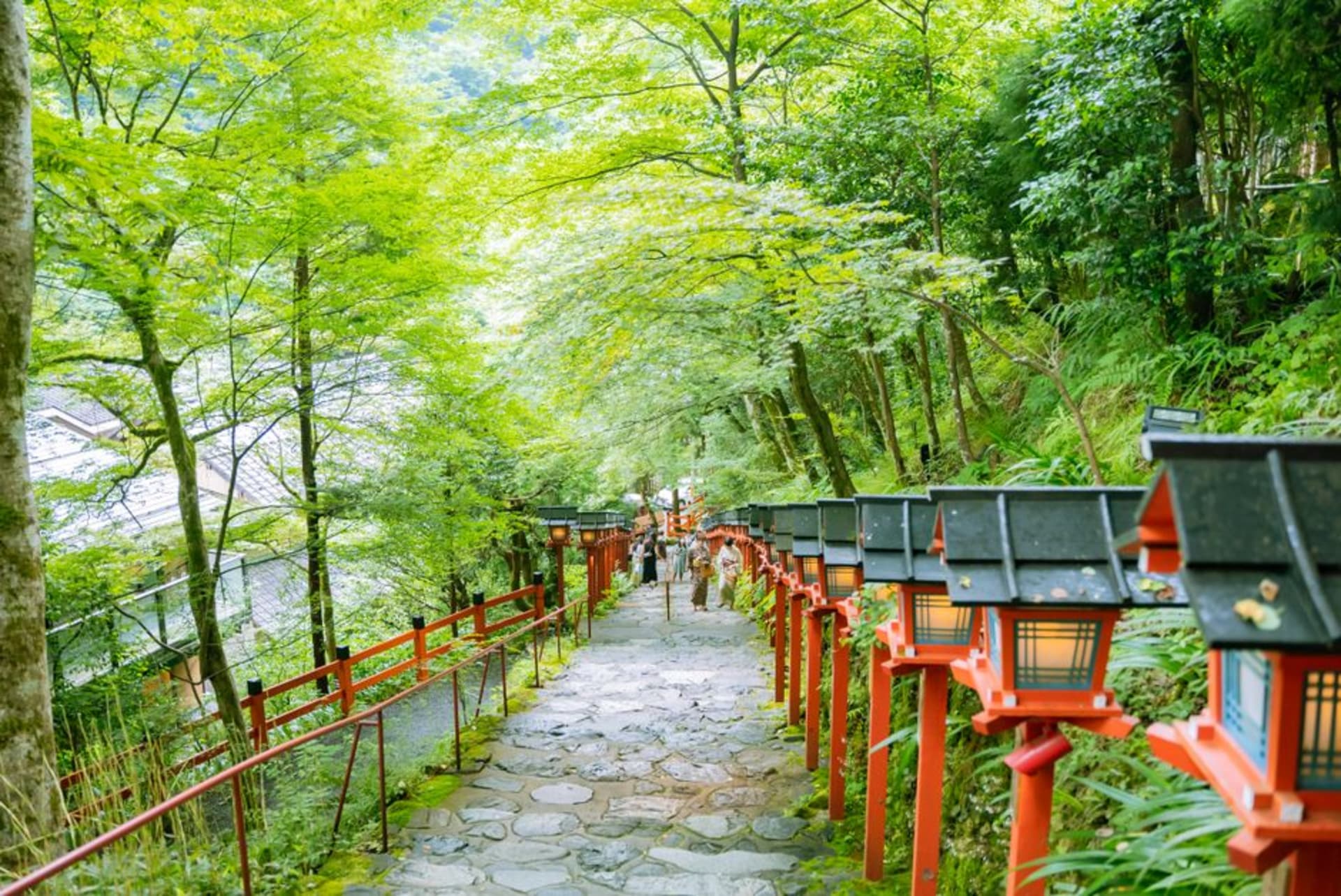
A thousand-year-old pilgrimage stitched through the Kii mountains in cedar, moss, and worn stone. We walked it slowly, one shrine at a time, and let the forest set the pace. Rain, incense, and the quiet company of everyone who'd come before.
We started the Nakahechi route at Takijiri-oji in a thin morning rain, and I remember thinking we were underdressed and probably foolish. Then the trail tipped up into the trees and the sound of the road behind us simply disappeared. Lia stopped talking. So did I. Within twenty minutes the only noises were water somewhere below us, our own breathing, and the occasional hollow knock of a woodpecker. By the first stone marker — a small weathered oji shrine where pilgrims have paused for eight hundred years — we’d both stopped checking the map. You don’t really walk the Kumano Kodō. You surrender to it.
Cedar, Moss, and the Long Climb
The forest here does something to your sense of time. The cryptomeria cedars go up impossibly straight, their trunks the width of a car, and the light comes down green and filtered like you’re underwater. Everything not made of wood is furred in moss — the stones, the fallen logs, the little statues of Jizō tucked into the roots. We climbed for hours between the villages, past tea houses that were once resting spots for emperors and are now just quiet clearings with a bench. Lia found a spider’s web strung between two saplings, beaded with rain, and we stood looking at it far longer than two adults probably should. The trail asks nothing of you except that you keep going, and somehow that’s the whole gift.
Sleeping Where Pilgrims Sleep
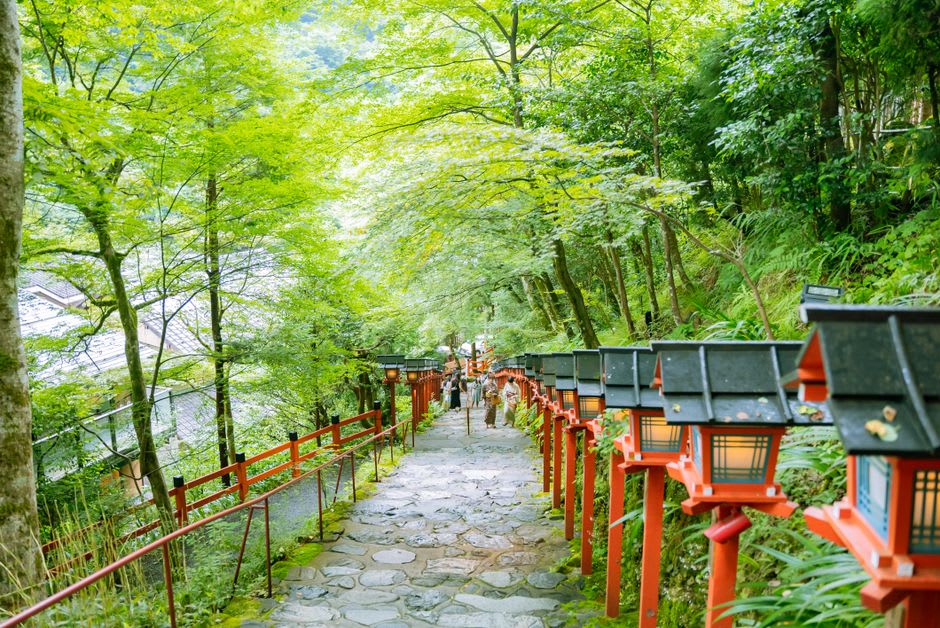
We stayed a night in Chikatsuyu, in a family-run minshuku where dinner was laid out on a low table the moment we arrived — river fish grilled on skewers stuck upright around a bed of coals, mountain vegetables, rice, and something pickled I couldn’t name and ate all of anyway. The owner had walked the route himself countless times and drew arrows on our map with a stubby pencil, warning us about a slippery descent. In the morning there was miso soup and the smell of woodsmoke, and our boots, which we’d left by the door soaked through, had been set neatly by the heater to dry. That kind of care, offered to strangers passing through, felt like part of the pilgrimage itself.
Arriving at Hongū
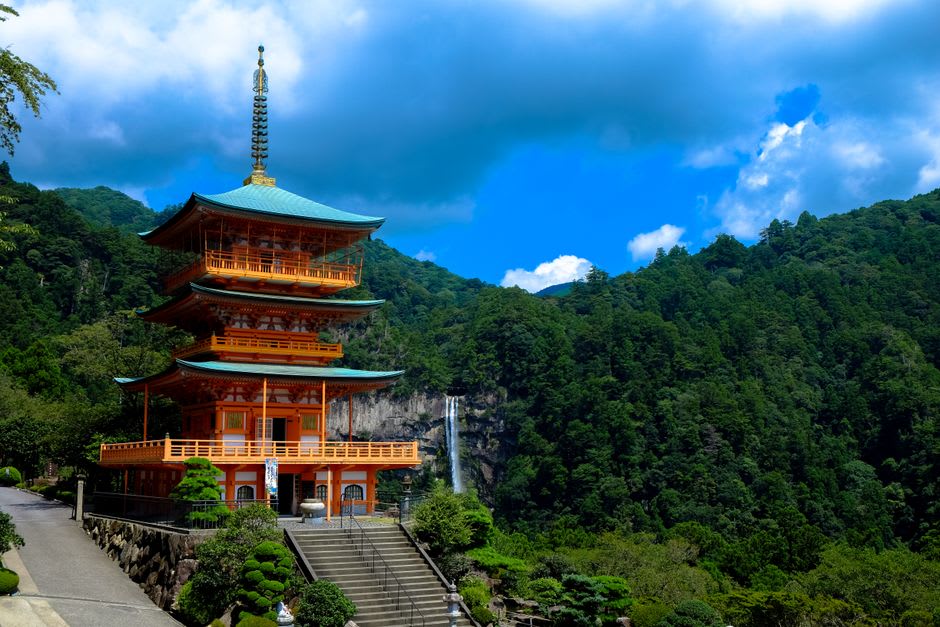
The last stretch to Kumano Hongū Taisha is a long ridge walk, and then suddenly the trees open and you’re looking down at Ōyunohara — the enormous steel torii gate standing in a field where the grand shrine once sat before a flood moved it uphill. It’s the largest torii in Japan and there’s no dramatic build-up to it; it’s just there, huge and grey against the mountains. We walked down to stand beneath it and neither of us said anything for a while. At the shrine itself, cypress-bark roofs dark with age, we did the small rituals like everyone else — the bow, the clap, the coin. I’m not religious. It didn’t matter. Something in three days of walking through that forest had earned the moment anyway.
Getting There
Most walkers reach the Kumano Kodō via Kii-Tanabe, which is served by limited express trains from Osaka (Shin-Osaka) in around two hours. From Tanabe, local Ryujin buses run up into the mountains to the Nakahechi trailheads — Takijiri-oji is the classic starting point — and on to Hongū. If you’re only doing a day, the Hosshinmon-oji to Hongū section is the gentlest and most rewarding. Book minshuku lodging well ahead, carry cash, and start early: the light in those cedars is best in the first hours, and so is the silence.
Keep exploring
More of Kansai