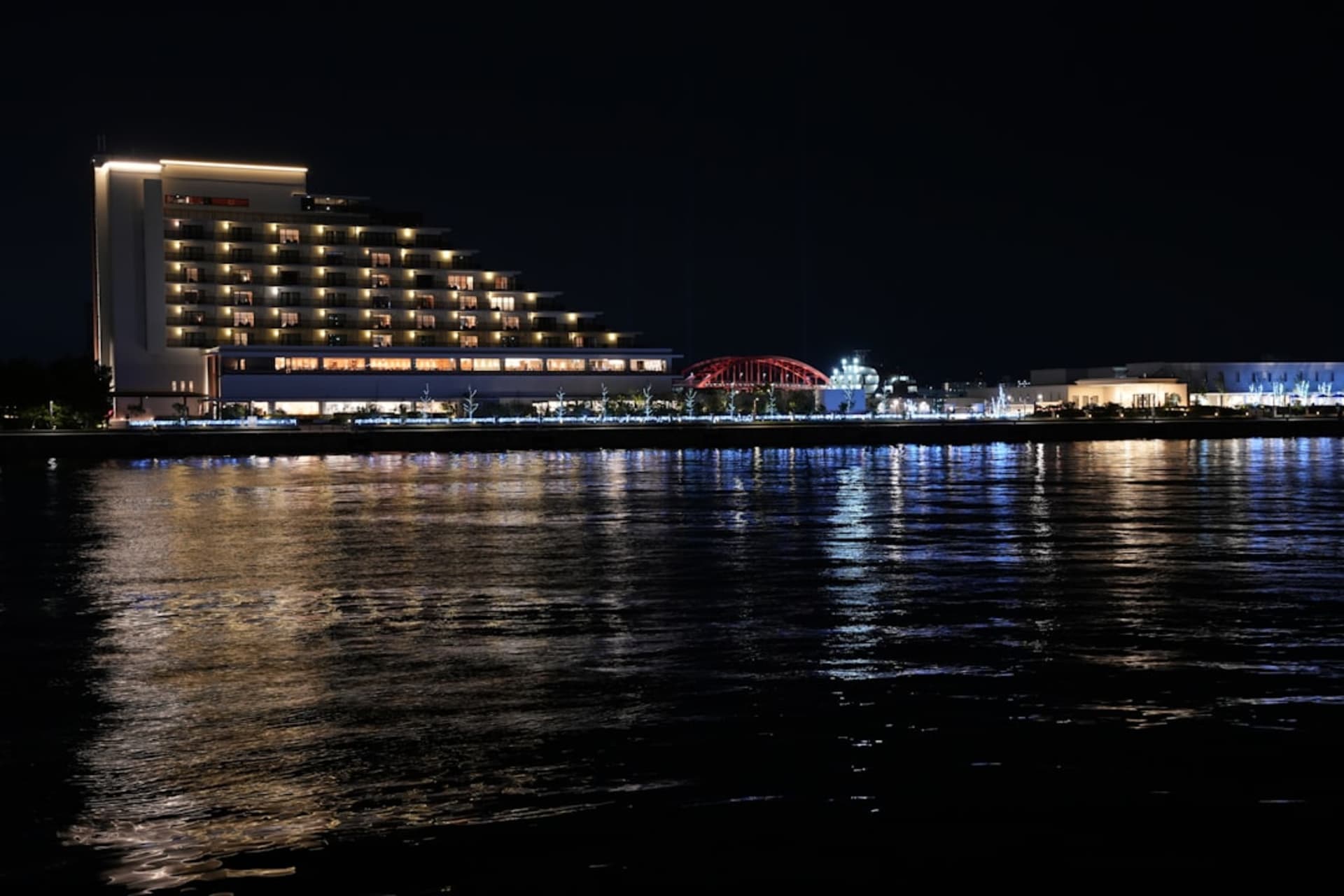
A cosmopolitan port city wedged between the Rokko mountains and the Inland Sea. Foreign-merchant houses, a sparkling harbor, and beef that ruins you for all other beef.
Lia and I came to Kobe expecting a single meal and left with a city. We had budgeted one night — enough, we thought, to eat the beef and move on to Kyoto. But Kobe is one of those places that quietly rearranges your plans. It is pinned into a narrow strip between the Rokko mountains and the Inland Sea, so tightly that the hills begin where the streets end, and this geography gives it a compactness that feels almost European. We arrived in the late afternoon, dropped our bags near Sannomiya, and walked toward the water as the light went amber. There is a particular kind of ease to Kobe — it has been a port open to foreigners since the 1860s, and it seems to have absorbed a century and a half of comings and goings without ever losing its own composure. By the time we reached the harbor, we had already silently agreed to stay two more nights.
The Harbor and the Port Tower
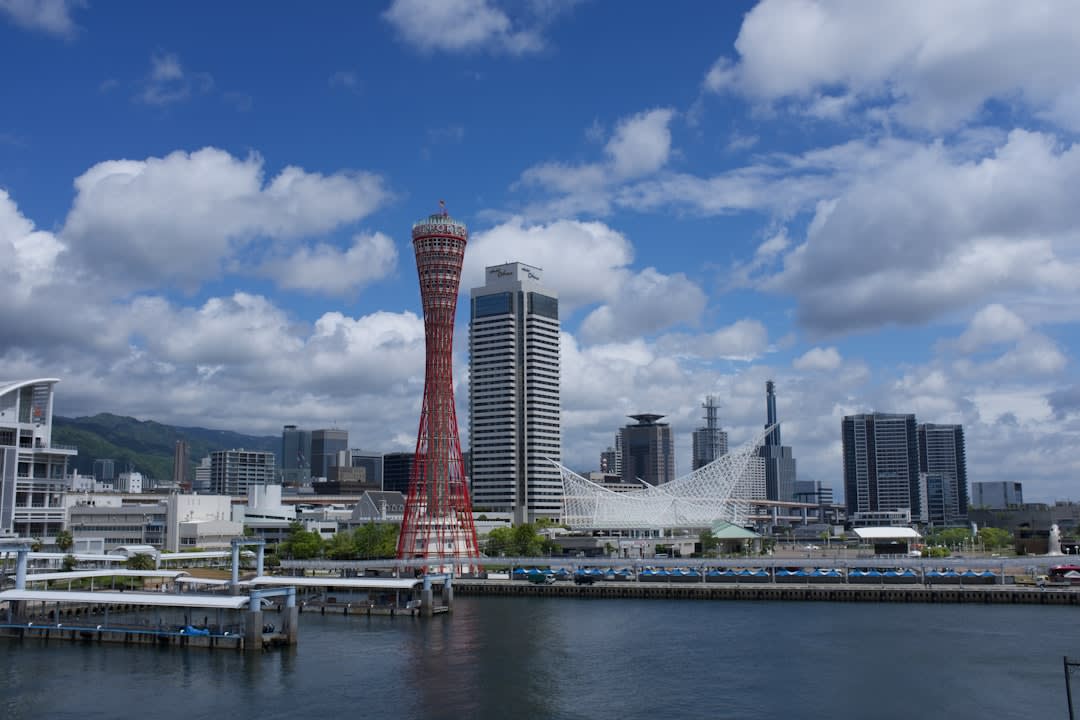
Kobe Port Tower is the city’s exclamation point — a slender red lattice hourglass standing over the waterfront, and beside it the strange white wave-roof of the Maritime Museum. We went up the tower at dusk, which is the only time worth going, and watched the harbor slide from gold into blue. Below us, Meriken Park curved out into the water, and the whole basin of Kobe Harborland began switching on its lights one section at a time. Lia leaned on the railing and said the city looked like it had been arranged by someone with taste, and she was right — even the working docks and container cranes seemed placed rather than accumulated.
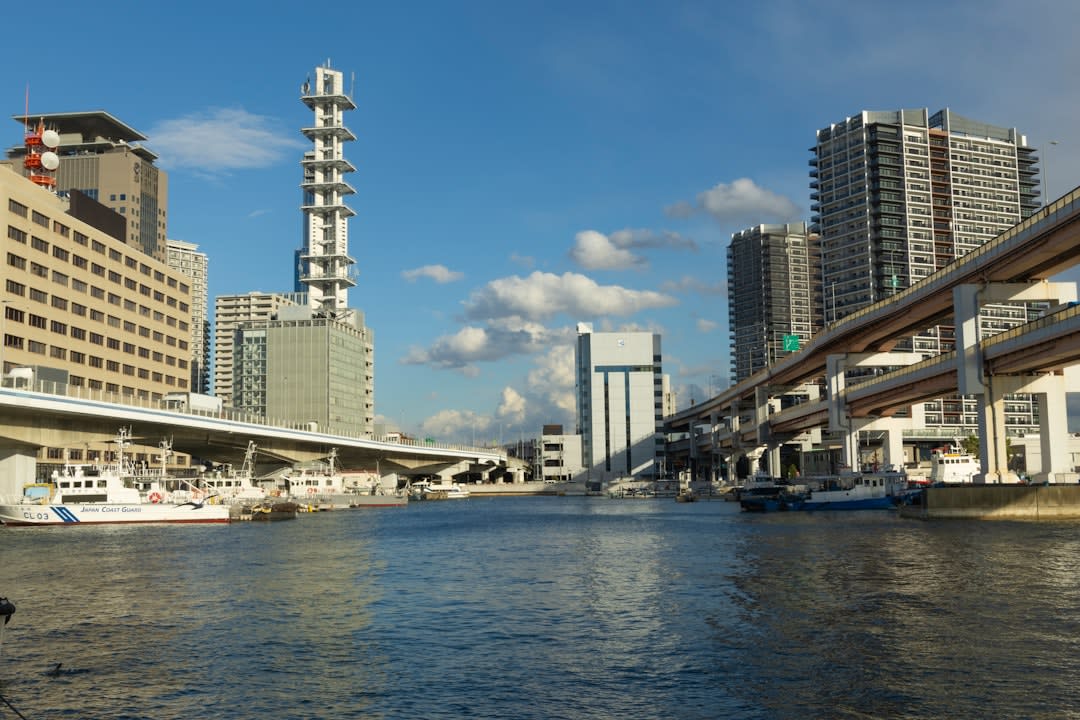
Down at water level, Meriken Park keeps a small, sobering thing: a preserved section of the pier left broken exactly as the 1995 earthquake left it, the concrete slumped and the lamp-posts still tilted. We stood there for a while. Kobe rebuilt itself with the same quiet efficiency it does everything, but it chose not to erase the wound, and I respected the city more for that unhealed corner beside all the sparkle.
Kitano and the Foreign Houses
The morning took us uphill into Kitano, the district where the foreign merchants built their homes when the port opened. The streets climb steeply, and the houses — the ijinkan — are a genteel jumble of weathervanes, verandas, and stained glass: a German-timbered place here, an English colonial there, a former French consulate, all leaning into the hillside among Japanese pines. It should feel like a theme park and somehow doesn’t. These were real homes for real traders, and the wear shows honestly in the banisters and the fogged old window glass.
We drank coffee in a café that had once been someone’s parlor, at a window looking down the slope to the sea beyond the rooftops. Lia sketched the weathervane house while I read the little placards, and I found myself thinking that Kobe’s whole character is here in Kitano — a place that took in the outside world and made it domestic, unhurried, its own.
The Beef, and the View From Rokko
Of course we ate the beef. We had it at a small teppan counter near Kitano, seven seats and a chef who cooked in front of us with the calm of a man who has done this ten thousand times. Real Kobe beef is a strictly certified thing — a specific bloodline of Tajima cattle raised in Hyōgo — and eating it at the source, seared on iron and cut into cubes, the fat dissolving before you can properly chew, is not like eating other steak. It is closer to eating butter that remembers being an animal. We said very little during the meal. There was nothing to add.
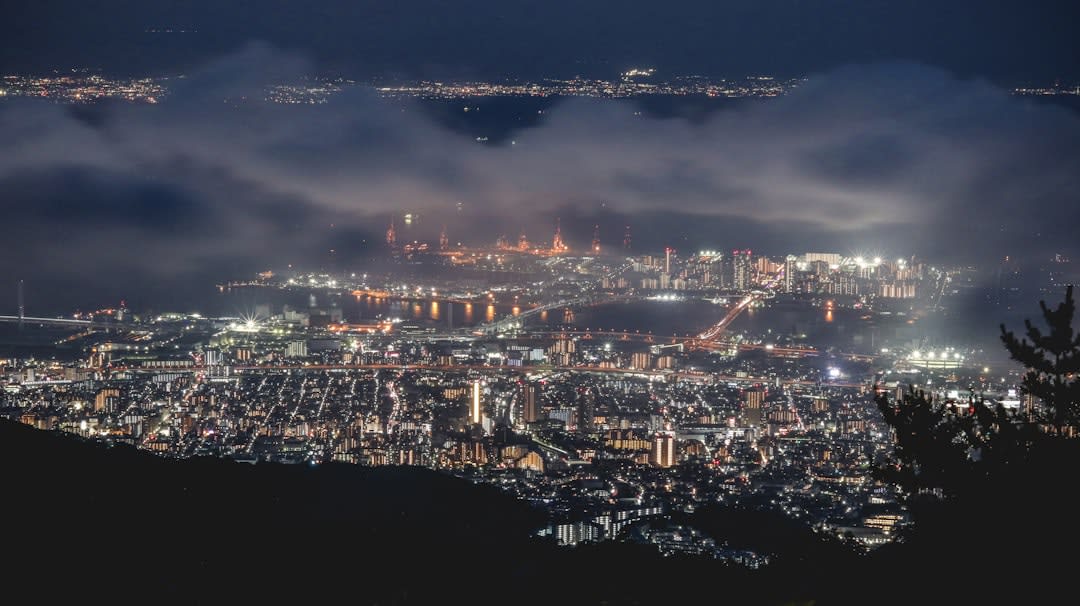
That night we took the cable car up Mount Rokko for the view the whole region talks about. Kobe is long and thin, so from above it becomes a single glittering ribbon pressed between the black of the mountains and the black of the sea, the harbor a bright knot at its center. They call it a ten-million-dollar night view. Standing in the cold wind with Lia’s hand in my coat pocket, watching the ferries stitch bright wakes across the bay, I thought it undersold.
Getting There
Kobe sits on the main Sanyō Shinkansen line; Shin-Kobe Station is about fifteen minutes from Shin-Osaka and under three hours from Tokyo. From central Osaka it is even simpler — the JR, Hankyu, and Hanshin lines all run into Sannomiya, Kobe’s downtown hub, in around thirty minutes. Everything we did was walkable from Sannomiya except Mount Rokko, which you reach by city bus and then cable car. If you are combining Kobe with Kyoto and Osaka, base yourself here for a night or two rather than day-tripping; the city is at its best after dark, when the harbor lights come on and the beef counters fill up.
Keep exploring
More of Kansai