Ise
"There is nothing to see, and that is the point. The holiest place in Japan is a plain wooden hut you cannot photograph, in a forest that has stood for two thousand years."
The home of Ise Jingū, the most sacred shrine in Shintō, hidden in a vast forest of ancient cedars and rebuilt from scratch every twenty years. A nostalgic approach street, a pair of wedded rocks in the sea, and a stillness that feels older than anything else in Japan.
I’ll admit I didn’t understand Ise before we went. Lia had put it on our route through Mie prefecture and I’d nodded along, picturing something grand — gold leaf, soaring roofs, the usual visual argument for holiness. What we found instead was a plain building of unpainted cypress standing behind a wooden fence in a forest so old and so quiet that I found myself lowering my voice without deciding to. There was nothing to see, in the ordinary sense. And somewhere in the walk through those cedars I stopped needing there to be.
The shrine in the forest
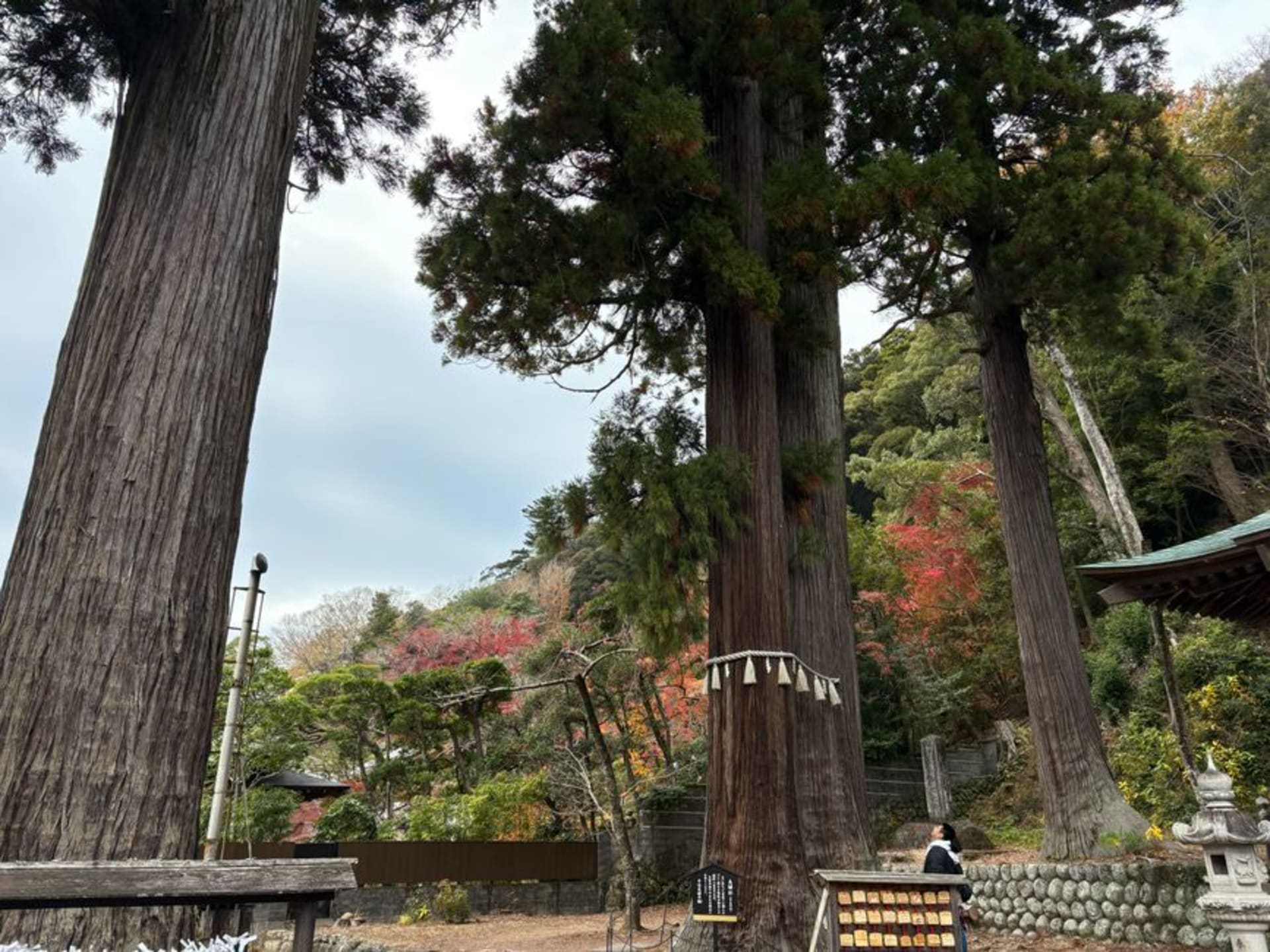
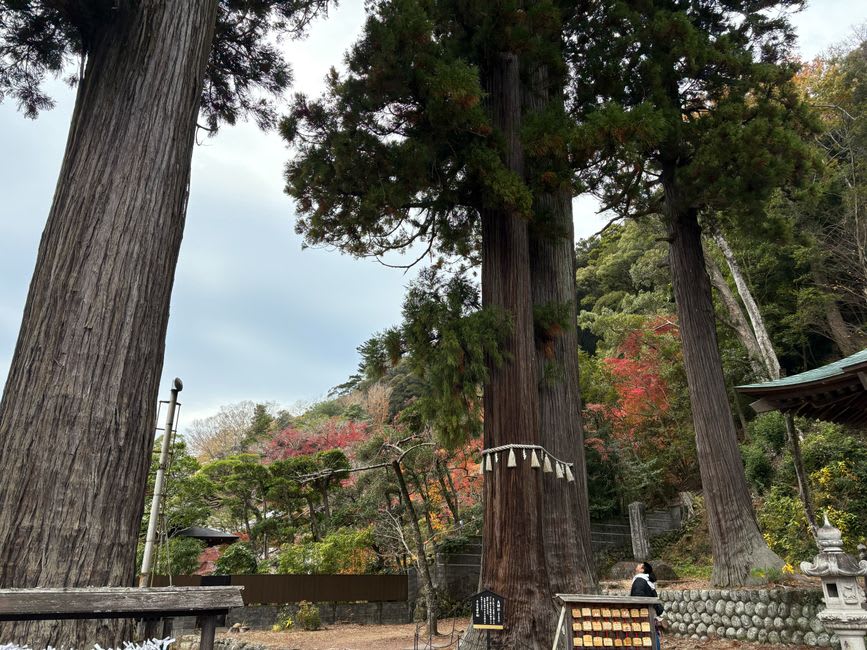
Ise Jingū is not one shrine but more than a hundred and twenty, spread across the town and hills, with two great sanctuaries at its heart: the Gekū, the outer shrine, and the Naikū, the inner, which enshrines Amaterasu, the sun goddess from whom the imperial line claims descent. You approach the Naikū across the Uji Bridge over the clear Isuzu River, and the guidebooks tell you to cross on the right, because this is a place where such things are still observed. Beyond the bridge the path widens into an avenue of cedars so vast that people instinctively fall silent, and the deeper you go the older the trees become, some of them broad enough that Lia and I together couldn’t have reached around one. At the innermost sanctuary you climb a short flight of stone steps to a plain fence, and beyond it — glimpsed, never entered — the sacred building itself. No photographs past that point. No crowds pushing. Just a slow line of people bowing and moving on.
What I keep returning to is the rebuilding. Every twenty years, the entire inner shrine is taken down and built again, identical, on an empty plot of raked gravel right beside it — the old timbers dismantled, the deity moved, the empty ground left to wait for the next cycle. It has been done this way for around thirteen hundred years. The building is never more than twenty years old, and the tradition is unbroken across more than a millennium. It undid something in me, that idea: permanence achieved not by resisting decay but by renewing through it.
Okage-yokochō
Just outside the Naikū’s gate, the approach street of Oharaimachi curves away from the river, and at its centre sits Okage-yokochō, a recreated warren of Edo- and Meiji-era shopfronts built to feel like the pilgrim town this has always been. It should feel like a theme park and somehow doesn’t — the wood is real, the shops are working, and the smell of grilling and steaming rice hangs over everything. Lia and I ate Ise udon, the famously soft thick noodles drowned in a dark, almost sweet soy tare, standing at a counter while an old man ladled them out without hurry. Afterwards we queued for akafuku, the local sweet: soft mochi buried under smooth red bean paste, ridged to resemble the flow of the Isuzu River. Pilgrims have been eating it here for three hundred years.
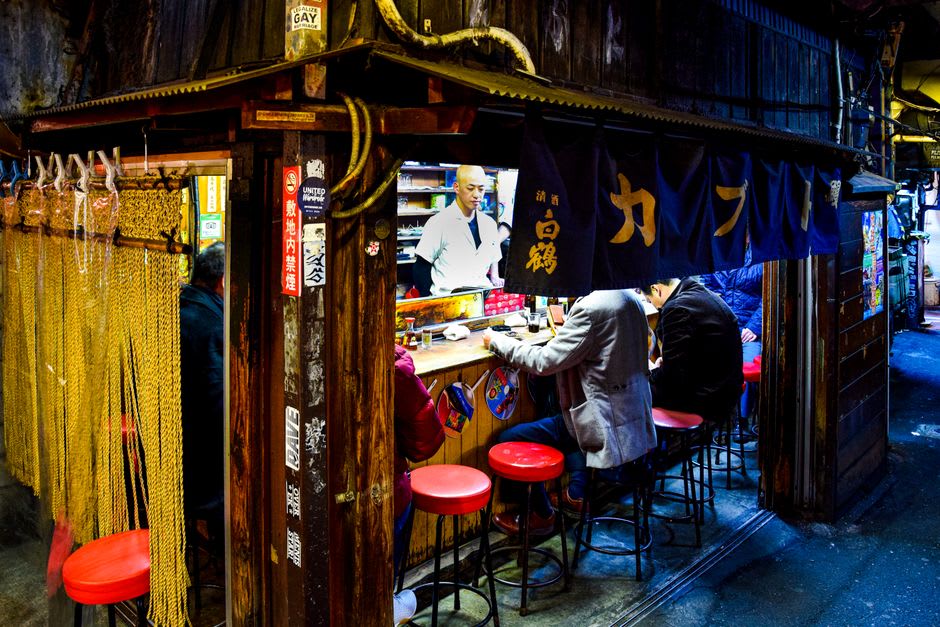
The street was busy, cheerful, full of families, and I liked it more for the contrast with the forest — the sacred and the everyday sitting a gate apart, which is how Shintō has always seemed to me to prefer things.
The wedded rocks
We drove out to the coast at Futami the next morning to see Meoto Iwa, the wedded rocks — two rugged sea stacks joined by a heavy rope of rice straw, one large and one small, standing just offshore. The rope, replaced ceremonially several times a year by priests wading into the surf, marks them as husband and wife and as a gateway to the sacred realm beyond. In summer, at dawn, the sun rises directly between them; we came in the wrong season and the wrong hour and it didn’t matter. The tide was out, the rope sagged glistening between the stones, and a line of frog statues — a pun on the word for “return,” a charm for safe journeys — kept watch from the little shrine on the shore.
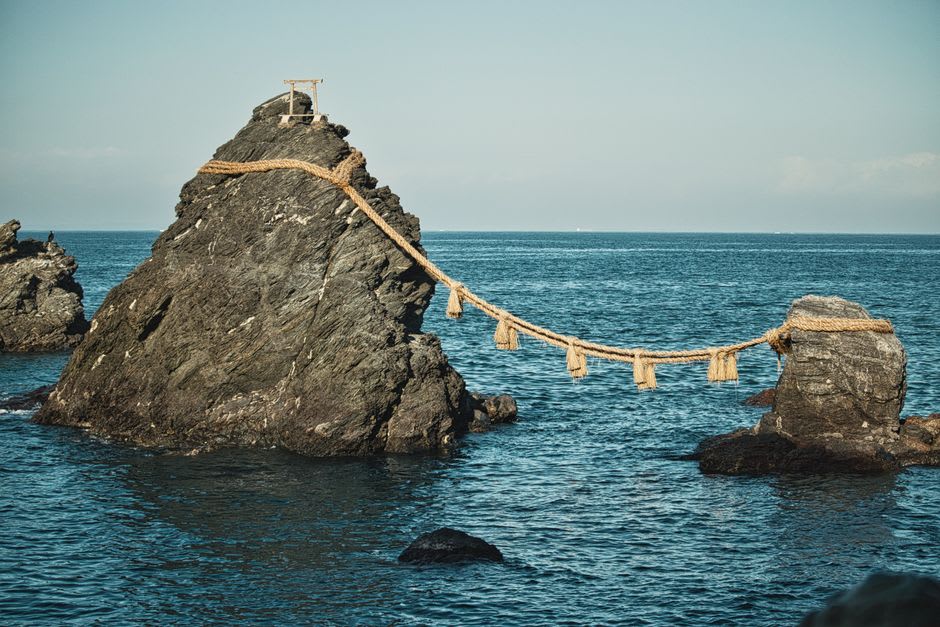
Lia bought a small frog charm and put it in her bag, for the journey, and we stood a while longer watching the rope lift and drop on the swell before we turned back inland.
Getting There
Ise sits on the Shima Peninsula in Mie prefecture, easiest to reach from Nagoya, about ninety minutes away on the Kintetsu limited express to Ujiyamada or Iseshi station. From Osaka, the Kintetsu line also runs direct in around two hours. The two great shrines are some distance apart; local buses connect them, and tradition holds that you visit the outer shrine first, then the inner. Futami and the wedded rocks are a short train ride or drive from the town centre. Any season rewards the visit, but the forest is at its most beautiful in the low gold light of autumn.
Keep exploring
More of Kansai