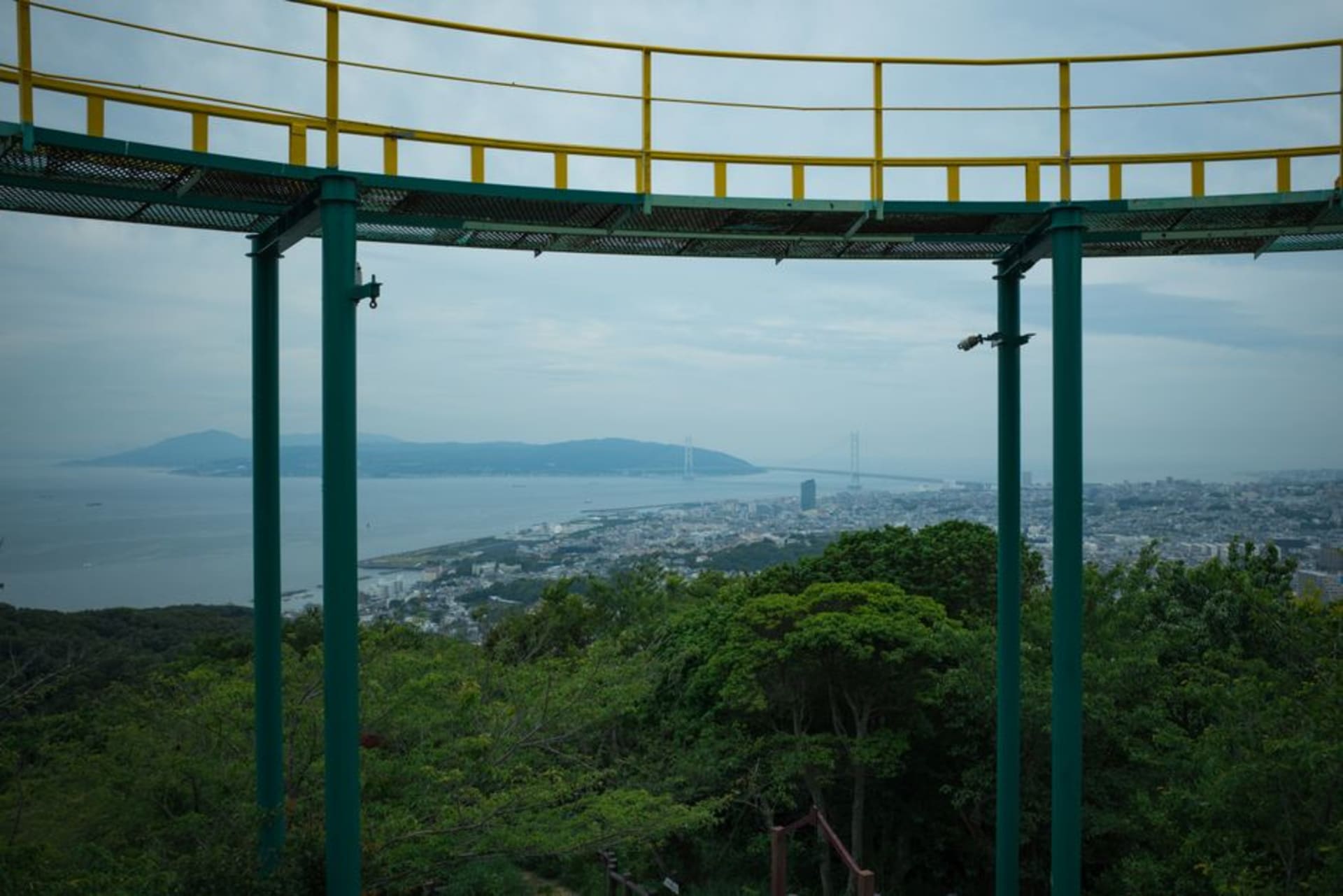
The large, pastoral island that bridges Kobe and Shikoku across the Inland Sea. We came for the roaring whirlpools at its southern tip and stayed for the flower parks, the onsen, the creation-myth shrines, and more onions than either of us thought possible to love.
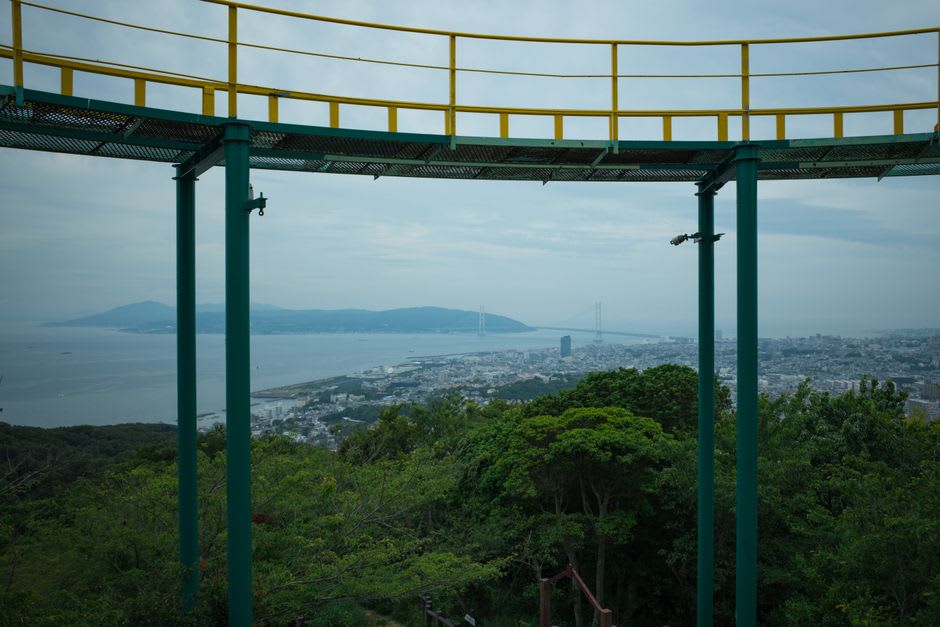
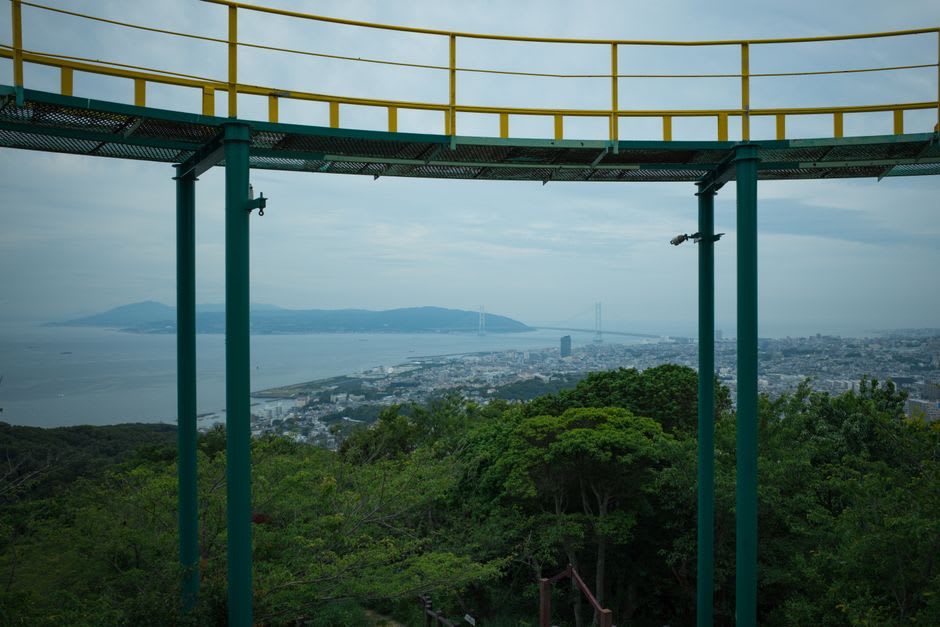
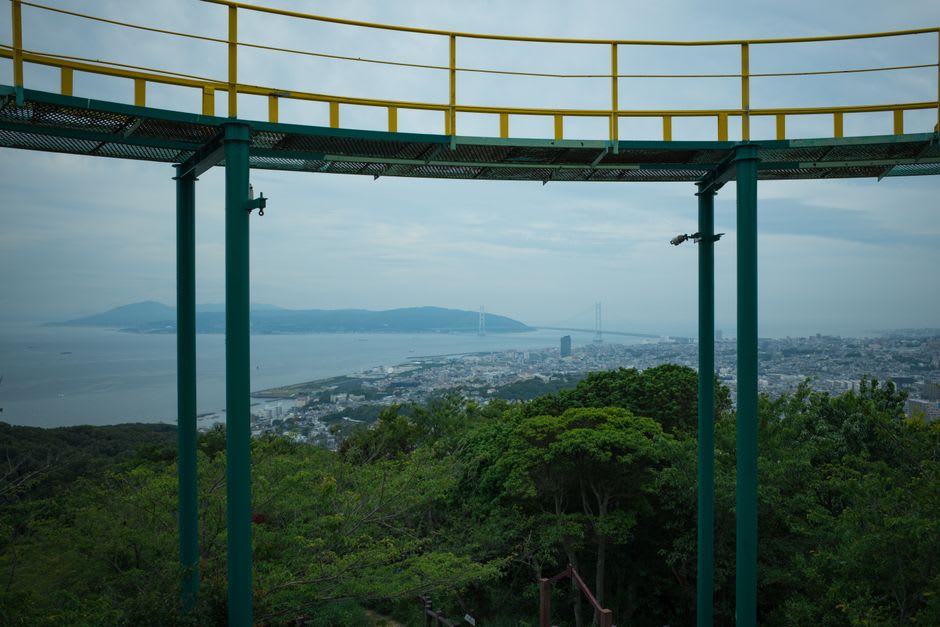
Crossing onto Awaji feels like the map exhaling. One moment you’re on the tangled expressways of Kobe, the next you’re sweeping over the vast white span of the Akashi Kaikyō Bridge and the land opens into green — rolling hills, onion fields, the Inland Sea glittering on both sides. We’d rented a car for this leg, a rare thing for us in Japan, and it was exactly the right choice. Awaji is big, breezy, and pleasantly empty, a farming and fishing island that most travellers only cross on their way to Shikoku. Lia rolled the window down and the air came in smelling of salt and cut grass. In myth this is where the gods stood on the floating bridge of heaven and made the first island of Japan, and pastoral as it looks, the place does feel like a beginning.
The Naruto Whirlpools
We drove the length of the island to reach its southern tip, and the reason: the Naruto whirlpools, where the tide funnels through the narrow strait between Awaji and Shikoku and the sea, quite literally, boils. Twice a day the currents rip through so fast that huge whirlpools spin up, some several metres across, roaring and folding in on themselves. We took a boat out into the strait to see them close, the hull heaving as we crossed the churning line of water, everyone gripping the rails and laughing nervously. You can also watch from the Uzunomichi walkway suspended beneath the great bridge, with glass panels in the floor and the whirlpools turning far below your feet. Lia, who is not fond of heights, made it exactly halfway across before deciding she’d seen enough.
Flowers, Onsen, and Onions
Awaji is famous within Japan for two things that sound absurd together and go perfectly: flowers and onions. The island’s mild climate makes it one big garden, and we spent a slow morning at a hillside flower park where terraced beds of blooms ran right down to the sea, the colours almost too much in the bright light. Then, the onions — Awaji’s are legendary, prized across the country for their sweetness — and we ate them everywhere: in burgers, deep-fried, simmered into soup, even as a soft-serve flavour we tried once and did not repeat. In the evening we soaked in an onsen looking west, where Awaji is known for having some of the finest sunsets in the region, the sea turning molten as the sun went down behind Shikoku.
The First Island
For all its onions and flower parks, Awaji carries genuine weight in Japanese myth. This is Onokoro, the first land pulled from the sea in the creation story, and the island wears that heritage quietly. We stopped at Izanagi Jingū, one of the oldest shrines in the country, dedicated to the two deities said to have made the islands of Japan. It was calm and shaded, a great camphor tree at its heart, an old couple praying at the hall, no crowds at all. Standing in that quiet, with the sea never more than a few kilometres away in any direction, it was easy to feel why the old stories chose this place to begin. We drove back north in the dusk with the windows down, past the dark shapes of the hills, in no hurry to leave.
Getting There
Awaji is easiest by car, and a rental out of Kobe or Osaka lets you reach the scattered coast, parks, and the whirlpools at your own pace. Without one, highway buses cross the Akashi Kaikyō Bridge from Kobe (Maiko) and run down the island toward Naruto and the southern tip; there are local buses too, though they’re sparse. The whirlpools are strongest around the tidal peaks, so check the day’s schedule and time your boat or walkway visit to match. Give the island a full day at minimum — an overnight in a seaside onsen, timed for the sunset, rewards you far more.
Keep exploring
More of Kansai