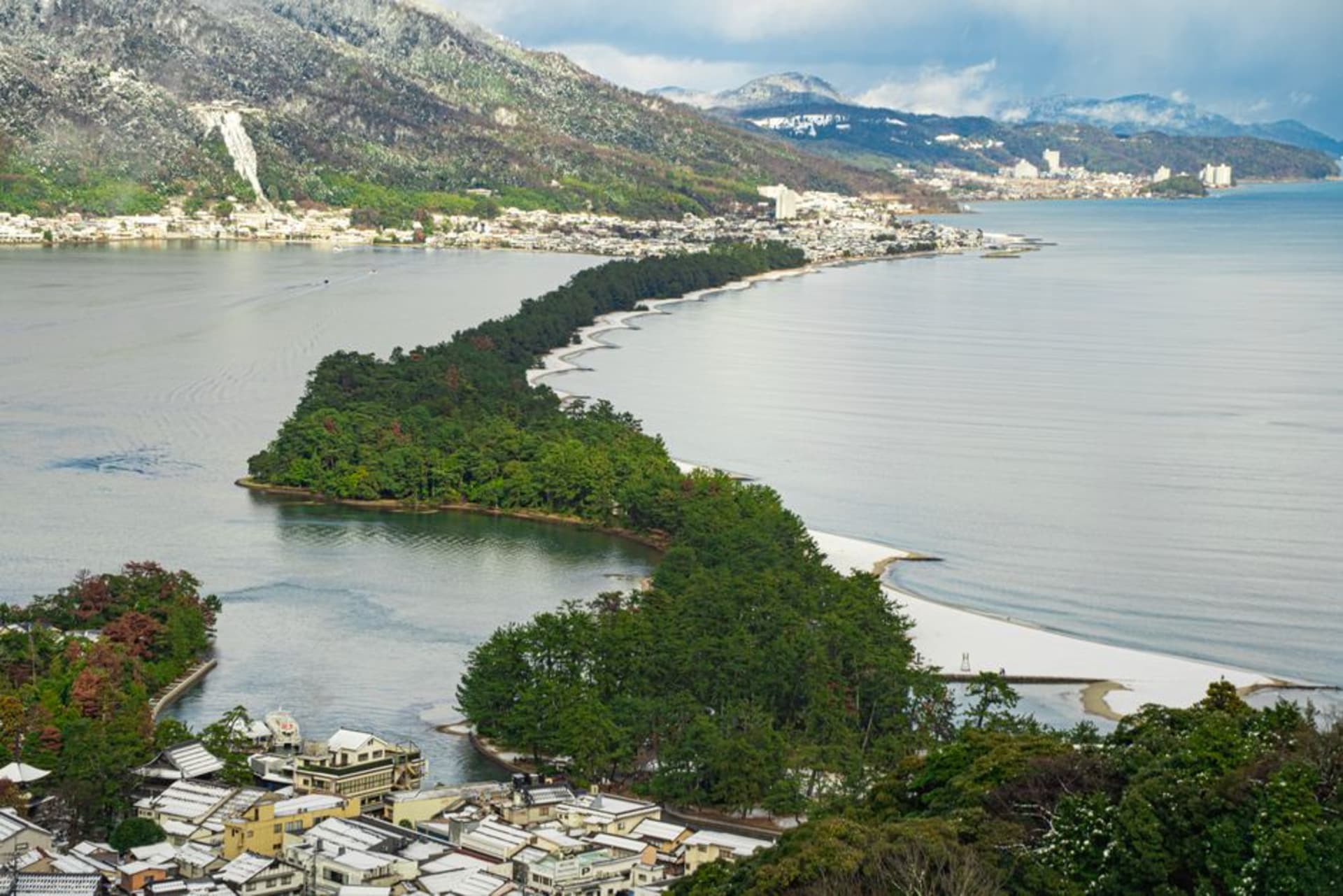
Amanohashidate
"You bend over, look between your legs, and the sandbar lifts off the water into the sky — I did not believe it until I did it."
A three-kilometre sandbar covered in ancient pines that stretches across a bay on the Sea of Japan coast, counted for centuries as one of Japan's three great views. From the hillside you bend down and look at it upside-down between your legs, and the pine bridge appears to float in the sky. Poetic, unhurried, and utterly strange.
I will admit I felt slightly ridiculous. Lia and I were standing at a hilltop viewpoint on the northern Kyoto coast, surrounded by perfectly composed Japanese visitors who were, one after another, turning their backs to the view, bending forward, and peering at the landscape upside-down from between their own legs. This is the traditional way to look at Amanohashidate, and there is a proper reason for it: inverted, the long pine sandbar seems to detach from the sea and hang in the sky, which is exactly what its name — “bridge to heaven” — promises. So I bent over too. And the world tipped, the blue bay became sky, the sandbar floated, and I stopped feeling ridiculous at once.
The Bridge to Heaven
Amanohashidate is a natural sandbar, roughly three kilometres long, running almost the whole way across Miyazu Bay, and it has been counted since at least the Edo period as one of the Three Views of Japan — alongside Matsushima and Miyajima. What makes it magical up close is the pines: some eight thousand of them, gnarled and wind-shaped, growing along the whole length of the bar, so that walking it feels like crossing a slender forest laid out on the sea.
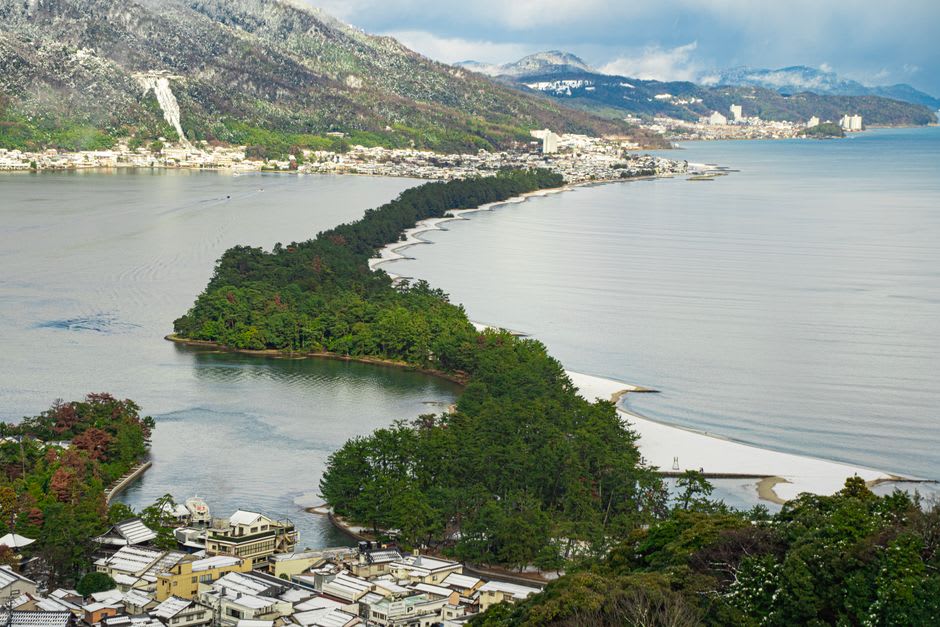
We walked across it, which takes about an hour at an idle pace. The pines have names, the sand is pale, and there are small shrines and a freshwater well improbably surviving in the middle of a saltwater bay. Cyclists drifted past; a few people fished from the edges. It is the rare famous view you can also physically stroll straight through.
The Two Viewpoints
The classic upside-down view comes from Kasamatsu Park on the northern hillside, reached by a little chairlift or cable car, and it is there that the “matanozoki” — the between-the-legs peek — is practically obligatory. There is a viewing platform, souvenir stalls selling the inevitable postcards, and a stand where you can hurl small clay discs at a ring for luck. On the southern side, Amanohashidate View Land offers the “flying dragon” view, where the sandbar coils away like a dragon rising.
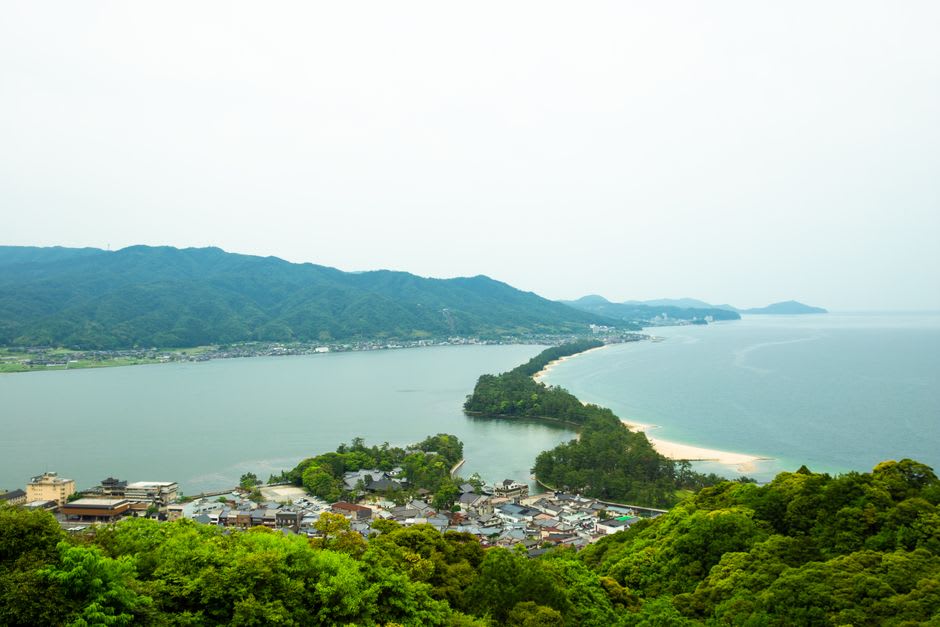
We did both, on separate ends of the same day, and each frames the sandbar differently — one a bridge, one a dragon. Lia preferred the quieter northern side; I liked the chairlift, riding up with my feet dangling over the pines. Either way, the trick is the same: turn around, bend down, and let the sea become the sky.
The Quiet Coast
What surprised me was how peaceful the whole area is once you step away from the two viewpoints. This is the Tango Peninsula, a soft, rural stretch of the Sea of Japan coast that most foreign visitors never reach, and it moves at a gentler pace than anywhere near Kyoto city. At the northern end of the sandbar sits Motoise Kono Shrine, ancient and cedar-shaded and almost empty, and the little town of Miyazu drowses beside its harbour.
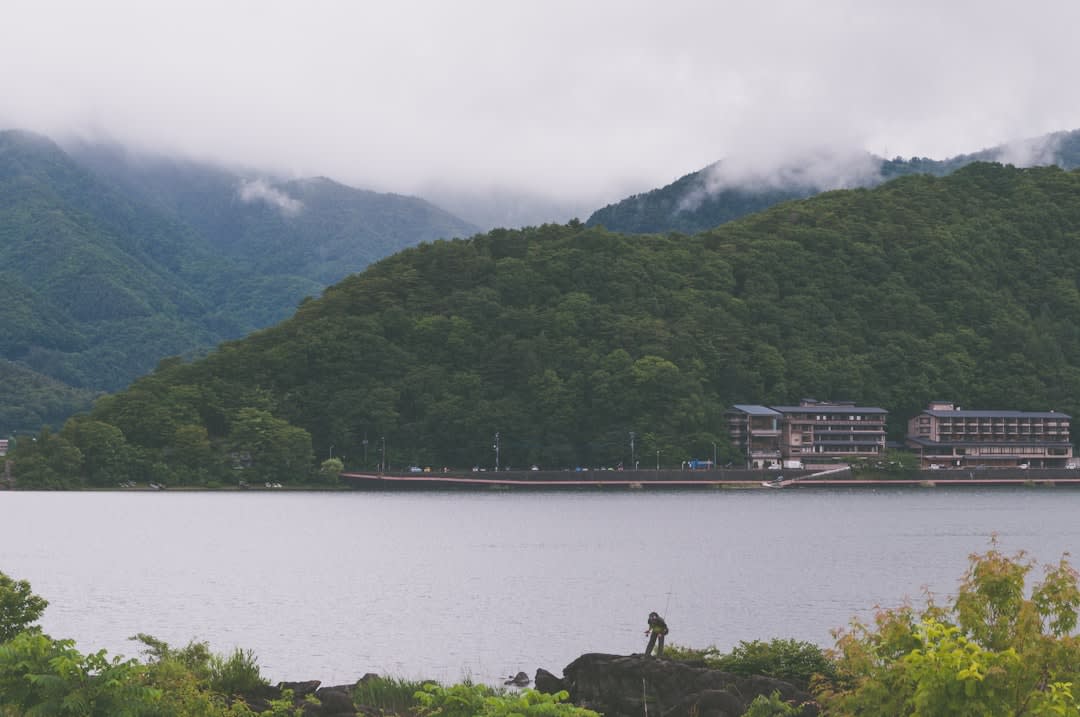
We ate grilled fish by the water, watched the light change over the bay, and rented bicycles to loop the far shore in the late afternoon with nobody else around. It felt like a corner of Japan that had been famous for a thousand years and somehow stayed unhurried anyway. That contradiction is exactly its charm.
Getting There
Amanohashidate is on the northern Kyoto coast and takes a little effort, which is part of why it stays quiet. The most direct route is the limited express Hashidate train from Kyoto Station, around two hours via the JR and private Kyoto Tango Railway lines, right to Amanohashidate Station near the southern end of the sandbar. From there the whole area is walkable, or better yet cyclable — rental bikes are everywhere and the flat sandbar was made for them. The two hillside viewpoints each have their own cable car or chairlift. Stay a night in Miyazu or at an onsen ryokan on the bay to enjoy the coast after the day-trippers leave; the evening light on the pines is worth it.
Keep exploring
More of Kansai