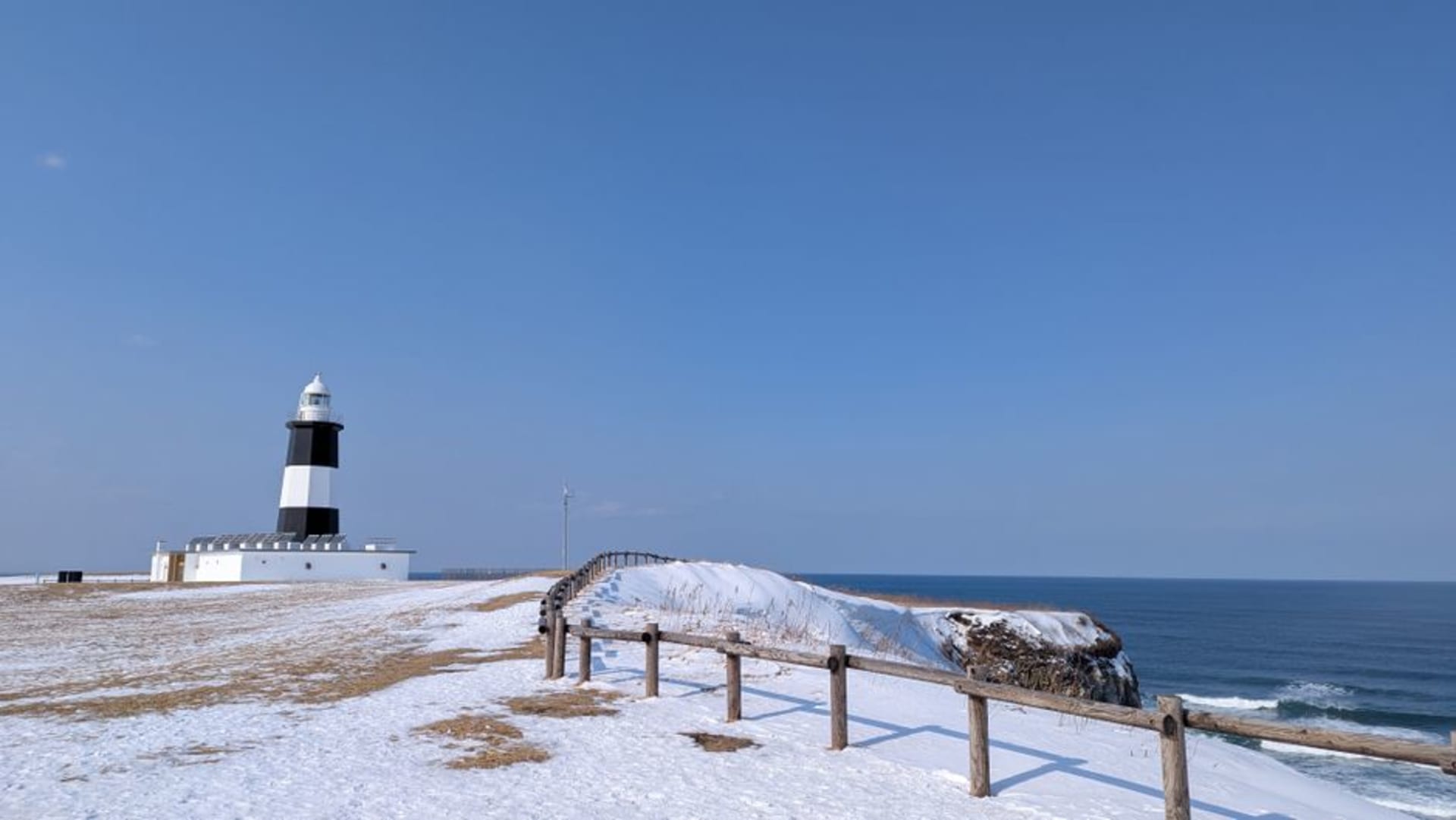
Japan's northernmost city, a windswept dairy port looking out from Cape Sōya toward the coast of Sakhalin. Treeless green capes, herds grazing under a huge sky, and the ferry pier for the wild islands of Rishiri and Rebun.
There’s a particular pleasure in going as far as a place will let you go, and in Japan that place is Wakkanai. Lia and I had been working our way north for days, and at some point the trip stopped being about any single sight and became about the simple fact of the direction — north, and then further north, until the trains ran out. Wakkanai is where they run out. It’s a small, weathered dairy port at the very top of Hokkaidō, and when we stepped off at the station, the northernmost in Japan, the wind hit us like a hand on the chest. Lia laughed and said it felt like arriving somewhere the map had forgotten to finish.
Cape Sōya and the Edge of the Country
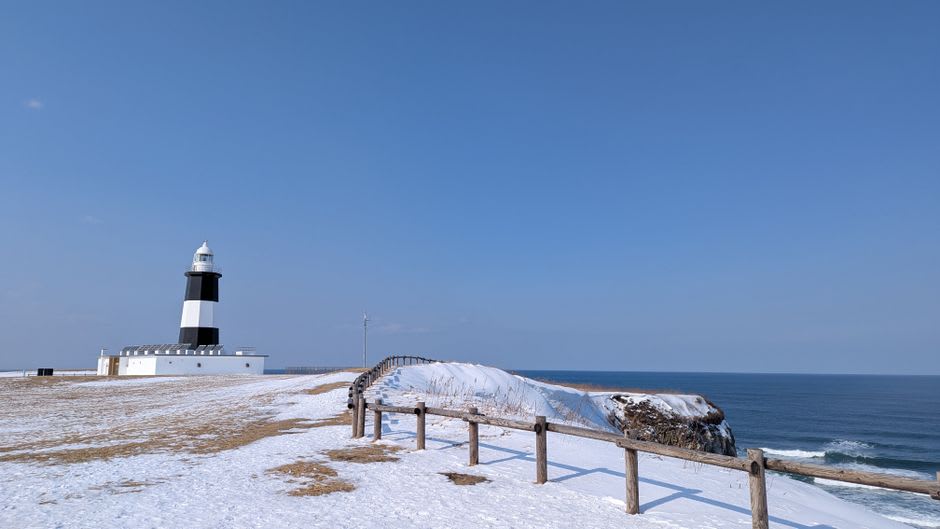
Cape Sōya is the northernmost point of Japan you can drive to, a low grassy headland about thirty minutes from town, and standing on it is a strangely emotional thing. There’s a spare, pointed monument marking the spot, and beyond it only the grey Sōya Strait — and on a clear day, faint and blue on the horizon, the hills of Sakhalin, Russian land you can genuinely see with your own eyes. Lia and I stood there gripping our jackets while the wind roared in off the sea, and neither of us said much, because there wasn’t much to say. You’ve simply run out of country. A woman was selling scallops grilled on a little stand nearby, steam whipping away sideways, and we ate them looking north at another nation, salt and butter and cold air, one of those small perfect meals you remember for no logical reason.
The Treeless Capes and the Cows
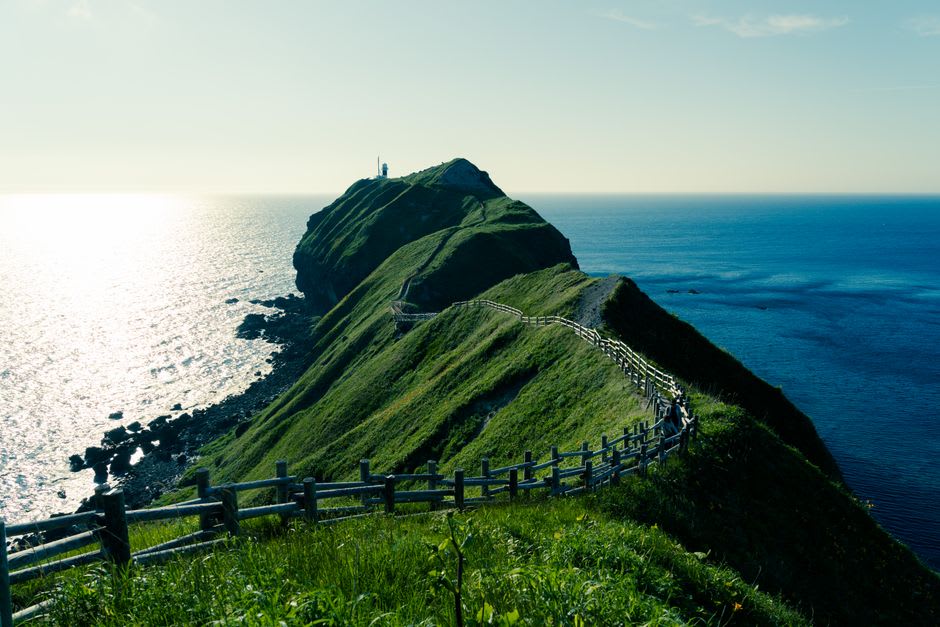
What surprised me most about Wakkanai was how green and empty it is. The Sōya Hills roll away behind the cape in long treeless folds — too windswept for forest — and dairy cattle graze all over them under a sky that feels twice as big as it should. We drove the ridge road they call the Shiranukamachi cape route, and it was pure open pasture and turning wind turbines and glimpses of sea on both sides, more like Iceland or the Faroes than any Japan I’d pictured. There’s a long avenue of white birch too, planted in rows across the grassland, that Lia made me stop the car for. We bought soft-serve ice cream from a farm stand made with the local milk, thick and almost grassy in flavor, and ate it leaning on the car while the cows watched us with total indifference and the wind never once let up.
The Ferry Pier and the Islands Offshore
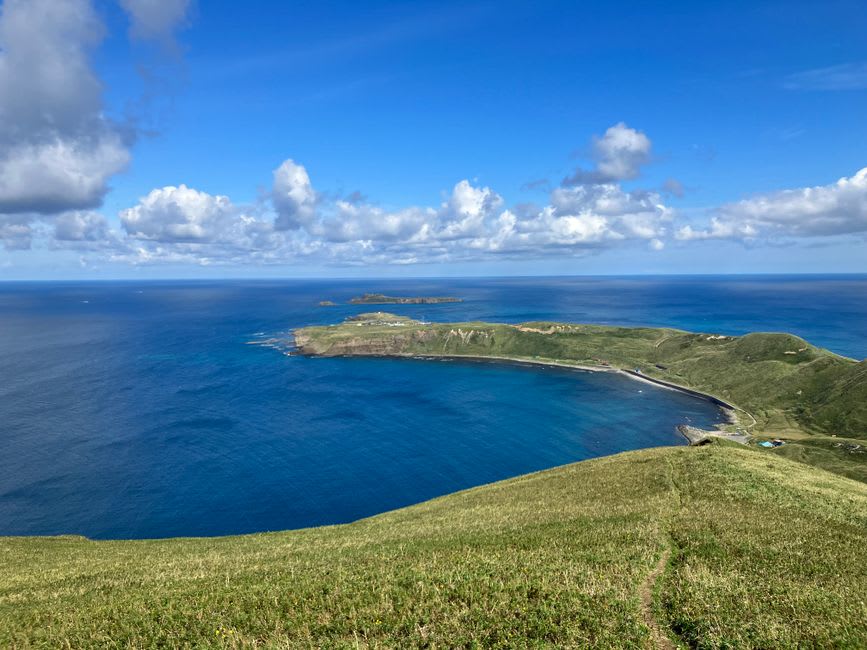
Down at the harbor sits the Wakkanai North Breakwater Dome, a long curving colonnade of concrete arches built to shield the pier from the ferocious winter sea — a genuinely beautiful piece of engineering that looks like the ruin of some Roman aqueduct washed up at the top of Japan. We walked its length with the wind booming through the arches. This is also the gateway to Rishiri and Rebun, two islands you can see riding the swell offshore: Rishiri a near-perfect volcanic cone rising straight from the water, Rebun low and famous for its summer wildflowers. We didn’t have the days to cross, and I regretted it the moment the ferry pulled out without us. Lia photographed Rishiri’s cone floating on the horizon and told me, firmly, that we’d come back in July for the flowers. I didn’t argue.
Getting There
Wakkanai is a long haul, which is rather the point. A limited express train from Sapporo takes around five hours up through the center of Hokkaidō to Wakkanai Station, the northernmost in the country; there’s also a small airport a short bus ride from town with flights from Sapporo and, seasonally, Tokyo. Ferries to Rishiri and Rebun leave from the harbor beside the breakwater dome and take under an hour each, more frequent in the warmer months and thinned right out in winter. Renting a car is worth it here — the cape, the hill roads, and the farm stands are spread out and barely served by buses. Come prepared for wind in any season; even in summer the capes are cool and exposed, and in winter Wakkanai is one of the harshest, most bracing corners of Japan.
Keep exploring
More of Hokkaidō