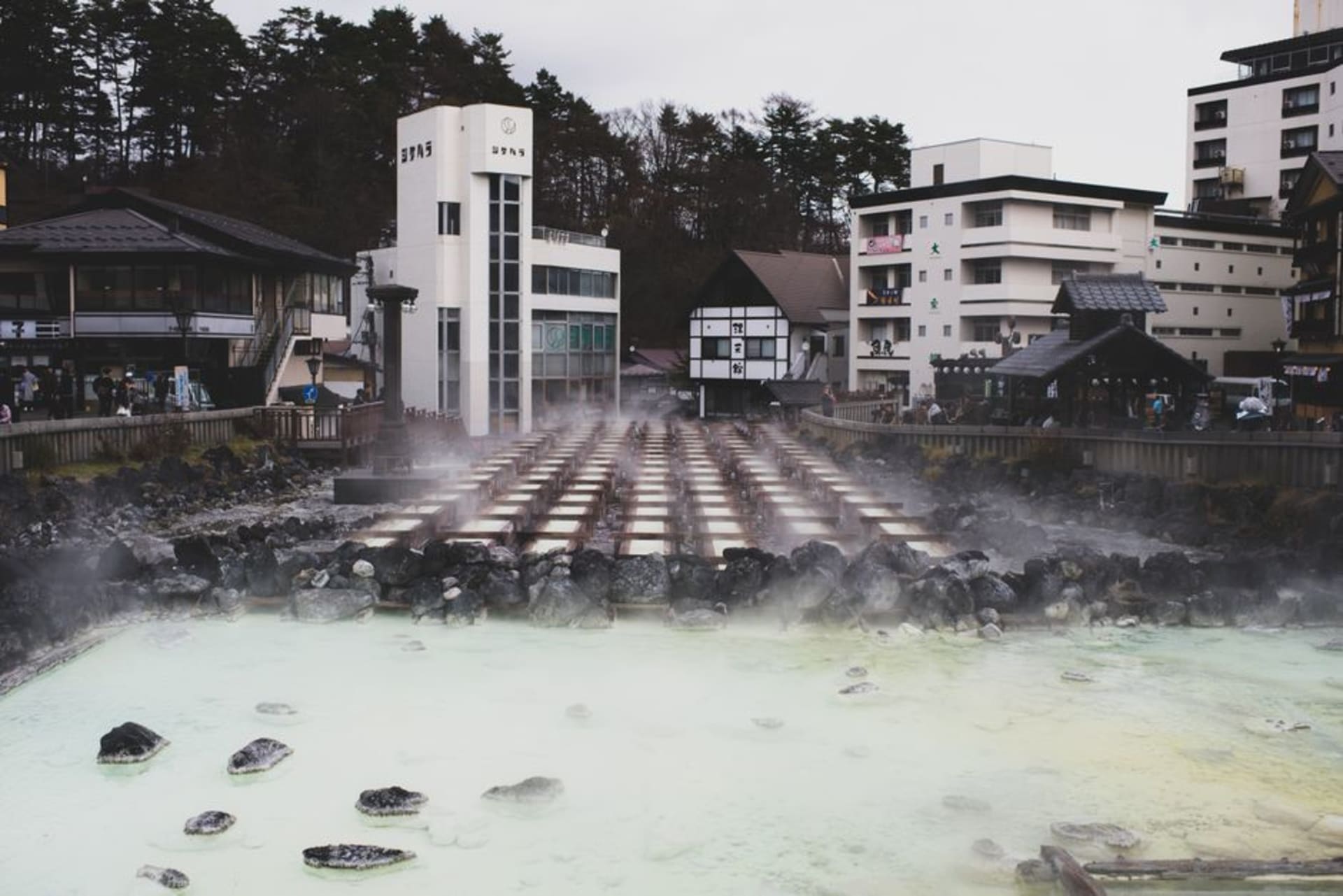
Tokachigawa Onsen
"The water came out the colour of weak tea and left my skin feeling like it belonged to someone younger."
A hot-spring town on the wide Tokachi plain whose water is unlike anywhere else in Japan — a rare amber 'moor' spring, rich with ancient peat, that turns your skin soft and smells faintly of the earth. Tokachigawa doesn't have mountains or a famous lake. It has this strange dark water, and it turns out that's enough.
I’ll admit I was skeptical. After the drama of Hokkaido’s caldera lakes and drift ice, a spa town in the middle of a flat agricultural plain sounded like a place to do laundry, not to be moved. Then I got into the water. Tokachigawa’s onsen is a moor spring — one of only a couple in Japan and a handful worldwide — meaning the water rises through layers of ancient peat, staining it a clear amber-brown and loading it with plant-derived organic acids. It comes out looking like cold tea and feels, unmistakably, silky. Lia got in beside me, ran a hand along her own arm, and said, quietly and a little accusingly, “why did nobody tell us about this?”
The moor water, and why it’s different
Most Japanese hot springs are about minerals — sulphur, iron, salt, radon. Tokachigawa is about plants. The spring is fed by water that has spent a very long time filtering through a buried peat moor formed from reeds and sedges on the Tokachi plain, and it’s the humic and fulvic acids from that decayed vegetation that give the water its colour and its famous effect on skin. Locals call it bijin-no-yu, “beauty water,” and for once the marketing felt earned — both of us came out of our first soak genuinely softer-skinned, no lotion required. Almost every ryokan in town taps the same source, and they’ll happily explain the geology to you over breakfast. It’s the kind of place where the water is the whole personality, and the town knows it and leans in.
The Tokachi plain, cranes, and open sky
Step outside the onsen and the appeal is the opposite of dramatic: space. The Tokachi plain is Hokkaido’s great breadbasket, a huge patchwork of wheat, beans, potatoes and dairy pasture that rolls flat to the horizon under enormous skies. We borrowed bicycles from our inn and rode out among the fields, passing barns and grazing cows, feeling like we’d wandered into a different, gentler country. Nearby, at the Tokachigawa Onsen Crane Natural Park, red-crowned cranes stalk the wetlands beside the river — the same regal birds we’d chased in the far east, here almost casual. In the evening the whole plain turned gold, and the flatness that I’d dismissed on arrival became the point: nothing to interrupt the light, all the way to the edge of the world.
Food, sake, and slow evenings
The Tokachi region eats extraordinarily well, and the onsen town is a fine base for it. This is the home of butadon — a Hokkaido dish of grilled pork over rice, sweet-savoury and generous — and we ate it at a plain, busy local shop that had been perfecting it for longer than I’d been alive. The plain’s dairy means absurdly good ice cream and cheese; its fields, honest beans and potatoes; and nearby Obihiro, the region’s hub, has a cheerful drinking-alley culture we happily got lost in one night. Back at the ryokan we did the loop that Tokachigawa is built for: soak in the amber water, eat a long kaiseki dinner, soak again, sleep hard, repeat. Lia declared it the most restful stop of the whole trip, and I couldn’t argue.
Getting There
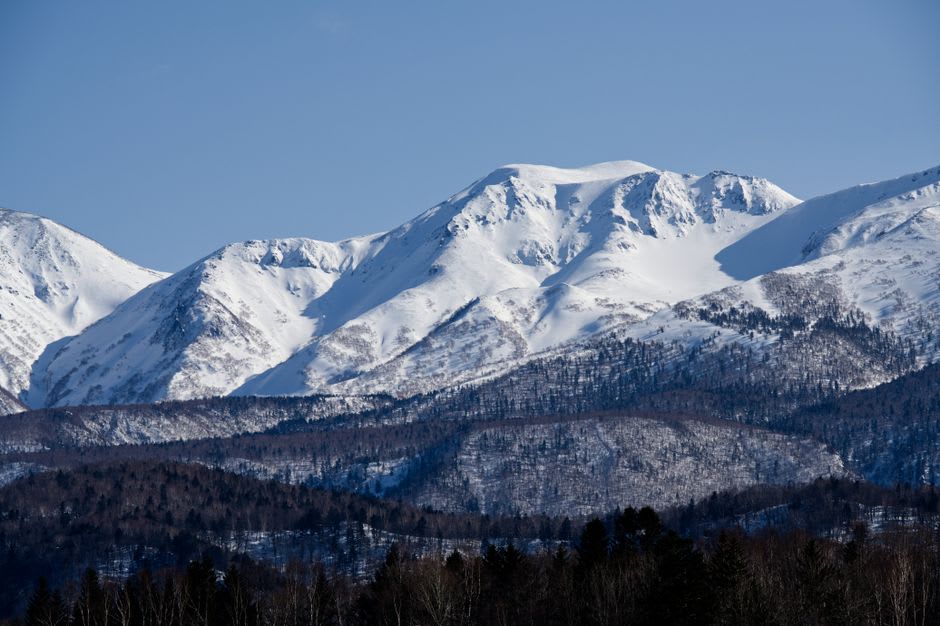
Tokachigawa Onsen sits on the Tokachi plain in central-eastern Hokkaido, just outside the city of Obihiro. Obihiro is the gateway: it has its own airport with flights from Tokyo, and it’s a straightforward stop on the JR limited express from Sapporo (around two and a half hours through the Hidaka mountains). From Obihiro station it’s a short bus or taxi ride out to the onsen town — many ryokan run their own pickup shuttles if you let them know your train. A rental car is worth it if you want to explore the plain, the crane park, and the wider Tokachi countryside at your own pace. The onsen is a year-round pleasure; we came in the shoulder season and had the quiet, golden fields nearly to ourselves.
Keep exploring
More of Hokkaidō