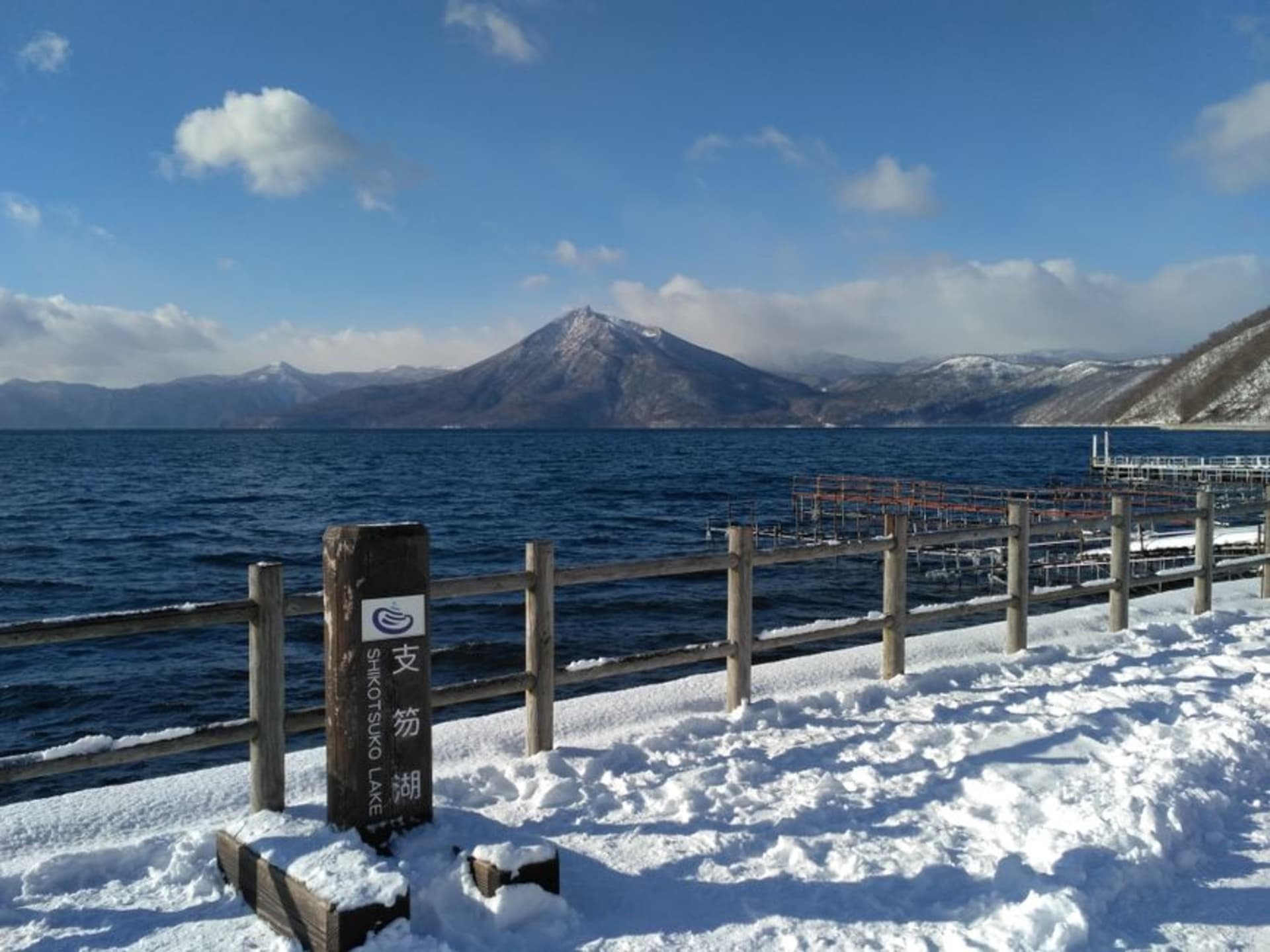
Lake Shikotsu
"We leaned over the side of the boat and could see the drop-off go down and down until the blue simply swallowed it."
A deep caldera lake ringed by volcanoes in southern Hokkaidō, so clear the water seems to hold light rather than reflect it. Ice-free through winter, prized for its transparency, and quiet enough that a single canoe can own the whole blue expanse.
I have looked into a lot of clear water in my life, and Lake Shikotsu undid me a little. It’s a caldera lake in southern Hokkaidō, one of the deepest in Japan, held in a bowl of old volcanoes, and it’s so transparent that from a boat you watch the lakebed fall away beneath you until the blue turns bottomless. Lia and I came up from Chitose on a still morning, and the first sight of it through the trees made us both go quiet. It’s not a grand, dramatic lake — no crowds, no big resorts — just an enormous stillness of impossibly clear water, and that stillness is the whole point.
The Clearest Water
The clarity is the thing people come for, and it deserves the reputation. We rented a clear-bottomed canoe near the visitor center and paddled out from the eastern shore, and once we were over deeper water we simply stopped and looked down. You can see the volcanic slope of the lakebed descending, boulders and pale sand, fish hanging in the water column, and then the point where the light gives out and it all goes deep blue. Lia trailed her fingers in it and said the cold felt clean, which is exactly the word. Because the lake is so deep it never freezes, even in a Hokkaidō winter, and its temperature barely moves — a strange, steady body of water that feels almost too pure to be real.
The Ring of Volcanoes
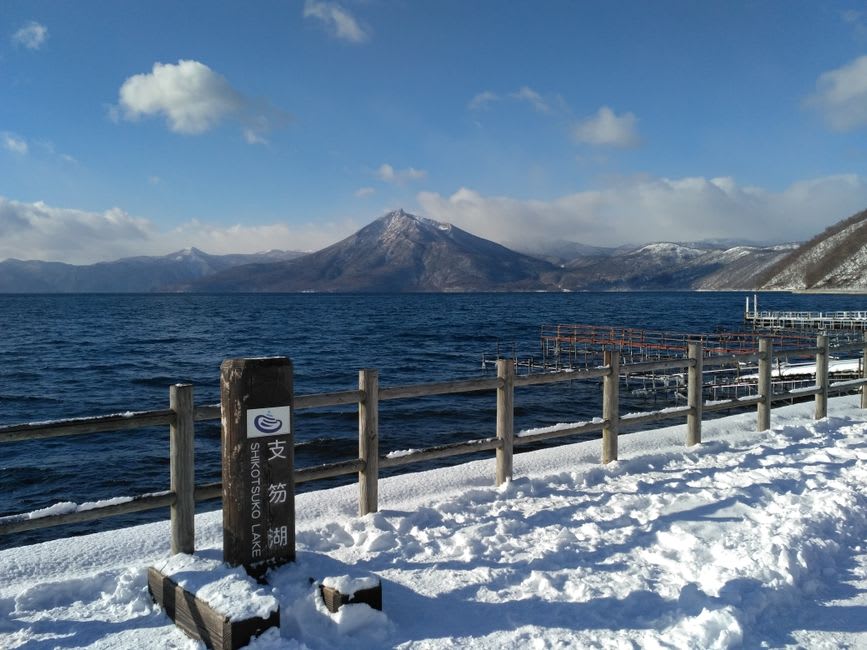
Shikotsu sits in a caldera, and its rim is a circle of volcanoes that give the lake its scale and its moods. Mount Eniwa rises to the north, and the twin cones of Tarumae and Fuppushi stand to the south, Tarumae still steaming faintly, a lava dome at its summit. We walked a stretch of the shoreline trail with the peaks reflected in the flat water, and the reflection was so clean it was hard to tell where the real mountain ended and the mirrored one began. Serious hikers climb Tarumae for the crater and the long view back down to the blue lake; we settled for the shore, ate rice balls on a log, and watched a heron work the shallows. The mountains hold the lake like cupped hands, and the whole basin feels sealed off from the rest of the world.
The Onsen and the Winter Ice Festival
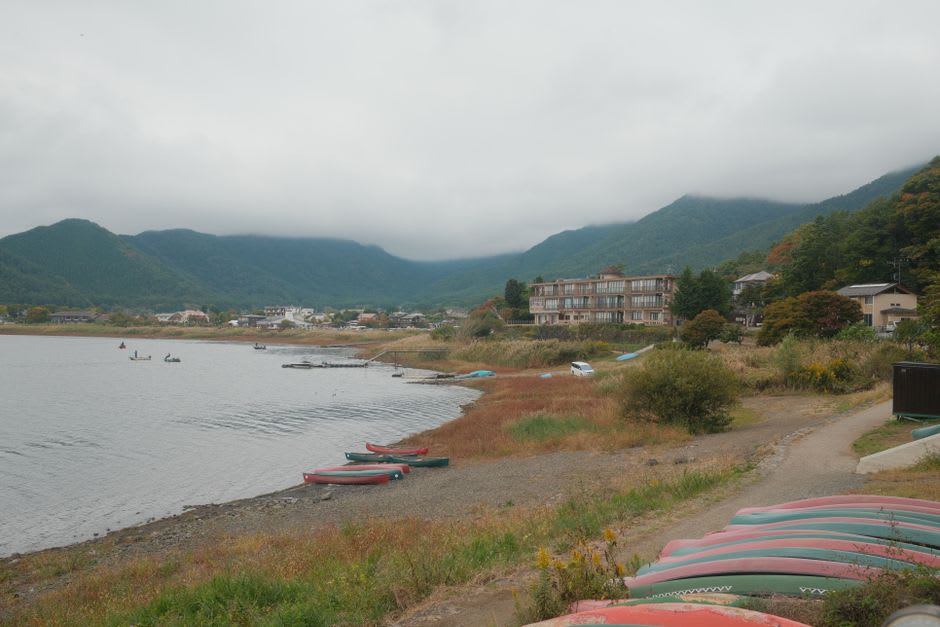
On the eastern shore, the small hot-spring hamlet of Shikotsuko Onsen is the lake’s one cluster of warmth and lodging, and after a cold morning on the water we soaked in an outdoor bath looking through steam at the trees. In winter the village hosts the Hyōtō Matsuri, an ice festival where lake water is sprayed over frames until it builds into pale blue ice sculptures that glow when lit at night — we saw only photographs, but locals spoke of it with real affection. Even in the green season the hamlet is tiny and calm: a few inns, a shrine, a red suspension bridge over the outflowing river. We stayed until the afternoon light went long across the water, then drove back down to Chitose reluctant to leave it behind.
Getting There
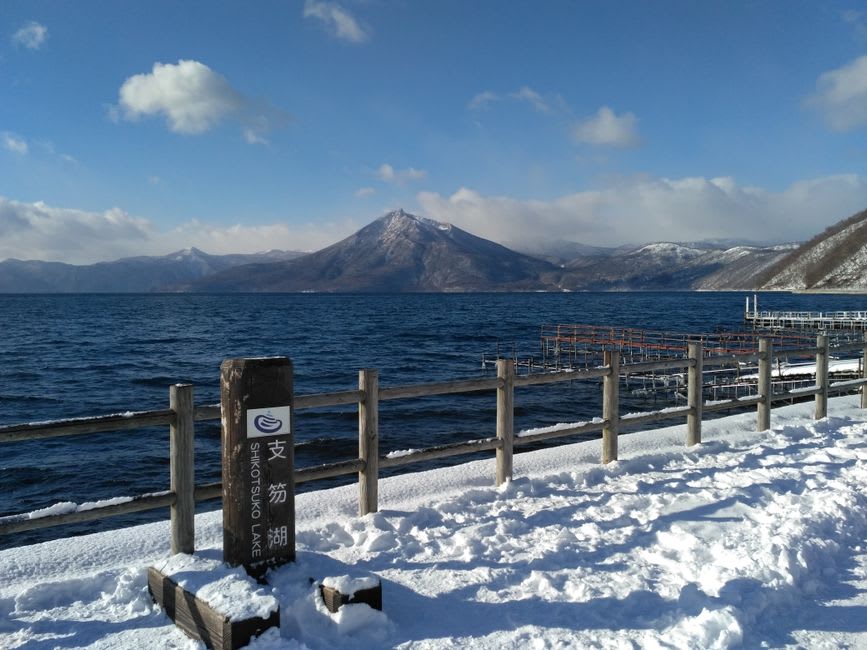
Lake Shikotsu lies in Shikotsu-Tōya National Park, a short way inland from Hokkaidō’s southern coast. The easiest approach is from Chitose: a seasonal bus runs from Chitose station and New Chitose Airport to Shikotsuko Onsen in around forty to fifty minutes, and by car it’s a similar quick drive up into the hills. Sapporo is roughly an hour and a half away. The eastern shore around Shikotsuko Onsen has the visitor center, boat and canoe rentals, and the cluster of inns; the rest of the shoreline is quiet and best explored with your own wheels. Come in the green season for the canoeing and the clarity, or in early winter for the ice festival — and pack a warm layer whatever the month, because the deep water keeps the air cool even in summer.
Keep exploring
More of Hokkaidō